but immigrants built this country, we should admire them and respect them
Auburn basketball legend Charles Barkley sounded off about immigrant treatment in America during Sunday’s March Madness broadcast on CBS. Discussing UConn’s Alex Karaban and his family’s journey to the U.S., Barkley spoke out about current immigration practices in the country.
“I wanna be very careful with my words right now,” Barkley began. “Cause this is a really touchy subject for me. I love that kid (Karaban) and his family. But the way some of these other immigrants are getting treated in our country right now is a travesty and a disgrace.”
“I think there is a difference between amazing immigrants and criminal immigrants.
And I think what’s going on in our country — I think what we’re doing to some of these amazing immigrants is really unfortunate and it’s really sad.
That’s a great immigrant story, we have a lot of great immigrant stories out there who — they stories need to be told but some of the stuff that’s happening to immigrants in our country is really unfortunate and its really unfair.
But immigrants built this country, we should admire them and respect them.”
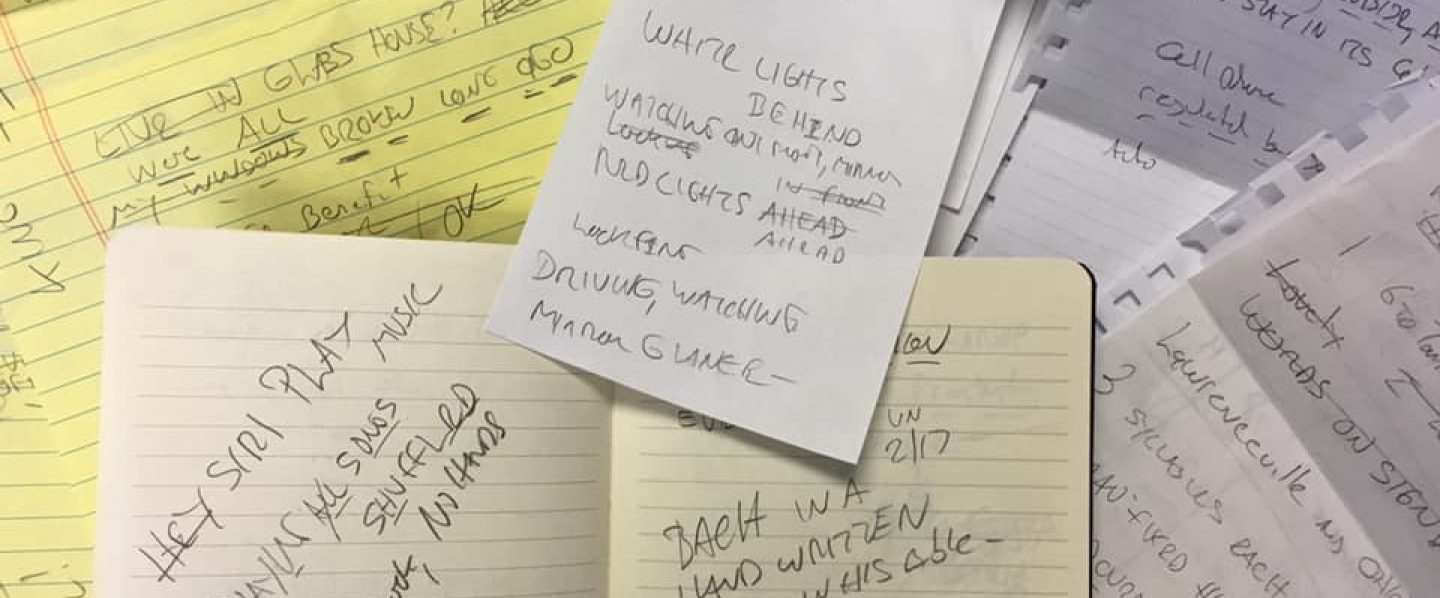
leaning against each other like drunken brothers at a funeral
Adapted from the poem, Even Numbers by Carl Sandburg as published in The People, Yes in The Complete Poems of Carl Sandburg by Carl Sandburg (Harcourt, Brace and Company: New York, 1950).
1
A HOUSE like a man all lean and coughing, a man with his two hands in the air at a cry,
“Hands up“
A house like a woman shrunken and stoop-shouldered, shrunken and done with dishes and dances
These two houses I saw going uphill in Cincinnati
2
Two houses leaning against each other like drunken brothers at a funeral,
Two houses facing each other like two blind wrestlers hunting a hold on each other.
These four scrawny houses I saw on a dead level cinder patch in Scranton, Pennsylvania
3
And by the light of a white moon m Waukesha, Wisconsin, I saw a lattice work in lilac time white-mist lavender a sweet moonlit lavender
Sorry but I just couldn’t resist.
Hey Little Brother!
Still in the drivers seat!
For those who know, they know,
For those who don’t know, that’s my little brother Pete watching me handle the reigns sitting in the drivers seat ( at the Dutch Village in Holland, Michigan).
I don’t have glasses yet and it looks like I still have my front teeth so this could have been the summer of 1968.
1969 was a rough year on my face.
I got glasses.
On my 9th birthday, I got hit in the face with a surf board that gashed my cheek open.
On Thanksgiving Day, running from my brother Timmy, I slipped and fell on the basement floor and chipped my left front tooth in half.
Still wear glasses.
Still have the scar.
One of grand daughters just lost her front teeth and asked her Mom if she could get a gold tooth like Pappa.
BTW, I should mention that this college basketball season, Michigan went undefeated on the road in the Big 10, something that hasn’t happened since 1976.
They tied the record of most regular season wins by a Big 10 team.
And in the process, the swept the home and away series with that team in East Lansing.
1944 in Europe at Christmas Time candy in the mail
In a letter dated 25 December, in what would have been 1944, my Dad wrote to my mom, his then girlfriend, from Luxemburg where his outfit was stationed at the time.
Dad wrote:
It was another Christmas today and we spent a rather quiet day. I guess you folks back home are realizing the war in not yet over and I hope we can come home soon.
I only received one package from you so far, a box of Fanny Farmer candy. We enjoyed it very much.
Although the wars seems to have taken a turn for the worst we are located in a fine town where the people talk French, German and English.
For dinner today we had a regular turkey dinner with all the trimmings just like home. But I felt lonesome for home and for you.
No surprise to folks who knew Dad that he got to writing about dinner and candy in the mail very early in his letter.
It should be noted that Dad was in the 12th Corps Headquarters Unit as the attached Dental Officer.
The 12th Corps was part of the United States Third Army under the command of one General George S. Patton, Jr.
Nine days before, on the 16th of December, American forces in Belgium had been overwhelmed by an unexpected attack by the German Army, an attack now remembered as The Battle of the Bulge.
During the attack, the United States 106th Division was surrounded and and two of the division’s three regiments surrendered on 19 December. The Germans gained 6,000 prisoners in one of the largest mass surrenders in American military history.
Patton famously managed to stop his Third Army, turn it 90 degrees and march north to attack, stop and then push back the Germans.
The 12th Corps was part of that pivot movement and so Dad ended up in Luxemburg where he attended Christmas Day services at the Cathedral and had a turkey dinner and shared a box of fannie farmer candy.
The odd thing about this is when Dad was in the States, he drove with several other Dentists that had just finished field training at Carlisle, Pa to Fort Andrew Jackson in Columbia, SC to be assigned to a unit.
When they got to their quarters at Fort Jackson, the guys Dad was traveling with couldn’t wait and ran off to get their assignments while Dad chose to unpack and hang up his uniforms.
By the time Dad got over to the office, they were at a loss at what to do with him as they had filled all the Dental positions they had open.
Almost as an afterthought, they sent Dad over the 12th Corps Headquarters Unit and told Dad that if he liked it there, he could stay as their Dental officer.
So Dad ended up as the only Dentist assigned to the HQ unit of Generals and Colonels who ran the 12th Corps.
Those guys who drove down from Carlisle with Dad?
They all got assigned to medical units in the 106th Division.
Christmas, 1944.
I have to wonder what Dad was thinking.
The decision to unpack his uniforms in February 1943 made a big difference in how he spent that holiday.
Probably made a big difference in my life as well.
Thoughts for Christmas and as the man said, be thankful for the small miracles … and be more thankful for the big ones!
PS: The collection of Dad’s over 200 letters home written during WW2 have been donated to the Bentley Library of Michigan History at the University of Michigan in Ann Arbor.
Mr. Snape writes, “The next couple of hours felt almost comically horrible, like one of those bits in The Simpsons where Homer falls out of a plane into a factory full of angry bees. Eventually, another boat came to the rescue, but rather than taking us aboard it dragged us through the waves, buffeting us up and down like a cork in a bathtub. We hit the shore just as happy hour kicked in, glowstick-waving Swedish ravers in Santa hats lining our route like an off-its-face guard of honour. There were speakers blasting trance on every corner, and pneumatic drill-wielding workmen outside our apartment. The whole episode exists in my mind like the cautionary second half of a film about substance abuse. Fish stew: just say no.
And yet … my wife and I have told this story about 40 times, and I don’t think there’s a pre-child Christmas either of us remembers with more fondness. We had salty fries and Fanta for Christmas dinner, retired to bed at 8pm and slept for 14 hours. On Boxing Day, I asked a friend in Bangkok to put us up for a couple of days and we got the first boat out of Phi Phi, leaving the ravers to face the workmen through the ringing blur of their own hangovers. Sometimes, a bit of peace and quiet is the greatest gift you can get.”
I am not sure where to start.
Telling the story of my Weirdest Christmas or expound on the great gift of peace and quiet.
Or can I tie them together?
Regular readers know I grew up in a family with 11 kids and a Mom and Dad with a lot a patience and that patience was never put more to the test than at Christmas time.
I had two older brothers who married and moved away but always came home at Christmas.
One brother moved to Maryland and the on to North Carolina and he drove his family up to Michigan every year!
A trip I didn’t appreciate until I moved to Atlanta and then on to South Carolina.
I had another half dozen older brothers and sisters who were off at college in Ann Arbor but would, of course, come home at Christmas.
We had a full house.
A more than full full house.
Those of us at home adjusted quite nicely to the older siblings being gone.
We had a big house that got a lot bigger with all those brothers and sisters off at college.
And the holidays brought them all home.
It was the old, we were happy when they got here but we where happier when they left.
It didn’t help matters when my Mom seemed to take the side of the big kids and that since they were on break, they deserved a break.
If they wanted to watch something on TV, they got to watch TV.
If they wanted their friends over until all hours of the night, their friends were over until all hours of the night.
It was tailor made for the self important me to wage war and vocal outrage against these concessions but my family was used to me waging war and being vocally outraged and no one paid much attention to me which pretty poured gasoline on my fire.
That at some point they didn’t all band together and with my Mom, lock me out in the garage for the rest of the week is a wonder.
But they didn’t and we managed to survive the holidays, winter vomiting and all.
Then there was that one Christmas.
That one Christmas when our Parents somehow happened to lose control of their minds when one of my sisters came home with the incredible plan that she came up with to invite all of her college friends over for a three night sleep over.
She picked the week between Christmas and New Years, got our Parents approval, I think, and invited about 40 of her friends to spend their holiday at Che’ Hoffman in Grand Rapids.
Let be clear here.
These were all for the most part, kids from school in Ann Arbor.
Why did they need to see each other at Christmas break?
I am not in anyway making this up.
This really happened.
They came with loaded cars and sleeping bags and lots of luggage and empty stomachs and moved on in.
It was the invasion of the body snatchers.
It was as if John Boy Walton showed up with half the freshman class from the University of Virginia.
And it went on and one for days and days.
It was the Griswolds on steroids.
I have no real distinct memory of it all, now fifty years or more later.
But I did learn that even with a house full of family at Christmas it wasn’t so bad.
I understood that sometimes, a bit of peace and quiet is the greatest gift you can get.
hard to see but a still from a home movie of the pile of presents under the tree in 1972
hail victors valiant raise next generation right sing to the colors
I am pretty sure that I have related the story of the night I got a phone call from my brother Paul that opened without a hello or greeting, but the words, I AM INCENSED.
This was kinda startling for two reasons.
One was that my brother Paul, so far as I know, never called anyone in his life.
And, Two, my brother Paul, so far as I know, had never been incensed about anything in his life.
Paul had just paged through the latest Michigan Today Alumni Magazine and found an article that recognized some family that had 6 siblings who had all earned degrees from the University of Michigan.
This was not right, Paul, declared and he called me and he told I had to do something about it.
So I got in touch with the Alumni Association and let them know that the Hoffman Family had a little bit more history to recognize.
Started with Grandpa Robert Karl Hoffman, the 1st Hofman born in the US and the 1st to change his last name to Hoffman, he was the 1st one to graduate from Michigan with a DDS in 1911.
Then our Dad, Robert Paul Hoffman, who graduated with a DDS in 1942.
Then the siblings.
Paul, Jack, Mary, Janet, Tim, Lisa, Me, Steve and Al graduated from Michigan stretching out over the 1960s. 70s and 80s.
Growing up, I knew there was only one college for me and I was so focused on accomplishing graduating from Michigan that when I finally DID graduate, I was at a bit of loss of what to do next and maybe still am.
My roommates knew the story of me getting into Michigan and they all agreed that the school changed the rules so it would never happen again.
And there were more graduates to come.
The spouses of Paul, Janet, Lisa and Al who graduated from Michigan.
Then the nieces and nephews of the 4th Generation who graduated from Michigan.
A couple of editions later, the Alumni Magazine ran an article that stated simply, they didn’t know what they were getting into when they recognized that family with 6 graduate siblings.
They didn’t know what they were getting into as they heard from so many other families, who I guess, were incensed.
The heard from several families also with 6 sibling graduates.
The heard from several families with 7 sibling graduates.
The heard from a couple of families with 8 sibling graduates.
But they only heard from 1 family, the Hoffman Family of Grand Rapids, with 9 sibling graduates.
If we act like we own it, at least we are acting honestly.
Work is starting on that 5th generation.
Me and grandson Ian – it’s his 1st time for the game with that team … class of 2047?
If you been to a game in Ann Arbor and listened to the crowd sing The Yellow and Blue with the band you know that 95% of the crowd knows one word, HAIL!.
We had a family tradition of singing The Yellow and Blue at family gatherings if the mood was right and by unspoken agreement, we would all drop out and let Dad sing the HAIL by himself.
With that memory in mind:
Sing to the colors that float in the light; Hurrah for the Yellow and Blue! Yellow the stars as they ride through the night And reel in a rollicking crew; Yellow the field where ripens the grain And yellow the moon on the harvest wain; -Hail! Hail to the colors that float in the light Hurrah for the Yellow and Blue!
Win or lose today, Hurrah for the Yellow and Blue!