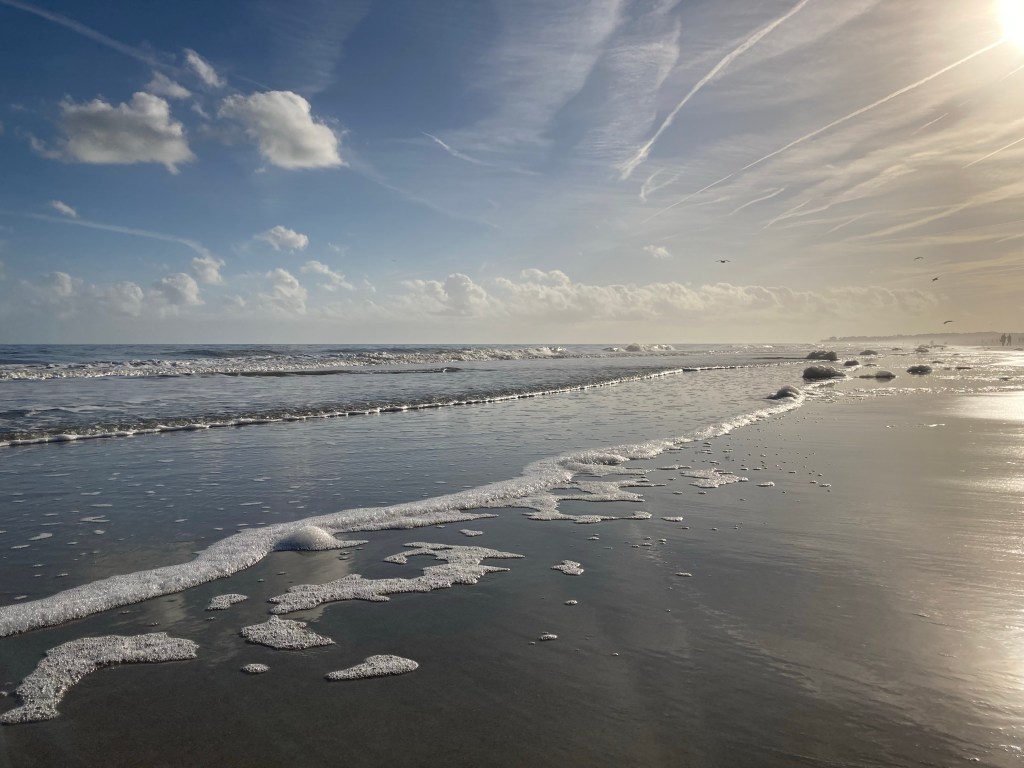
boats of mine boating
other little children shall
bring my boats ashore
Adapted from Where Go the Boats? by Robert Louis Stevenson (1850-1894).
Dark brown is the river.
Golden is the sand.
It flows along for ever,
With trees on either hand.
Green leaves a-floating,
Castles of the foam,
Boats of mine a-boating—
Where will all come home?
On goes the river
And out past the mill,
Away down the valley,
Away down the hill.
Away down the river,
A hundred miles or more,
Other little children
Shall bring my boats ashore.
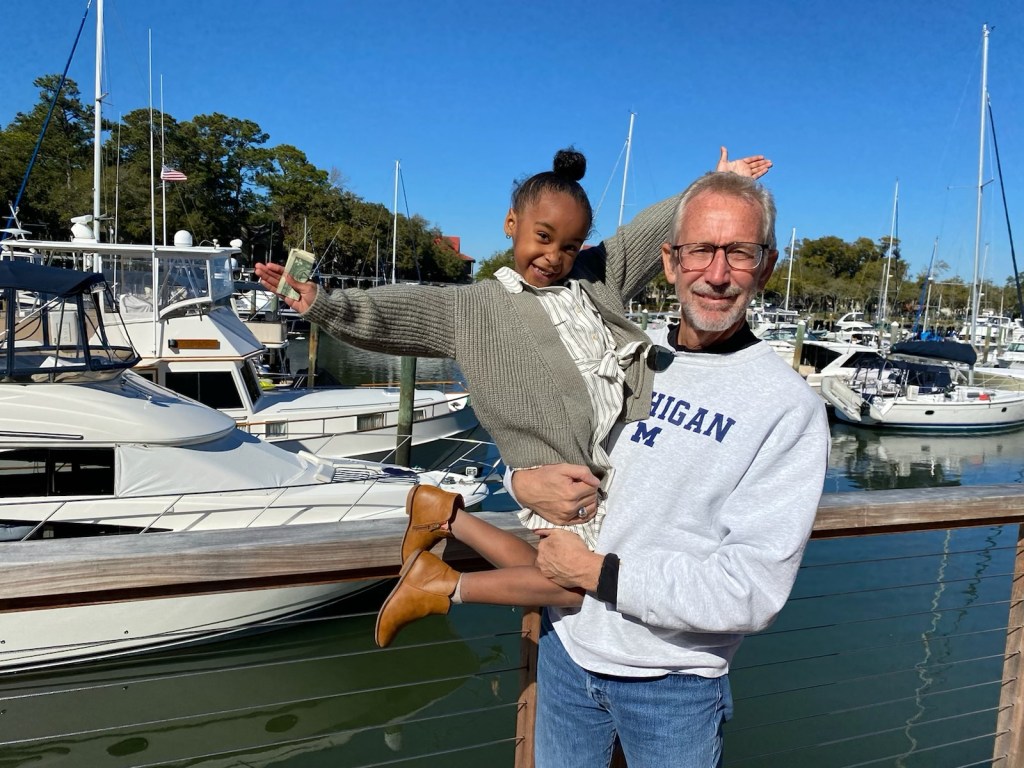
I thought it was fitting that Mr. Stevenson also wrote Treasure Island and I was on an island, looking at these boats, with my Granddaughter Dallas and all I could think was the verse in the Bible, For where your treasure is, there your heart will be also (Matthew 6:21).
And my treasure wasn’t in the boats.
I also cannot help but think of my sixth grade class at Crestview Elementary School in Grand Rapids, Michigan.
As I think of it, many of my teachers started the day reading to us.
Saying that I realize that for the years, 4th, 5th and 6th grade, I had 2 teachers.
Miss Critchell was my teacher for 4th and 5th and Mr. Vanderwheel was my teacher in 6th grade.
Miss Critchell was a rookie and Mr. Vanderwheel had been at Crestview forever.
I can picture them in the mornings getting coffee and Miss Critchell having a nervous stomach about walking into the classroom and not knowing where to begin and Mr. Vanderwheel saying something like, “you know what works for me …”
We would all gather on the playground and blacktop as we called it, outside the school doors and wait for the first bell.
That was the signal to line up by class in front of the glass doors that led into the scool.
Crestview was U shaped and had an entrances to the building off the blacktop at the top of each arm of the U.
Facing the school looking at the top of the U, the left hand side was the 4th thru 6th grade side.
The big kids.
The side that had one large set of boys and girls restrooms off the main hallway.
The right hand side was the K thru 3rd grade side.
The little kids.
The rooms on this side had restrooms in the classroom which was great when you had to throw up.
The restroom in the Kindergarten was an in-room restroom and for some reason, the light switch was on the outside. This made for great fun when someone was in the restroom and the light could be turned off by anybody else.
Not that I would have done anything like that.
That first bell would ring and we would all line up.
We lived so close that many times my Mom would yell, “I heard the first bell!” and we would run out the door still getting dressed or eating a pop tart.
We lived a block down the hill from school and could hear all the bells as they rang.
Every once in a while due to power surge or outage or something those bells would go off on their own.
Sometimes on weekends and sometimes even in the summer.
Time change weekend always seemed to mess them up.
One time I remember, but I don’t remember how old I was, they went off in the middle of the night and rang for what seems like over an hour.
We always wondered who got in trouble for that one and we knew someone got in trouble because our neighbor across the street was Mrs. Schad, who was Chairperson of the school board for as long as I was in school and we knew she had to have been woken up by the sound of the bell as well.
Maybe that is why they got turned off.
As an aside, for the longest time the Grand Rapids Public Schools never closed, never missed a day, for snowy weather. When Mrs. Schad would be interviewed by local media, she would always say she looked out her window and the children were having no problem getting to school.
Those children were US.
We often talked about walking out into the snow and collapsing in fatigue in front of her house but we never did.
After the first bell, all the teachers came and lined up at the different entrances.
The hallways that ended at the top of the arms of the U were walled with glass windows and the doors were steel framed glass and the teachers would all stand there looking out at their day waiting to burst in on them.
Then the second bell would ring and the doors would open and we would file in and tramp down to our class room.
The halls were lined with long rows of pegs and we would hang up our coats and arrange boots and mittens and hats.
In the winter and on rainy days, the hallways were a swamp and everything was damp.
As fast as we could, we got into our classrooms and sat at our assigned seats.
I can’t remember if there was one more bell or if the clock just got to 9AM but the day would start when the two flag monitors, a boy and a girl, chosen by rotation, we all had to take a turn, would walk to the front of the class to spread the flag that stood in the front of the classroom.
One kid took a corner of the flag and stretched the flag out best they could.
The other kid grabbed a hold of the flag pole so the flag wouldn’t fall down.
With right hand over heart, (because the heart was on the right and your right hand was the hand ‘closest’ to the heart – at least that’s what I remember being told) we recited the pledge of allegiance.
I have to ask, is this still done today?
With the pledge over we would sing a patriotic song , usually America the Beautiful or America (My Country ’tis of thee).
I always wanted to sing the “Internationale”.
I didn’t know the words but I knew OF the song from some where in my reading.
Years later in the movie UNSTRUNG HEROS where the little kid hero sings the Internationale and is dragged out in the hallway yelling about rights for the oppressed workers of the world, I was seeing a missed opportunity.
With the song over, we all sat at our desks, the flag monitors returned to their seats and when I was in 4th, 5th and 6th grade, the teacher took out a book and began to read out loud.
Miss Critchell read Charlottes Web, Trumpet of the Swan and Henry Huggins books as I remember it.
Mr. Vanderwheel read “Treasure Island”.
I don’t know if it is a sign of my old age or what, but in my mind, in my memory, I cannot recall anything as spellbinding as Mr. Vanderwheel reading that old book.
Think of that great word.
Spellbinding.
As if bound by a spell.
That is just what it was like.
I know I was taken over by the story and it seems to me that I wasn’t the only one as the classroom was STILL.
Spellbound.
Mr. Vanderwheel made the story come alive.
I wasn’t just listening to the reading.
I was there.
To this day, I will take a square of paper and draw a black circle on it and write 7PM on it. Then I’ll give the paper to someone or leave it on their desk and walk away. Every once in a while, someone would say ‘A BLACK SPOT, Oh no!!”, but I haven’t had anyone figure out what I was doing in forever.
Mr. Vanderwheel just read, with some affectation to his voice for the pirates arrrrrrrgh and Ben Gunn’s voice asking for cheese, but for the most part he let the words trigger our own imagination.
Mr. Vanderwheel also was watching the text and knew the story so that he would be reading something like, “‘There was a Knock on the door. Jim opened the door and ….’ and then Mr. Vanderwheel would pause and say, “We’ll stop right there this morning.”
And the class would go “oooooooooooooooooooooooooooooohhhhhhhhhhhhhhhhh.”
Treasure Island has been made into a movie 4 or 5 times and I have seen them all and been disappointed in them all.
None of the movies can come close to the way I saw it my mind when Mr. Vanderwheel read to us each morning.
The morning reading accomplished a lot things and eased the class into each day but it also an incredible gift.
I look at all the gadgets and items available to day that offer to stimulate learning and imagination.
All the games, devices, videos and such and all the wonderful things kids have today.
And I think of Mr. Vanderwheel reading and I remember my sixth grade class.
And I feel sorry for kids today.