Some of these beach haiku were written by random trips to beach.
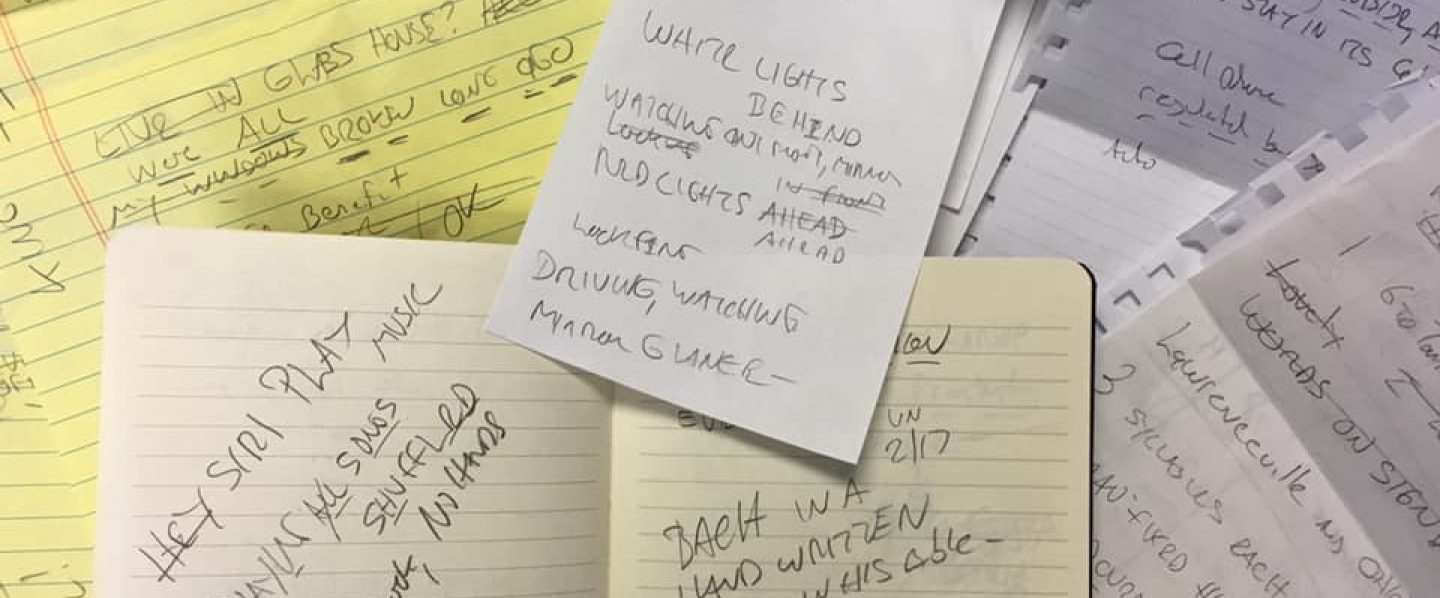
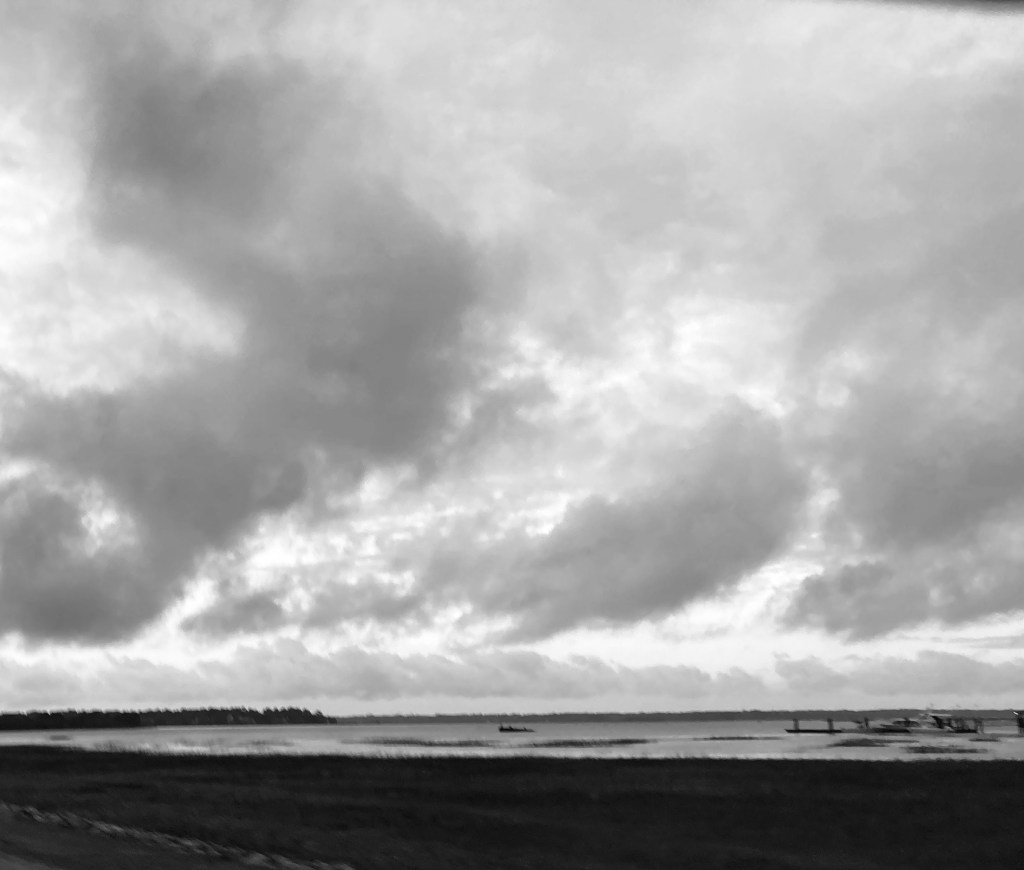
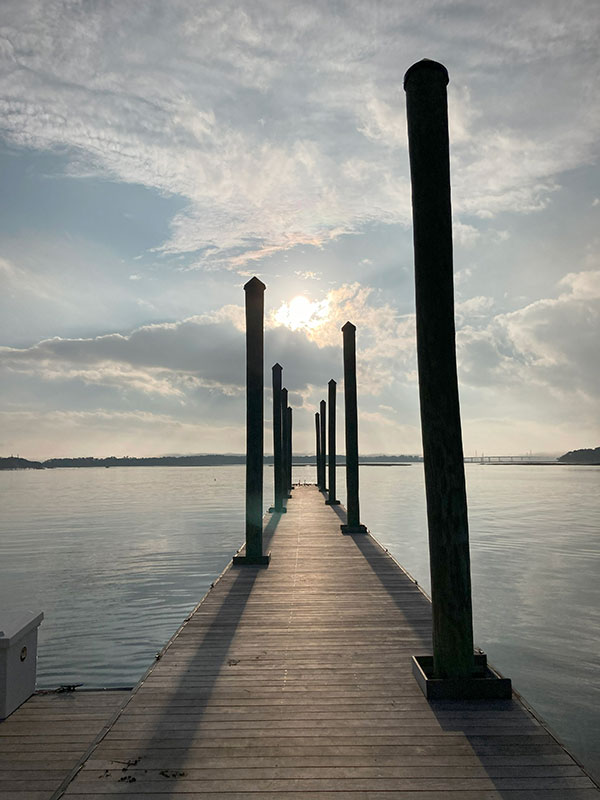
Most of these are part of a series based on afternoons spent at the beach on Hilton Head Island with my pad out ( a real paper note pad), hoping for words with my iPhone camera handy to add illustration to my thoughts.
I wanted to see if I would be ‘inspired’ by what I saw, by what I heard, by what I smelled, by what I tasted, what I felt emotionally and what I felt tactilely.
Some turned out okay.
Some were too forced.
Some were just bad.
Some did involve some or all of those feelings.
As far as it goes, I guess I was inspired by by what I saw, by what I heard, by what I smelled, by what I tasted, what I felt emotionally and what I felt tactilely.
Please aware that most of these haiku were NOT WRITTEN on the date in the title – for an explanation of this please see The Series link in the navigation table.
there are pleasures in madness, in being mad, known only to madmen
I have a source that attributes the saying, There are pleasures in madness known only to madmen, to Dr, Johnson (also known as Dr. Samuel Johnson (1709- 1784), who was, according to Wikipedia, an English writer who made lasting contributions as a poet, playwright, essayist, moralist, critic, biographer, editor, and lexicographer. The Oxford Dictionary of National Biography calls him “arguably the most distinguished man of letters in English history”.)
As I was working on words to bring together walking on the beach in March and March Madness, the quote popped out of my brain and I hammered out a haiku.
Then I put back into the google to see if I could find some context for the quote and what I found was, There is a pleasure sure, In being mad which none but madmen know.” from John Dryden in Act II, scene 1 of The Spanish Friar (1681).
Dr. Johnson.
John Dryden.
Madness.
March.
March Madness and the Beach.
On the Beach in March.
I grew up in a place where March was mean.
I grew up where, as Garrison Keillor wrote of the Great Lakes/Upper Midwest, God invented March so that none drinkers would know what a hangover was like.
Now I don’t.
Now I live where March is kind of nice.
March is still a month of for Madness but for me, that doesn’t include the weather.
And this led into my search for a haiku.
I was trying to find the words to express that while my team was no longer playing this March, I was able to compensate as I was able to walk on the beach in March on my lunch break.
Such madness.
Such in madness.
Suffice it to say, there are pleasures in walking in the waves on the beach at lunchtime, but you have to work near the beach to know that.
Which asks the question, am I only trying to rub it in on folks who don’t work near the beach?
Am I only trying to rub it on folks, friends and family who live up North where it is 44 degrees and overcast?
Surely, it would be a sign, sure, of some sort of madness to be so mean.
There are pleasures in madness, known only to madmen.
Which begs, the question, would I enjoy my lunch time walk on the beach as much if I couldn’t brag about in social media.
Hmmmmmmmmmmm.
Honestly?
YES I WOULD!
After all, there are pleasures in walking in the waves on the beach at lunchtime, but you have to work near the beach to know that.
enduring as rock charming as waves delicate as seashore – I wish …
“I own a rocky point of land in Carmel, Calif. extending into the Pacific Ocean… I am a woman living alone ‒ I wish protection from the wind and privacy from the road and a house as enduring as the rocks but as transparent and charming as the waves and as delicate as a seashore. You are the only man who can do this – will you help me?”
So wrote Della Brooks Walker to Frank Lloyd Wright.
Mr. Wright took up the challenge and the result is known as the The Walker House, the Mrs. Clinton Walker house and the Cabin on the Rocks.
Mr. Wright took up the challenge in a way consistent with his stated view that: No house should ever be on a hill or on anything. It should be of the hill. Belonging to it. Hill and house should live together each the happier for the other.
How can you not be attracted by that statement?
Easy to understand why Mr. Wright has such a devoted following.
As an aside, one my many nephews (I have over 100 or so counting nephews in law) posted photos recently of a visit to Taliesin West, Wright’s place in Arizona.
I asked this nephew if the folks at Taliesin West told them the story of driving to Taliesin East in the middle of the night to dig up Wright’s body and bring it back to Arizona.
I mentioned that while creepy, it wasn’t as creepy as the Taliesin East butler story.
My Nephew responded that the Taliesin West folks DID not talk about the body snatch and that he had to google the Taliesin East butler story.
And nope, I am not going to relay the stories here as you will enjoy doing the google yourself.
BUT I DIGRESS.
So Mr. Wright designed a house that was part of the beach.
The house, the only Wright house on an ocean, was built in 1952,
The house, located in California’s Carmel-by-the-Sea, is in the news and it is for sale for the low low price of $22 million.
I was intrigued to note that along with all of the Wright intended attributes, as explained by wikipedia, that “The house, an example of Wright’s organic architecture, is built on granite boulders, uses the local Carmel-stone, and has a roof the color of the sea that is shaped to resemble the bow of a ship.” but also it is a house you can hear.
I don’t mean that you can hold the house to your ear and hear the sea as if it was a sea shell.
Nor do I mean that just to look at the house, you can hear the waves.
What I mean is that the house has a sound.
The house has the sound of my childhood.
You see, the house was used in the movie.
A movie maybe more famous for its sound track theme than the movie itself.
That movie was titled, The Summer Place.
For me, and for many folks who grew when I grew up, to hear the song, Theme to a Summer Place, will transport them back to a time where that song was heard everywhere, any where all the time.
Click on the video and listen and I know what you will say.
You will say, OH THAT SONG.
I hear it and I am about 8 years old and I am at home, after school and my Mom is making dinner and the radio in Grand Rapids, Michigan, where I grew up, is tuned to WOOD-AM.
stare at the sunset and wonder why it has no impact on you. How …
Follow the pedestrian path to the Williamsburg Bridge. This will take you well out of your way, but you think it might be a nice idea to watch the sunset from the bridge.
As you arrive at the midpoint of the bridge and see the sun going down, take a deep breath and try hard to live in the moment. This will be impossible for you. You haven’t been able to enjoy a sunset since you upped your dose of venlafaxine.
Stare at the sunset and wonder why it has no impact on you. How is something so viscerally, timelessly beautiful leaving you completely cold? How is it possible that your antidepressant is keeping you functional but also stifling any semblance of spiritual epiphany?
Adapted from the short story A G.P.S. ROUTE FOR MY ANXIETY by JESSE EISENBERG (New Yorker, Feb 27, 2023, Issue 2 Volume 99).
Mr. Eisenberg relates a walk outside in the style of turn by turn instructions from his GPS.
The spice sprinkled on top of the words, is the feeling from Mr. Eisenberg expressed through his anxiety.
A funny piece and at the same time, so very sad.
No triggers.
No reasons.
No explanations.
Just the anxiety.
A feeling so overwhelming of the soul that Mr. Eisenberg writes, How is something so viscerally, timelessly beautiful leaving you completely cold?
He wraps up a lot of life in one short walk.
Here is the story shamelessly repurposed from the New Yorker.
A G.P.S. ROUTE FOR MY ANXIETY
FROM: Home
TO: Local Y.M.C.A.
ESTIMATED TIME: Five hours
Exit your apartment through the service entrance so you don’t have to make small talk with the doorman, who resents you.
Upon exiting, turn left. Going right would obviously be quicker, but you might run into the woman from your building whose name you don’t remember.
Make a quick left at the rack of Citi Bikes. Avoid looking directly at the bikes and being reminded that you don’t have an active life style.
Dangerously cross the street in the middle of the block to avoid the bodega where you embarrassed yourself last week by going in drunk and ordering Ben & Jerry’s from the deli section.
Walk straight for three blocks in the wrong direction so that you can pass the movie theatre where you met your first girlfriend, Shira. Things seemed so much simpler then. Why couldn’t you just have proposed to Shira? Did you think she would wait around for you to grow up? She was an incredibly appealing person, and many people liked her. It was hubris to think that she would wait for you.
As you pass the theatre, it will occur to you that you should have proposed there. Shira would have thought it was so romantic. You could have cutesily conscripted the theatre staff to be in on the proposal. They could have done something kitschy but sweet, like hiding the ring in a tub of popcorn, and Shira might have said something charming, like “I wish you had proposed to me with some Raisinets.” You would have laughed and kissed her. Your life would have taken a nice turn with Shira. You would be a father now, maybe.
Make an extreme right to avoid the movie theatre. Walk briskly for several minutes to shake off the feeling of what could have been.
Take out your cell phone and pretend to be on an important call because you’re about to pass some canvassers for the A.S.P.C.A. Your mix of narcissism and self-hatred is so deep and convoluted that you can’t even bring yourself to spare five seconds to save animals.
This might be a nice time to listen to a podcast—maybe one from the BBC that doesn’t overlap with your own life and make you feel competitive. Something about the Bauhaus movement might be comforting.
Make a left for no other reason than to pass the office building where you interned for that documentary-film company when you thought that documentaries were going to change the world.
Make an immediate hard right to avoid the corner where you were fired by the documentary-film company for being too vocal at meetings.
Follow the pedestrian path to the Williamsburg Bridge. This will take you well out of your way, but you think it might be a nice idea to watch the sunset from the bridge.
As you arrive at the midpoint of the bridge and see the sun going down, take a deep breath and try hard to live in the moment. This will be impossible for you. You haven’t been able to enjoy a sunset since you upped your dose of venlafaxine.
Stare at the sunset and wonder why it has no impact on you. How is something so viscerally, timelessly beautiful leaving you completely cold? How is it possible that your antidepressant is keeping you functional but also stifling any semblance of spiritual epiphany?
Turn back and exit the bridge.
Walk uptown for several minutes, searching for any meaning in your life and not finding it.
Arrive at your destination, the local Y.M.C.A., which is actually five blocks from your apartment.
It is now dark out.
Stand outside the Y.M.C.A. for several minutes, watching other people go in.
abroad in the marsh terminal sea somehow soul seems suddenly free
Adapted from The Marshes of Glynn by Sidney Lanier (1842–1881)
Glooms of the live-oaks, beautiful-braided and woven With intricate shades of the vines that myriad-cloven Clamber the forks of the multiform boughs,— Emerald twilights,— Virginal shy lights, Wrought of the leaves to allure to the whisper of vows, When lovers pace timidly down through the green colonnades Of the dim sweet woods, of the dear dark woods, Of the heavenly woods and glades, That run to the radiant marginal sand-beach within The wide sea-marshes of Glynn;— Beautiful glooms, soft dusks in the noonday fire,— Wildwood privacies, closets of lone desire, Chamber from chamber parted with wavering arras of leaves,— Cells for the passionate pleasure of prayer to the soul that grieves, Pure with a sense of the passing of saints through the wood, Cool for the dutiful weighing of ill with good;—
O braided dusks of the oak and woven shades of the vine, While the riotous noon-day sun of the June day long did shine Ye held me fast in your heart and I held you fast in mine; But now when the noon is no more, and riot is rest, And the sun is a-wait at the ponderous gate of the West, And the slant yellow beam down the wood-aisle doth seem Like a lane into heaven that leads from a dream,— Ay, now, when my soul all day hath drunken the soul of the oak, And my heart is at ease from men, and the wearisome sound of the stroke Of the scythe of time and the trowel of trade is low, And belief overmasters doubt, and I know that I know, And my spirit is grown to a lordly great compass within, That the length and the breadth and the sweep of the Marshes of Glynn Will work me no fear like the fear they have wrought me of yore When length was fatigue, and when breadth was but bitterness sore, And when terror and shrinking and dreary unnamable pain Drew over me out of the merciless miles of the plain,—
Oh, now, unafraid, I am fain to face The vast sweet visage of space. To the edge of the wood I am drawn, I am drawn, Where the gray beach glimmering runs, as a belt of the dawn, For a mete and a mark To the forest-dark:— So: Affable live-oak, leaning low,— Thus—with your favor—soft, with a reverent hand (Not lightly touching your person, Lord of the land!), Bending your beauty aside, with a step I stand On the firm-packed sand, Free
By a world of marsh that borders a world of sea. Sinuous southward and sinuous northward the shimmering band Of the sand-beach fastens the fringe of the marsh to the folds of the land. Inward and outward to northward and southward the beach-lines linger and curl As a silver-wrought garment that clings to and follows the firm sweet limbs of a girl. Vanishing, swerving, evermore curving again into sight, Softly the sand-beach wavers away to a dim gray looping of light.
And what if behind me to westward the wall of the woods stands high? The world lies east: how ample, the marsh and the sea and the sky! A league and a league of marsh-grass, waist-high, broad in the blade, Green, and all of a height, and unflecked with a light or a shade, Stretch leisurely off, in a pleasant plain, To the terminal blue of the main.
Oh, what is abroad in the marsh and the terminal sea? Somehow my soul seems suddenly free From the weighing of fate and the sad discussion of sin, By the length and the breadth and the sweep of the marshes of Glynn.
Ye marshes, how candid and simple and nothing-withholding and free Ye publish yourselves to the sky and offer yourselves to the sea! Tolerant plains, that suffer the sea and the rains and the sun, Ye spread and span like the catholic man who hath mightily won God out of knowledge and good out of infinite pain And sight out of blindness and purity out of a stain.
As the marsh-hen secretly builds on the watery sod, Behold I will build me a nest on the greatness of God: I will fly in the greatness of God as the marsh-hen flies In the freedom that fills all the space ’twixt the marsh and the skies: By so many roots as the marsh-grass sends in the sod I will heartily lay me a-hold on the greatness of God: Oh, like to the greatness of God is the greatness within The range of the marshes, the liberal marshes of Glynn. And the sea lends large, as the marsh: lo, out of his plenty the sea Pours fast: full soon the time of the flood-tide must be: Look how the grace of the sea doth go About and about through the intricate channels that flow Here and there, Everywhere, Till his waters have flooded the uttermost creeks and the low-lying lanes, And the marsh is meshed with a million veins, That like as with rosy and silvery essences flow In the rose-and-silver evening glow. Farewell, my lord Sun! The creeks overflow: a thousand rivulets run; ’Twixt the roots of the sod; the blades of the marsh-grass stir; Passeth a hurrying sound of wings that westward whirr; Passeth, and all is still; and the currents cease to run, And the sea and the marsh are one.
How still the plains of the waters be! The tide is in his ecstasy. The tide is at his highest height: And it is night.
And now from the Vast of the Lord will the waters of sleep Roll in on the souls of men, 100 But who will reveal to our waking ken The forms that swim and the shapes that creep Under the waters of sleep? And I would I could know what swimmeth below when the tide comes in On the length and the breadth of the marvellous marshes of Glynn.
time present time past future eternally unredeemable
Sunset Timelapse at Bluewater Resort on Hilton Head Island
Time present and time past Are both perhaps present in time future, And time future contained in time past. If all time is eternally present All time is unredeemable. What might have been is an abstraction Remaining a perpetual possibility Only in a world of speculation. What might have been and what has been Point to one end, which is always present. Footfalls echo in the memory Down the passage which we did not take Towards the door we never opened Into the rose-garden. My words echo Thus, in your mind. But to what purpose Disturbing the dust on a bowl of rose-leaves I do not know.
From Burnt Norton as it appears in Four Quartets (Harcourt, Brace & Company, New York, 1943) by T. S. Eliot (1888-1965)
“Though wisdom is common, the many live as if they have wisdom of their own”
“the way upward and the way downward is one and the same.”
But to what purpose?
Disturbing the dust on a bowl of rose-leaves …
I do not know.
All time is unredeemable.
(Full disclosure, the video included with this post was created by Brett, my friend and coworker here on the Island. Brett has a pretty cool job. His is the effort to capture what it is that makes you want to spend your vacation on the island. He does a pretty good job with what he has to work with. One of the perks of this job is getting to see his stuff before the rest of the world does.)