3.18.2026 – Ides of March are come ….

Ides of March are come ….
seer said softly, … they are come
but they are not gone

Adapted from The Parallel Lives: The Life of Julius Caesar by Plutarch, as published in Vol. VII of the Loeb Classical Library edition, 1919 where the author rights.

The following story, too, is told by many. A certain seer warned Caesar to be on his guard against a great peril on the day of the month of March which the Romans call the Ides; and when the day had come and Caesar was on his way to the senate-house, he greeted the seer with a jest and said: “Well, the Ides of March are come,” and the seer said to him softly: “Ay, they are come, but they are not gone.” Moreover, on the day before, when Marcus Lepidus was entertaining him at supper, Caesar chanced to be signing letters, as his custom was, while reclining at table, and the discourse turned suddenly upon the question what sort of death was the best; before any one could answer Caesar cried out: “That which is unexpected.” After this, while he was sleeping as usual by the side of his wife, all the windows and doors of the chamber flew open at once, and Caesar, confounded by the noise and the light of the moon shining down upon him, noticed that Calpurnia was in a deep slumber, but was uttering indistinct words and inarticulate groans in her sleep; for she dreamed, as it proved, that she was holding her murdered husband in her arms and bewailing him.
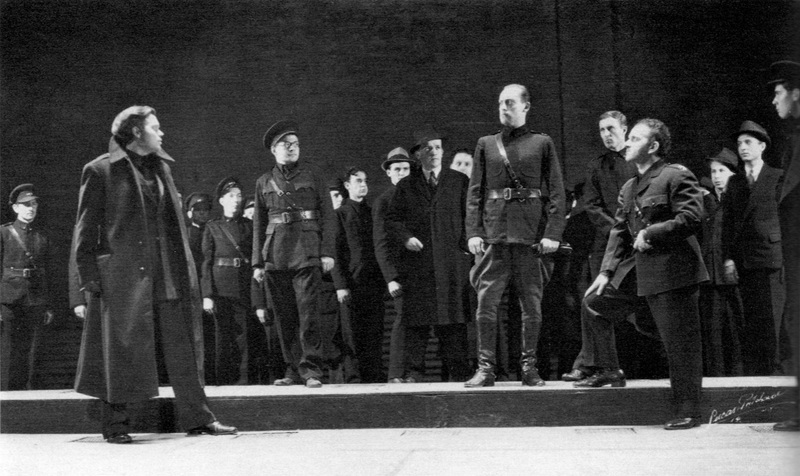
Julius Caesar, Act I, Scene II also comes to mind.

Cassius speaks to Brutus

Now, in the names of all the gods at once,
Upon what meat doth this our Caesar feed
That he is grown so great? Age, thou art shamed!
Rome, thou hast lost the breed of noble bloods!
When could they say, till now, that talked of Rome,
That her wide walks encompassed but one man?
Now is it Rome indeed, and room enough
When there is in it but only one man.

As Kenneth Roth, a Guardian US columnist and visiting professor at Princeton’s School of Public and International Affairs, and former executive director of Human Rights Watch writes in his opinion piece, “Trump needs to reject Netanyahu’s quest for a forever war“:

As the world suffers the economic consequences of this disastrous war of choice, and people see yet another defenseless people being pummeled by the US-Israeli military alliance, public opinion is turning rapidly. American support for Israel has plummeted, first as it committed genocide in Gaza, and apartheid and ethnic cleansing in the West Bank, and now the crime of aggression in Iran.

Trump’s lawless belligerence and indifference to international standards have made the public in key democratic allies – Canada, Germany, France and the UK – favor a turn toward China, despite its own repressive indifference to international law. That’s quite an accomplishment.

Trump’s aggression is no more popular among allied governments. His pleas for help in defending tankers in the strait of Hormuz have so far come up empty. He has tried to up the ante, suggesting that his commitment to Nato, a defensive alliance built on pledges to support any member under attack, would depend on Nato members joining him in his offensive war of aggression. The response to that threat was decidedly cold.

Trump has an endless capacity to make fact-free pronouncements about the brilliant success of his policies. Iranians’ best hope may be that he declare victory and move on. Trump’s demand for Iran’s “unconditional surrender” complicates that face-saving strategy. Yet as the price of Trump’s folly mounts – new inflationary pressure, declining stock markets, worsening midterm prospects, even a disheartened Maga base – we must hope that Trump finds the wisdom to reject Netanyahu’s quest for a forever war and calls it quits.

Look again at the words …

Trump’s lawless belligerence and indifference …

Trump’s aggression …

Trump has an endless capacity to make fact-free pronouncements …

Trump’s folly mounts …

Upon what meat doth this our Caesar feed
That he is grown so great? Age, thou art shamed!

the seer said to him softly: “Ay, the Ides of March are come … but they are not gone.

3.14.2026 – the sun peeks over the

the sun peeks over the
horizon – watched many times
never grow tired of

Sunrise over Pinckney Island and Skull Creek in the South Carolina Low Country

Adapted from a passage in the book, The Racketeer by John Grisham (Doubleday: New York, 2012), where Mr. Grisham writes:

I sit on my terrace for the last time, sipping coffee and watching the ocean fade into pink, then orange as the sun peeks over the horizon.

I’ve watched this many times and never grow tired of it.

On a clear morning, the perfect sphere rises from the water and says hello, good morning, what another fine day it’s going to be.

I’m not sure where I’m headed or where I’ll end up, but I plan to be near a beach so I can begin each day with such quiet perfection.

People come and go so quickly here.

I grew up in West Michigan.

A location noted to be the 2nd most overcast bit of land with only the Seattle area having a higher percentage of gray sky.

I moved to the Atlantic Coast and often get to watch the ocean fade into pink, then orange as the sun peeks over the horizon.

I’ve watched this many times and never grow tired of it.

On a clear morning, the perfect sphere rises from the water and says hello, good morning, what another fine day it’s going to be.

I’m not sure where I’m headed or where I’ll end up, but I plan to be near a beach so I can begin each day with such quiet perfection.

3.13.2026 – up, down beaches, lost …

up, down beaches, lost …
freedom, exhilarating
indescribable

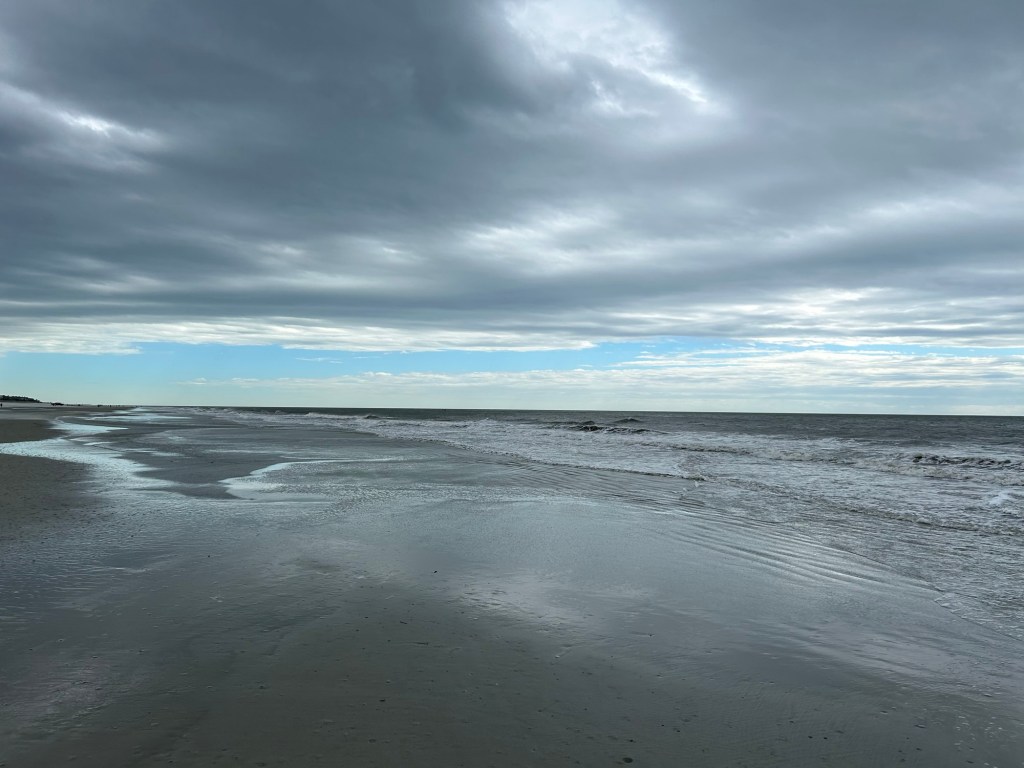
Beach on Hilton Head Island as storm front comes up from behind me …

Adapted from a passage in the book, The Racketeer by John Grisham (Doubleday: New York, 2012), where Mr. Grisham writes:

I stare at the moon over the ocean.

I breathe the salty air and listen to the waves gently roll ashore.

Freedom is exhilarating, and indescribable.

I can’t wait to feel sand between my toes.

There are a few early birds on the beach, and I hustle down there.

No one notices; no one cares.

People who roam aimlessly up and down beaches are lost in their own worlds, and I am quickly getting lost in mine.

Obviously I think of the priceless moments I get on my lunch to breathe the salty air and listen to the waves gently roll ashore and I feel the sand between my toes.

But that one phrase there.

Freedom is exhilarating, and indescribable.

Are there any other words that can better describe what makes America great?

With the all the effort being put into making America great again, why do I find my freedoms less exhilarating and less free.

It’s indescribable.

3.11.2026 – effect doesn’t seem

effect doesn’t seem
to have been priced into the
decision making

Adapted from the article, How Trump’s War With Iran Changed the World in a Week, by Jim Tankersley who report on Germany and Europe as Berlin bureau chief for The New York Times where Mr. Tankersley writes:

Mr. Trump’s war, now nearly two weeks old, is already reshaping travel patterns, energy dependencies, living costs, trade routes and strategic partnerships. Countries typically shielded from regional conflict, like Cyprus and the United Arab Emirates, have faced retaliatory Iranian fire. The fallout could disrupt midterm elections in the United States, tilt the war calculus in Ukraine and force China into a major economic pivot.

Those effects may compound if Mr. Trump presses ahead with the war, particularly if Iran escalates its counterattacks and blocks ship traffic through the critical oil passage of the Strait of Hormuz. Some economists are already invoking a dreaded memory for any U.S. president — the specter of oil-shock-induced stagflation, with growth stalling and prices roaring upward.

“I’m old enough to remember the events of the ’70s, and a world in which oil price spikes were a significant issue both economically and for a president who might be facing elections,” said Suzanne Maloney, an Iran expert at the Brookings Institution. “That doesn’t seem to have been priced into the decision making,” she added.

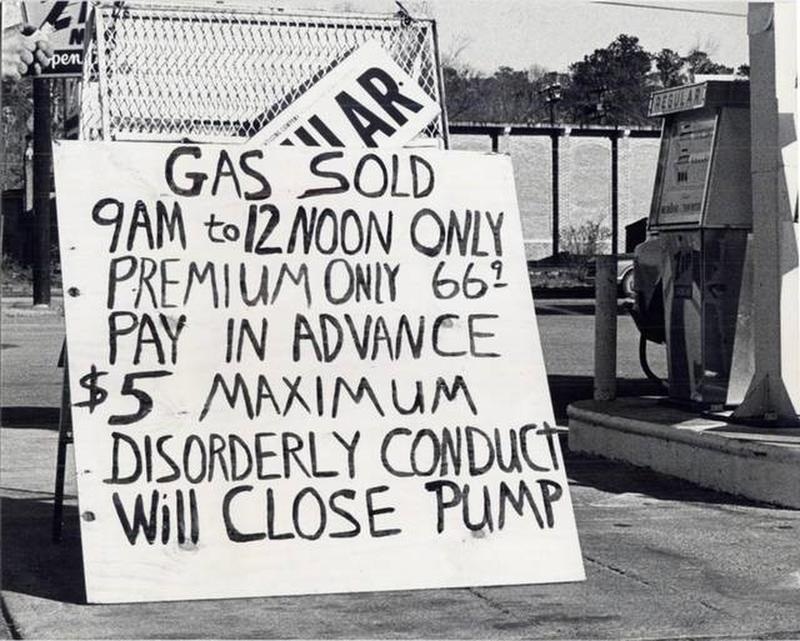
What happened in the ’70s?

Two things.

There was the Oil Crisis of 1973 and the Oil Crisis of 1979.

It’s that first one in 1973 I want to talk about.

I was 13.

Inflation at the grocery store was 14%.

According to Wikipedia:

On 6 October 1973, the Yom Kippur/October War began when Egypt attacked the Bar Lev Line in the Sinai Peninsula and Syria launched an offensive in the Golan Heights.

Israel took heavy losses in men and materiel during the fighting against Egypt and Syria, and on 18 October 1973, Meir requested $850 million worth of American arms and equipment to replace its materiel losses

On the afternoon of 19 October 1973, Faisal was in his office when he learned about the United States sending $2.2 billion worth of weapons to Israel.

The arms lift enraged King Faisal of Saudi Arabia. Faisal was angry that Israel had only asked for $850 million worth of American weapons, and instead received an unsolicited $2.2 billion worth of weapons, which he perceived as a sign of the pro-Israeli slant of American foreign policy.

On 20 October 1973, he retaliated by placing a total embargo on oil shipments to the United States, to be joined by most of the other oil-producing Arab states.

The embargo imposed on the United States led to shortages of oil in the United States, which set an inflationary spiral.

Nixon later boasted in his memoirs that the US Air Force flew more sorties to Israel in October 1973 than it had during the Berlin Airlift of 1948–49, flying in a gargantuan quantity of arms, though he also admitted that by the time the arms lift had begun, the Israelis had already “turned the tide of battle” in their favor, making the arms lift irrelevant to the outcome of the war.

In an interview with the British historian Robert Lacey in 1981, Kissinger later admitted about the arms lift to Israel: “I made a mistake. In retrospect it was not the best considered decision we made”.

Why do I have this feeling that, old as I am, I will live to hear on some documentary or read in some book that someone from this current administration will talk about this current war and say, In retrospect it was not the best considered decision we made.

Why do I have this feeling that this current war won’t be the only topic about which someone from this current administration will talk about and say, In retrospect it was not the best considered decision we made.

Why do I have this feeling that this current administration won’t be the only topic about which someone from this current generation of voters will talk about and say, In retrospect it was not the best considered decision we made.

3.1.2026 – frame Constitution

frame Constitution
no man hold power bring this
oppression on us

Adapted from a passage in a letter from Abraham Lincoln to William Herndon, dated Feb. 15, 1848, where Mr. Lincoln writes:

Kings had always been involving and impoverishing their people in wars, pretending generally, if not always, that the good of the people was the object.

This, our convention understood to be the most oppressive of all kingly oppressions and they resolved to so frame the Constitution that no one man should hold the power of bringing this oppression upon us.

Collected Works of Abraham Lincoln. Volume 1 [1824-Aug. 28, 1848]. In the digital collection Collected Works of Abraham Lincoln. https://name.umdl.umich.edu/lincoln1. University of Michigan Library Digital Collections. Accessed March 1, 2026.