9.30.2026 – money cannot buy

money cannot buy
happiness – having enough
is still essential

Adapted from the article, These are the happiest states in America. See where your state ranks by Anthony Thompson in USAToday where Mr. Thompson writes (quoting WalletHub’s annual Happiest States in America report):

“It’s also important to note that while the adage that money can’t buy happiness has a lot of truth to it, having enough money to live comfortably is still essential. But anything beyond that won’t necessarily enhance happiness as much as having fulfilling hobbies, relationships and opportunities for personal growth.”

That line, It’s also important to note that while the adage that money can’t buy happiness has a lot of truth to it, having enough money to live comfortably is still essential got me to wondering about something so I opened up Gemini, Google’s AI Bot and asked:

In America today, how much money is needed so that you have enough money to live comfortably?

I got a very well reasoned report, nicely documented (click here for the complete Gemini Response) that in short said:

Living “comfortably” in the United States depends heavily on household size, geographic location, and lifestyle expectations. Financial studies utilizing the standard 50/30/20 budget framework (allocating 50% of income to necessities like housing and groceries, 30% to discretionary spending, and 20% to savings and debt repayment) establish key baseline income thresholds for comfortable living across the nation.

Gemini then broke out some numbers.

Income Needed by Household Size – Household Type

Average National Threshold
Single Adult: $85,000 – $100,000
Family of Four (2 adults, 2 kids): $210,000 – $240,000

Low-Cost States (e.g., WV, MS)
Single Adult: ~$81,000 – $86,000
Family of Four (2 adults, 2 kids): ~$187,000 – $195,000

High-Cost States (e.g., HI, MA, CA)
Single Adult: $124,000 – $129,000
Family of Four (2 adults, 2 kids): $300,000 – $330,000

I then asked, “How many American’s meet this level of Income right now?

The summary response I got was:

Summary Takeaway
For Single Adults: Only about 1 in 7 single Americans earns enough to meet the formal 50/30/20 definition of a “comfortable” lifestyle on a single income.

For Families of Four: About 1 in 5 families earns the combined $210,000+ necessary to cover necessities, non-essentials, and consistent 20% savings without financial strain.

That got me to thinking so I asked one more question.

I asked “How many American’s met this level of income in 2015?”

I got this response …

Single Adults (2015): Roughly 1 out of 6 to 1 out of 7 single-person households earned above the ~$60,000–$71,000 mark in 2015 dollars (~14% to 16%).

Families of Four (2015): Roughly 1 out of 4 to 1 out of 5 married families with two kids earned above the ~$150,000 mark in 2015 dollars (~19% to 23%).

Not much different but what got me was this statement:

Adjusting for inflation using the U.S. Bureau of Labor Statistics Consumer Price Index (CPI), cumulative inflation between 2015 and today is approximately 41%.

This means that $1.00 in 2015 had roughly the same purchasing power as $1.41 today. Deflating the current thresholds back to 2015 values yields the equivalent income needed to live “comfortably” in 2015.

So many many many numbers.

I am reminded of that old saying:

A recession is when someone is out of money.

A depression is when I am out of money.

Thinking of that line of having enough money to enhance happiness as much as having fulfilling hobbies, relationships and opportunities for personal growth as thinking about enough money to put food on the table and that remined of that line out of the depression when FDR put a man named Harry Hopkins in charge of relief efforts and according to legend, Hopkins found an office on Inauguration day and began funding programs to start emergency food distribution.

Someone in Washington told Hopkins that giving government money away like that wouldn’t work in the long run.

“People don’t eat in the long run,” said Hopkins, “they eat every day.”

Photos from the Resettlement and Farm Security Administrations and the Office of War Information 1935-1943 by the great Walker Evans.

9.29.2026 – through a glass darkly

through a glass darkly
unreliability
of eyewitnesses

There is this thing called the Rashomon Effect.

According to the Wikipedia: The Rashomon effect is the phenomenon of the unreliability of eyewitnesses. The effect is named after Akira Kurosawa’s 1950 Japanese film Rashomon, which itself is based on Ryunosuke Akutagawa’s short story “In a Grove”, in which a murder is described in four contradictory ways by four witnesses. It has been used as a storytelling and writing method in cinema in which an event is given contradictory interpretations or descriptions by the individuals involved, thereby providing different perspectives and points of view of the same incident.

An event is given contradictory interpretations or descriptions by the individuals involved, thereby providing different perspectives and points of view of the same incident.

This is a photo a friend of mine posted on Facebook of the end of last weekend’s Michigan-Iowa football game.

That the photo is of the game is incidental, as is the outcome of game (an outcome I am used to – they wouldn’t be the Amazin’ Blues if they didn’t break your heart) but look at the people looking not at the game, but at their devices.

They will have there own personal proof of being there at something they didn’t watch because they were watching their phones.

They are eyewitnesses to history, yet their proof if being an eyewitness proves they took their eye off history.

I was at several moments worth remembering in Michigan Stadium.

Anthony Carter into the endzone with no time on the clock to beat Indiana.

Desmond Howard flying 20 yards into the end zone to win the Heisman Trophy.

All remembered WITH ADVANTAGES as Mr. Shakespeare would say and without the need for a device.

In one of the last books about Queen Elizabeth II, a book about her travels around the world, she was asked what changed the most in her exerience.

The Queen responded along the line that she used to see people, now all she saw were … little black boxes.

And I put it to you that even with the scene recorded and safely in your hand … any event is given contradictory interpretations or descriptions by the individuals involved, thereby providing different perspectives and points of view of the same incident.

Plus ça change, plus c’est la même chose inded.

9.28.2026 – down dark path changing

down dark path changing
shape of our nation perhaps
irrevocably

Adapted from the Opinion Piece by the Detroit Free Press Editorial Board that was headlined: Michigan can’t send an extremist to the U.S. Senate: Our endorsement.

The Editorial Board stated:

Everything you’ve heard about Michigan’s U.S. Senate race is true:

An extremist is asking voters to send him to Washington, masking an agenda far out of step with Michigan’s mainstream under the pretense of normalcy.

If elected, this man would urge America down a dark path, changing the shape of our nation, perhaps irrevocably.

But that man is not Abdul El-Sayed.

9.27.2026 – karmario fluff

karmario fluff
or sagapolutele
however gifted

“You want to know something?” Karras crossed his knees and put his fingertips together. “I don’t think I would have been much of a football player if I didn’t have a name like Karras. That hard K sound is the key. If my name was Harris, an H instead of a K, and they’d baptized me Alexander . . . with that name, ‘Alexander Harris,’ I’d never have made it as a football player—at least not as a defensive tackle. It’s not a football player’s name. Maybe I could have been a flanker with a name like that . . . but more likely I would have turned out to be the Secretary of the Interior.”

“Would you say this theory was true of other football players?” I asked.

“Absolutely,” he said. “John Unitas. Think of that name. It suggests authority and teamwork. Twenty percent of a football player’s genius is the name he was born with. Leo Nomellini— what does that name bring to mind but power and an afternoon of terror for the guy going in against him? Sam Huff? A guy that’s going to blow you over. Csonka? It sounds like a blow to the gut. Dick Butkus? Look at the collection of consonants—that’s why he’s a great linebacker. If his name was Robin Jenkins, he couldn’t have made it in the Ivy League.”

“Or take the other side of the coin,’ Karras said. “Milt Plum. That’s why Plum was never a great quarterback with the Lions, however gifted he was with natural ability. He was destroyed by his name. His parents probably wanted him to play the cello and take them for picnics up on the hill when they were eighty years old, so they called him Milt. You played bridge with him when you were at Detroit, right?”

That’s right,” I said, “He was very good.”

Karras nodded. “Of course, there’s not much his parents could have done, given that name Plum, but suppose they took out the Milt and called him Jack and spruced him up with a good middle name. Suppose they called him Jack Kong Plum.”

Jack Kong?

“Sure. Some of his aunts might have objected—on the grounds that there weren’t any Kongs they could recall in the Plum family tree, but someone called Jack Kong Plum would have been a helluva quarterback. He’d talk different, and he wouldn’t have played bridge, and he’d walk different with a name like that. He would have started out right in football.”

From Mad Ducks and Bears by George Plimpton (Random House: New York, 1973).

I read Mad Ducks and Bears when I was a little kid and long before I was a football fan.

I grew up in a ‘sports aware’ home where it seems like the Detroit Tigers were on the radio all summer long and Michigan football was on through the fall and on fall Sunday’s, the Detroit Lions were on TV (though my Dad loved to throw a wrench in the works and change the channel over to the AFL to watch Joe Namath and the Jets – but that was just to raise the level of discussion).

But I wasn’t much a fan and didn’t pay much attention to it.

But I read everything.

I read all the books about Gridiron Greats and the Fireside Book of Baseball, and I can’t tell you why.

Maybe it was the sports writing.

Because I was attracted to the writing of George Plimpton, who made a career of taking part in professional sports in order to write about it.

I think I saw his TV special first where he talked about his time with the then Baltimore Colts for the basis of the TV show.

But the show was full of references to his time with the Detroit Lions and a book called Paper Lion.

I read that when I was about 10 and then I read his 2nd book about his friendship with Detroit football players Alex Karras and John Gordy.

It was then that I read the above passage about names.

Names and professional sports.

And it has stuck with me to this day.

Nothing to do with how gifted someone was with natural ability, the player was destroyed by his name.

A little time back, Michigan had a quarterback named Wilton.

Nothing against the guy, but he was doomed.

Way back in 1979, I knew Michigan was in trouble with QB B.J. Dickey and when Rich Hewlett was announced as a surprise starter in the OSU game, I knew the game was over before it started.

Just say it outloud.

BJDICKEY

His parents probably wanted him to play the cello and take them for picnics up on the hill when they were eighty years old, so they called him BJ.

And Rich Hewlett?

Of course, there’s not much his parents could have done, given that name Hewlett.

But call him Jack?

Call him Jack Kong Hewlett and he’d walk different with a name like that. He would have started out right in football.

When the Lions made a splash signing a new QB that had just won the Heisman I was less than thrilled as I knew Joey Harrington just … didn’t have the name.

SO it was fun to read today the column Mandel’s Final Thoughts: USC just can’t do it and Florida might be winner of all Kiffin drama By Stewart Mandel in the New York Times … just for the names.

Texas Tech linebacker Austin Romaine.

UGa Offensive coordinator Buster Faulkner.

Vols freshman Faizon Brandon.

No. 24 Mississippi State QB Kamario Taylor, RB Fluff Bothwell and WR Sanfrisco Magee.

Nebraska’s Anthony Colandrea.

Oklahoma State’s QB Drew Mestemaker.

Cal star QB Jaron-Keawe Sagapolutele.

Utah QB Devon Dampier.

Iowa State QB Rocco Becht.

Indiana RB Lee Beebe Jr.

Boise State QB Maddux Madsen.

Sanfrisco Magee?

Sanfrisco … Magee?

Well okay.

I want to watch a Cal game just to hear the announce say Touchdown Jaron-Keawe Sagapolutele!

That Rocco Becht.

He has started out right in football.

Poor Fluff Bothwell.

But I tell you this.

For a player to made to this level of college football with a name like Fluff … he has to be good.

9.26.2026 – clock stopped 5:30

clock stopped 5:30
now always time to quit work,
have drink, cook dinner

The clock stopped at 5:30 for three months.

Now it’s always time to quit work,

have a drink, cook dinner.

From Braided Creek: A Conversation in Poetry by Jim Harrison as published in Jim Harrison: Complete Poems by Jim Harrison (Copper Creek Press: 2021).

Braided Creek: A Conversation in Poetry is pages of seemingly unconnected, random thoughts expressed in three lines.

Every three lines is a thought unto itself and no connection to the previous or following lines.

Not sure what Mr. Harrison meant by a conversation in poetry, but there it is.

Reading through the poem, this triplet caught my imagination.

For no greater reason, I just like the concept.

I was reminded of the story of how the Marx Brothers would be on a movie set in Los Angeles and at 2 p.m., one of them would yell, “It’s quitting time in New York!”

I am reminded of the old drinking saying, “it’s five o’clock somewhere”.

Which is not just a saying but, according to Wikipedia, is a song performed by Alan Jackson and Jimmy Buffett, and written by Jim “Moose” Brown and Don Rollins. It was released in June 2003 as the lead single from Jackson’s 2003 compilation album Greatest Hits Volume II. It spent eight non-consecutive weeks at #1 on Billboard Hot Country Songs in the summer of 2003, and ranked #4 on the year-end chart. In addition, the song peaked at #17 on the Billboard Hot 100 in September, and ranked #65 on the year-end Hot 100, making it the biggest pop hit for Jackson and the first top forty hit for Buffett since the 1970s.

On November 5, 2003, it won the Country Music Association (CMA) Award for Vocal Event of the Year. It was Buffett’s first award in his 30-year career. It also won two Academy of Country Music awards for Single Record of the Year and Vocal Event of the Year. The song became the #3 song of the decade on Hot Country Song.

WOW.

And I have never heard of this song!

https://youtu.be/kfqtO88ZlBQ?is=esSS71u_55j4mVv_

Also according to Wikipedia, The title refers to a popular expression used to justify drinking at any time of day, given that somewhere in the world, it is 5:00 p.m., the end of the workday for a traditional “nine-to-five” worker. The narrator states that he has not had a day off in over a year and that he wants to leave work and relieve his stress by drinking alcohol. The lyrics include the phrase, “It’s only half-past twelve but I don’t care. It’s five o’clock somewhere”: even though it is not 5:00 in the narrator’s time zone, it is in another part of the world. For example, a time of 12:30 p.m. in Newnan, Georgia, Jackson’s hometown, usually translates to a time of 5:30 p.m. in London, England. Even though it would not exactly be 5:00 p.m. in London, one can still assume that it is five o’clock in London. If Jackson is narrating in the Pacific Time Zone, a time of 12:30 p.m. there coincides with a time of 5:00 p.m. in Newfoundland.

That may be the most bizarre passage of wikipedia I have ever read.

Do I reply with a loud, “Reaaaaaaaaaaaaaaaaaaallllllllllllly?”

Or … “NO KIDDDDDDDDDDDDDDDDDDDDDDDDDDDING.”

It’s just goofy that things that come across my screen to my fingertips somedays.

First of all, it’s based on the assumption of Standard Time as if Daily Savings Time (EDT) or British Summer Time (BST) then the Eastern US is 5 hours different from UTC.

Also, I love to tell folks that I listen to an online radio station from London because it is 5 hours ahead so I know, somewhere, someone has made it through the next 5 hours.

Then the selection of Newfoundland and 12:30 p.m. (Pacific) is 5:00 p.m. in Newfoundland which just cracked me up.

See, when I was in college in Ann Arbor, Michigan I listened to the Canadian Broadcasting Company or CBC for their music.

AS an aside, thinking of Ann Arbor and Canadian Radio, back in the day, Univ of Michigan Football used to be broadcast by CKLW in Windsor.

Folks who didn’t know would comment how odd it was that that feller who invented the modern Collegiate Athletic Corporation, Michigan Athletic Director Don Canham, would choose a canadian radio station.

Canham would then explain that CKLW was outside of the US and did not have to comply with FCC regulations on signal strength and it had 50,000-watt a clear-channel signal (“blowtorch signal”) that reached numerous U.S. states.

But I digress.

In Ann Arbor, I would listen to the CBC and they would announce an upcoming show saying that it would be on at 10 a.m. in Ontario, 7 a.m. in the Pacific, 11 a.m. in the Atlantic .. and then they would always add …. one half hour earlier in Newfoundland.

Pronouncing it New FOUND land.

I heard that so often than for the longest time, when making plans to meet with friends and a time would be settled on, I would add …. one half hour earlier in Newfoundland, which made my friends smile, as they moved a little further down the bench.

ANYWAY, I was tickled to see that someone, whoever wrote that wikipedia article on 5 o’clock somewhere picked on poor old NT or Newfoundland Time.

Then whoever wrote the wikipedia article picked out little old Newnan, Georgia.

I have been there!

I have friend in who live there.

When I lived in Lawrenceville, Ga we used to joke that Newnan and Lawrenceville was about as far away two places could be (70 miles) where you could live and STILL say, you were from Atlanta.

I did not know Alan Jackson was from Newnan but I bet my friends did.

What I knew about Newnan was that was where the a spur of the railroad broke off and went to Warm Springs, GA where Franklin Roosevelt built a house.

There was no turn around in Warm Springs so when the FDR took the train, the train had to turn around in Newnan, and the back all the way down the 80 miles to Warm Springs.

An interesting footnote to history that got messed up, as in her book, No Ordinary Time by Doris Kearns Goodwin, a book about Mr. and Mrs. Roosevelt, either Ms. Goodwin or her editor watched too much Seinfeld as in the book the town is identified as Newman, GA.

TO get back to the point.

The clock stopped at 5:30 for three months.

Now it’s always time to quit work,

have a drink, cook dinner.

I like the concept and it appeals to me greatly.

And that is all I wanted to say.

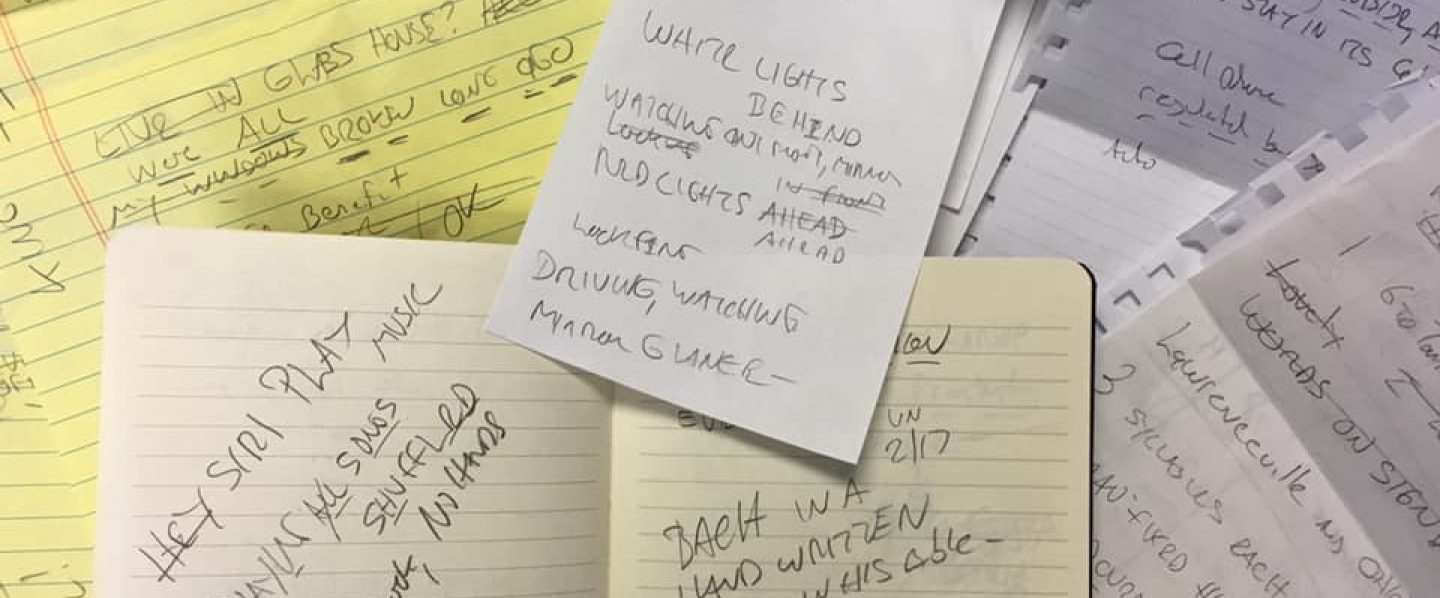
Lastly, of late, I have had lots of queries on ‘how do I write these essays’ with, as a professor of mine in Ann Arbor might say, a touch of a suspect animus that I got the feeling folks wonder how much of these are written with help of AI.

Happy to say, none of it.

I cannot explain it, but these just spill out of my brain like cider out of spigot on a barrel.

This morning I sat down with that bit of Mr. Harrison in mind and now I look down and its 4 pages and 1200 words later.

One thought led to another and it came out my finger tips.

And believe me, this was planned as a quick in and out – type out the lines of the poem and say i liked the thought and be done … but nooooo – the way my brain works kicked in and the horse was out of the barn!

Sometimes in the middle of these things I think of an Aunt of James Thurber who, according to a Thurber story, set out to prove she could fix some mechanical device and after hours of trying yells, “Won’t someone take this G*DD*MN thing away from me!”

As Harold Ross of the New Yorker might say, “There you are.”

It’s quitting time in New York