6.30.2022 – institutional

institutional
core – White House staff Cabinet
understood – wanted

Reading Doris Kearns Godwin’s book on LBJ, Lyndon Johnson and the American Dream (Copyright © 1976, 1991), I was stopped by this paragraph that she wrote about the Presidency of John F. Kennedy.

Ms. Godwin wrote:

The most important decision a President makes concerns what he wants to do with the office, what range of issues he wants to recognize. The challenge is to create boundaries for the office, to select among possible goals. John Kennedy had set that agenda for his successor: tax reduction, the civil rights bill, federal aid to education, executive action to improve life in the cities, medical care for the aged, and plans for a poverty program. In the two years and ten months before November, 1963, Kennedy had denned for himself and for his Presidency a series of purposes, or what Richard Neustadt calls “irreversible commitments to denned courses of action.” The commitments implied the selection of a particular clientele and the shaping of an institutional core – a White House staff and a Cabinet – that understood the kind of Presidency John Kennedy wanted.

I could not help but updated the passage for today.

Trump had denned for himself and for his Presidency a series of purposes, or what Richard Neustadt calls “irreversible commitments to denned courses of action.” The commitments implied the selection of a particular clientele and the shaping of an institutional core – a White House staff and a Cabinet – that understood the kind of Presidency Donald Trump wanted.

Kind of frightening in a way.

Explains much.

Consider the list of commitments compiled for JFK.

  • tax reduction
  • the civil rights bill
  • federal aid to education
  • executive action to improve life in the cities
  • medical care for the aged
  • plans for a poverty program

hmmmmmmmmmmmm

To quote Francis Urquhart, “You might very well think that – I couldn’t possibly comment.”
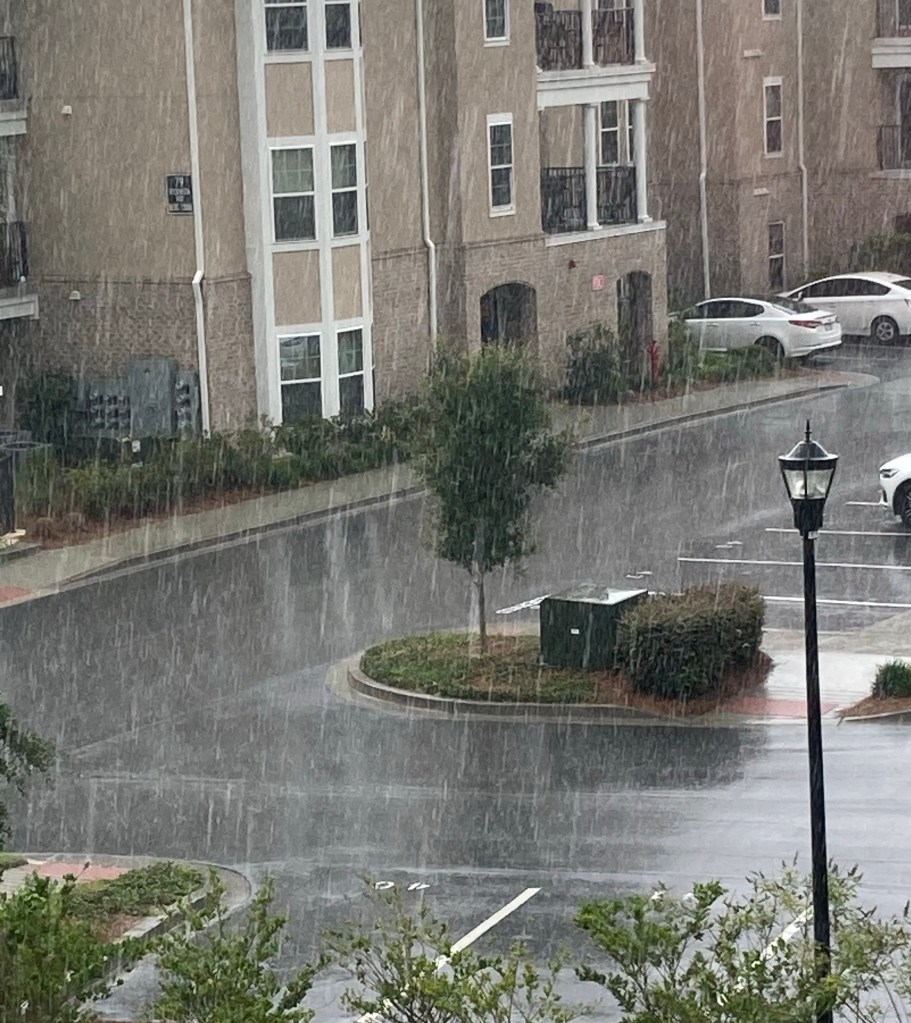
6.29.2022 – like a low-hung cloud

like a low-hung cloud
it rains so fast all at once
falls and cannot last

Adapted on a rainy morning in the low country from John Dryden’s Palamon and Arcite or The Knight’s Tale – Book Three where the poet writes:

But, like a low-hung cloud, it rains so fast,
That all at once it falls, and cannot last.
The face of things is changed, and Athens now,
That laughed so late, becomes the scene of woe:

6.28.2022 – when a man is afraid

when a man is afraid
base fear is always stronger
than respect always

Before there was House of Cards with Francis Underwood messing around with the United States, there was House of Cards with Francis Urquhart messing around with Great Britain.

According to wikipedia, Francis Ewan Urquhart is a fictional character created by British politician and author Michael Dobbs. Urquhart is the main character in Dobbs’s House of Cards trilogy of novels and television series: House of Cards, To Play the King and The Final Cut.

House of Cards follows Urquhart, a Conservative and the government chief whip with roots in the Scottish aristocracy, as he manoeuvres himself through blackmail, manipulation and murder to the post of Prime Minister. To Play the King sees Prime Minister Urquhart clash with the newly crowned King of the United Kingdom over disagreements regarding social justice. By the time of The Final Cut, Urquhart has been in power for 11 years, and refuses to relinquish his position until he has beaten Margaret Thatcher’s record as longest serving post-war Prime Minister

It was Francis Urquhart who said:

It’s not respect but fear that motivates a man; that’s how empires are built and revolutions begin. It is the secret of great men. When a man is afraid you will crush him, utterly destroy him, his respect will always follow. Base fear is intoxicating, overwhelming, liberating. Always stronger than respect. Always.

6.27.2022 – impossible found

impossible found
civilization on fear
hatred cruelty

Then the voice asks, “why not?”

Based on this passage from George Orwell’s book, 1984.

Winston Adams is being questioned by O’Brien.

‘You could not create such a world as you have just described. It is a
dream. It is impossible.’

‘Why?’

‘It is impossible to found a civilization on fear and hatred and cruelty.
It would never endure.’

‘Why not?’

‘It would have no vitality. It would disintegrate. It would commit
suicide.’

‘Nonsense.

You are under the impression that hatred is more exhausting
than love.

Why should it be?

And if it were, what difference would that make?

6.26.2022 – it over or just

it over or just
beginning fasten seatbelts
be a bumpy night

This is going to be a long hot summer.

So many threads in the tapestry that will be the history of the year 2022.

So many story lines to follow.

Hands covering my face but with my fingers spread over my eyes so I can see.

Right now, I can say it’s not over.

I can say it’s just beginning.

I can say, fasten your seatbelts.

I can say, it’s going to be a bumpy night.

Wake me when we get to over.

The text of the today’s haiku is adapted from the screenplay from the 1950 movie “All About Eve” by Joseph L. Mankiewicz.

Thinking about movies and the current passing show and the time of year, the movie, Long Hot Summer comes to mind.

Based on William Faulkner’s writings, the movie has Orson Welles, as Will Varner deliver this line about an abandoned house:

The man that built this place, his name’s forgotten.

This was his dream and his pride.

Now it’s dust.

Must be a moral there somewhere.