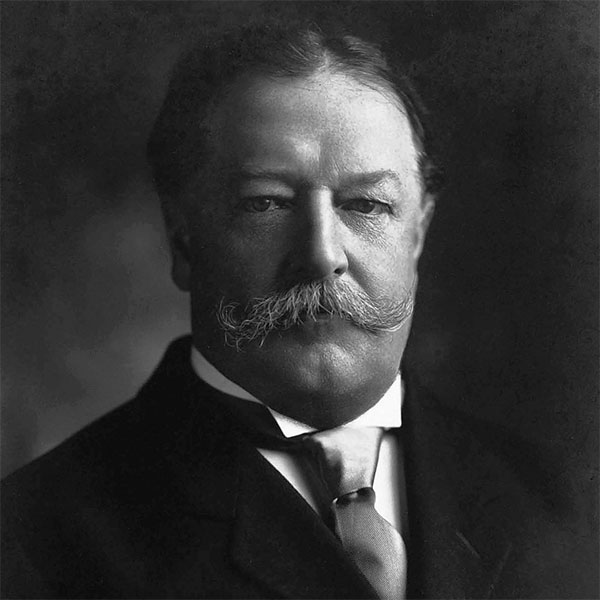
3.18.2025 – are vast and complex

are vast and complex
reaches between cat feet of
Fog and Remembrance Rock

Adapted from a letter by James Thurber to a Librarian in Asheville, North Carolina on January 30th, 1952, where Thurber writes:

Nobody ever gives me time to get things done, and such a project as yours can’t be batted off. I wouldn’t want to start writing in January something about Carl Sandburg to be finished in January. He may seem as easy to describe as a face carved on a mountain, but there are vast and complex reaches between the cat feet of the “Fog” and ‘‘Remembrance Rock.” I like to think of him informally, without putting on my stiff Sunday critical shirt and shoes. He was up here not too long ago, playing his guitar and singing, sometimes with me, late into the night, although it seemed early. I was proud to have taught him a new verse about Casey Jones, who went through Toledo on an open switch. He is an American institution, not easy to describe within the limits of January. Let the glib boys do that, and give him my love and fond wishes that he will go on forever.

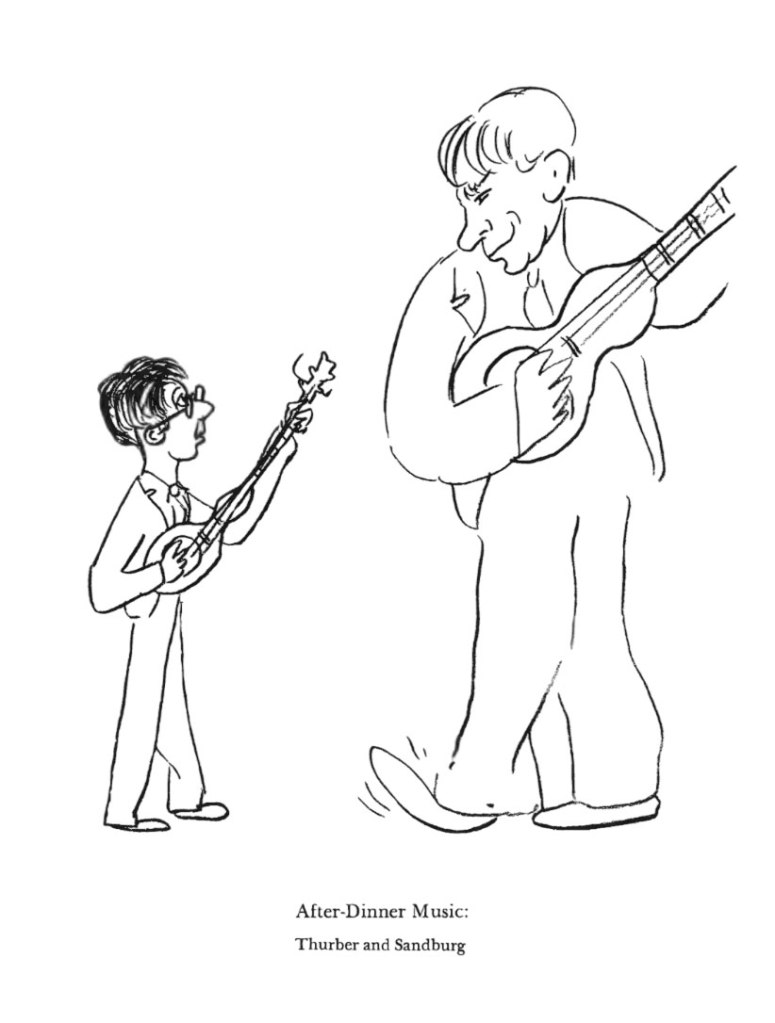
Mr. Thurber also remembered the evening singing with Sandburg with a drawing.

Just fun thinking of the two of them in the same room.
Fog you ask??

Fog is …

The fog comes
on little cat feet.

It sits looking
over harbor and city
on silent haunches
and then moves on.

Remembrance Rock is Carl Sandburg’s only novel. Sandburg described it as an epic, weaving the mystery of the American Dream with the costly toil and bloody struggles that gone to keep alive and carry further that Dream.

And there are vast and complex reaches between the two.
3.17.2025 – rich are different

rich are different
they possess, enjoy early
does something to them

Let me tell you about the very rich.

They are different from you and me.

They possess and enjoy early, and it does something to them, makes them soft where we are hard, and cynical where we are trustful, in a way that, unless you were born rich, it is very difficult to understand.

They think, deep in their hearts, that they are better than we are because we had to discover the compensations and refuges of life for ourselves.

Even when they enter deep into our world or sink below us, they still think that they are better than we are.

Excepted from Rich Boy by F. Scott Fitzgerald as published in Redbook Magazine in two parts in January and February, 1926.

The end comes for empire when the top 1% of the money realizes they no longer need the structure of the empire to support their wealth.

How close are we getting to that point?

I feel like I am living a James Bond novel and the evil bad guy is .. us.

3.16.2025 – few years back began

few years back began
to lose the world of people
I couldn’t hold on

INVISIBLE as published in Jim Harrison: Complete Poems by Jim Harrison (Copper Canyon Press, 2021).

Within the wilder shores of sky
billions of insects are migrating
for reasons of sex and food,
or so I’m told by science,
in itself as invisible as the specters
of love and death. What can I see
from here but paper and the mind’s
random images? A living termite
was found on sticky paper at 19,000 feet.
Perhaps she thought she had lost
the world as I think I must, barring
flora, fauna, family, dogs, the earth,
the mind ground of being as it is.
A few years back I began to lose
the world of people. I couldn’t hold on.
Rüppell’s vulture was seen at 36,000 feet
for reasons the gods keep from us.

3.15.2025 – there are no obits

there are no obits
on front page but the one am
waiting for, will be

Search the Google for the line, “There are no obits on the front page,” returns lots of sources but according to legend, this is how Franklin D. Roosevelt himself told the joke:

Every morning a well-dressed man gets off a train and, while walking down the platform, buys the morning’s newspaper from a boy who’s always standing at the same spot on the platform. And every morning the man does the exact same thing: he glances at the front page, scowls, and then hurls the paper into a nearby garbage can. After several months of this, the boy grows curious:

“Excuse me, Sir, I don’t mean to bother you, but every morning you buy a paper, but then you just throw it away after a glance at the front page. Why do you buy a paper if you’re not going to read it?”

“Young man,” the fellow says, “I buy the paper because I want to look at the obituaries.”

“But, Sir, the obituaries aren’t on the front page, they’re in section D.”

“Young man, when the SOB I’m looking for dies, it’ll be on the front page.”

It is taking me less and less time to read the morning papers.

3.14.2025 – say nothing that put

say nothing that put
momentary slight even
on that great office

Taft had been tempted to go to New York and personally welcome Roosevelt home.

According to one report in the Indianapolis Star, his advisers had suggested that “this demonstration of amity would be appreciated by Col. Roosevelt and would do more than anything else to drive away the suspicion that seems to have gained ground that the relations between the chief executive and his predecessor are strained.”

Upon reflection, however, Taft concluded that it would diminish the status of the presidential office “if he were to ‘race down to the gangplank,’ to be the first to shake hands with the former President.”

He explained to his military aide that he was “charged with the dignity of the Executive” and was determined to “say nothing that will put a momentary slight even on that great office.”

No matter how much he would rather be Will, welcoming his friend Theodore, he was now President Taft.

“I think, moreover, that [Roosevelt] will appreciate this feeling in me,” he concluded, “and would be the first one to resent the slightest subordination of the office of President to any man.”

“Charged with the dignity of the Executive” and was determined to “say nothing that will put a momentary slight even on that great office.

Charged with the dignity of the Executive.

Say nothing that will put a momentary slight even on that great office.

Oh well.

Excerpt from The bully pulpit : Theodore Roosevelt, William Howard Taft, and the Golden Age of journalism by Doris Kearns Goodwin (Simon & Schuster, New York, 2013).