each generation so far, has been blessed, with chance to conduct itself …
I want not only to join with you in an expression of thankfulness for the nation’s mighty past, but to join with you in expressing the resolution that we of to-day will strive in our deeds to rise level to those deeds which in the past made up the nation’s greatness.
Each generation so far, in this country, has been blessed, first, with the chance to resolve, and to put into effect the resolution so as to conduct itself that the next generation in turn would have the opportunity to feel a like gratitude.
It is a good thing, on the Fourth of July and on all other occasions of national thanksgiving, for us to come together, and we have the right to express our pride in what our forefathers did, and our joy in the abundant greatness of this people.
We have the right to express those feelings, but we must not treat greatness achieved in the past as an excuse for our failing to do decent work in the present, instead of a spur to make us strive in our turn to do the work that lies right at hand.
If we so treat it we show ourselves unworthy to come here and celebrate the historic past of the nation.
In 1861, when Lincoln called to arms you men of the great war, how did you show your loyalty to the men of 1776, to the spirit of ’76? You showed it by the way in which your hearts leaped to the performance of the task that was ready in those days.
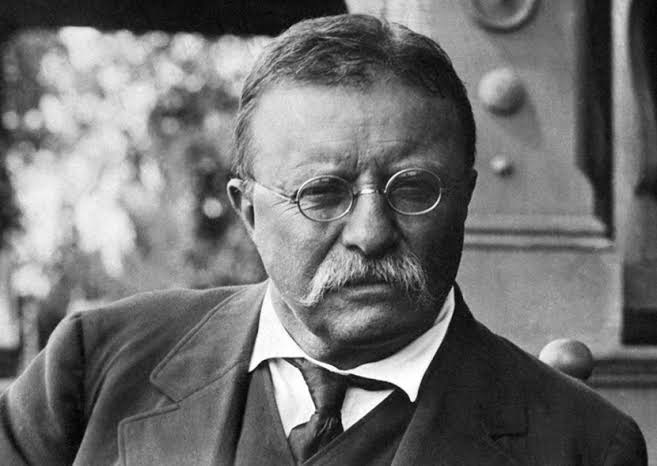
President Theodore Roosevelt on July 4, 1903.
Each generation so far, in this country, has been blessed, first, with the chance to resolve, and to put into effect the resolution so as to conduct itself that the next generation in turn would have the opportunity to feel a like gratitude.
Each generation so far …
So far …
Well, I guess it had to happen sooner or later.
We must not treat greatness achieved in the past as an excuse for our failing to do decent work in the present, instead of a spur to make us strive in our turn to do the work that lies right at hand.
try obedience to Constitution, laws don’t you think that’d work?
According to the Library of Congress – Mr. Lincoln’s first portrait with a full beard …
On February 23, 1861, Abraham Lincoln arrived in Washington, DC for his March 4th Inaugural as President of the United States.
Meeting in Washington at the same was the Peace Conference of 1861, which according to Wikipedia, was a meeting of 131 leading American politicians in February 1861, at the Willard Hotel in Washington, D.C., on the eve of the American Civil War. The conference’s purpose was to avoid, if possible, the secession of the eight slave states from the upper and border South that had not done so as of that date. The seven states that had already seceded did not attend.
An invitation was passed along by the Conference to meet with Mr. Lincoln and he replied that he would receive members at 9:00 p.m.
Mr. Lucius E. Chittenden, a Vermont delegate to the Conference, later wrote of that meeting:
There was only one occurrence which threatened to disturb the harmony and good humor of the reception. In reply to a complimentary remark by Mr. Lincoln, Mr. Rives had said that, although he had retired from public life, he could not decline the request of the Governor of Virginia that he should unite in this effort to save the Union. ” But,” he continued, ” the clouds that hang over it are very dark. I have no longer the courage of my younger days. I can do little — you can do much. Everything now depends upon you.”
“I cannot agree to that,” replied Mr. Lincoln. “My course is as plain as a turnpike road. It is marked out by the Constitution. I am in no doubt which way to go. Suppose now we all stop discussing and try the experiment of obedience to the Constitution and the laws. Don’t you think it would work?”
Here today on the 4th of July, 2025, 250 years after Lexington and Concord, Bunker Hill and George Washington being appointed to the command of the Continental Army, we seem to have lost our way.
I found that difficult to understand as I feel that our course is as plain as a turnpike road.
It is marked out by the Constitution.
I am in no doubt which way to go.
Suppose now we all stop discussing and try the experiment of obedience to the Constitution and the laws.
As Mr. Lincoln asked, Don’t you think it would work?
Sadly, as Bruce Catton wrote, Lincoln’s path might indeed be clear—to him, at least, if not to all of his fellow countrymen—but a general appeal for obedience to the Constitution meant nothing at all, because the Constitution meant such different things to different men.
Maybe at one time, this might have been seen as part of the beauty if not majesty of the Constitution of the United States.
Not something used, as it was in 1861, to wreck it.
cultivate spirit to do justice, love mercy act with charity
250 years ago today, General George Washington took formal command of the Continental Army.
According to published reports, he made a short speech and read verse eight from the 101st Psalm, “Morning by morning I will destroy all the wicked in the land, cutting off all the evildoers from the city of the Lord.”
8 years later when he gave up his command, General Washington sent out a Circular Letter to the States, which he wrote on June 8, 1783 as the commander in chief, at his headquarters in Newburgh, New York.
This circular was directed to the governors and states of the new nation.
I now make it my earnest prayer, that God would have you, and the State over which you preside, in his holy protection, that he would incline the hearts of the Citizens to cultivate a spirit of subordination and obedience to Government, to entertain a brotherly affection and love for one another, for their fellow Citizens of the United States at large, and particularly for their brethren who have served in the Field, and finally, that he would most graciously be pleased to dispose us all, to do Justice, to love mercy, and to demean ourselves with that Charity, humility and pacific temper of mind, which were the Characteristicks of the Divine Author of our blessed Religion, and without an humble imitation of whose example in these things, we can never hope to be a happy Nation.
we’ll forget, but now absence feels like a loss – game, set match to the gizmos
It’s the perfect Wimbledon. The sun is out, the Brits are firing and as for the scoring, that too will be somewhat perfect, this being the first Wimbledon since the tournament told the line judges, long the arbiters of accuracy, that after 148 years, their services will no longer be required.
Arguments, unpredictability and, as the cameras zoom in to the line judge whose eyesight judgment prompts a participant explosion, buttock-clenching awkwardness in close-up: goodbye to all that. Hello, AI and sharp-eyed robots, analysing in real time 18 lots of footage.
It’s perfect now, but is it progress? After the first day, players complained that while the calls were perfect in their accuracy, they were imperfect in that the gizmo’s volume was set too low and they could not hear the verdicts.
To some extent, Wimbledon is falling into line – both the Australian and US Opens, and very many of the lesser professional tournaments, have waved goodbye to the humans and embraced electronic line calling. The players wanted it. They strive truly, madly and deeply for perfection; their short, explosive careers cannot hinge on the human fallibility of others.
But look at Centre Court without the sentries posted around the border, and without the quiet ceremony that has always marked the departure of one set of line judges and the arrival of another. One day their absence will feel natural and maybe we’ll forget they were ever there, barking their assessments. But for now, their absence feels like a loss. Game, set and match to the gizmos.
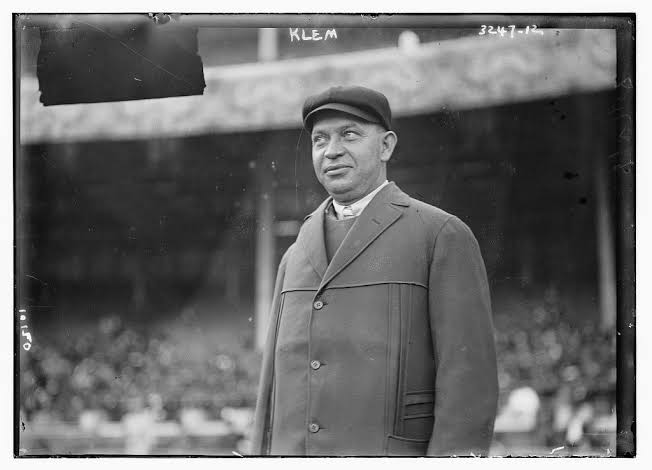
Major League umpire, Bill Klem famously said about making the call in baseball games that, I never missed one … in my heart.
Past University of Michigan Football Coach, Bo Schembechler once said something along the lines that his game plan always took into account 7 points that could go either way because of the calls by the referees … it’s part of the game, he said.
I like to follow Cricket when I can.
I follow Team England.
In Cricket the difference between an being called OUT can depend on whether of not the ball hit the player or his uniform or if the ball hit the bat.
To make sure the correct call is made, Cricket uses HOT SPOT and THE WHISTLER.
The HOTSPOT is an infrared camera on the play because the HEAT SIGNITURE of a ball hitting wood (the wicket) is different than that of the ball hitting the cloth of the uniform of the batter.
If that doesn’t work, there is the WHISTLER that is a microphone under the plate because the SOUND SIGNITURE of the ball hitting wood is different from the sound of the ball hitting cloth.
Oh give me a break.
But sports are a billon dollar industry.
Betting on sports is a billion dollar industry.
To quote General Jack Ripper in the movie, Dr. Stangelove, Clemenceau once said that war is too important to be left to the generals.
Well, today, in or out, in bounds or out of bounds, before the horn or after the buzzer or what have you is too important to be left to humans.
I guess.
I understand that athletes strive truly, madly and deeply for perfection; their short, explosive careers cannot hinge on the human fallibility of others.
I don’t know.
It used to be part of the game.
It used to be … a game.
One day the absence of humans will feel natural and maybe we’ll forget they were ever there, barking their assessments.
I knew coming home wouldn’t be easy. As the plane from Ho Chi Minh to London descended, I looked out over England’s patchwork fields and was unsure what I was returning to or for. Those first few months were spent flitting between my family home and more pet-sitting stays. Friends and family wanted to know “my plan” and I felt more diminished each time I told them I didn’t know. The reverse culture shock was acute. I discovered that people don’t ask about your travels because the experiences are too unrelatable. Plus, a relationship I had formed overseas, and was trying to maintain, was nosediving and it was hard to discuss it with friends, since they didn’t know the person or the context. I was disoriented, but also felt as if I had never been away.
Gradually, the idea of having a space that was mine, neighbours to get to know, regular exercise classes to attend and a coffee shop where they knew my name felt exciting. I had once laughed in the face of routine; now, I knew it was crucial if I wanted to build a life worth living.
Perversely, many digital nomads end up doing a global tour of Starbucks. “It was the one place with reliable wifi,” says Matt, 25, a fellow British writer and on-off nomad since 2019. “I hated that I was in there, but finding somewhere to work was always difficult.”
Lots and lots of thoughts here.
But the phrase that comes to hit home for me was I discovered that people don’t ask about your travels because the experiences are too unrelatable.
I thought back to a party where I found myself, to use Tom Wolfe’s term, in a ‘conversational bouquet’ where the discussion between the two other guys focused on, one, which side of Italy was better to drive down … the Adriatic Side or the Mediterranean side? – and, two, – was it better to rent a car when in Europe or BUY a car when in Europe and use a broker to sell it once your trip (which I guess was at least a month long … I hope) over.
I had little to contribute aside from historical commentary on the Appian Way and the Campaigns of World War 2 that were fought on those roadways.
Needless to say I discovered that people didn’t ask about my travels because the experiences were too unrelatable.
I tried to interject my thoughts on driving down the east coast versus the west coast of the State of Michigan … Alpena through the Thumb to Port Huron or The Long Blue Edge of Summer as we called the Lake Michigan coast, but I found no traction in the conversation.
I had a real guilty pleasure that to read that these world travelers, these digital nomads, found themselves doing a global tour of Starbucks because it was the one place with reliable wifi,
Well, I can do that.
I mean, I can sit in any number of Starbucks and use the wifi and have the same view of the world as these digital nomads.
Oh well.
I don’t travel much.
If offered the chance to travel, I would most likely ask if I could take the time to go visit and play with the grand kidz.
I do do this though.
My office is about 5 blocks from the Atlantic Ocean.
At lunch, I’ll change into shorts and T Shirt and walk down to the beach for a bit.
Often I am stuck in a group waiting to cross the street to the beach walkway and someone will say to me, “What a great week to be here!”
I look them in the eye and agree and smile then say, “I’m here on my lunch.”
But back to the article.
Routine.
I have long said that one of the things I loved about college was the 4 month length of the term and the syllabus that was handed out at the start of the term.
The syllabus would list the 100 books I had to read, the term paper I had to write and the dates of the mid term and final.
I had no idea how I would get all that done.
But I knew, that by the end of the term, it would be done.
It was … great.
Out of college no one hands out a syllabus.
I get quarterly goals but in all the years I have been working, I can’t remember anything that was considered a quarterly goal at the start of the quarter, that was around at the end of the quarter.
Something else would have replaced it of course, but that points to the syllabus and lack of routine.
Most Professors had taught their courses for years and the syllabus was un changeable.
You could depend on it.
You could get into … a routine, a rhythm.
Working for the last 40 years, boy howdy, do I miss it.
The current administration pushes something they call, strategic uncertainty.