sleep, o gentle sleep, nature’s soft nurse, steep senses in forgetfulness
Adapted from:
O sleep, O gentle sleep, Nature’s soft nurse, how have I frightened thee, That thou no more will weigh my eyelids down, And steep my senses in forgetfulness?
From Henry IV, Part II, Act III, Scene 1 by William Shakespeare.
Where Big Bill has King wonder where sleep has gone, I manage to haiku it into a short prayer of thankfulness as well as write a sentence where haiku is used as a verb.
Editing Bill and turning haiku into a gerund without making it ‘haikuing’ is a pretty good start for a muggy muggy morning the low country of South Carolina.
Let me say that I have felt hot and cold, dry and wet and all other forms of weather but walking out into a steamy, thick, warm muggy morning a mile from the Atlantic coast is to be hit in the face with a soggy smelly towel, but I digress.
But morning it is and waking up is the issue.
Owen Johnson wrote about waking up in his book, The Prodigious Hickey: A Lawrenceville Story (The Century, 1908) saying:
” … the air with its clamour from the belfry of the old gymnasium, but no one rises. There is half an hour until the gong sounds for breakfast, a long delicious half hour—the best half hour of the day or night to prolong under the covers.”
There is half an hour until the gong sounds for breakfast …
a long delicious half hour …
the best half hour of the day or night to prolong under the covers …
O sleep.
O gentle sleep.
Nature’s soft nurse.
O, how I do hate to get up in the morning.
Weigh my eyelids down.
Steep my senses in forgetfulness.
PS: Anyone who dares quote Hamlet back to me with his whiney To sleep—perchance to dream. Ay, there’s the rub … will be shot.
Moya Sarner is an NHS psychotherapist who writes about the terrible things that can happen in people’s lives and how to deal with them.
Her headlines include, I do not need a £100 hairbrush. So why have I spent so long fantasising about one?, Terrible things happen in life – but it is possible to recover from them, Therapy isn’t about life hacks. The best solutions are simpler – and more complex and Life let you down again? Congratulations – you’re growing.
Kind of depressing to just read the headlines.
So why would I waste my time on the one aging?
Somehow, someway I will turn 65 on Thursday and I am kind of happily mystified to find myself here.
Nothing much will change on the next day, Friday morning.
I will continue to work as long as I can because I need to work as long as I can but I got a good job that I enjoying working at as long as I can.
But I will be 65.
So the headline, No, age isn’t just a number – and the sooner we realise that, the happier we will be caught my interest.
Ms. Sarner writes:
Sitting in a cafe recently, I saw a poster advertising a barista training course for young people interested in a career in hot beverages. Things in the NHS being what they are, I enjoyed losing myself in a fantasy future spent standing behind a sleek, shiny machine, having witty exchanges with customers and colleagues as I skilfully poured smooth, foaming milk into silky dark espresso, tipping and turning each cup to create my own unique artworks on the coffee surface.
That was until I read the small print, which included the rather brutal definition of “young people” as aged 18 to 24. I realised, with an internal gasp, that my limited ability to pour liquid without spilling it was not the only obstacle to this career choice. There was a core personal reality here from which I had become totally untethered: the passing of time.
This untethering is bad news for anyone interested in building a better life. A lot of nonsense is spoken and sung and written on plates and pencil cases about how we should all stay young and never grow old. But I’ve discovered as a therapist and as a patient in psychoanalysis that the capacity to anchor yourself in the reality of time passing is fundamental to good mental health, and to the potential for life to get better.
That old one way passage of time.
Gosh.
It made me wonder if Ms. Sarner took the time to watch the people working in the cafe?
I have no doubt I couldn’t do the job.
I also had to stop at that last line.
She points to … the potential for life to get better.
Pretty thin gruel I guess, but if that’s what you got.
Though it makes me feel good about missing Ms. Sarner’s other stories.
Maybe I have read too much history.
May I have thought about that mental game where I say to myself, 15 years before I was born, World War 2 ended.
End of World War2?
Why that was a lifetime before I was born!
For someone born in 2025, 15 years ago it would have been 2010.
2010?
Wasn’t that just yesterday?
I can’t say I embraced the passage of time, but I understood it was passing and I have happily watched the parade as it went by.
I don’t need the protentional for life to get better as life is good.
Got no complaints.
For afterwards I believe in God and the saving grace of Jesus and for the here and now I pray for guidance and I pray for acceptance.
Aside from that I am just me.
Someone once told me that they never understood how someone could ‘be born to be hung’ and then they met me.
Never quite sure what that person met but with hanging being out of favor, I felt empower to just enjoyed life.
As Mr. Twain said, “I was young and foolish then; now I am old and foolisher.”
In place of Ms. Sarner’s article I offer Big Bill and poor old Macbeth when it all starts to make sense to that feller and he says:
Tomorrow, and tomorrow, and tomorrow, Creeps in this petty pace from day to day, To the last syllable of recorded time;
And all our yesterdays have lighted fools The way to dusty death.
Out, out, brief candle! Life’s but a walking shadow, a poor player, That struts and frets his hour upon the stage, And then is heard no more.
It is a tale Told by an idiot, full of sound and fury, Signifying nothing.
As I said, nothing will change when I wake up on Friday on the other side of 65.
Well, maybe there are some small changes I can make to my life, but you better look hard to spot them.
” … he recognized how eager we are for entertainment that understands the importance of food in structuring and texturing the course of our lives. Isn’t a good meal, especially a simple one, all you want after a long day and a big night? If life is meals, play on.”
In structuring and texturing the course of our lives, isn’t a good meal, especially a simple one, all you want after a long day and a big night?
No, chemtrails are not real, the Environmental Protection Agency said on Thursday, in a notable instance of the Trump administration debunking a conspiracy theory that gained traction amid catastrophic flooding in Central Texas.
For decades, scientists have sought to shut down the chemtrails conspiracy theory, which asserts that the federal government is spraying harmful chemicals into the sky to control the weather, population or food supply. On Thursday, their efforts got a major boost from an unexpected source: two new E.P.A. websites that seek to “provide clear, science-based information” on chemtrail claims as well as on geoengineering, or efforts to intentionally alter Earth’s climate.
Most successful use of Chemtrails ever …
But she closes with:
Andrew Dessler, a professor of atmospheric science at Texas A&M University, said the E.P.A.’s new sites “appear to be a reasonable effort to give people the facts they need to recognize that chemtrails claims lack any scientific basis.” Still, he said, “those already convinced of the conspiracy will likely be unmoved. Instead, they’ll probably just conclude that the E.P.A. is in on the coverup.”
As the King says the Duke in the book The Adventures of Huckleberry Finn:
“Hain’t we got all the fools in town on our side? And ain’t that a big enough majority in any town?”
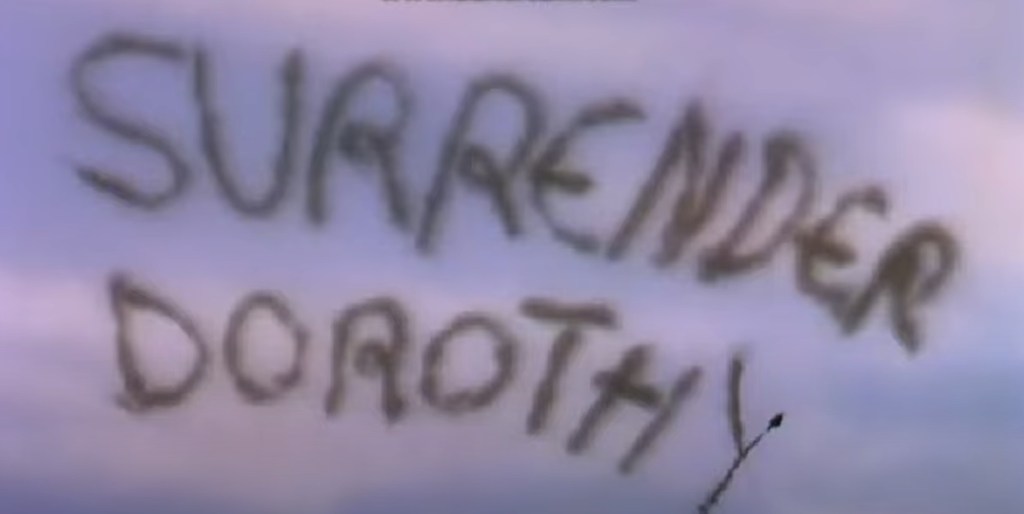
Crowds on Hilton Head Island stare in awe at dangerous chemtrails