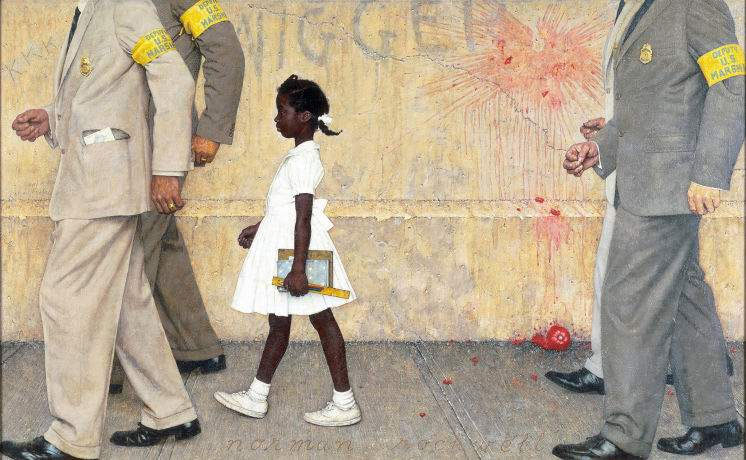
have no incentive to continue to do so … desegregation
Students and teachers working in school districts today might be decades removed from the people who led the push for desegregation in their districts, but they still benefit from the protections that were long ago put in place. Without court oversight, school districts that were already begrudgingly complying might have no incentive to continue to do so.
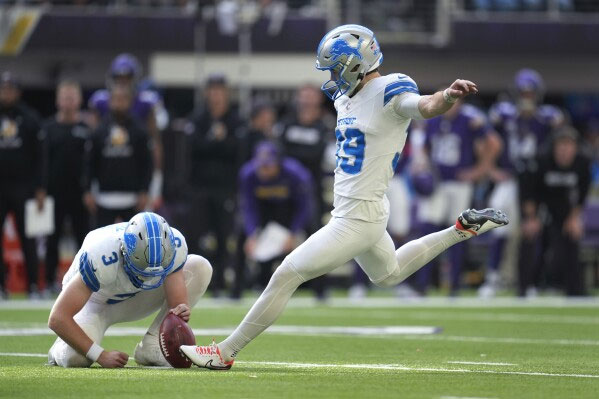
Many assumed another kicker would be signed, but Lions special teams coach Dave Fipp believed fiercely in Bates and told anyone who would listen they needed to buy in on him. Head coach Dan Campbell trusted Fipp. That meant no training camp competition. There were skeptics, but being underestimated probably was beneficial for Bates. “He’s so determined to prove people wrong who didn’t think he was good enough,” Fipp says.
In the first preseason game, he kicked a 53-yard field goal in bad weather against the Giants. Bates started to think he could do this. Then a 30-yard field goal attempt went wide right. Before the miss, he told himself, “Don’t miss it, don’t miss it, don’t miss it.”
Fipp encouraged positive thoughts. “You never want to say, ‘Don’t miss,’” he told him. “You want to say, ‘Put it through the middle.’”
man that is born of a woman is of few days and full of trouble
Man that is born of a woman is of few days and full of trouble. Book of Job, Chapter 14, verse 1.
Thump, thump, thump, went his foot on the floor. He played a few chords then he sang some more— “I got the Weary Blues And I can’t be satisfied. Got the Weary Blues And can’t be satisfied— I ain’t happy no mo’ And I wish that I had died.” And far into the night he crooned that tune. The stars went out and so did the moon. The singer stopped playing and went to bed While the Weary Blues echoed through his head. He slept like a rock or a man that’s dead.
From The Weary Blues by Langston Hughes As printed in The collected poems of Langston Hughes by Langston Hughes (Knopf, New York, 1994).
that is one small step for man, a man, one giant leap for all mankind
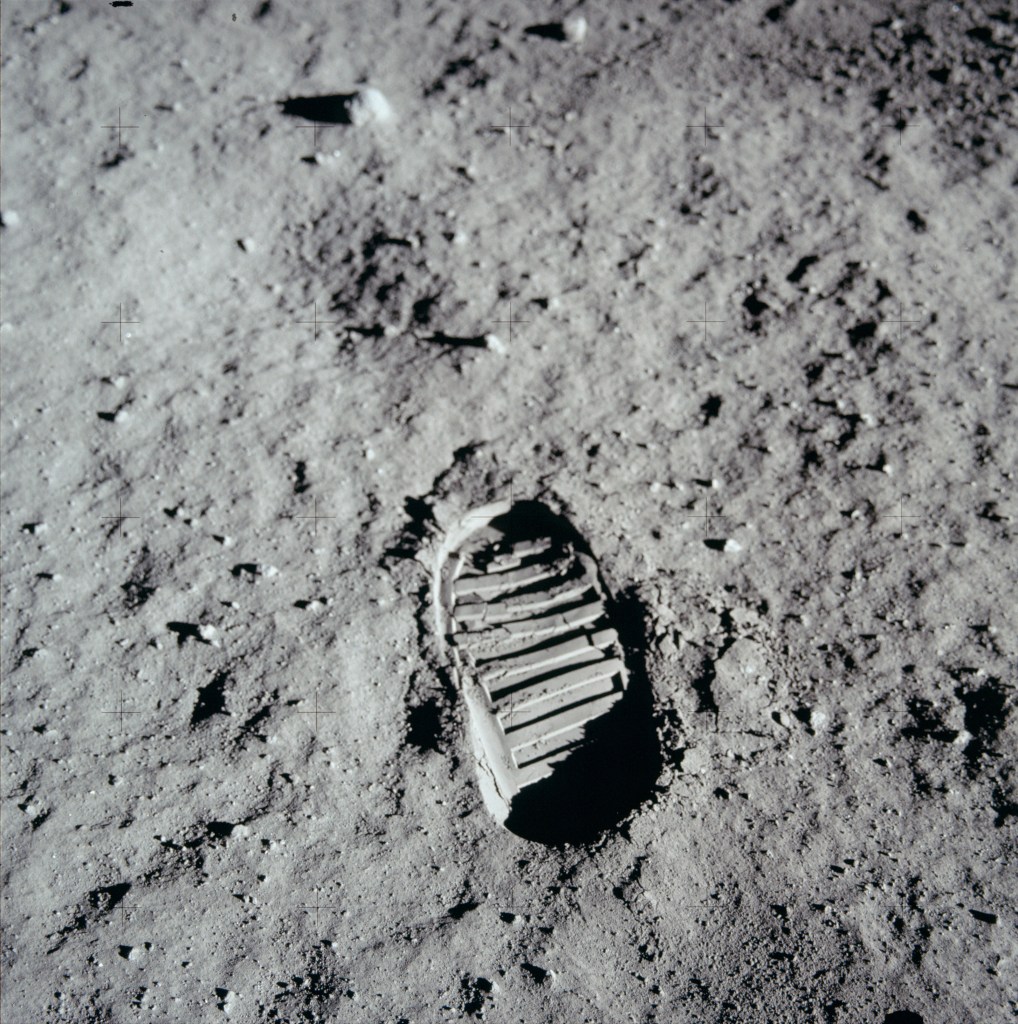
Today’s haiku is in commemoration of man’s first walk on the Moon back on July 20, 1969.
Never thought I feel so old typing 1969 but I was watching and I had just turned nine years old.
The words in today’s haiku are a combination of what Astronaut Neil Armstrong said or meant to say as the first words that were said when the first human stood on the surface of the Moon, “That’s one small step for a man, one giant leap for mankind” and the words carved on the plaque left on the surface of the Moon that read, “Here men from the planet Earth first set foot upon the Moon July 1969, A. D. We came in peace for all mankind.”
By now, I think everyone has heard that there is some question about what Mr. Armstrong meant to say and what he actually said when he said those first words that were said when the first human stood on the surface of the Moon.
Here is Wikipedia on the subject.
… six and a half hours after landing, Armstrong stepped off Eagle’s landing pad and declared: “That’s one small step for man, one giant leap for mankind.”
Armstrong intended to say “That’s one small step for a man”, but the word “a” is not audible in the transmission, and thus was not initially reported by most observers of the live broadcast. When later asked about his quote, Armstrong said he believed he said “for a man”, and subsequent printed versions of the quote included the “a” in square brackets. One explanation for the absence may be that his accent caused him to slur the words “for a” together; another is the intermittent nature of the audio and video links to Earth, partly because of storms near Parkes Observatory. A more recent digital analysis of the tape claims to reveal the “a” may have been spoken but obscured by static. Other analysis points to the claims of static and slurring as “face-saving fabrication”, and that Armstrong himself later admitted to misspeaking the line.
As to Mr. Armstrong admitting to misspeaking the line, the reference is to the book, Chariots for Apollo : the making of the lunar module by by Charles R Pellegrino and Joshua Stoff (Atheneum, New York, 1985), where the authors state that at an anniversary party for people involved with Apollo 11, Mr. Armstrong got into a discussion with Tommy Attridge of Grumman about what was said:
“But there must be an a,” Armstrong insisted. “I rehearsed it that way. I meant it to be that way. And I’m sure I said it that way.”
Tommy played an MGM commemorative 45-rpm record of the flight — one of millions that had flooded the market within days of the astronauts’ return. Tommy was right. No matter how many times he played the record, and no matter at what speed, there was no “a” before the word “man.”
Armstrong sighed. “Damn, I really did it. I blew the first words on the moon, didn’t I?”
I must report that the book, Chariots for Apollo : the making of the lunar module, is not annotated.
Did he say A MAN or not?
Well, Boy, Howdy, I think the controversy pales in comparison to the video controversy.
See, when they set up the communication channels for Apollo, NASA, bless their hearts, used all the normal TV channels for other purposes so the video signal from Apollo could only be seen on special NASA monitors.
And the only way they could get this video signal to US TV networks, was to point a standard TV camera at one of their special monitors.
I am told that on the special monitors, the picture was crystal clear.
What we saw on TV was black and white ghost images.
To get an idea what this is like is watch an old TV show like M*A*S*H or All in the Family where you are watching a muddy copy of a video RECORDING of the show, and compare it to the old black and white Andy Griffith shows that are on movie film and are crystal clear.
How NASA made this decision about TV with the one of the biggest TV moments ever on the line is beyond me.
I do know that NASA felt they had a backup plan in that their private signal was being recorded for posterity on huge 54mm electronic video tape and super high quality video could be prepared and released to the media.
This never happened as somehow, the tape was lost OR it was erased and recorded over before it could be transferred.
And all the world has left was that grainy ghostly black and white video that we all saw that first day.
As I remember it, about 15 years ago a plea went out from NASA to all current and retired employees asking if anyone anywhere had any thoughts about where a copy of this video might be found?
Was it stored somewhere?
Was it filed somewhere?
Was it in someone’s basement (no lie, NASA engineers took a lot of stuff home)?
The reason the search was on as the last machine NASA had that could play that 54mm video tape was about to sent to the garbage dump so this final effort was made to find the video.
Some hope was held out that there might have been a copy at this out of the way receiver station in Australia but no tape ever turned up and the machine was junked.
On the 50th Anniversary NASA made a big deal about releasing moon landing video that had been digitally enhanced but they had to start with that same old grainy footage we all saw.
Like I said, the NASA employees who saw the original video said was crystal clear and were shocked by what went out over TV.
But back to Mr. Armstrong.
His quote has been listened to and analyzed more than probably any other 11 (or 12) words in spoken history.
One analyst went so far as to say that it was his opinion that Mr. Armstrong said, “That’s one small step for man” and realized he blew the line and started to start over saying the word ONE again.
This feller felt the line might have been written as “That’s one small step for a man, a giant leap for mankind.” and that Mr. Armstrong started to correct himself … “That’s one small step for man … one … small step for A man … but stopped and finished with giant leap for mankindafter saying the word ONE.
What I do know is there is NO controversy about what third man said when he first walked on the moon.
This was Pete Conrad of Apollo 12.
When he hopped off the ladder he said, “Whoopie!”
Then Mr. Conrad said, “Man, that may have been a small one for Neil, but that’s a long one for me.”
He was a couple of inches shorter than Mr. Armstrong.
Though according to Wikipedia, “This was not an off-the-cuff remark: Conrad had made a US$500 bet with reporter Oriana Fallaci he would say these words, after she had queried whether NASA had instructed Neil Armstrong what to say as he stepped onto the Moon. Conrad later said he was never able to collect the money.”