11.2.2025 – shake out every sail

shake out every sail
round the world and home again
that’s the sailor’s way

Head the ship for England!
Shake out every sail!
Blithe leap the billows,
Merry sings the gale.
Captain, work the reck’ning;
How many knots a day? —
Round the world and home again,
That’s the sailor’s way!

From Homeward Bound by William Allingham as published in The vista of English verse by Henry Spackman Pancoast, (H. Holt and company: New York, 1911).

We happened to be on the beach on Hilton Head during the Hilton Head Multi Hull 50th Anniversary Beach Regatta.

My grandson Jaxon, who knows no fear, ran into the waves and asked for a ride.

One of the sailors boomed and I mean BOOMED out, ‘You Bet!’

Picked him up and plopped on the boat.

Today’s haiku is adapted from the poem, Homeward Bound, and the movie, Charlie and the Chocolate Factory.

According to the book, I want it Now, by Julie Dawn Cole, who played Veruca Salt in the movie, it was screen writer, David Seltzer, who came up with the “… clever and charming quotations, often borrowed from Classic Literature, that he wove into Gene’s dialogue. His fluency in this works translated into the final elegance of the final script. S[potting the origins of these quotes has fascinated many Wonka fans.

According to Wikipedia, He [David Seltzer] was uncredited for his contributions to the screenplay of the 1971 musical film Willy Wonka & the Chocolate Factory. The author of the original book, Roald Dahl, is credited as the sole screenwriter; however, it has been revealed that Seltzer rewrote 30 percent of Dahl’s script, adding such elements as the “Slugworth subplot”, music other than the original Oompa Loompa compositions (including Pure Imagination and The Candy Man), and the ending dialogue for the film.”

As a shout out to the movie, Mr. Seltzer and those guys on the boat, so shines a good deed in a weary world.

And lest we forget, Mr. Shakespeare and The Merchant of Venice. Where the original line, spoken by Portia, is:

How far that little candle throws his beams! So shines a good deed in a naughty world.

If you could have seen the smile on Jaxon’s face … you would know just what Big Bill and Mr. Seltzer were going for.

11.1.2025 – permits outrageous

permits outrageous
eventualities to
materialize

The Constitution establishes the electoral college system to govern the President’s selection, and provides further means ol choice when that system bogs down in inconclusive result. But it grants the federal government only limited authority over its most important election, that of the President: critically significant powers repose in the states. By express or implicit constitutional authority, federal statutes specify the date of election day, determine when the electors are to meet and cast their ballots, and establish the procedure for counting those ballots in Congress. But at the same lime, the Constitution authorizes the states to decide how the electors are to be chosen and their electoral vote cast. State laws also regulate the conduct of elections, including the presidential contest, and political activity carried on within their borders. This authority and autonomy invite wide variation from state to state in the method, honesty, and freedom of federal elections.

In sanctioning this division of powers, the Constitution leaves elementary and crucial questions of procedure unanswered and permits the most outrageous eventualities to materialize. If, let us say, two conflicting sets of electoral votes are returned by a given state, who shall decide which set is to prevail? The Constitution provides no solution.

Consider another likely untoward instance. A candidate who receives on election day a majority of the popular vote cast may not, under the Constitution, necessarily become President—it he fails to secure also a majority of the electoral vote. The utter contradiction of this state of affairs with the most elementary principles of democracy is self-evident: the majority popular will can be denied.

From The Election That Got Away by Louis W. Koenig (American Heritage, October 1960 – Volume 11 Issue 6).

I give the American Heritage Magazine a lot of credit for my interest in United States History.

Before I was born, my Dad started subscribing to American Heritage whose editions were published in thin hard cover books a little be bigger than a the size of an 8 1/2 x 11 inch piece of paper.

And they were just left in stacks, a few here, a few there, some on the shelf, all over the house so when I was born, they were part of my landscape.

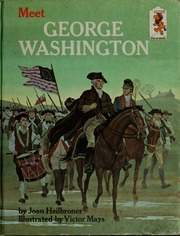
The magazine usually had something interesting on the cover to catch your eye, Washington on a horse or the Wright Brothers or something and their articles were written in a style for the general public.

Nothing at all like the Journal of American History which I didn’t find out about until I got to college.

But there they were and I can’t remember a time I didn’t pick on up and at least thumb through the pages or read an article or part of an article that caught my eye.

Some of these stories had illustrations and some of the illustrations and magazine covers were pretty goofy.

They appealed to me and, and in a way, as a kid, I thought of American Heritage as the Mad Magazine of US History.

Today’s haiku is adapted from a story that ran in October of 1960 and the author smugly warns that the debacle of the election 1877, where the states levered electoral votes to swing the election away from the candidate who won the popular vote.

The author, a Louis W. Koenig, who has a long list of published works but not a wikipedia entry (you have to work out what that means) warned … it could happen again.

This was in October of 1960.

That fall would see the Nixon/Kennedy election with Kennedy being declared the winner after some late night calls to the Mayor Daly in Chicago … or maybe there weren’t any calls but a recount was considered (as Mike Royko wrote The Chicago Elections committee would throw the ballots at the ceiling and any ballot that stuck was declared a Republican vote) but nothing came of it.

Then came that Dallas afternoon and a new Presdident.

Than came Watergate and a new President.

Then came Bush/Gore.

And then came the folks who don’t even bother with the Constitution.

My point being this, the Constitution leaves elementary and crucial questions of procedure unanswered and permits the most outrageous eventualities to materialize.

And we are still here, 65 years after Mr. Koenig wrote those words.

There has to be a hope that in 2090, the Constitution will still leave elementary and crucial questions of procedure unanswered and permit the most outrageous eventualities to materialize.

And somehow those outrageous eventualities of the past, were overcome.

10.31.2025 – nature’s first green is

nature’s first green is
gold, her hardest hue to hold …
nothing gold can stay

Nature’s first green is gold,
Her hardest hue to hold.
Her early leaf’s a flower;
But only so an hour.
Then leaf subsides to leaf.
So Eden sank to grief,
So dawn goes down to day.
Nothing gold can stay.

Nothing Gold Can Stay by Robert Frost, as published in The Poetry of Robert Frost edited by Edward Connery Lathem. (Henry Holt and Company, New York, 1942)

Ashley River with Pink Grass along the marsh, from the Magnolia Plantation near Charleston, SC.

10.29.2025 – planning construction

planning construction
in DC? the right permit
is a crucial step

On the website, PermitFlow.com, the page titled, “DC Building Permit Guide for Builders, Developers, Contractor

If you’re a developer, contractor, or builder who is planning construction in Washington, DC, getting the right permits is a crucial step. Permits help to ensure that your project proceeds legally and under the city’s approval, without either of which you could face fines or orders to remove the work.

Getting a DC building permit can be frustrating. You’re expected to provide proof that your project is thoroughly planned out, including approval from communities and licensed contractors. The biggest challenge is making sure to include everything the city needs to approve your building permit.

This guide will walk you through all the steps of getting a DC building permit, from what projects require a permit to how to make the process easier.

‍What requires a building permit in DC?

In Washington DC, many construction and renovation projects require a building permit. These can include building a structure of 50 square feet or more or simply as installing a sump pump.

Here’s a list of common projects that need permits:

New building construction
Adding rooms, floors, or decks to existing buildings
Demolishing structures
Major renovations or remodeling
Changing a building’s use (like turning a house into an office)
Installing or replacing electrical, plumbing, or HVAC systems
Building decks, fences, or retaining walls
Adding or removing walls
Installing solar panels
Excavation work
Some smaller projects don’t require a permit (unless the site is in a historic district).

Well!

I mean what is a building code when compared to the Constitution of the United States.

Neither seem to present serious roadblocks, if you know what I mean.

Or are you telling me that the demolition of part of the White House can be arranged by someone just making a phone call to friend who owns a bull dozer and can come over on a Saturday Morning?

OH come on.

I checked the city website for Grand Rapids, Michigan and you can’t even put up a fence without a permit.

Somewhere, someone knows where the bodies are buried and who got paid.

And someday …

Down here in the low country, the part of the country that was in the papers recently because the county prosecutor was found guilty of hiding settlements from clients so he could pocket the money he needed to fund his drug problem. This all unraveled on the guy when he working to get his kid off of charges of DUI in a boating accident that left a young girl dead which led to him shooting both his wife and the son in question. The Country Prosecutor pled not guilty but a jury didn’t buy it.

I mention all that so the reader can get a grasp on the legal climate down here.

See, a guy we met had a coffee shop and he wanted to expand his indoor seating and applied for the right permit but refused to make any other extra curricula financial contributions to help further his request.

And the request was refused on the grounds he didn’t have the required 10 parking spots in his parking lot.

He replied with photos and a map that showed he DID INDEED have 10 parking spots.

When he got to work the next day, there was an official City of Bluffton ‘No Parking’ sign on one spot in his lot.

Today, that sign is still there.

The guy gave up and closed his coffee shop.

Petty.

Petty crime.

The online dictionary defines petty as of little importance; trivial.

What you might expect in the low country.

Not when talking about one of the most famous structures in the United States, if not the world.