9.7.2024 – quae volumus et

quae volumus et
credimus libenter – we …
believe what we want

Quae volumus, et credimus libenter.

The things we want we are also quick to believe.
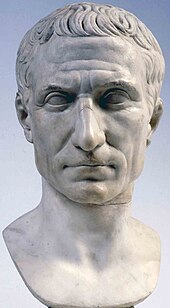
The full form of the saying in Caesar is Quae volumus et credimus libenter, et quae sentimus ipsi, reliquos sentire speramus, “The things we want, we are also quick to believe, and what we ourselves perceive, we hope that others feel too.”

So wrote Julius Ceasar in his book, Commentaries on the Civil War.

According to Wikipedia, Commentarii de Bello Civili (Commentaries on the Civil War), or Bellum Civile, is an account written by Julius Caesar of his war against Gnaeus Pompeius and the Roman Senate. It consists of three books covering the events of 49–48 BC, from shortly before Caesar’s invasion of Italy to Pompey’s defeat at the Battle of Pharsalus and flight to Egypt.

50 years or so before Christ plus the 2024 years since.

Almost 2100 years ago.

The things we want we are also quick to believe.

Either Julius Caesar would have fit right in today.

Or our current system of elections would have fit right in, 2100 years ago.

Here is the full except:

Proxima nocte centuriones Marsi duo ex castris Curionis cum manipularibus suis xxil ad AttiumVarum perfugiunt. Hi, sive vere quam habuerantopinionem ad eum perferunt, sive etiam auribus Variserviunt (nam, quae volumus, et credimus libenteret, quae sentimus ipsi, reliquos sentire speramus), confirmant quidem certe totius exercitus animosalienos esse a Curione maximeque opus esse in con-spectum exercitus venire et colloquendi dare facultatem. Qua opinione adductus Varus postero diemane legiones ex castris educit. Facit idem Curio,atque una valle non magna interiecta suas uterquecopias instruit.

In English:

On the following night two Marsic centurions from Curio’s camp, with twenty-two of their men, desert to Attius Varus. Whether they convey to him the opinion that they really held, or whether they only flatter his ears for what we desire we gladly believe, and what we ourselves feel we hope that others feel too at any rate they assure him that the hearts of the whole army are estranged from Curio, and that it is highly necessary that he should come within sight of the army and afford an opportunity of conference. Varus, influenced by this judgment, leads his legions out of camp early the next day. Curio does the same, and each draws up his forces with only one small valley between them.

As you can see, in the Loeb Classic Edition of 1917, it comes out as:

for what we desire we gladly believe, and what we ourselves feel we hope that others feel too …

quae volumus, et credimus libenteret, quae sentimus ipsi, reliquos sentire speramus

For what we desire we gladly believe.

I don’t want to point to just one candidate in this current election cycle but those words, for what we desire we gladly believe, helps me understand his his following.

9.6.2024 – boring more than mad …

boring more than mad …
show me a sane person and
I’ll cure him for you

In his book, Jung: Man and Myth (Macmillan Pub Co, 1981), Vincent Brome writes:

“It was the explosive person who said one day to his wife, ‘If I get another perfectly normal adult malingering as a sick patient I’ll have him certified!’ And to George Beckwith, his American friend, ‘I’m sometimes driven to the conclusion that boring people need treatment more urgently than mad people.’ Witty on some occasions, he commented to one of his assistants, ‘Show me a sane person and I’ll cure him for you.’”

I am reminded of something Mr. Churchill said along the lines of “There are two types of people in this world. Those who are billed to death. And those who are bored to death.

9.5.2024 – ignore these limits

ignore these limits
thrilling fact that night owls have
been vindicated

From the article, Forget the 5am starts! Night owls like me possess the real secret of success by Arwa Mahdawi in the article where Ms. Mahdawi writes:

Research led by academics at Imperial College London studied data on more than 26,000 people and found that “self-declared ‘night owls’ generally tend to have higher cognitive scores”. And we are talking quite a lot higher. “Evening types … scored about 13.5% higher than morning types in one group and 7.5% higher than morning types in another group”, according to a write-up of the study.

Experts have urged caution in interpreting the findings, saying, for instance, that there are “important limitations”. Still, I think we can ignore these limitations for now and focus on the thrilling fact that night owls have finally been vindicated.

I have never ever been a morning person.

I have never ever been called a morning person.

Sadly, most of my life has been designed to begin with an early morning start.

Larry McMurtry’s thoughts on Captain Woodrow Call and getting up in the morning in the book Lonesome Dove might describe me.

Mr. McMurtry writes: To Call’s regret he had never been able to come awake easily. His joints felt like they were filled with glue, and it was an irritation to see Augustus sitting on the black kettle looking as fresh as if he’d slept all night, when in fact he had probably played poker till one or two o’clock. Getting up early and feeling awake was the one skill he had never truly perfected — he got up, of course, but it never felt natural.

Now I can’t stay up.

I miss those dark hours for reading.

Late late at night when no one else was up or around.

That’s when it seemed like my brain really kicked in.

Growing up in a family with 10 brothers and sisters.

College with 4 guys sharing a 450 square feet of apartment.

Seven kids in my family.

Late late at night when no one else was up or around.

So there is research that shows us folks who liked being up at night have higher cognitive scores that those morning folks.

I didn’t need any research.

It was something I already knew.

If those morning folks had been smarter, they would have been up late at night.

9.4.2024 – I was self-appointed

I was self-appointed
surveyor of forest paths
keeping them open

For many years I was self-appointed inspector of snow storms and rain storms, and did my duty faithfully; surveyor, if not of highways, then of forest paths and all across-lot routes, keeping them open, and ravines bridged and passable at all seasons, where the public heel had testified to their utility.

Sometimes the non conformity is living in the Hilton Head area … but wearing a Tybee Island T Shirt

In any weather, at any hour of the day or night, I have been anxious to improve the nick of time, and notch it on my stick too; to stand on the meeting of two eternities, the past and future, which is precisely the present moment; to toe that line. You will pardon some obscurities, for there are more secrets in my trade than in most men’s, and yet not voluntarily kept, but inseparable from its very nature. I would gladly tell all that I know about it, and never paint “No Admittance” on my gate.

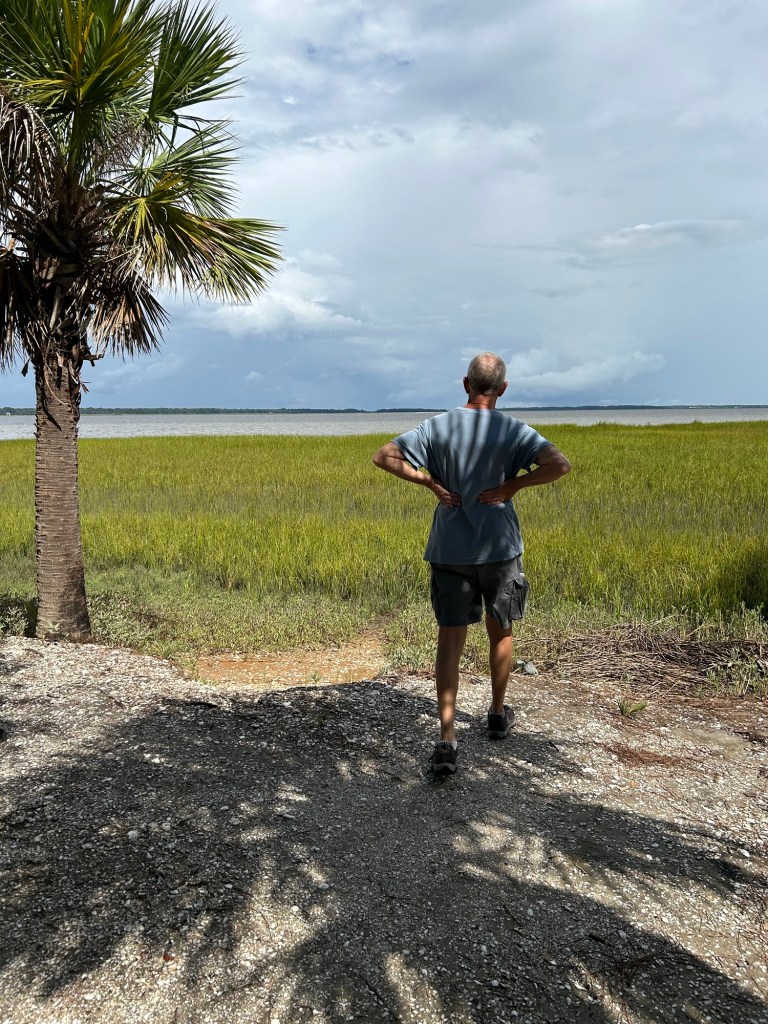
Inspecting my salt marshes and the Broad River, looking towards Parris Island US Marine Corps Recruit Depot

For a long time I was reporter to a journal, of no very wide circulation, whose editor has never yet seen fit to print the bulk of my contributions, and, as is too common with writers, I got only my labor for my pains. However, in this case my pains were their own reward.

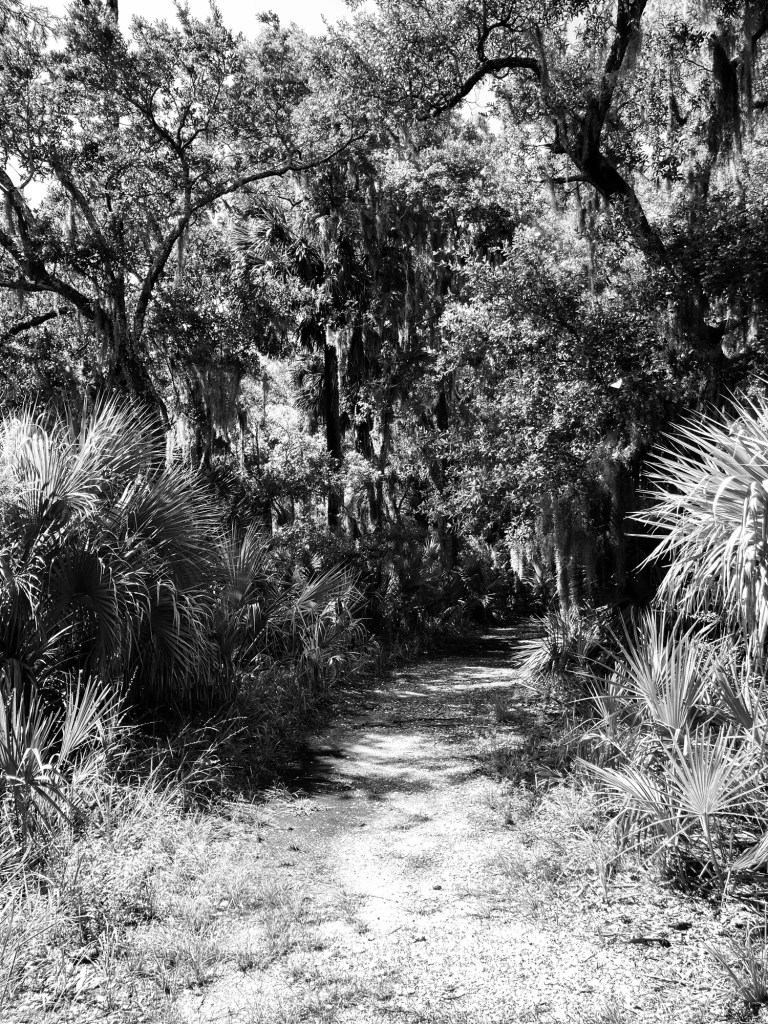
Path not taken … maybe – Lemon Island, South Carolina

For eighteen hundred years, though perchance I have no right to say it, the New Testament has been written; yet where is the legislator who has wisdom and practical talent enough to avail himself of the light which it sheds on the science of legislation.

All passages from Walden by Henry David Thoreau (Boston, Ticknor and Fields, 1854).

Wikipedia quotes EB White on Mr. Thoreau, that to write Walden, “Henry went forth to battle when he took to the woods, and Walden is the report of a man torn by two powerful and opposing drives— the desire to enjoy the world and the urge to set the world straight.”

Mr. Thoreau was in his mid 30’s when he went forth to battle.

I am in my mid 60’s and my urge to set the world straight is waning.

My desire to enjoy the world is growing.

That last line I quote from Walden happens to be the very last line of the book.

I can tweak it to read, “For over two thousand years, though perchance I have no right to say it, the New Testament has been written; yet where is the legislator who has wisdom and practical talent enough to avail himself of the light which it sheds on the science of legislation.

It was Jim Harrison who once wrote along the lines that the United States had passed some 1.5 million laws … trying to enforce the 10 commandments.

It was Mr. Churchill who said in a speech in 1947, “Indeed it has been said that democracy is the worst form of Government except for all those other forms that have been tried from time to time.”

If Mr. Churchill is correct, BOY HOWDY, but do I feel sorry for all those other countries.

Is it any wonder that I embrace my role as a self-appointed inspector of snow storms and rain storms and reporter for my own journal of small circulation.

However, in this case my pains are their own reward.

PS: Thank you to my wife and co-self-appointed-inspector for the photos of our adventure on Widgeon Point, South Carolina.

9.3.2024 – beneath my palm-trees ..

beneath my palm-trees ..
sat a weeping – no one to
ask me why I wept …

Beneath my palm-trees, by the river side,
I sat a weeping: in the whole world wide
There was no one to ask me why I wept,
And so I kept
Brimming the water-lily cups with tears
Cold as my fears.

Beneath my palm-trees, by the river side,
I sat a weeping: what enamoured bride,
Cheated by shadowy wooer from the clouds,
But hides and shrouds
Beneath dark palm-trees by a river side?

Song of the Indian Maid by John Keats as published in The Oxford Book of English Verse: 1250–1900 (Oxford, 1919).

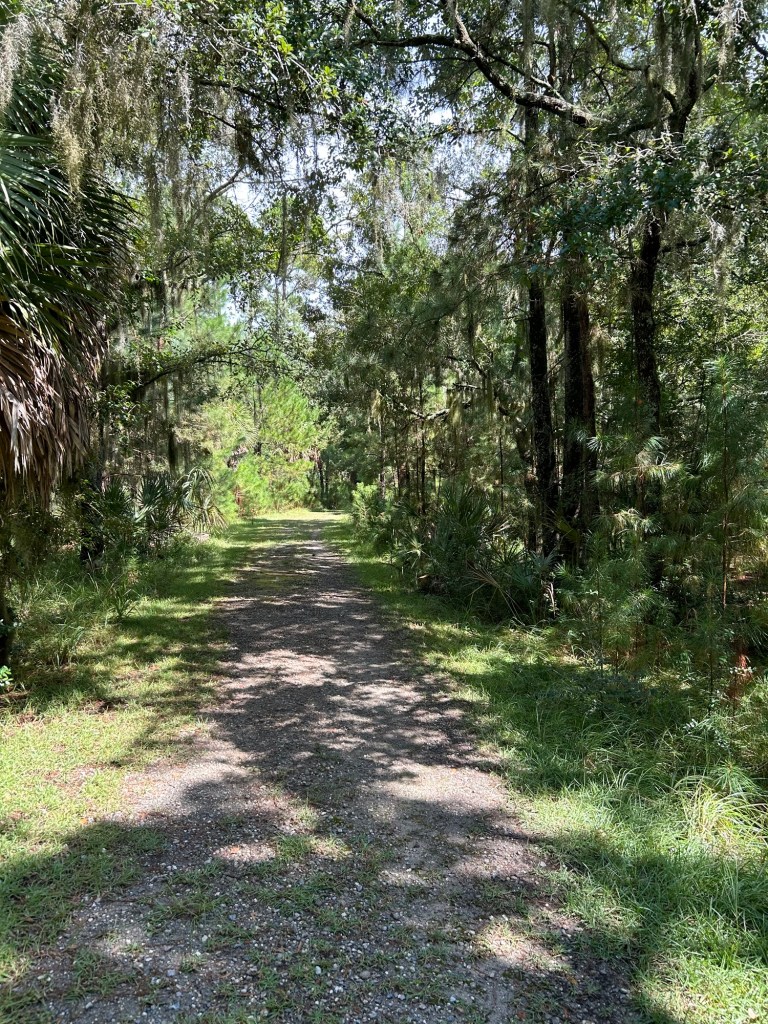
On Labor Day, my wife and I walked through the Widgeon Point Preserve on Lemon Island in Port Royal Sound in the heart of the South Carolina Low Country.

As it says on the park website, A hiking loop travels the perimeter of the adjacent hummock island. The loop is a wide, flat nature trail that travels through pines, palms, and oak trees. Views of the river can be seen from several different vantage points. The various coastal habitats of Widgeon Point Preserve support a rich diversity of wildlife and plants. Visitors have extraordinary opportunities to observe the natural beauty of the Lowcountry.

It had just rained and the muddy path was filled with little mud marsh crabs that gave you the feeling that the path itself was alive.

It was a extraordinary opportunity to observe.

And also an opportunity to learn.

We knew we lived in the low country of South Carolina.

We knew we lived in Beaufort County, South Carolina.

But we didn’t know that Beaufort County is SO LOW that during high tide, up to 50% of Beaufort County is under water.

Pine, palms and live oaks.

A muddy, forest path

And make sure its low tide.