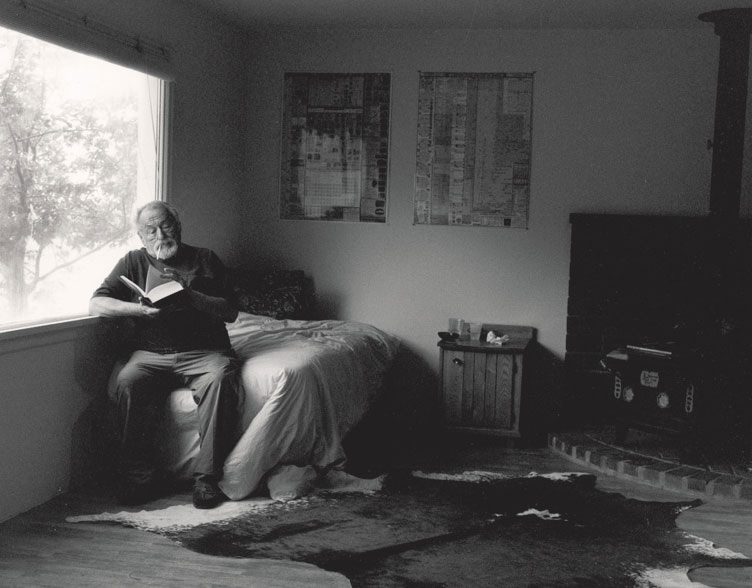
could do anything wanted to do but found there was nothing to do
Live oaks and Spanish Moss – over the ancient shell ring on Hilton Head island …
Now the standard cure for one who is sunk is to consider — those in actual destitution or physical suffering — this is an all-weather beatitude for gloom in general and fairly salutary day-time advice for everyone.
But at three o’clock in — the morning, a forgotten package has the same tragic importance as a death sentence, and the cure doesn’t work — ; and in a real dark night of the soul it is always three o’clock in the morning, day after day.
At that hour the tendency is — to refuse to face things as long as possible by retiring into — an infantile dream — but one is continually startled out of this by various contacts with the world.
One meets these occasions as quickly and carelessly as possible and retires once more back into the dream, hoping that things will adjust themselves by some great material or spiritual bonanza.
But as the withdrawal persists there is less and less chance of the bonanza — one is not waiting for the fade-out of a single sorrow, but rather being an unwilling witness of an execution, the disintegration of one’s own personality …
So there was not an ‘I’ any more — not a basis on which I could organize my self-respect — save my limitless capacity for toil that it seemed I possessed no more.
It was strange to have no self — to be like a little boy left alone in a big house, who knew that now he could do anything he wanted to do, but found that there was nothing that he wanted to do –
And in a real dark night of the soul it is always three o’clock in the morning, day after day.
As Big Bill put it, tomorrow and tomorrow and tomorrow, creeps in this petty pace from day to day, to the last syllable of recorded time.
(From The crack-up with other pieces and stories, by F. Scott Fitzgerald, 1945, James Laughlin, New York.)
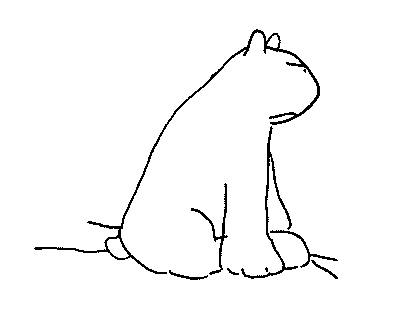
A grizzly bear who had been on a bender for several weeks following a Christmas party in his home at which his brother-in-law had set the Christmas tree on fire, his children had driven the family car through the front door and out the back, and all the attractive female bears had gone into hibernation before sunset returned home prepared to forgive, and live and let live. He found, to his mild annoyance, that the doorbell had been replaced by an ornamental knocker. When he lifted the knocker, he was startled to hear it play two bars of “Silent Night.”
When nobody answered his knock, he turned the doorknob, which said “Happy New Year” in a metallic voice, and a two-tone gong rang “Hello” somewhere deep within the house.
He called to his mate, who was always the first to lay the old aside, as well as the first by whom the new was tried, and got no answer. This was because the walls of his house had been soundproofed by a soundproofer who had soundproofed them so well nobody could hear anybody say anything six feet away. Inside the living room the grizzly bear turned on the light switch, and the lights went on all right, but the turning of the switch had also released an odor of pine cones, which this particular bear had always found offensive. The head of the house, now becoming almost as angry as he had been on Christmas Day, sank into an easy chair and began bouncing up and down and up and down, for it was a brand-new contraption called “Sitpretty” which made you bounce up and down and up and down when you sat on it. Now thoroughly exasperated, the bear jumped up from the chair and began searching for a cigarette. He found a cigarette box, a new-fangled cigarette box he had never seen before, which was made of metal and plastic in the shape of a castle, complete with portal and drawbridge and tower. The trouble was that the bear couldn’t get the thing open. Then he made out, in tiny raised letters on the portal, a legend in rhyme: “You can have a cigarette on me If you can find the castle key.” The bear could not find the castle key, and he threw the trick cigarette box through a windowpane out into the front yard, letting in a blast of cold air, and he howled when it hit the back of his neck. He was a little mollified when he found that he had a cigar in his pocket, but no matches, and so he began looking around the living room for a matchbox. At last he saw one on a shelf. There were matches in it, all right, but no scratching surface on which to scratch them. On the bottom of the box, however, there was a neat legend explaining this lack. The message on the box read: “Safety safety matches are doubly safe because there is no dangerous dangerous sandpaper surface to scratch them on. Strike them on a windowpane or on the seat of your pants.”
Enraged, infuriated, beside himself, seeing red and thinking black, the grizzly bear began taking the living room apart. He pounded the matchbox into splinters, knocked over lamps, pulled pictures off the wall, threw rugs out of the broken window, swept vases and a clock off the mantelpiece, and overturned chairs and tables, growling and howling and roaring, shouting and bawling and cursing, until his wife was aroused from a deep dream of marrying a panda, neighbors appeared from blocks around, and the attractive female bears who had gone into hibernation began coming out of it to see what was going on.
The bear, deaf to the pleas of his mate, heedless of his neighbors’ advice, and unafraid of the police, kicked over whatever was still standing in the house, and went roaring away for good, taking the most attractive of the attractive female bears, one named Honey, with him.
MORAL: Nowadays most men lead lives of noisy desperation.
From Further Fables for Our Time by James Thurber (Illustrated by the Author) First published in Great Britain 1956, by Hamish Hamilton Ltd, 90 Great Russell Street London W.C.1.
that rare malady cure fully known costs little so hard to achieve
Social isolation is the rare malady whose cure is fully known and costs relatively little, yet is still so difficult to achieve.
In the 21st century, we are a social species living atomized lives; even when living in a high-rise apartment building in a densely inhabited city, surrounded by people in every direction, we can easily feel bereft and melancholy.
Mr. Kristof writes, “As for physical infrastructure to address loneliness, one example is the “chatty bench,” adopted in the United Kingdom, Sweden and Australia. This is a park bench with a sign encouraging strangers sitting there to chat with each other; in a Northern Ireland town, the sign says: “Sit here if you are happy to chat with passers-by.”
There are also “talking cafes,” where people are encouraged to gab with other coffee drinkers. There are “libraries of things,” where you can mingle with neighbors to borrow camping equipment or a carpet cleaner or lend out your own gear.
My wife and I, we talk to people.
Try to catch their eye and say hello.
If we are looking for anyone to talk back, it is usually little kids.
Little kids gravitate to my wife as they have been raised to ‘not to talk to strangers’ and they rarely meet anyone stranger than me.
More times than not, when a little kid gets brave enough to talk to me, they will say, “Do you know you have a gold tooth?“
To which I immediately look over one shoulder and lower my head and confide that, well, see … I’m a pirate.
Which usually delights them and they turn to their Mom and say, “Mom, Mom, this guy’s a PIRATE!!!!!”
Which goes mostly to reinforce Mom’s thoughts to have that ‘no talking to strangers‘ lecture one more time.
But that doesn’t do much for the topic at hand does it.
Social isolation is the rare malady whose cure is fully known and costs relatively little, yet is still so difficult to achieve.
In the 1941 film, Meet John Doe, Gary Cooper as John Doe catches on nationwide with a movement based on the phrase, Be a Better Neighbor.
Be a better neighbor …
Maybe it’s a lost cause.
But in the 1939 film, Mr. Smith Goes to Washington, Jimmy Stewart as Mr. Smith says: I guess this is just another lost cause Mr. Paine.
All you people don’t know about lost causes.
Mr. Paine does.
He said once they were the only causes worth fighting for and he fought for them once. For the only reason any man ever fights for them.
Because of just one plain simple rule.
Love thy neighbor.
(BTW Frank Capra directed both pictures.)
Love thy neighbor.
A lot longer ago than 1939 and before there were films, one of the Pharisees, an expert in the law as it is says, asked Jesus, ‘which is the greatest commandment?’
Jesus replied: ‘Love the Lord your God with all your heart and with all your soul and with all your mind.’ This is the first and greatest commandment … And the second is like it: ‘Love your neighbor as yourself.’
Love your neighbor.
And when Jesus was asked what or who was a neighbor, Jesus told the story of the Good Samaritan.
We are told that the numbers of church goers is dropping at an accelerated rate.
People are moving fast to disassociate themselves from the ‘Chosen Frozen.’
Maybe if we tried to be better neighbors.
Mr. Kristof writes: “Solutions to loneliness are like that — little nudges to encourage us to mingle the way we evolved to. They’re so easy, and loneliness seems so debilitating, that we should be doing more.
We Americans, atomized and polarized, addicted and distressed, are a lonely crowd. Overwhelming evidence suggests that for the sake of our happiness and well-being, we need one another.”
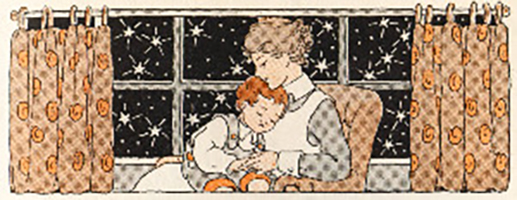
dreamed the pins fell out of all the stars, and the stars fell into his cap
A little boy was dreaming Upon his mother’s lap, That the pins fell out of all the stars, And the stars fell into his cap.
So when his dream was over, What did that little boy do? He went and looked inside his cap, And found it was not true.
The Little Boy’s Dream from The Canadian Readers Book I, A Primer And First Reader, Authorized For Use In The Public Schools Of Manitoba, Saskatchewan, Alberta, And British Columbia, (Toronto, The Macmillan Company Of Canada Limited, 1931)
The book contains this appendix.
This book provides easy material of an interesting nature for the purpose of teaching young children to read. It contains the kind of literature which the child loves and which is his rightful heritage. It includes in simplified form many of the children’s classics—Mother Goose Tales, Nursery Rhymes, Stories about Children, Animals, Birds, Flowers, etc. These seize his interest, stimulate his imagination, and arouse in him the desire to read. Interest and pleasure in the story is the motive for mastering the vocabulary.
For Mother Goose, the line, “It contains the kind of literature which the child loves and which is his rightful heritage” sounds a bit … well, I’m not going to say it, but that last pronoun does stick out today and as for rightful heritage??
I will say that the Story of the Three Little Pigs ends in a way I love:
Down came the wolf “Splash” into the big pot of hot water
And that was the end of the big, bad wolf.
When dealing with a wolf, one can always hope for a happy ending.
As for our hero in the haiku?
Who hasn’t looked for the dreamed results of a dream and come away empty in the morning.
take various paths sky is door never closed sun moon aren’t doorknobs
I’m trying to create an option for all these doors in life. You’re inside or out, outside or in. Of late, doors have failed us more than the two-party system or marriages comprising only one person. We’ve been fooled into thousands of dualisms which the Buddha says is a bad idea. Nature has portals rather than doors. There are two vast cottonwoods near a creek and when I walk between them I shiver. Winding through my field of seventy-seven large white pine stumps from about 1903 I take various paths depending on spirit. The sky is a door never closed to us. The sun and moon aren’t doorknobs. Dersu Uzala slept outside for forty-five years. When he finally moved inside he died.
Doors by Jim Harrison.
I drove out to my workplace for the first time in a month due to construction on the workplace.
The last time I drove, I drove my car into the rising sun.
Today, I drove in the dark.
I take various paths to work as the light changes as the Earth tips.
The path is the same but at least seems different.