of all, tyrannies exercised for victims good the most oppressive
Adapted from the passage:
Of all tyrannies, a tyranny sincerely exercised for the good of its victims may be the most oppressive.
It would be better to live under robber barons than under omnipotent moral busybodies.
The robber baron’s cruelty may sometimes sleep, his cupidity may at some point be satiated;
but those who torment us for our own good will torment us without end, for they do so with the approval of their own conscience.
From “The Humanitarian Theory of Punishment,” by C. S. Lewis, in God in the Dock: Essays on Theology and Ethics, ed. Walter Hooper (Grand Rapids, MI: William B. Eerdmans, 1970), 287–300.
The Constitution establishes the electoral college system to govern the President’s selection, and provides further means ol choice when that system bogs down in inconclusive result. But it grants the federal government only limited authority over its most important election, that of the President: critically significant powers repose in the states. By express or implicit constitutional authority, federal statutes specify the date of election day, determine when the electors are to meet and cast their ballots, and establish the procedure for counting those ballots in Congress. But at the same lime, the Constitution authorizes the states to decide how the electors are to be chosen and their electoral vote cast. State laws also regulate the conduct of elections, including the presidential contest, and political activity carried on within their borders. This authority and autonomy invite wide variation from state to state in the method, honesty, and freedom of federal elections.
In sanctioning this division of powers, the Constitution leaves elementary and crucial questions of procedure unanswered and permits the most outrageous eventualities to materialize. If, let us say, two conflicting sets of electoral votes are returned by a given state, who shall decide which set is to prevail? The Constitution provides no solution.
Consider another likely untoward instance. A candidate who receives on election day a majority of the popular vote cast may not, under the Constitution, necessarily become President—it he fails to secure also a majority of the electoral vote. The utter contradiction of this state of affairs with the most elementary principles of democracy is self-evident: the majority popular will can be denied.
From The Election That Got Away by Louis W. Koenig (American Heritage, October 1960 – Volume 11 Issue 6).
I give the American Heritage Magazine a lot of credit for my interest in United States History.
Before I was born, my Dad started subscribing to American Heritage whose editions were published in thin hard cover books a little be bigger than a the size of an 8 1/2 x 11 inch piece of paper.
And they were just left in stacks, a few here, a few there, some on the shelf, all over the house so when I was born, they were part of my landscape.
The magazine usually had something interesting on the cover to catch your eye, Washington on a horse or the Wright Brothers or something and their articles were written in a style for the general public.
Nothing at all like the Journal of American History which I didn’t find out about until I got to college.
But there they were and I can’t remember a time I didn’t pick on up and at least thumb through the pages or read an article or part of an article that caught my eye.
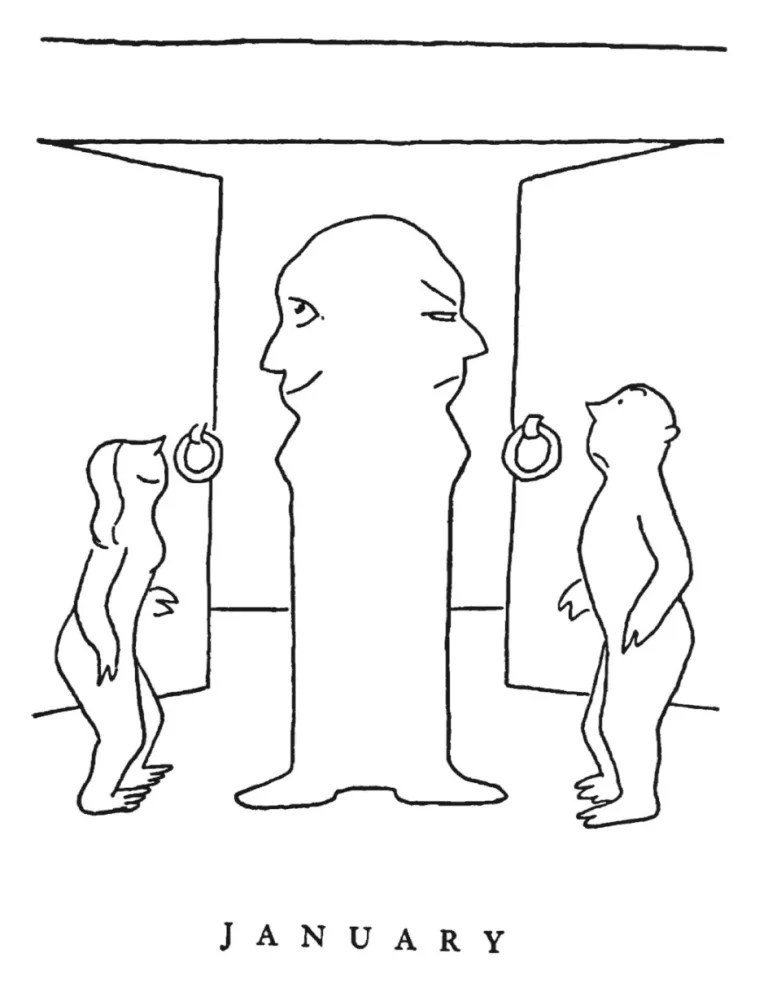
Some of these stories had illustrations and some of the illustrations and magazine covers were pretty goofy.
They appealed to me and, and in a way, as a kid, I thought of American Heritage as the Mad Magazine of US History.
Today’s haiku is adapted from a story that ran in October of 1960 and the author smugly warns that the debacle of the election 1877, where the states levered electoral votes to swing the election away from the candidate who won the popular vote.
The author, a Louis W. Koenig, who has a long list of published works but not a wikipedia entry (you have to work out what that means) warned … it could happen again.
This was in October of 1960.
That fall would see the Nixon/Kennedy election with Kennedy being declared the winner after some late night calls to the Mayor Daly in Chicago … or maybe there weren’t any calls but a recount was considered (as Mike Royko wrote The Chicago Elections committee would throw the ballots at the ceiling and any ballot that stuck was declared a Republican vote) but nothing came of it.
Then came that Dallas afternoon and a new Presdident.
Than came Watergate and a new President.
Then came Bush/Gore.
And then came the folks who don’t even bother with the Constitution.
My point being this, the Constitution leaves elementary and crucial questions of procedure unanswered and permits the most outrageous eventualities to materialize.
And we are still here, 65 years after Mr. Koenig wrote those words.
There has to be a hope that in 2090, the Constitution will still leave elementary and crucial questions of procedure unanswered and permit the most outrageous eventualities to materialize.
And somehow those outrageous eventualities of the past, were overcome.
kind of behavior could make a nun kick in a stained-glass window
He’s tried to restore Confederate statues and names. He’s retreating from the Civil Rights Act of 1964. His flunkies have downplayed Black icons like Harriet Tubman, the Tuskegee Airmen and Jackie Robinson.
That kind of behavior could make a nun kick in a stained-glass window. And it certainly won’t get you into heaven.
From the opinion piece, Trump’s Slavish Stupidity by Maureen Dowd (Aug 28, 2025).
Maureen Dowd is an Opinion columnist for The Times. She won the 1999 Pulitzer Prize for distinguished commentary.
I like the writing of Ms. Dowd.
She has a way often of writing just what I feel.
She has a ‘style’ as they say, all her own.
Be that as it may, she is not above sneaking in the occasional odd reference to American literature.
In this case, a tribute to the great Raymond Chandler who wrote in his novel, Farewell, My Lovely, that wonderful line … “It was a blonde. A blonde to make a bishop kick a hole in a stained-glass window.”
I just wanted to say to Ms. Dowd, that I got it and I loved it.
PS – Found this in my drafts from back in August and never published it and as I am on vacation, I thought it would be a good day to use it.
I cried over things knowing no beautiful things, not one, not one … lasts
Adapted from:
I cried over beautiful things knowing no beautiful thing lasts. The field of cornflower yellow is a scarf at the neck of the copper sunburned woman, The mother of the year, the taker of seeds. The northwest wind comes and the yellow is torn full of holes, New beautiful things come in the first spit of snow on the northwest wind, And the old things go, not one lasts.
Autumn by Carl Sandburg in Chicago Poems as published in The Complete Poems of Carl Sandburg, (Harcourt Brace and Company, New York, 1950).
It’s just a building, I know.
And I know it was MASSIVELY renovated under Mr. Truman.
But understand, without much structural attention since being turned over to John Adams and being burned by the Brits in 1812, that building was falling down.
According to wikipedia:
By late 1948, three main options were considered for replacement of the White House:
Demolish and rebuild the interior, keeping the exterior walls intact.
Demolish the building entirely and construct a new executive mansion.
Demolish the building entirely, salvage the exterior walls and rebuild them and a new interior.
Two of the options were DEMOLISH ENTIRELY.
And the decision was made to Demolish and rebuild the interior, keeping the exterior walls intact.
Also from Wikipedia, Historic preservation of buildings during this time was not as strict or defined as it became later. For its time, simply not demolishing the entire structure was deemed “preservation”. Winslow envisioned many of the interior items – from doors, trim, woodwork, and ornamental plaster – would be reused. Most were carefully dismantled, labelled, catalogued, and stored. Much of the paneling was reinstalled in the main public rooms, but other historic elements were simply copied to accommodate increasing cost and time constraints. Many of the original materials that were not deemed of significantly identifiable historic value, such as marble fireplace mantels, or not deemed to be readily reused, such as pipes, were sent to landfills.
So is it the building where Mrs. Adams hung her laundry up in to dry, where Lincoln walked and FDR rolled?
Well not really, but there is this scene in my memory that I read about where Carl Sandburg, visited FDR in what is now the Yellow Room but in that day, was FDR’s study.
Sandburg, according to the story, stood at a window, hand on the window frame, and said something like, “This is where Lincoln stood, looking south to Virginia.”
FDR asked, “How can you know?”
Sandburg responded, “… I can tell.”
That window, the window Mr. Lincoln looked through, the window that Sandberg rested his hand on, that’s still there.
La mer est tout, son souffle est pur et sain que mouvement et amour
Based on the passage: La mer est tout ! Elle couvre les sept dixièmes du globe terrestre. Son souffle est pur et sain. C’est l’immense désert où l’homme n’est jamais seul, car il sent frémir la vie à ses côtés. La mer n’est que le véhicule d’une surnaturelle et prodigieuse existence ; elle n’est que mouvement et amour ; c’est l’infini vivant, comme l’a dit un de vos poètes. Et en effet, monsieur le professeur, la nature s’y manifeste par ses trois règnes, minéral, végétal, animal.”
From Vingt mille lieues sous les mers : Tour du monde sous‑marin by Jules Verne( Paris : Éditions J. Hetzel & Cie, 1870).
Or … The sea is everything!
It covers seven-tenths of the earth’s surface. Its breath is pure and healthy.
It is the vast desert where man is never alone, for he feels life stirring on all sides.
The sea is only the vehicle for a supernatural and prodigious existence;
it is nothing but movement and love;
it is living infinity, as one of your poets said.
And indeed, Professor, nature manifests itself there in all three of its kingdoms: mineral, vegetable, and animal.”
From Twenty Thousand Leagues Under the Seas: A Tour of the Underwater World by Jules Verne (Paris: J. Hetzel & Co., 1870).
What?
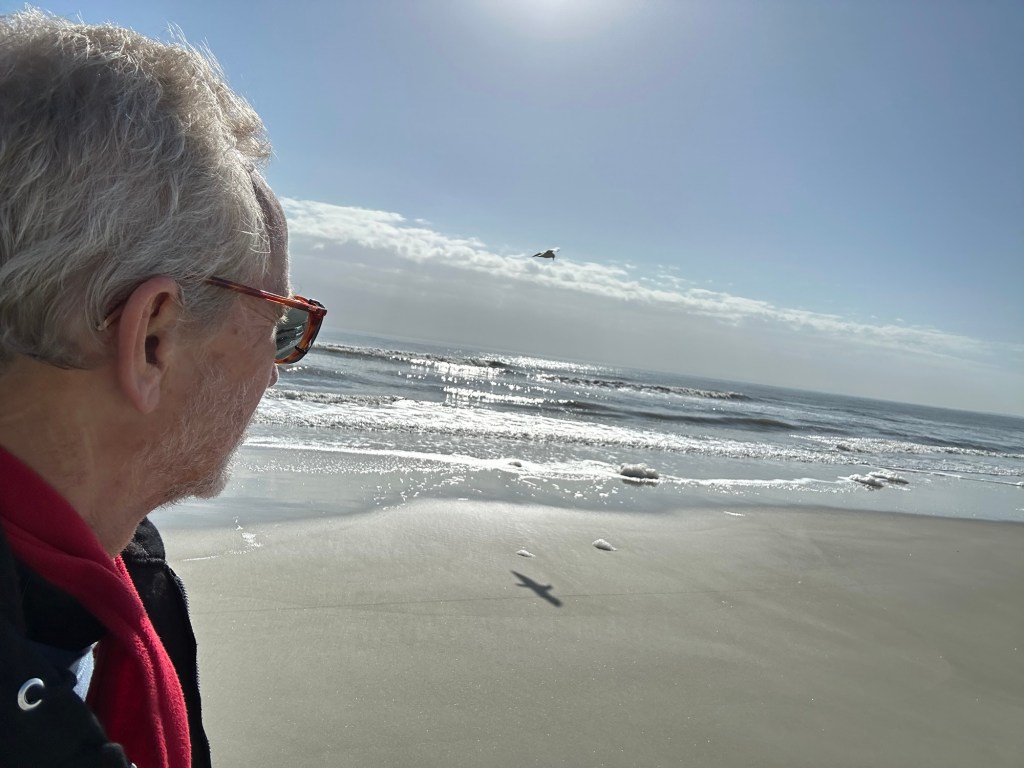
Another excuse to show off that this is where I take my lunch time?
La mer est tout!
The sea is everything!
Elle n’est que mouvement et amour!
It is nothing but movement and love!
And … another excuse to show off that this is where I take my lunch time.