4.21.2024 – contemporary

contemporary
methodological and
theoretical

Such great words and use of multi syllable words!

I picked up a copy of ReFocus: The Films of Lawrence Kasdan by Brett Davis (Edinburgh University Press, Edinburgh, 2024).

The blurb on the book says that the ReFocus make up a series of contemporary methodological and theoretical approaches to the interdisciplinary analyses and interpretations of neglected American directors, from the once-famous to the ignored, in direct relationship to American culture — its myths, values, and historical precepts.

Read that out loud.

A series of contemporary methodological and theoretical approaches to the interdisciplinary analyses and interpretations of neglected American directors, from the once-famous to the ignored, in direct relationship to American culture — its myths, values, and historical precepts.

I read a sentence like that and I want to stand up and cheer.

So I did.

4.15.2024 – yet once, ages ago,

yet once, ages ago,
they had been everywhere and
had seen everything

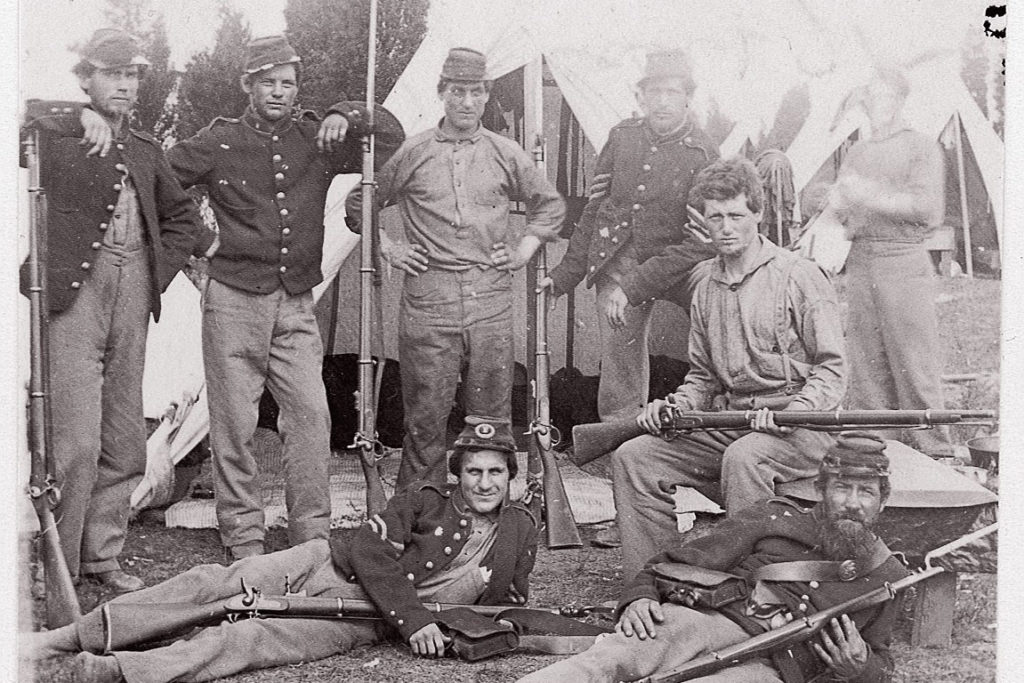
The books which make up this trilogy began, very simply, as an attempt to understand the men who fought in the Army of the Potomac. As a small boy I had known a number of these men in their old age; they were grave, dignified, and thoughtful, with long white beards and a general air of being pillars of the community. They lived in rural Michigan in the pre-automobile age, and for the most part they had never been fifty miles away from the farm or the dusty village streets; yet once, ages ago, they had been everywhere and had seen everything, and nothing that happened to them thereafter meant anything much. All that was real had taken place when they were young; everything after that had simply been a process of waiting for death, which did not frighten them much—they had seen it inflicted in the worst possible way on boys who had not bargained for it, and they had enough of the old-fashioned religion to believe without any question that when they passed over they would simply be rejoining men and ways of living which they had known long ago.

Yet, in an odd way, the old veterans did leave one correct impression: the notion that as young men they had been caught up by something ever so much larger than themselves and that the war in which they fought did settle something for us—or, incredibly, started something which we ourselves have got to finish. It was not only the biggest experience in their own lives; it was in a way the biggest experience in our life as a nation, and it deserves all of the study it is getting.

From the preface to Mr. Lincoln’s Army, Book One of the Army of Potomac Trilogy by Bruce Catton, (Doubleday, Garden City, NY, 1962).

They lived in rural Michigan in the pre-automobile age, and for the most part they had never been fifty miles away from the farm or the dusty village streets;

yet once, ages ago, they had been everywhere and had seen everything, and nothing that happened to them thereafter meant anything much.

All that was real had taken place when they were young;

everything after that had simply been a process of waiting for death, which did not frighten them much —

they had seen it inflicted in the worst possible way on boys who had not bargained for it,

It was not only the biggest experience in their own lives; it was in a way the biggest experience in our life as a nation.

I am reminded of what Big Bill wrote in his play, Henry V.

And gentlemen in England now a-bed
Shall think themselves accursed they were not here,
And hold their manhoods cheap whiles any speaks
That fought with us upon Saint Crispin’s day.

In remembrance of Mr. Abraham Lincoln who died on April 15th, 1865.

4.14.24 – I just hit the ball

I just hit the ball
in all the places I know
I shouldn’t hit it

“I didn’t have a very good warm-up session and I kept it going all day today,” Woods said.

I just hit the ball in all the places that I know I shouldn’t hit it. And I missed a lot of putts. Easy, makable putts. I missed a lot of them.

Tiger Woods on his play on the 3rd day at the 2024 Master’s Tournament as quoted in the article, Tiger Woods makes unwanted Masters history while Scheffler edges into lead by Ewan Murray at Augusta.

Back in the day, sportswriters gathered around athletes in locker rooms or anywhere after an event and hoped for a great quote, a quote, any quote, the sports writer could use to construct a story.

Sometimes the sports writer might score an exclusive by being the only reporter around.

Today, by agreement with the people who run sports, these poor athletes have to drag themselves to a room filled with sports writers, sit at table on a platform down front and answer the question, “What happened out there today?”

Yesterday Mr. Woods was obviously honest.

When asked what happened when he shot an 82 (a bad score I am told and if I remember correctly an 82 is what Roy McAvoy, played by Kevin Costner, shot in the movie, Tin Cup), Mr. Woods said, “I just hit the ball in all the places that I know I shouldn’t hit it. And I missed a lot of putts. Easy, makable putts. I missed a lot of them.”

That about sums it up.

I am reminded of a story Jim Bouton tells in his book, Ball Four, about Mickey Mantle being asked about a home run.

“He’d be interviewed by some announcer about a home run he hit, with the wind blowing from left to right and the ball had been curving into the wind and thus was saved from going foul. “That’s right,” Mickey said. “When I noticed the wind blowing like that—I always check, you know—I put the proper English on the ball, left or right, up or down, depending upon which way the wind is blowing.”

Mr. Bouton writes that the announcer who asked the question never even looked up, just wrote it all down in his notes.

What if we were faced with obvious questions about what happened to us or why we did something.

One summer when I was a kid, my Dad came home with a chain saw.

What did you get that thing for?” my Mom asked.

“To clean out the brush. As long as I use it properly, there is nothing to worry about.”

“You will be out in the woods and hurt yourself!”

“I got an electric one so I can’t be out in the woods as it needs an extension cord. As long as I use it properly, there is nothing to worry about.”

“You are a Dentist and you are going to cut your fingers off!

As long as I use it properly, there is nothing to worry about.”

A few hours later, I was sitting in the kitchen and my Dad came in.

His hand was wrapped in a towel that was turning red with blood.

Where’s Mother?” Dad asked as he looked around, trying to hide his bloody hand.

Dad, what happened out there?” I asked.

I wasn’t using it properly!

That about summed it up.

4.13.2024 – when it comes to it …

when it comes to it …
takes brave personality …
to take any chance

Adapted from the Saturday Guardian Feature, Blind Date, with the heading, ‘Did we kiss? In public? Heavens, no, we’re British! But we did have a warm goodbye hug’.

In response to the question, What were you hoping for?, the feller on this Blind Date responded, “At our age we have less confidence when it comes to dating, so it takes a brave personality to take a chance where the outcome will be published.”

I liked that response.

We all the know the story of when Ben Franklin edited Thomas Jefferson’s Declaration of Independence.

Dr. Franklin told Jefferson of the man who had the sign that said, “John Thompson, Hatter, makes and sells hats — for ready money,’ on a sign in the shape of the hat.

Dr. Franklin then edits out everything until all he has left is the sign in the shape of hat and the name, John Thompson.

“What else do you need?” asked Dr. Franklin.

Let’s apply this style of editing to the response the man made.

We start with: At our age we have less confidence when it comes to dating, so it takes a brave personality to take a chance where the outcome will be published.

Is age a factor?

We have less confidence when it comes to dating, so it takes a brave personality to take a chance where the outcome will be published.

Do we care if it gets published, I mean everything everywhere ends up on social media, right?

We have less confidence when it comes to dating, so it takes a brave personality to take a chance.

And just dating? Really? Just dating?

We have less confidence, so it takes a brave personality to take a chance.

Confidence?

I have confidence in the sun coming up and the tide sweeping the beach twice a day, all other bets are OFF.

It takes a brave personality to take a chance.

I think Dr. Franklin would agree that that about sums it up.

4.9.2024 – it did not strike

it did not strike
eye quite as quickly but a
certain grandeur, too

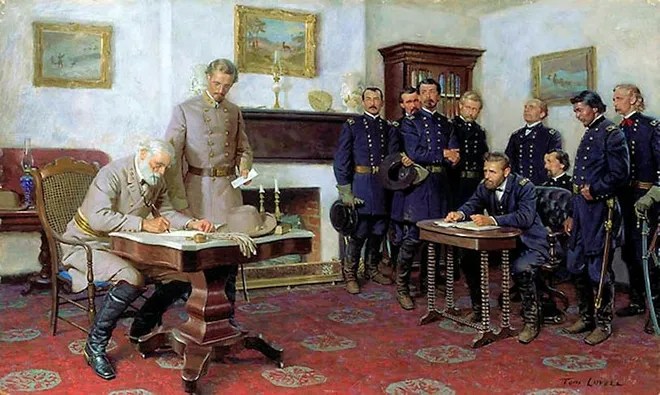
And he wrote into the terms of surrender one of the great sentences in American history. Officers and men were to sign paroles, and then they were to go home, “‘not to be disturbed by the United States authority so long as they observe their paroles and the laws in force where they reside.” ‘

Grant looked at the beaten army and he saw his own fellow Americans, who had made their fight and lost and now wanted to go back and rebuild. But the war had aroused much hatred and bitterness, especially among those who had done no fighting, and Grant knew very well that powerful men in Washington were talking angrily of treason and of traitors, and wanting to draw up proscription lists, so that leading Confederates could be jailed or hanged.

The sentence Grant had written would make that impossible. They could proceed against Robert E. Lee, for instance, only by violating the pledged word of U. S. Grant, who had both the will and the power to see his word kept inviolate. If they could not hang Lee they could hardly hang anybody. There would be no hangings. Grant had ruled them out.

It did not strike the eye quite as quickly, but U. S. Grant had a certain grandeur about him, too.

From U.S. Grant and the American Military Tradition by Bruce Catton, Little, Brown and Company, 1954.