by means of which sounds represented, language is made visible
Adapted from the book, Facts for Everybody by Robert Kemp Philp, 1863, T. Nelson and Sons, Paternoster Row, London.
The fact from Facts for Everybody that I am quoting is the listed under ALPAHABET.
Mr. Philp writes thusly:
ALPHABET.The most important invention of man, ascribed to a Phœnician, by means of which sounds are represented, and language made visible to the eye by a few simple characters.
Previous to this invention, pictures, or hieroglyphics, were used to record events; and letters were, probably, a generalization of these.
At this day, the Chinese have no letters, but have 214 keys to classes of words, distinguished by the number of strokes combined in each, The English language has 26 letters; the French 23; Hebrew 22; Greek 24; the Latin 22; the Arabic 28.
The figures used in arithmetic are an universal character, and many attempts have been made by the learned to introduce an universal character into language, but at present (1863 remember) there are 200 or 300 various alphabets.
The most important invention of man?
But what about …
But what …
But …
The most important invention of man!
Language made visible.
I am not sure that anything I have written or quoted (including Mr. Hemingway’s Novel in 6 words) has packed so much into so few words.
Language made visible.
I recall another quote in a post quoting Alain de Botton.
I began word painting because such a factual description seemed of little help to me in pinning down why I found the scene so impressive.
Word painting with language made visible through use of the alphabet.
Word painting in 2022 using a keyboard of letters developed in 1870 and a description describing language made visible written in 1863 about an invention that dates back perhaps to 1000’s of years before the birth of Christ.
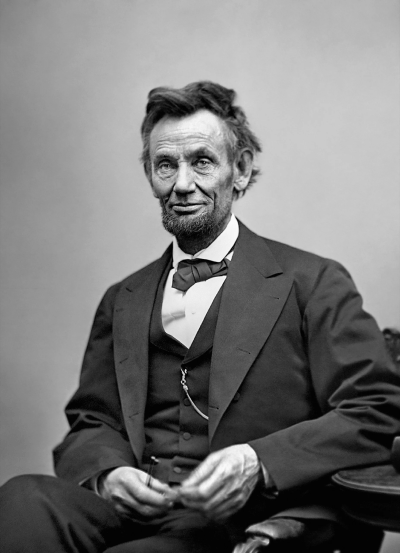
malice toward none with charity for all strive to finish the work
Adapted from Abraham Lincoln’s 2nd Inaugural Address.
A speech Mr. Lincoln made on March 4, 1865.
On April 14, 1865, he was shot.
On April 15, 1865, he died.
Here is the speech.
“Fellow countrymen: at this second appearing to take the oath of the presidential office there is less occasion for an extended address than there was at the first. Then a statement somewhat in detail of a course to be pursued seemed fitting and proper. Now, at the expiration of four years during which public declarations have been constantly called forth on every point and phase of the great contest which still absorbs the attention and engrosses the energies of the nation little that is new could be presented. The progress of our arms, upon which all else chiefly depends is as well known to the public as to myself and it is I trust reasonably satisfactory and encouraging to all. With high hope for the future no prediction in regard to it is ventured.
“On the occasion corresponding to this four years ago all thoughts were anxiously directed to an impending civil war. All dreaded it ~ all sought to avert it. While the inaugural address was being delivered from this place devoted altogether to saving the Union without war insurgent agents were in the city seeking to destroy it without war ~ seeking to dissolve the Union and divide effects by negotiation. Both parties deprecated war but one of them would make war rather than let the nation survive, and the other would accept war rather than let it perish. And the war came.
“One eighth of the whole population were colored slaves not distributed generally over the union but localized in the southern part of it. These slaves constituted a peculiar and powerful interest. All knew that this interest was somehow the cause of the war. To strengthen perpetuate and extend this interest was the object for which the insurgents would rend the Union even by war while the government claimed no right to do more than to restrict the territorial enlargement of it. Neither party expected for the war the magnitude or the duration which it has already attained. Neither anticipated that the cause of the conflict might cease with or even before the conflict itself should cease. Each looked for an easier triumph and a result less fundamental and astounding. Both read the same Bible and pray to the same God and each invokes His aid against the other. It may seem strange that any men should dare to ask a just God’s assistance in wringing their bread from the sweat of other men’s faces but let us judge not that we be not judged. The prayers of both could not be answered ~ that of neither has been answered fully. The Almighty has His own purposes. “Woe unto the world because of offenses for it must needs be that offenses come but woe to that man by whom the offense cometh.” If we shall suppose that American slavery is one of those offenses which in the providence of God must needs come but which having continued through His appointed time He now wills to remove and that He gives to both North and South this terrible war as the woe due to those by whom the offense came shall we discern therein any departure from those divine attributes which the believers in a living God always ascribe to Him. Fondly do we hope ~ fervently do we pray ~ that this mighty scourge of war may speedily pass away. Yet, if God wills that it continue until all the wealth piled by the bondsman’s two hundred and fifty years of unrequited toil shall be sunk and until every drop of blood drawn with the lash shall be paid by another drawn with the sword as was said three thousand years ago so still it must be said ‘the judgments of the Lord are true and righteous altogether.’
“With malice toward none with charity for all with firmness in the right as God gives us to see the right let us strive on to finish the work we are in to bind up the nation’s wounds, to care for him who shall have borne the battle and for his widow and his orphan ~ to do all which may achieve and cherish a just and lasting peace among ourselves and with all nations.”
Always on the lookout for remarkable, or worthy of a remark, words and remarkable words brought together in a remarkable fashion, I came across this line in Wikipedia this morning:
Raffaello Sanzio da Urbino; (28 March or 6 April 1483 – 6 April 1520) known mononymously as Raphael, was an Italian painter and architect of the High Renaissance.
I always wish I had studied Italian for no other reason than it LOOKS like fun to talk like that.
I imagine little Raphael in kindergarten and the teacher reading the role, calling Raffaello Sanzio da Urbino, and little Raphael saying ‘presente’.
Raffaello Sanzio da Urbino was on my mind this morning due a review I read of an exhibition now in London.
I might as well read about it even though I am not going to London and even if I was I know that I wouldn’t be able to get the ticket to see the exhibition and even I was able to get a ticket I most likely wouldn’t be able to afford it let alone the ticket to London.
The reviewer writes: “Of the big three of the High Renaissance, he was the most straightforward, the most productive, and for 300 years, the most influential.”
When talking of the High Renaissance, the big three were Leonardo, Michelangelo and Raphael.
I remember being in lectures on these fellers back in college as History of Art was my minor but all that I really remember is that of the three, it was Raphael who took a step back, looked at the suffering, angst and anguish that went into the art of the other two and said to himself, “there has got to be a better way” then went out and found one.
He lived the good life and it shows in the life and color that is in his work.
But on the one hand both Leonardo and Michelangelo lived to be crabby old men and Raphael, like Mozart, died in his late 30’s.
The review of the exhibition brought me to search him out and if you throw a name into the google, you will get Wikipedia links back and Wikipedia threw the word mononymously into my brain and it got me thinking.
I love the word and never knew it existed until one hour ago.
Mononymously.
My spell check throws it out.
The Google pretty much throws it out.
Online dictionaries find mononymous and mononym and the Macmillan Online Dictionary has the curious line, There is also some evidence for a derived noun mononymity, meaning something like: ‘the state of only using one name’.
Some evidence?
The Committee is still out on this one I guess.
But no mention of the adverb Mononymously or the act of being known by one name.
Is that just supposed to be understood?
Then it got me to thinking of those folks truly known mononymously.
So often anyone known mononymously owes to their current celebrity.
As Paul Simon wrote:
He’s so unhip that when you say Dylan He thinks you’re talking about Dylan Thomas Whoever he was The man ain’t got no culture
And I would have bet a doughnut that with a name like Dylan, you would be able to achieve mononymity.
Of course, Mr. Simon does mix first and last names here but you get my drift.
Does a name have to be unusual to achieve true mononymity?
I don’t think so but it helps.
When you say ‘Michael’ do you mean Michael Jackson or Michael Jordan?
When you say ‘Elvis’ do you mean, well, Elvis or Elvis Grbac who played quarterback at Michigan who threw the touchdown pass to Desmond Howard to beat Notre Dame that my wife witnessed but doesn’t remember (the game, the pass or that there was someone named Elvis in the building).
According once again to Wikipedia, 100 Billion people have lived and died in the history of the world.
And somehow, someway, some folks achieve mononymity.
That the big three of the High Renaissance achieved it and have held it for the last 500 years must say something.
I, on the other hand, have achieved anonymity and am happy with that.
One source says one third of the American males are named Michael.
I once saw a printed birthday card that had Happy Birthday Mike on the front … and inside something like, don’t get excited, half the world could get this card.
A search of the Google for my name in quotes shows 1.1 million hits ( in .63 seconds – which is a ridiculous amount of time even when you consider it is often longer than the time separating most Olympic Gold and Bronze medal winners).
Yet in MY CHILDHOOD, when I went to school in 7th grade, three teachers called the role that first day of school and got my name wrong.
I was marked absent for three days until those teachers looked at me and asked who was I?
I said my name was Mike and that I had no idea who Michelle Hoffman was.
Courage was mine, I had mystery; Wisdom was mine, had mastery:
Adapted from the poem, Strange Meeting by Wilfred Owen, who wrote some of the best British poetry on World War I, composed nearly all of his poems in slightly over a year, from August 1917 to September 1918. In November 1918 he was killed in action at the age of 25, one week before the Armistice. Only five poems were published in his lifetime.
The punctuation is in the original.
Strange Meeting

It seemed that out of battle I escaped
Down some profound dull tunnel, long since scooped
Through granites which titanic wars had groined.

Yet also there encumbered sleepers groaned,
Too fast in thought or death to be bestirred.
Then, as I probed them, one sprang up, and stared
With piteous recognition in fixed eyes,
Lifting distressful hands, as if to bless.
And by his smile, I knew that sullen hall,—
By his dead smile I knew we stood in Hell.

With a thousand fears that vision’s face was grained;
Yet no blood reached there from the upper ground,
And no guns thumped, or down the flues made moan.
“Strange friend,” I said, “here is no cause to mourn.”
“None,” said that other, “save the undone years,
The hopelessness. Whatever hope is yours,
Was my life also; I went hunting wild
After the wildest beauty in the world,
Which lies not calm in eyes, or braided hair,
But mocks the steady running of the hour,
And if it grieves, grieves richlier than here.
For by my glee might many men have laughed,
And of my weeping something had been left,
Which must die now. I mean the truth untold,
The pity of war, the pity war distilled.
Now men will go content with what we spoiled.
Or, discontent, boil bloody, and be spilled.
They will be swift with swiftness of the tigress.
None will break ranks, though nations trek from progress.
Courage was mine, and I had mystery;
Wisdom was mine, and I had mastery:
To miss the march of this retreating world
Into vain citadels that are not walled.
Then, when much blood had clogged their chariot-wheels,
I would go up and wash them from sweet wells,
Even with truths that lie too deep for taint.
I would have poured my spirit without stint
But not through wounds; not on the cess of war.
Foreheads of men have bled where no wounds were.

“I am the enemy you killed, my friend.
I knew you in this dark: for so you frowned
Yesterday through me as you jabbed and killed.
I parried; but my hands were loath and cold.
Let us sleep now …”
read for enjoyment that reading is a pleasure one of the greatest
Adapted from the line, “I must remind you here of something that I have already insisted upon, namely that I am very strongly of opinion that you should read for enjoyment. To my mind it is very ill-advised to look upon reading as a task; reading is a pleasure, one of the greatest that life affords, and if these books of which I am now going to speak to you do not move, interest or amuse you, there is no possible reason for you to read them.” from the essay, Books and You: A Dissertation Upon Reading by W. Somerset Maugham.


 No Haiku For You