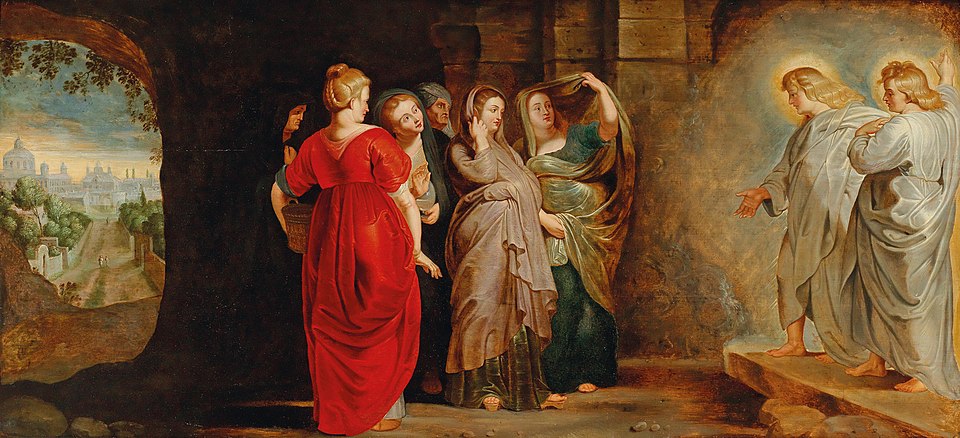
why do you look for the living among the dead? remember, told you
Why do you look for the living among the dead? He is not here; he has risen! Remember how he told you, while he was still with you in Galilee: ‘The Son of Man must be delivered over to the hands of sinners, be crucified and on the third day be raised again.’ ” Then they remembered his words.
Luke 24 (New International Version)
Workshop of Peter Paul Rubens – The Women at Christ’s empty tomb (1640)
the distortion and weaponisation of faith deeply saddening
Adapted from the article, As Team Trump wage unceasing war on Iran, evangelical nationalists are destroying any moral world order we once had by Simon Tisdall in the Guardian on April, 4, 2026 where Mr. Tisdall writes:
For most practising Christians, the misappropriation, distortion and weaponisation of faith to justify death and destruction, sow divisions, excuse war crimes and bomb Iran “back to the stone ages” is deeply saddening.
Christians – who celebrate Easter on Sunday – believe Jesus was crucified for the sake of all mankind, for the forgiveness of sins, not for vindictive vengeance, pride and domination.
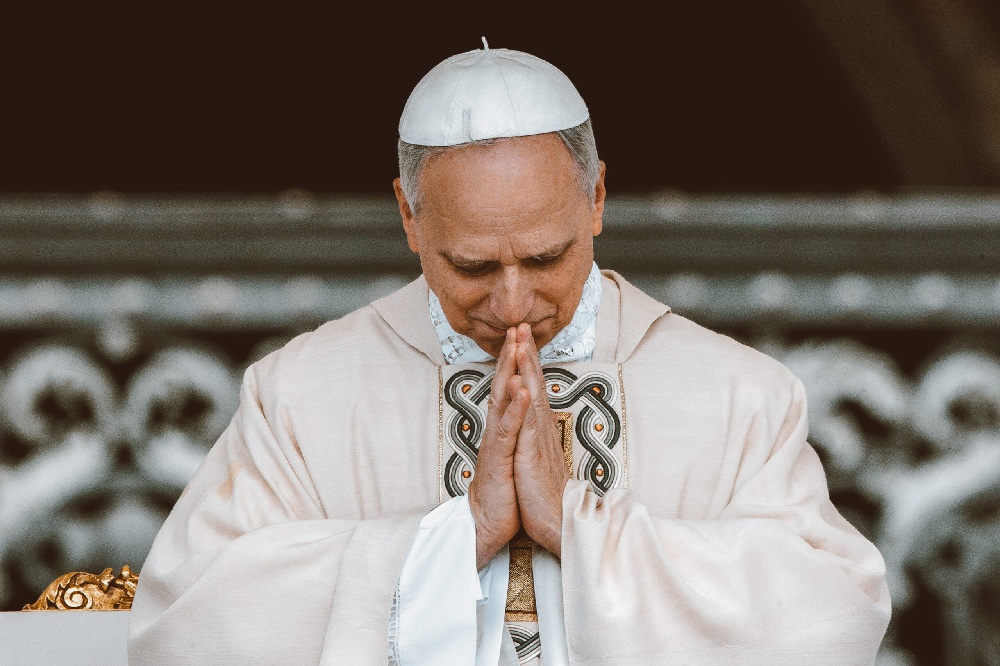
Pope Leo spoke for many beyond the Catholic church at a Palm Sunday mass in Rome in forcefully rejecting attempts by zealots such as Hegseth to conscript Christianity.
“No one can use [Jesus] to justify war,” he said, quoting Isaiah. War-makers’ prayers would go unanswered. “Your hands are full of blood.”
I grew up in the Evangelical Church (Pre Trump).
I grew up
singing Onward Christian Soldiers and The Battle Hymn of the Republic.
Onward, Christian soldiers,marching as to war, With the cross of Jesus going on before!
And
Mine eyes have seen the glory of the coming of the Lord; He is trampling out the vintage where the grapes of wrath are stored; He hath loosed the fateful lightning of his terrible swift sword; His truth is marching on.
As a little kid in Sunday School and Tuesday Bible Club, we sang a song the closed with the line “For I’m in the Lord’s Army, YES SIR!” and when you hit the Yes SIR!, you yelled it out and saluted like a Marine Drill Sergeant.
We also sang a song that went:
Jesus loves the little children All the children of the world Red and yellow, black and white They are precious in His sight Jesus loves the little children of the world
It just came to me, typing out these words that the first couple of songs are written in the 1st person and about me.
That last song is in the 3rd person and is talking about Jesus.
Maybe that’s where the disconnect comes in.
Still …
That line from the article, “Christians – who celebrate Easter on Sunday – believe Jesus was crucified for the sake of all mankind, for the forgiveness of sins, not for vindictive vengeance, pride and domination.“
Thinking about what Pope Leo said. “No one can use [Jesus] to justify war.”
And that kids song:
Jesus loves the little children All the children of the world Red and yellow, black and white They are precious in His sight Jesus loves the little children of the world
initiate offense shoot outside and score inside pass, rebound, defend
Lendeborg’s performance is a big reason why the Wolverines are in position to do so. He unlocked Michigan’s offense, the ultimate wild card for a coach with May’s extensive playbook. He’s the versatile linchpin of a big-ball bully lineup that has stuffed opponents into lockers all season, able to run fast breaks, initiate offense in the half court, shoot outside, score inside, pass, rebound, defend. He’s shooting better than 37 percent from beyond the arc on the season and has developed a lethal Euro step that has defenders backpedaling out of posters in transition.
“(My mom) really dug me out of the hole that I was in,” Lendeborg said. “This is pretty much a dream come true.”
A team that has stuffed opponents into lockers all season with a key player who:
is able to run fast breaks –
initiate offense in the half court –
shoot outside –
score inside –
pass –
rebound –
defend –
Versatile?
The online dictionary define versatile says that “Versatile describes a person, tool, or material capable of doing many things well, adapting to new tasks, or having multiple uses. It implies flexibility, adaptability, and being “all-around”.
Versatile is indeed the word for a basketball player who is able to run fast breaks, initiate offense in the half court, shoot outside, score inside, pass, rebound, defend.
Based on the New York Times Opinion piece, The Conversation: Tastelessness and Classlessness Are the Least of Our Concerns by Frank Bruni and Bret Stephens.
Frank Bruni is a professor of journalism and public policy at Duke University and Bret Stephens is an Opinion columnist for The Times, writing about foreign policy, domestic politics and cultural issues.
They create a weekly column where they discuss current events where Mr. Bruni takes the ‘left’ side of the discussion while Mr. Stephens takes the ‘Right’ side.
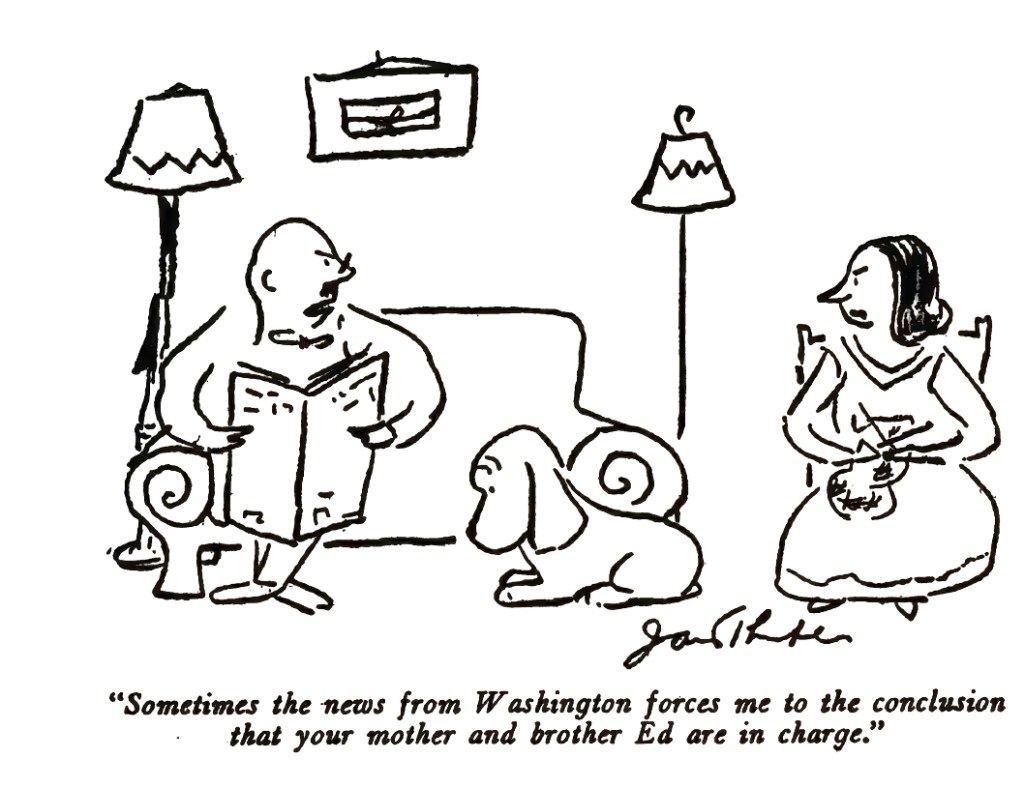
This is what Mr. Stephens, the feller who takes the ‘Right’ side of an argument wrote about the speech the feller in office made last night.
As our readers know, I support the war and think it’s been far more successful — and necessary — than critics acknowledge.
I learned nothing from it that I hadn’t known before it started, except that Trump somehow thinks that the Strait of Hormuz will be reopened by something akin to magic.
It was also a signal to what remains of the Iranian regime that they just need to hold on for another two or three weeks and it will be over.
A reminder that, even if this is the right war, we’ve got the wrong president.
Zacchaeus was a wee little man, and a wee little man was he
Jesus entered Jericho and was passing through. A man was there by the name of Zacchaeus; he was a chief tax collector and was wealthy.
He wanted to see who Jesus was, but because he was short he could not see over the crowd. So he ran ahead and climbed a sycamore-fig tree to see him, since Jesus was coming that way.
When Jesus reached the spot, he looked up and said to him, “Zacchaeus, come down immediately. I must stay at your house today.” So he came down at once and welcomed him gladly.
All the people saw this and began to mutter, “He has gone to be the guest of a sinner.”
But Zacchaeus stood up and said to the Lord, “Look, Lord! Here and now I give half of my possessions to the poor, and if I have cheated anybody out of anything, I will pay back four times the amount.”
Jesus said to him, “Today salvation has come to this house, because this man, too, is a son of Abraham. For the Son of Man came to seek and to save the lost.”
Luke 19:1-10 (NIV)
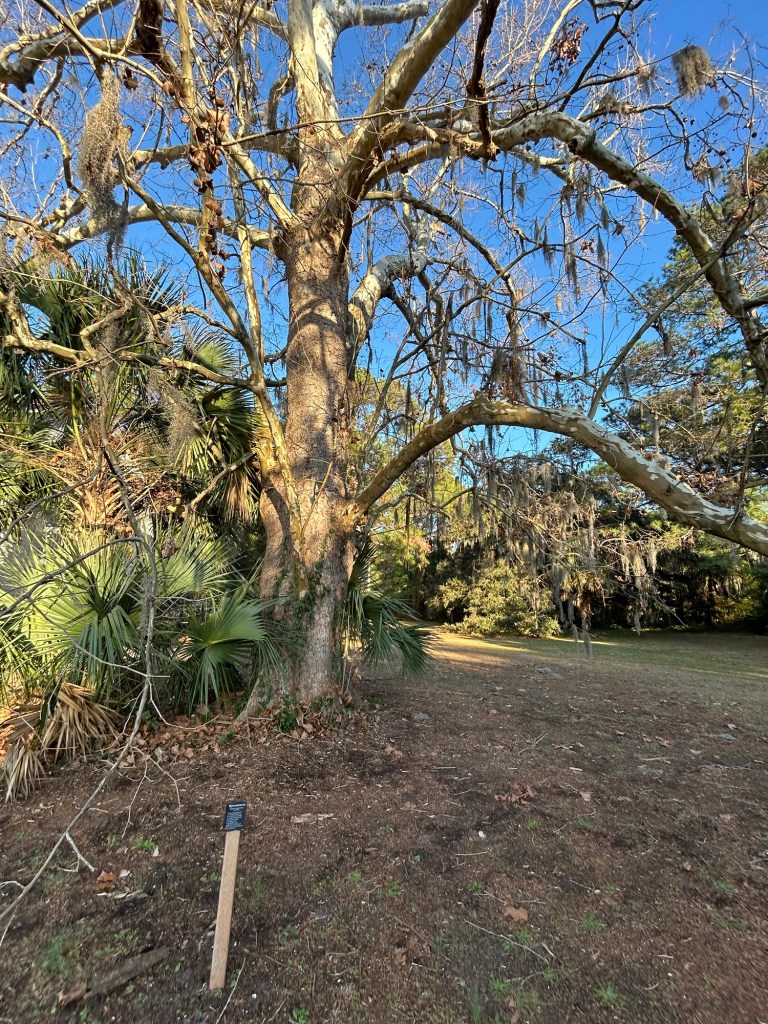
This tree is on the grounds of the Carolina Coastal Museum on Hilton Head Island.
Thanks to the handy little markers, I can tell you it is a Sycamore.
Who doesn’t remember the Sycamore Tree?
If you grew up with me in West Michigan church circles, at some point in your life didn’t you sang the Sunday School song about Zacchaeus that goes:
Zacchaeus Was A Wee Little Man, And A Wee Little Man Was He. He Climbed Up In A Sycamore Tree, For The Lord He Wanted To See. And As The Savior Passed Him By, He Looked Up In The Tree, And He Said, “Zacchaeus, You Come Down; For I’m Going To Your House Today, For I’m Going To Your House Today”
By some misguided judgement, for a couple years of my life, I was the summer replacement, emergency go-to-guy for the 4 Year Old Sunday School class at my Church and this song was a staple of my time with the 4 year olds.
I sang it as I only I could and slowed the 5th verse down so that me and all the kids held out one finger and pointed and said each word slowly so that it came out Zacchaeus! (Pause-Point) You (Pause-Point)Come (Pause-Point)Downnnnnnnnnnnnnnnnnnnn!
Then I changed the last word so that we sang, For I’m Going To Your House To Play, For I’m Going To Your House To Play.
When I went home after church, I took the phone off the hook so calls from parents went answered.
Can’t explain it, but week after week, I got asked to come back …
Anyway, back on the Island, when I read the little marker in front of the tree, I thought that for the first time in my life I was looking at a Sycamore Tree and I sang the song over and over until I was told to please shut up.
But I was happy.
I was standing in front of a Sycamore and it was easy to see with the low branches and the number of branches how wee little Zacchaeus was able to climb up in the tree.
I could picture the wee little man in his purple robes, just like in the flannel graph song sheets we had in Sunday School, hanging from the branches.
So, it was with no little sadness to learn that there are sycamore trees and then there are sycamore trees.
Turns out, what I was looking at was a Platanus occidentalis, also known as the American Sycamore.
According to Wikipedia, it is a species of Platanus native to the eastern and central United States, the mountains of northeastern Mexico, extreme southern Ontario, and extreme southern Quebec.
The sycamore tree is often divided near the ground into several secondary trunks, very free from branches. Spreading limbs at the top make an irregular, open head. Roots are fibrous. The trunks of large trees are often hollow.
If you read the Bible story quoted above in the King James English, it says that Zacchaeus climbed up in a Sycomore tree not a Sycamore.
The New International Version of the Bible that I quote from does say sycamore-fig tree and that is a completely different tree from the Platanus occidentalis, also known as American sycamore.
The Sycamore-fig is the Ficus sycomorus, or the fig-mulberry (because the leaves resemble those of the mulberry), sycamore, or sycomore, is a fig species that has been cultivated since ancient times.
According to wikipedia, Ficus sycomorus is native to Africa south of the Sahel and north of the Tropic of Capricorn, excluding the central-west rainforest areas. It grows naturally in Lebanon; in the southern Arabian Peninsula; in Cyprus; in very localised areas in Madagascar; and in Israel, Palestine and Egypt.
Well.
As Frank Lloyd Wright might say, there you are.
My story for Palm Sunday, 2026.
Me and the Sycamore on Hilton Head, Zacchaeus and Jesus who said, “For the Son of Man came to seek and to save the lost.”
I hear your questions.
Even down here on the Sea Islands of South Carolina, I hear your questions.
You want to know what in the world Zacchaeus has to do with Palm Sunday.
I’ll tell you.
And I wasn’t something I noticed until I looked up these verses when I first saw the Sycamore.
In Chapter 19 of Book of Luke, Jesus looks up and sees that wee little man and tells him to come down.
The Book of Luke says that the crowd listened to Jesus explain why he was going to the House of Zacchaeus, the sinner, for supper.
The Book of Luke of Luke says that Jesus noticed he had the crowd interested so he told the parable of the Rich Man who gave 10 of servants money to invest and then Rich Man examined how the servants responded.
The Book of Luke says that after Jesus had said this, he went on ahead, going up to Jerusalem …
Those who were sent ahead went and found it just as he had told them. As they were untying the colt, its owners asked them, “Why are you untying the colt?”
They replied, “The Lord needs it.”
They brought it to Jesus, threw their cloaks on the colt and put Jesus on it. As he went along, people spread their cloaks on the road.
When he came near the place where the road goes down the Mount of Olives, the whole crowd of disciples began joyfully to praise God in loud voices for all the miracles they had seen:
“Blessed is the king who comes in the name of the Lord!”
“Peace in heaven and glory in the highest!”
So it seems that on the Morning of Palm Sunday, Jesus met Zacchaeus.
I guess he at lunch at his house and then went to ride into Jerusalem.
And we remember this because of that great Palm Sunday song …
Zacchaeus Was A Wee Little Man, And A Wee Little Man Was He. He Climbed Up In A Sycamore Tree, For The Lord He Wanted To See. And As The Savior Passed Him By, He Looked Up In The Tree, And He Said, “Zacchaeus, You Come Down; For I’m Going To Your House Today, For I’m Going To Your House Today”


 No Haiku For You