3.15.2020 – should remember that

should remember that
not unhealthy as they fear
healthy as they feel

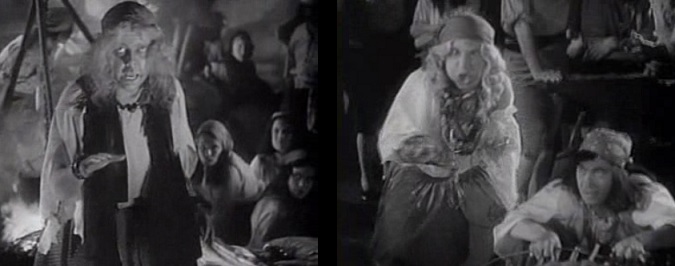
“How would you like to feel the way she looks?” says Groucho Marx in the movie, “Night at the Opera” as he watches Auzcena the gypsy singing.

I was reminded of that line when I read one the better articles on Coronavirus and what it feels like to come down with and go through the illiness.

The article, What does the coronavirus do to your body? Everything to know about the infection process, by Javier Zarracina, and Adrianna Rodriguez, USA TODAY, in a well written and nicely presented fashion recounts how you get the virus, how you feel when you start to come down with the virus and what you go through as the virus works though you.

The authors interviews a Dr. Raphael Viscidi, infectious disease specialist at Johns Hopkins Medicine.

Dr. Viscidi says, “So it’s basically a war between the host response and the virus,” Hirsch said. “Depending who wins this war we have either good outcomes where patients recover or bad outcomes where they don’t.

Restricting oxygen to the bloodstream deprives other major organs of oxygen including the liver, kidney and brain.

In a small number of severe cases that can develop into acute respiratory distress syndrome (ARDS), which requires a patient be placed on a ventilator to supply oxygen.

However, if too much of the lung is damaged and not enough oxygen is supplied to the rest of the body, respiratory failure could lead to organ failure and death.”

For me, the most important words are, “In a small number of severe cases.”

On 2nd thought those aren’t the most important words from Dr. Viscidi.

The most important words come at the very end of the article.

“People should remember that they’re as healthy as they feel,” Dr. Viscidi said. “And shouldn’t go around feeling as unhealthy as they fear.”

The article says, “Viscidi urges to public to think of the coronavirus like the flu because it goes through the same process within the body. Many people contract the flu and recover with no complications.”

In Night at the Opera, just before Grouch says, “How would you like to feel the way she looks,” he has another great line that more or less sums up my take on all this.

“Boogie, boogie, boogie”

3.14.2020 – coronavirus

coronavirus
said backward, needle reversed
turn me on dead man

If you say CORONAVIRUS backwards, you can hear the phrase, “turn me on deadman.”

Honest!

This haiku is a test.

This is only a test.

This is only a test for the people who know.

How many themes can you find hidden in this Haiku?

Records.

Not Olympic records but music, long playing albums and 45’s.

Record played with a diamond needles.

Hidden messages in records.

Playing records backwards by spinning the turntable manually.

If you could, place the tone arm, as it was called, so the needle was reversed OR just leave it and hope you didn’t wreck the needle.

Possibly the most famous ‘hidden message’ was in the Beatle’s White Album.

In the song, Revolution 9, the words, “number 9, number 9, number 9”, are repeated over and over.

If played backwards in the manner described above, you heard the secret message, “Turn Me on Deadman, Turn me on Deadman.”

You heard about this as a rumor at school.

You tried it home.

It worked!

FRONTWARDS
BACKWARDS

It was thrilling and hilarious.

You tried it all your other albums to find hidden messages.

You wrecked the needle on your record player.

You bragged at school that you heard the message but it wrecked your needle.

If you were REALLY cool you said “stylus” instead of “needle”.

Sermons in churches were based on these hidden messages.

Paul was dead.

Paul wasn’t dead just facing backwards on Sgt. Pepper.

I have never been to England, but I kinda like the Beatles.

My sister Mary screaming “THERE HE IS”, when Paul walked on stage with John Lennon to accept a Grammy.

And people think iPhones are cool.

Go figure.

Help me out, what did I miss?

3.11.2020 – call for normalcy

call for normalcy
meant to say normality
he said normalty

A candidate for the Presidency has called for a Return to Normalcy.

I have to ask, is the Candidate or the campaign handlers aware of the history of “Return to Normalcy?”

After 10 ballots and discussions in a smoke filled room, Warren G. Harding came out of the 1920 Republican Convention in Chicago as the party’s candidate for President.

Mr. Harding ran on the slogan, “Return to Normalcy.”

Saying in a speech in Boston on May 14, 1920, Mr. Harding said, “America’s present need is not heroics, but healing; not nostrums, but normalcy; not revolution, but restoration; not agitation, but adjustment; not surgery, but serenity; not the dramatic, but the dispassionate; not experiment, but equipoise; not submergence in internationality, but sustainment in triumphant nationality.”

I was taught that the speech was written as “not nostrums, but normality.”

I was also taught that the candidate delivered the speech as “not nostrums, but normalty.

My teaching went on that the press of the day in quoting the speech wrote down “not nostrums, but normalcy.

What was said, heard and recorded became a side story of the 1920 campaign.

According to an article in the Guardian, “Samuel Gompers complained that “Senator Harding does not use the word ‘normal’. He speaks of ‘normalcy’. The word is obsolete, and so is the condition to which he would return”.

And the Daily Chronicle of London kept the embers warm by sneering, in April of 1921, “Mr. Harding is accustomed to take desperate ventures in the coinage of new words.”

Poor Warren G Harding: “normalcy” had been in use (albeit in specialized contexts) from 1857, as had all other words he was accused of having coined in equal parts idiocy and elitism.

But his legacy was quickly established. “His mind was vague and fuzzy”, Frederick Allen writes in 1931:Its quality was revealed in the clogged style of his public addresses, in his choice of turgid and maladroit language (“non-involvement” in European affairs, “adhesion” to a treaty), and in his frequent attacks of suffix trouble (“normalcy” for normality, “betrothement” for betrothal).” Obama didn’t use improper grammar. Cut him and other public figures a break (Oct 29, 2018)

What is fascintating is Mr. Harding’s defense of the word.

Mr. Harding took on a Trumpian point of view and to deny that use of the normalcy was incorrect.

He went so far to say that normality was not a word and stated publicly, “I have noticed that word caused considerable news editors to change it to “normality”. I have looked for “normality” in my dictionary and I do not find it there. “Normalcy”, however, I did find, and it is a good word.”

So the Candidate wants a return to nomalcy.

I have no problem with that.

Presidential campaigns have been noted for repeated stumbles, miscues and mental lapses.

And this campaign looks to Harding for inspiration?

Maybe it will work out for them.

As Mr. Harding himself said later, “Every student has the ability to be a successful learner.”

3.2.2020 – hope, righteous fury

hope, righteous fury
dark waters, mirrors and light
disquiet runs deeper

“We normally think people with a lot of resources and political skills are the ones who participate, but many citizens in this category regularly abstain from politics. Furthermore, many citizens with few resources can be mobilized if they experience strong anger.

“Anger leads citizens to harness existing skills and resources in a given election. Therefore, the process by which emotions are produced in each campaign can powerfully alter electoral outcomes.”

Quoted from “Anger motivates people to vote, U-M study shows”

As a footnote, all the word combinations in today’s haiku appear in headlines or abstracts on the the landing page of https://www.theguardian.com/us on March 2, 2020 at 7:30AM EST.