4.15.2020 – Let’s go see Old Abe

Let’s go see Old Abe
Sitting in marble. Quiet, yet
A voice forever

Lincoln Monument: Washington
by Langston Hughes in The Dream Keeper and Other Poems, first published 1932

Let’s go see Old Abe
Sitting in the marble and the moonlight,
Sitting lonely in the marble and the moonlight,
Quiet for ten thousand centuries, old Abe.
Quiet for a million, million years.

Quiet —

And yet a voice forever
Against the
Timeless walls
Of time —
Old Abe.

From the New York Times, April 15, 1865.

President Lincoln Shot by an Assassin

The Deed Done at Ford’s Theatre Last Night.

THE ACT OF A DESPERATE REBEL

The President Still Alive at Last Accounts.

No Hopes Entertained of His Recovery.

Attempted Assassination of Secretary Seward.

DETAILS OF THE DREADFUL TRAGEDY.

WAR DEPARTMENT, WASHINGTON, April 15 — 1:30 A.M.

Maj.-Gen. Dix:

This evening at about 9:30 P.M., at Ford’s Theatre, the President, while sitting in his private box with Mrs. LINCOLN, Mrs. HARRIS, and Major RATHBURN, was shot by as assassin, who suddenly entered the box and approached behind the President.

The assassin then leaped upon the stage, brandishing a large dagger or knife, and made his escape in the rear of the theatre.

The pistoi ball entered the back of the President’s head and penetrated nearly through the head. The wound is mortal. The President has been insensible ever since it was inflicted, and is now dying.

About the same hour an assassin, whether the same or not, entered Mr. SEWARD’s apartments, and under the pretence of having a prescription, was shown to the Secretary’s sick chamber. The assassin immediately rushed to the bed, and inflicted two or three stabs on the throat and two on the face. It is hoped the wounds may not be mortal. My apprehension is that they will prove fatal.

The nurse alarmed Mr. FREDERICK SEWARD, who was in an adjoining room, and hastened to the door of his father’s room, when he met the assasin, who inflicted upon him one or more dangerous wounds. The recovery of FREDERICK SEWARD is doubtful.

It is not probable that the President will live throughout the night.

Gen. GRANT and wife were advertised to be at the theatre this evening, but he started to Burlington at 6 o’clock this evening.

At a Cabinet meeting at which Gen. GRANT was present, the subject of the state of the country and the prospect of a speedy peace was discussed. The President was very cheerful and hopeful, and spoke very kindly of Gen. LEE and others of the Confederacy, and of the establishment of government in Virginia.

All the members of the Cabinet except Mr. SEWARD, are now in attendance upon the President.

I have seen Mr. SEWARD, but he and FREDERICK were both unconscious.

EDWlN M. STANTON,

Secretary of War.

Postscript: In one of those odd happenstances that dot the life of this blog, as I wrote this, Copeland’s Fanfare for the Common Man was playing on the radio …
4.11.2020 community we had

community we had
community we have, get to
community we need

Could there be a silver lining to the coronavirus?

Can a positive spin be spun on covid-19?

Maybe.

Maybe there will be a chance to start over again.

A national reset.

A global reboot.

A chance once more for the ‘City on a hill.”

In American History, the phrase comes on the stage in 1630.

John Winthrop, Governor of the Massachusetts Bay Colony from 1630 to 1634, used the phrase in a public address titled, “A Model of Christian Charity.”

Winthrop looked to the Bible verse, “You are the light of the world. A town built on a hill cannot be hidden.” Matthew 5:14 (NIV)

According to the Wikipedia Article on the speech, Winthrop felt that God made people have different positions from one another, “To foster an inter-dependence among mankind, that “every man might have need of others, and from hence they might be all knit more nearly together in the bonds of brotherly affection.”

Every one might have need of others certainly describes community today.

Winthrop then moves on to explain that there are two overriding “rules” which should govern all interactions within a community, “two rules whereby we are to walk one towards another: Justice and Mercy.”

The overriding principle is: “if thou lovest God thou must help [thy brother].

Justice.

Mercy.

Help thy Brother.

Mr. Winthrop saw the need back in 1630.

400 years later, still trying to get to that City on the Hill.

Maybe.

Maybe there will be a chance to try again.

I am reminded on an episode of that old, bizarre show, Family Affair.

Jody, Buffy, Mrs. Beazley and Mr. French.

We watched the show because it was on TV after school.

We didn’t watch the show because we wanted to watch the show.

We watched the show because we watched TV after school.

There were three channels.

We could watch a soap opera, Mike Douglas or something else.

For a long time, reruns of Family Affair was something else.

ANYWAY, there was an episode where Buffy and Jody noticed that no one in their New York apartment building interacted.

They arranged a get-to-know-you party in the lobby with treats baked by their Uncle’s butler, Mr. French.

It was kind of weird show at that.

No one came to the party.

The kids were down cast and returned to their apartment.

Later there was a loud commotion out in the hallway.

The elevators had jammed and people were trapped.

All the people who lived on that floor were out in a panic.

The kids Uncle Bill (Played by Brian Keith – you have to see him as Theodore Roosevelt in The Wind and the Lion) took charge and told Dads to go to other floors.

The plan was that they would all press the elevator buttons to see if that would clear the system.

The idea worked and the elevator service is restored.

Lots of hugs and handshakes all around.

Crisis averted!

Buffy and Jody notice the crowd and run back to their apartment and return with the punch and snacks and cups.

By the time they return, everyone has gone back to their apartments and the hallway is empty again.

Uncle Bill explains that people want privacy but they are there when you need them.

I started typing this about Family Affair with grave misgivings about a transition from A City on a Hill to Buffy and Jody.

But that last sentence works.

People want privacy but they are there when you need them

4.7.2020 – no baseball today

no baseball today
missing player in right field
he played the game

According to Major League Baseball guidelines for field dimensions for professional baseball, “The rulebook states that parks constructed by professional teams after June 1, 1958, must have a minimum distance of 325 feet between home plate and the nearest fence, stand or other obstruction on the right- and left-field foul lines, and 400 feet between home plate and the nearest fence, stand or other obstruction in center field.”

Notice that these guidelines only list a ‘minimum distance’ between home plate and the nearest fence.

The University of Florida, Institute of Food and Agricultural Sciences released in 2001, a guide baseball field layouts including field dimensions, construction tips, and materials necessary for building a baseball field.

This guide lists ‘recommended placement of outfield fences’ by level of play.

Again, these are just ‘recommendations’.

No where, in any rule book, is the maximum distance or depth of an outfield listed, defined or manadated.

For me, I accept that an outfield wall or fence is just an arbitrary barrier that limits but not defines the field of play.

If a batter playing in Detroit’s Comerica Park, hits a ball into the first row of the bleachers, it is a home run.

If the same batter hit a ball 2 miles away and it landed in the Detroit River, it would be a home run.

The ball would not be declared ‘out of bounds.’

The lines of a baseball field extend to infinity.

Defined only right and left foul lines extending out from homeplate.

These means, to me anyway, that anywhere you stand, anywhere in the world, you are standing in someones outfield.

(I admit this not an original thought for me but one I stole from WP Kinsella. What bugs me is that I can’t find the quote. I am pretty sure it is in Iowa Baseball Confederacy but I can’t find it)

If I am standing in someone’s outfield, there is a good chance I am in someone’s rightfield.

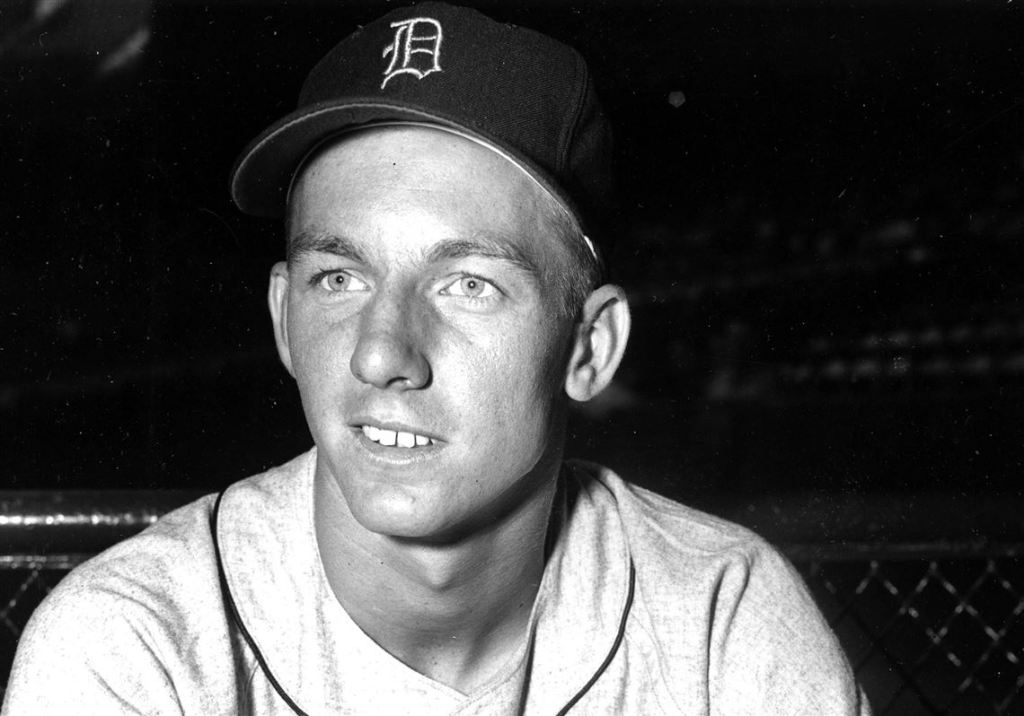
If I am rightfield, there is a good chance I standing near the man who played right field for the Detroit Tigers for 24 years.

If I was, I would be happy just to be there.

That would be enough.

To share right field for a play or two with Al Kaline.

I wouldn’t mind if he said hello.

I wouldn’t expect it though.

Not that Al wouldn’t say hello.

But if there was a game on, that is where his focus would be.

Man meets myth.

This time Man wins.

Al Kaline.

If you know what I mean, you know what I mean.

If you don’t know, that’s okay.

Suffice it to say, there is no joy in Mudville.

4.5.2020 – recognition of

recognition of
forms which give an event its
proper expression

I sat this morning thinking of photographer Henri Cartier-Bresson.

One of the ‘greats’ who was an early adapter of use of the small camera and a roll of 35mm film.

He felt the photographers work was done once the shutter was pressed.

No cropping.

No work in the darkroom.

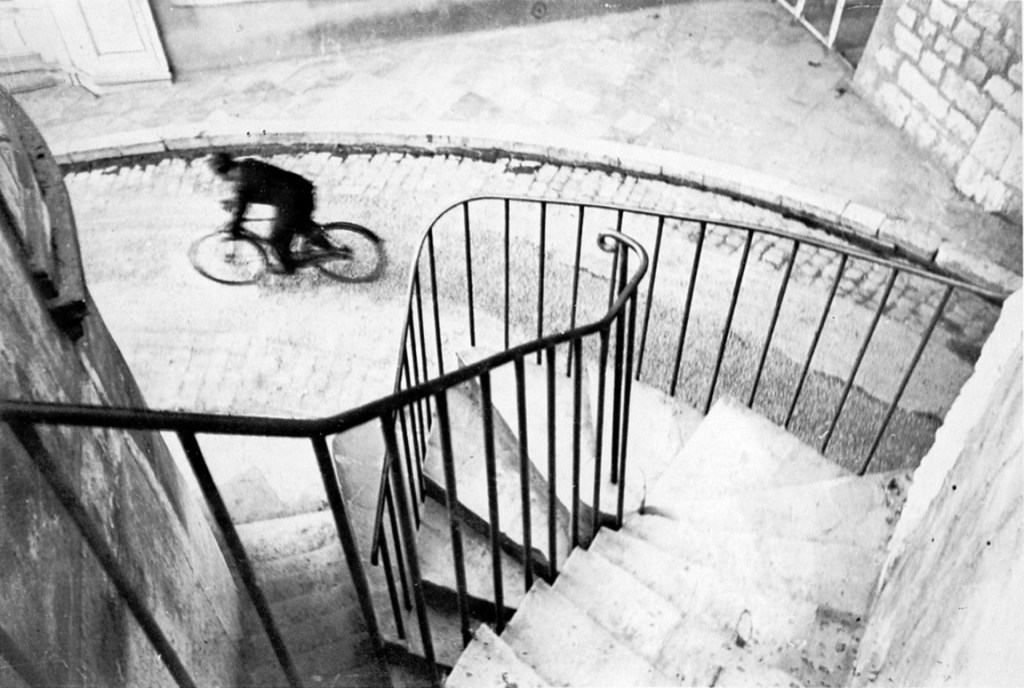
FRANCE. Marseille. The AllŽe du Prado. 1932. I was walking behind this man when all of a sudden he turned around.

He believed in composing his photographs in the viewfinder, not in the darkroom. He showcased this belief by having nearly all his photographs printed only at full-frame and completely free of any cropping or other darkroom manipulation. (Wikipedia from the NYTimes)

Take that Ansel Adams.

This is not a criticism of Mr. Adams.

NOT AT ALL.

Just recognition of the difference of the two.

Cartier-Bresson defined his work as ‘The Decisive Moment.’

Not, as might be guessed, that the photographer captured the decisive moment in history, the game winning hit, the great speech, the great debate or the second of assaianation.

But that the elements in the scene came together to create the decisive moment when the great photograph was there to be snapped.

Cartier-Bresson said, “There is a creative fraction of a second when you are taking a picture. Your eye must see a composition or an expression that life itself offers you, and you must know with intuition when to click the camera. That is the moment the photographer is creative,” he said. “Oop! The Moment! Once you miss it, it is gone forever.”

While Cartier-Bresson was a world famous photo journalist and had assignments to capture the powerful and famous of the world, so many of his photographs are of no one, no where and nothing special.

It is the moment that he captured.

The moment of any where life every day somewhere that made the photograph famous.

Cartier-Bresson famously was assigned to photograph the coronation of King George VI in 1936.

He returned with rolls of film of the crowds in London.

The people along the street.

The faces in the parks.

And without a single photograph of the new King.

I have to wonder what his images of life today would look like.

I am going to start looking.

4.2.2020 – what was it like then

what was it like then
to have lived through that time
we here are there now

On the morning of the 3d, we moved forward to the first position occupied on the 2d, and were formed the same, where we remained till about 3 p.m. Thence we were moved off by the right flank at double-quick to where the enemy was trying to pierce our center. The regiment was here detached, and sent to the support of the Second Division, Second Corps, where we assisted in repulsing the enemy, who had succeeded in breaking through a portion of their line.“*

So reads the report of Lt. Col. Edwin S. Pierce, commanding the 3rd Michigan Volunteer Infantry at the Battle of Gettysburg.

What he described came down in history known as ‘Pickett’s Charge’.

This is a first person eyewitness account of the one of the most famous and awful moments in United States history.

The regiment was here detached, and sent to the support of the Second Division, Second Corps, where we assisted in repulsing the enemy, who had succeeded in breaking through a portion of their line

Bruce Catton described the same scene, “

For the next few minutes this irregular rectangle of ground, a hundred yards deep by two or three hundred yards wide, was the bloody cockpit of the whole war, the place where men on foot with guns in their hands would arrive at a verdict. In this rectangle there was little work by the artillery. The Confederate guns to the west could not fire into this place without hitting their own men, and the Union guns here were out of action. A regular army battery of six guns commanded by Lieutenant Alonzo Cushing had been posted just north of the trees; by the time the Confederates came up to close range, five of the six guns had been put out of action, and when Cushing got off a final shot from the one gun that remained, he was killed and most of the gun crew went down with him. The climax of Pickett’s charge was an infantry fight pure and simple.

It was fought out with unremitting fury. Some of Pickett’s men broke in across the stone wall and knelt amid Cushing’s idle guns to fire point-blank at the defending infantry. Some of the defenders found the fire too hot to bear and withdrew; on a narrow front, and for the moment, Pickett’s men had actually broken the Union line. If they could widen the break and hold on to the ground gained until help came, they would have the battle won.…“**

For us, looking back, it is Pickett’s Charge, the high water mark of the Confederacy.

To the men of the 3rd Michigan, it was another day at the office.

The Colonel of the 3rd Michigan, Byron R. Piece, a former Dentist from Grand Rapids, Michigan, had been wounded the day before.

His brother took over command of the regiment on July 2nd and led the regiment in a counter attack against the confederate assault on July 3rd.

After 3 days of fighting in the Battle of Gettysburg, Lt. Col. Pierce closed his report with the line, “In closing this report, I cannot particularize any of the officers or men”

In other word, we didn’t do anything special.

We just did what was expected.

We did what we had to do.

Lt. Col. Pierce went on, “I am proud to state that they did their duty without an exception.”

I am living through the Get Flu Pandemic of 2020.

I am living through history here and now.

How will I be judged by history?

I just want to find toilet paper to get through this.

I am not a health care provider.

I am not an emergency responder.

I think of what John Milton wrote back 1673.

They also serve who only stand and wait.

I can stand with the best of them.

I can wait with the worst.

I would be happy to be described as some one who “their duty without an exception.”

When I Consider How My Light is Spent

When I consider how my light is spent
Ere half my days in this dark world and wide,
And that one talent which is death to hide
Lodg’d with me useless, though my soul more bent
To serve therewith my Maker, and present
My true account, lest he returning chide;
“Doth God exact day-labour, light denied?”
I fondly ask. But Patience to prevent
That murmur, soon replies: “God doth not need
Either man’s work or his own gifts; who best
Bear his mild yoke, they serve him best. His state
Is kingly. Thousands at his bidding speed
And post o’er land and ocean without rest:
They also serve who only stand and wait.”

John Milton, (1608–1674)

*Report of Lieutenant Colonel Edwin Pierce, 3rd Michigan Infantry, on the Battle of Gettysburg. HDQRS. THIRD REGIMENT MICHIGAN VOLUNTEERS, August 4, 1863. from OFFICIAL RECORDS: Series 1, vol 27, Part 1

** Catton, Bruce. Gettysburg: The Final Fury. Garden City, N.Y. : Doubleday, 1974