9.23.2025 – all count the same, some …

all count the same, some …
feel little bit different
and this is one of those

“They all count the same, but there are some that feel a little bit different. And this is one of those”

− Troy Aikman, on ESPN, after the Lions 38-20 win over Baltimore

I watched last night.

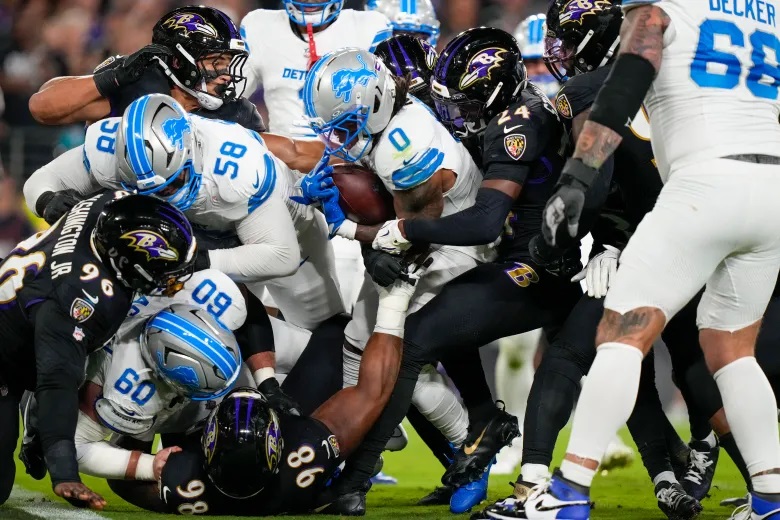
I watched the Detroit Lions pull off a 4 down goal line stand that was one for the ages.

Then I watched the Lions give the ball right back after a typical for me Lions 3 and out and then I watched the Lions give up a score to tie the game.

In my mind, the score had changed to 21-7 Lions and now it was 14-14.

A lot of game to go to be sure, but my old Lions Fan brain kicked in and I said to myself, ‘Same Old Lions.”

I am here to apologize.

I am here to say I was wrong.

I am here to say, I believe and I won’t doubt again.

And I want to say thank you to the Lions for the break away from everything else on my mind and thank you for the respite.

That 4th and 2 pass, well Boy Howdy, I will not doubt again.

As Troy Aikman said as time wound down, “They all count the same, but there are some that feel a little bit different. And this is one of those.”

Which I thought was pretty good.

As much as I know about TV and behind the scenes producers and production meetings and planned one-liners, I felt that in this moment, Troy Aikman, who has experienced his share of the “thrill of victory and the agony of defeat” spoke from the heart, spontaneously.

Mr. Aikman enjoyed the joy with which the Detroit Lions and their coach, Dan Campbell, play the game.

As Mr. Aikman looked at the crowd, the packed stadium, the roaring fans and the home team all in black, a team named for a bird in a poem written by one of America’s darkest poets (who was from Baltimore), and the visiting team comes in, bets all their chips and lays down the winning hand and Mr. Aikman said, “They all count the same, but there are some that feel a little bit different. And this is one of those”

The next morning in the Detroit Free Press, Mitch Albom published his column with the headline: Detroit Lions prove they are ready for prime time with win at Baltimore.

Mr. Albom led with:

You live long enough, you get to write a sentence like this:

Monday Night was why so much of America loves the Detroit Lions.

Mr. Albom closed with:

Bright Lights, Big Lions. America loves a good show. And America, more and more, loves this team. Go watch the tape of this game again. You’ll see why.

Once again folks, these just aren’t the same old Lions.

9.17.2025 – character, and the

character, and the
common moral sentiment
were their own safeguards

As long as he was able to maintain that by a broad restoration of individual character war would strengthen his society, Theodore Roosevelt could ignore the problem of power.

He, with William McKinley, Pierpont Morgan, and others of the old consensus, assumed that character automatically controlled power.

The decisions of self -regulating men of character would be right, socially beneficent, indeed altogether irreproachable, whether the issue were a vote, a war, an industry, or a canal.

Character, and the common moral sentiment for which it stood, were their own safeguards against any abuse of power.

The Mirror of war: American society and the Spanish-American War by Gerald F. Linderman (Ann Arbor: University of Michigan Press, 1974).

Along with everything else any cat might drag in, there seems to be a hue and cry against the evils … THE EVILS … of higher education.

The type of place that might teach that character, and the common moral sentiment for which it stood, were their own safeguards against any abuse of power.

Boy HOWDY but do I see why there are those who don’t want anything like that to be taught to college age kids.

Just imagine if a batch of 22 year-olds were dropped into society thinking that character, and the common moral sentiment for which it stood, was important!

I can imagine it.

It was me.

This book was written by Dr. Gerald F. Linderman, the man who gave the 1st real college lecture I ever had the privilege, AND I DO mean privilege of attending.

He taught a survey class of United States History from the Civil War to WW2.

He would stand in front of the class in this huge lecture and at 10 after the hour he would start speaking.

You could soon hear him through out the hall, not that spoke louder but the class would suddenly get less than quiet.

Early on I found out the best seats were in the front rows and I would sit back, spell bound, and listen as Dr. Linderman spun a tale of hero’s and villain’s as he taught the history of the United States.

For the rest of the time I was in college, I took every class I could from Dr. Linderman.

And if there weren’t classes from Dr. Linderman, there was Dr. Fine, Dr. Lockridge and Dr. Lindner.

See, I went to the University of Michigan.

I went to the University of Michigan and I am proud of it.

Sure I like the football team and the basketball team and the big stadium.

But I am here to tell you that if all I could brag about was the 6,000,000 books in the library and the way my mind got opened up by people who understood the value of such a library, I would wear a a Michigan T shirt with just as much pride.

I know, I know, I know, a lot of that comes across as pretty arrogant but if you were there and experienced the challenges, well, all I can say is that it was a pretty special place and it created pretty special people.

Yes I felt I was at one of the top universities in the world.

Yes, I felt I was up against other students who were among the top students anywhere.

Yes, I felt I held my own and if I could hold my own against those students at that University, then yes, I felt I could succeed anywhere.

If that’s arrogance, then so be it.

Because along with those challenges, it was up to you to embrace it.

It wasn’t for everyone

But if you did, the University embraced you back.

There was another student favorite Professor who taught great books by the name of Dr. Ralph Williams.

Each year he would open his class with a welcome speech.

I have done my best to reconstruct this speech from memory.

Welcome, welcome, welcome to the University of Michigan!

You have come to a great university, and you come now into a time of extraordinary possibility. This university, vast and varied, is a world unto itself—a place where people from across the globe gather, not only to learn, but to inquire, to explore, and to become.

At Michigan, you will encounter ideas that will challenge you, and people who will expand your understanding of the world. You will study with faculty who are among the best in their fields—who have committed their lives not only to knowledge but to the transformation that knowledge can bring.

And you—each one of you—belong here. Regardless of your background, your accent, your style, your strengths, your uncertainties—you are meant to be here. You have been chosen not only for what you have already achieved but for what you might become.

You are now part of a living tradition, stretching back over 200 years, and yet always reinventing itself. You walk in the same Diag as poets and scientists, as civil rights leaders and Nobel laureates, as people who once stood where you stand, wondering what lies ahead.

My friends—because you are my friends—make the most of this time. Read deeply. Ask questions. Dare to speak. Dare to listen. Reach out to those unlike you, and learn from them. Seek not only information, but understanding. Seek not only success, but wisdom.

And remember: you are not alone here. You are part of a community that believes in you, that hopes with you, and that stands ready to help you grow.

Welcome to the University of Michigan.

Welcome home.

Look, if your college experience wasn’t like this, I am sorry.

I probably had more fun than I should have.

But I grew up a lot as well.

And I can see how an experience like this might scare a lot of people.

Kids, young kids, going someplace where the Professors said:

Ask questions.

Dare to speak.

Dare to listen

A place where people from across the globe gather, not only to learn, but to inquire, to explore, and to become.

I always remembered you are not alone here. You are part of a community that believes in you, that hopes with you, and that stands ready to help you grow.

Scary right?

I sure do understand why some folks would be afraid of places that teach things like that.

Oh geeee whiz.

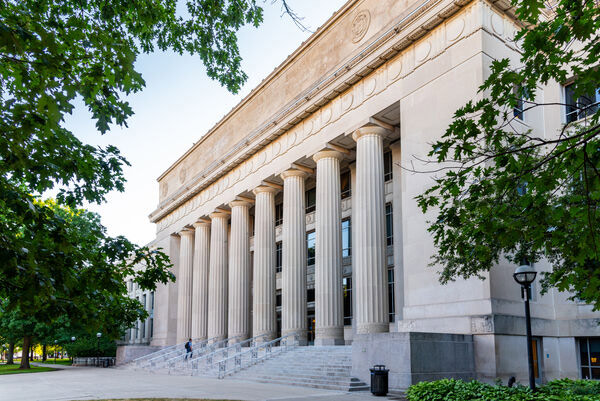
BTW – As for higher learning, I once was supposed to meet my friend Doug, in front of this building, Angell Hall, on Central Campus. It was winter and I made a bunch of snowballs and hid behind the columns waiting for Doug to come walking up the sidewalk. Standing there, snowball in hand, I heard, HEY MIKE. Doug had come thru the building and came out behind me. Sometimes you can be friends too long.

8.21.2025 – cut his words off short

cut his words off short
and he threw a frightened glance
over his shoulder

The port was filled with riverboats, more than he had ever seen at one time before in his life. Half the self-propelled barges of Germany — more than half, perhaps — were there, packed in, rank beside rank, and nearly all of them riding high in the water to prove that they were empty. There were friends and acquaintances everywhere, shouting greetings as soon as they recognized him and his barge.

“The Fritz Reuter’s here, boys. Now the war can start.”

The barge captain who shouted the last remark cut his words off short, with a note of apprehension in the final syllables, and he threw a frightened glance over his shoulder — the sort of glance which Germans had for years been casting behind them after a rash speech.

From the short story, If Hitler had Invaded England in the book, Gold from Crete ; ten stories by C. S. Forester (Little, Brown. Boston, 1970).

My son recently got a passport.

I asked him where he was going?

Nowhere“, he said, “… just need to prove I am a citizen of the United States.”

All my life I have watched Movies and TV shows were men in black trench coats and black hats and tight lipped smiles say to someone, “Your Papers …?

When I was kid, I had to ask my Dad what that meant.

I didn’t know.

I was an American.

From America.

A place where no asked for your papers.

A place where no one carried papers.

It used to be one of the things that Made America Great.

I watch as those things, those things that Made America Great are ripped away by people who claim to want to Make America Great Again?

And I wonder …

What was it like in Germany in when Hitler and HIS entourage took over.

Joseph Goebbels said, We are going into parliament to arm ourselves with weapons from democracy’s arsenal. We are becoming members of parliament in order to hamstring the Weimar way of thinking…

If democracy is stupid enough to give us free tickets and allowances for this disservice, that is its own business. We don’t worry about it. We will use any legal means to revolutionize the current state of affairs. (“What do we want with the Reichstag?” [“Was wollen wir im Reichstag?”] in his newspaper Der Angriff [The Attack], April 30, 1928.)

But what was it like for people like us in Germany to watch as the Nazi’s used any legal means to revolutionize the current state of affairs.

Can’t look at the voting records since as soon as the Nazi’s got slim majority control of the German Reichstag they outlawed any other political party so their percentage of all votes cast was almost always near 99%.

The average citizen of Germany during Word War 2 doesn’t show up in literature too often but this short story of Mr. Forester’s came to mind.

To invade England, in this story, the German Navy gathers together a collection of river barges skippered by everyday Germans.

Men not in the military and probably not a part of the political process.

They get together.

They see old friends.

And they joke.

They joke about the Government.

They joke about the Government and cut their words off short.

They joke about the Government and cut their words off short, with a note of apprehension in the final syllables.

They joke about the Government and cut their words off short, with a note of apprehension in the final syllables, and through a frightened glance over their shoulder.

They joke about the Government and cut their words off short, with a note of apprehension in the final syllables, and through a frightened glance over their shoulder — the sort of glance which Germans had for years been casting behind them after a rash speech.

The Trump years.

The Make America Great Again years.

The solutions … in search of problems.

In search of problems most of didn’t know we had.

The solutions to problems most of didn’t know we had that come at cost we don’t appreciate until it’s too late.

I told my son, I never needed a passport just to live in the United States.

And I cut my words off short, with a note of apprehension in the final syllables, and through a frightened glance over my shoulder — the sort of glance which we have for years been casting behind us after a rash speech.

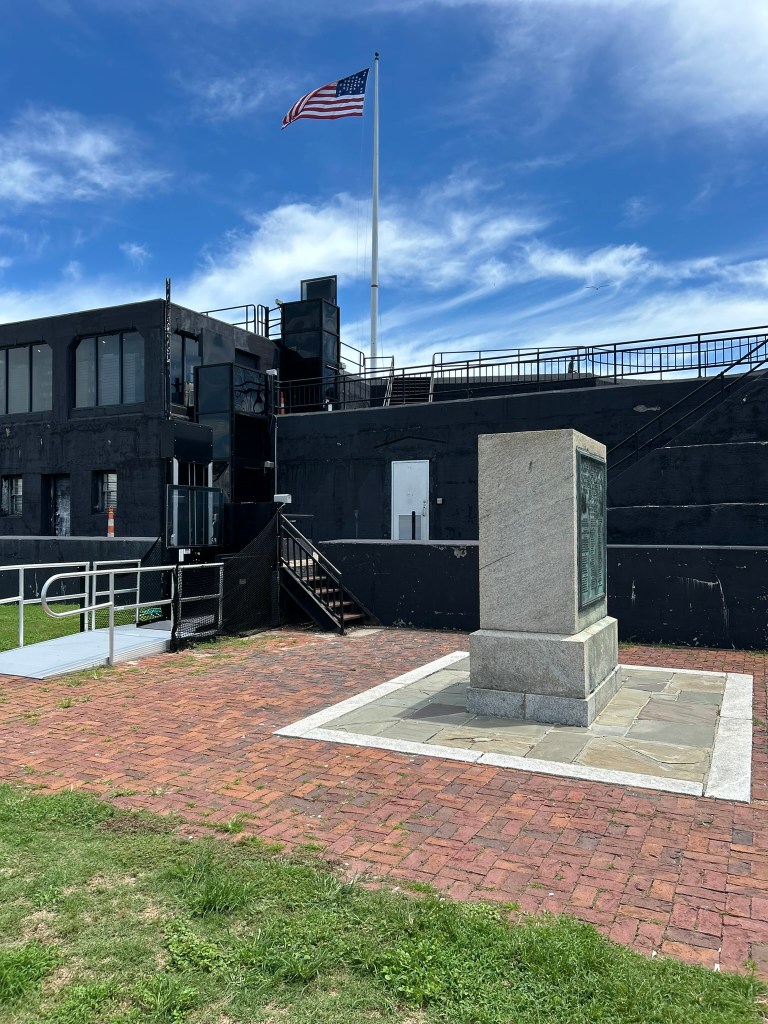
US Flag with the stars of 1861 flying over Fort Sumter, SC

PS: I have to point out that in the years leading up to the Civil War, the Southern States used their ‘slim majority’ in the House of Representatives to pass a rule FORBIDDING even the mention of the word ‘SLAVERY’ let alone any legislation to come to floor in the subject.

7.4.2025 – try obedience

try obedience
to Constitution, laws
don’t you think that’d work?

According to the Library of Congress – Mr. Lincoln’s first portrait with a full beard …

On February 23, 1861, Abraham Lincoln arrived in Washington, DC for his March 4th Inaugural as President of the United States.

Meeting in Washington at the same was the Peace Conference of 1861, which according to Wikipedia, was a meeting of 131 leading American politicians in February 1861, at the Willard Hotel in Washington, D.C., on the eve of the American Civil War. The conference’s purpose was to avoid, if possible, the secession of the eight slave states from the upper and border South that had not done so as of that date. The seven states that had already seceded did not attend.

An invitation was passed along by the Conference to meet with Mr. Lincoln and he replied that he would receive members at 9:00 p.m.

Mr. Lucius E. Chittenden, a Vermont delegate to the Conference, later wrote of that meeting:

There was only one occurrence which threatened to disturb the harmony and good humor of the reception. In reply to a complimentary remark by Mr. Lincoln, Mr. Rives had said that, although he had retired from public life, he could not decline the request of the Governor of Virginia that he should unite in this effort to save the Union. ” But,” he continued, ” the clouds that hang over it are very dark. I have no longer the courage of my younger days. I can do little — you can do much. Everything now depends upon you.”

“I cannot agree to that,” replied Mr. Lincoln. “My course is as plain as a turnpike road. It is marked out by the Constitution. I am in no doubt which way to go. Suppose now we all stop discussing and try the experiment of obedience to the Constitution and the laws. Don’t you think it would work?”

Here today on the 4th of July, 2025, 250 years after Lexington and Concord, Bunker Hill and George Washington being appointed to the command of the Continental Army, we seem to have lost our way.

I found that difficult to understand as I feel that our course is as plain as a turnpike road.

It is marked out by the Constitution.

I am in no doubt which way to go.

Suppose now we all stop discussing and try the experiment of obedience to the Constitution and the laws.

As Mr. Lincoln asked, Don’t you think it would work?

Sadly, as Bruce Catton wrote, Lincoln’s path might indeed be clear—to him, at least, if not to all of his fellow countrymen—but a general appeal for obedience to the Constitution meant nothing at all, because the Constitution meant such different things to different men.

Maybe at one time, this might have been seen as part of the beauty if not majesty of the Constitution of the United States.

Not something used, as it was in 1861, to wreck it.

7.3.2025 – cultivate spirit

cultivate spirit
to do justice, love mercy
act with charity

250 years ago today, General George Washington took formal command of the Continental Army.

According to published reports, he made a short speech and read verse eight from the 101st Psalm, “Morning by morning I will destroy all the wicked in the land, cutting off all the evildoers from the city of the Lord.”

8 years later when he gave up his command, General Washington sent out a Circular Letter to the States, which he wrote on June 8, 1783 as the commander in chief, at his headquarters in Newburgh, New York.

This circular was directed to the governors and states of the new nation.

I now make it my earnest prayer, that God would have you, and the State over which you preside, in his holy protection, that he would incline the hearts of the Citizens to cultivate a spirit of subordination and obedience to Government, to entertain a brotherly affection and love for one another, for their fellow Citizens of the United States at large, and particularly for their brethren who have served in the Field, and finally, that he would most graciously be pleased to dispose us all, to do Justice, to love mercy, and to demean ourselves with that Charity, humility and pacific temper of mind, which were the Characteristicks of the Divine Author of our blessed Religion, and without an humble imitation of whose example in these things, we can never hope to be a happy Nation.

be pleased to dispose us all,

to do Justice,

to love mercy,

and to demean ourselves with that Charity,

humility and

pacific temper of mind …