3.22.2023 – imagine having a

imagine having a
city full of things that no
other city had

That’s the way of the world, of course.

Possessions get discarded.

Life moves on.

But I often think what a shame it is that we didn’t keep the things that made us different and special and attractive in the fifties.

Imagine those palatial downtown movie theaters with their vast screens and Egyptian decor, but thrillingly enlivened with Dolby sound and slick computer graphics.

Now that would be magic.

Imagine having all of public life — offices, stores, restaurants, entertainments — conveniently clustered in the heart of the city and experiencing fresh air and daylight each time you moved from one to another.

Imagine having a cafeteria with atomic toilets, a celebrated tea room that gave away gifts to young customers, a clothing store with a grand staircase and a mezzanine, a Kiddie Corral where you could read comics to your heart’s content.

Imagine having a city full of things that no other city had.

From The life and times of the thunderbolt kid : a Memoir by Bill Bryson, New York, Broadway Books (2006).

To punch away once more at Mr. Bryson’s words, that’s the way of the world, of course.

Possessions get discarded.

Life moves on.

But I often think what a shame it is that we didn’t keep the things that made us different and special and attractive.

3.17.2023 – piling on problems

piling on problems
persistence of poverty
in life should shame us

Poverty is measured at different income levels, but it is experienced as an exhausting piling on of problems.

Poverty is chronic pain, on top of tooth rot, on top of debt collector harassment, on top of the nauseating fear of eviction. It is the suffocation of your talents and your dreams.

It is death come early and often.

From 2001 to 2014, the richest women in America gained almost three years of life while the poorest gained just 15 days.

Far from a line, poverty is a tight knot of humiliations and agonies, and its persistence in American life should shame us.

All the more so because we clearly have the resources and know-how to effectively end it.

From the Guest Opinion piece, America Is in a Disgraced Class of Its Own by Matthew Desmond, a sociologist at Princeton, where he is the director of the Eviction Lab.

Mr. Desmond continues:

Most Americans — liberals and conservatives alike — now believe people are poor because “they have faced more obstacles in life,” not because of a moral failing.

Long overdue, however, is a reckoning with the fact that many of us help to create and uphold those obstacles through the collective moral failing of enriching ourselves by impoverishing others.

Poverty isn’t just a failure of public policy.

It’s a failure of public virtue.

I am not so sure that most Americans don’t think that the poor are poor because they deserve to be poor due to some moral failing.

And I don’t care why poor people are poor.

The fact that they are are poor should be enough.

Truly I think we cannot do anything about the poor in the long run, as the poor will always be with us, but what do we do, what did we do in the short run?

Jesus himself said that “The poor you will always have with you.

Myself, I think if that as being a bit of test for us.

And Jesus also said, “For I was hungry and you gave me nothing to eat, I was thirsty and you gave me nothing to drink.

I was a stranger and you did not invite me in, I needed clothes and you did not clothe me, I was sick and in prison and you did not look after me.’ “

They also will answer, ‘Lord, when did we see you hungry or thirsty or a stranger or needing clothes or sick or in prison, and did not help you?’

“He will reply, ‘Truly I tell you, whatever you did not do for one of the least of these, you did not do for me.’

Is there another way to express that last line?

The line that says, whatever you did not do for one of the least of these, you did not do for me?

A failure of public virtue seems to fit nicely.

Tts persistence, both poverty and the failure in public virtue in American life should shame us.

But those words, virtue and shame.

Lets just say when the State of Florida gets around to releasing their approved dictionary, I doubt either word will be in there.

2.22.2023 – citizens by birth or

citizens by birth or
choice, of a common country
name belongs to you

Citizens by birth or choice of a common country, that country has a right to concentrate your affections.

The name of American, which belongs to you in your national capacity, must always exalt the just pride of patriotism more than any appellation derived from local discriminations.

With slight shades of difference, you have the same religion, manners, habits, and political principles.

You have in a common cause fought and triumphed together.

The independence and liberty you possess are the work of joint councils and joint efforts – of common dangers, sufferings, and successes.

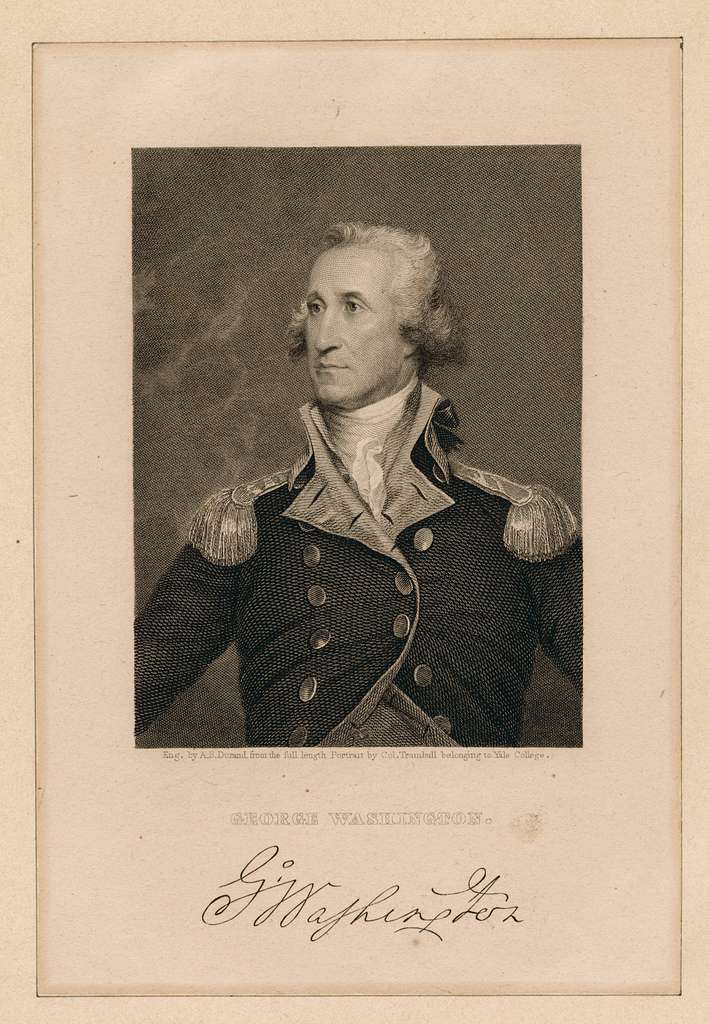
From the Farewell Address of George Washington.

The preface of a memorial edition printed by the Senate of the United States in the year 2000, states:

In September 1796, worn out by burdens of the presidency and attacks of political foes, George Washington announced his decision not to seek a third term.

With the assistance of Alexander Hamilton and James Madison, Washington composed in a “Farewell Address” his political testament to the nation.

Designed to inspire and guide future generations, the address also set forth Washington’s defense of his administration’s record and embodied a classic statement of Federalist doctrine.

Designed to inspire and guide.

I am not sure who came up with the wording for With slight shades of difference as Alexander Hamilton and James Madison helped out, but I have to marvel.

With slight shades of difference.

Citizen’s by birth OR choice.

The name that BELONGS to you.

The name of American.

The name that BELONGS to you.

Citizen’s by birth OR choice.

With slight shades of difference.

Words you could spray paint on a wall somewhere …

Appropriate reading for the General’s Birthday, 2023.

2.18.2023 – was preventable

was preventable
but in some ways was also
inevitable

The story I read, Down to Earth: The Arizona teen whose death in extreme heat is a warning of tragic things to come, by Nina Lakhani in the Guardian, is an article about the heat in Phoenix and the death in 2022 of a young man named Caleb Blair.

Caleb Blair, Ms. Lakhani writes, was a sweet talented kid with mental health struggles ended up naked and handcuffed, high and overheated, on the forecourt of a Circle K gas station.

It is an article filled with awfulness on many many levels.

Ms. Lakhani writes: His tragic death was preventable, but in some ways it was also inevitable given the US’s social, health and economic inequalities. And it signals that the climate crisis is a risk multiplier – it exposes, intersects with and amplifies existing problems such as housing shortages, inadequate mental health and addiction services, racist policing, and the lack of shade in cities, to name just a few.

His tragic death was preventable, but in some ways it was also inevitable given the US’s social, health and economic inequalities.

A terrible statement to read or say out loud.

A statement made more terrible maybe as that it mentions the US’s social, health and economic inequalities.

Social, health and economic inequalities in the United States.

The greatest country on the face of the earth.

One month after Pearl Harbor, President Franklin Roosevelt gave a speech that explained why America was in World War 2.

America was fighting for Democracy which, according to FDR, included economic opportunity, employment, social security, and the promise of “adequate health care”.

America, FDR said, was fighting for the four freedoms.

And just the four freedoms for the America but for the whole world.

The Four Freedoms?

 Freedom of speech.

Freedom of worship.

Freedom from want.

Freedom from fear.

Joe Stalin saw the flaw here right away.

When Stalin met FDR and the Four Freedoms came up, Stalin asked if Want meant Desire.

FDR was quit to point out that he meant, WANTS or NEEDS not desires.

As an aside though, FDR was once asked what book he would have people in the Soviet Union read to help understand the differences between the USSR and the USA. The Sears Roebuck Catalog, said FDR.

Freedom from want.

Social, health and economic inequalities in the United States.

Preventable, but in some ways it was also inevitable.

Maybe as George Bailey said, “… is it too much to have them work and pay and live and die in a couple of decent rooms and a bath?

Preventable, but in some ways it was also inevitable.

Maybe I need to include the first part of that line of George Bailey’s from It’s a Wonderful Life.

The line starts, they do most of the working and paying and living and dying in this town.

The living and dying in this town.

Social, health and economic inequalities in the United States.

Preventable, but in some ways it was also inevitable.

Boy Howdy, but if that isn’t the caption on the feelings of just about everything today.

Preventable, but in some ways it was also inevitable.

What happened to the promise?

2.12.2023 – would not be a slave

would not be a slave,
not be master, my idea
of democracy

Abraham Lincoln is one of those people whose every written word and every public utterance has become almost sacred.

His Presidential papers were donated, by his son Robert, to the Library of Congress.

In the description to the collection at the Library of Congress, we read:

The papers of Abraham Lincoln (1809-1865), lawyer, representative from Illinois, and sixteenth president of the United States, contain approximately 40,550 documents dating from 1774 to 1948, although most of the collection spans from the 1850s through Lincoln’s presidency (1861-1865).

Among those 40,550 documents is a scrap of paper with some words in the handwriting style of Mr. Lincoln.

It says:

As I would not be a slave, so I would not be a master.

This expresses my idea of democracy.

Whatever differs from this, to the extent of the difference, is not democracy.

As one writer says of this scrap of paper, The provenance of the tantalizing document is questionable, as is the date, although the editors of his collected work conjectured that he wrote it on August 1, 1858.

The provenance of the tantalizing document is questionable yet the words on the scrap of paper were included by Aaron Copeland in his Lincoln Portrait.

If you search Aaron Copland and Lincoln Portrait on You Tube you can here the words of Mr. Lincoln read by:

William Warfield

James Earl Jones

Phylicia Rashad 

and even

Aaron Copeland himself.

Anyone of you should give yourself a present on this 214 anniversary of Mr. Lincoln’s Birthday and listen to any of these version on this February twelfth.

My favorite is the one I embedded in this post with narration by Henry Fonda.

It is my favorite for two reasons.

One, with Mr. Fonda playing Young Abe Lincoln and with the midwestern twang, I feel this is kinda close to what you would have got with Mr. Lincoln.

The second is that it is the first version I ever heard when I heard it on a record I checked out of the Grand Rapids Public Library.

The list of recorded narrators is really quite impressive as it allows anyone who can read a chance to record with a symphony orchestra.

The list includes, Barack Obama, Margaret Thatcher and Willie Stargell.

Still, the narrators read the words written by Mr. Lincoln.

It is good to note that while the settings and music provided this piece were in no way imaginable by Mr. Lincoln, it all seems altogether fitting and proper that they appear together.

Mr. Copeland himself liked to tell the story that a performance of the Lincoln Portrait in Venezuela was credited with sparking the popular uprising that led to his removal from power.

Mr. Copeland related that “On that evening Juana Sujo was the fiery narrator who performed the spoken-word parts of the piece. When she spoke the final words, “… that government of the people, by the people, for the people (el gobierno del pueblo, por el pueblo y para el pueblo) shall not perish from the earth,” the audience rose and began cheering and shouting so loudly that Copland could not hear the remainder of the music. Copland continued, “It was not long after that the dictator was deposed and fled from the country. I was later told by an American foreign service officer that the Lincoln Portrait was credited with having inspired the first public demonstration against him. That, in effect, it had started a revolution.

It should also be noted that because of his leftist views Copland was blacklisted and Lincoln Portrait withdrawn from the 1953 inaugural concert for President Eisenhower.

Happy Birthday Mr. Lincoln!