12.29.2023 – All knew… ALL KNEW … that

All knew… ALL KNEW … that
this interest was the cause …
And? And the war came …

Both parties deprecated war but one of them would make war rather than let the nation survive, and the other would accept war rather than let it perish.

And the war came.

One eighth of the whole population were colored slaves not distributed generally over the union but localized in the southern part of it.

These slaves constituted a peculiar and powerful interest.

All knew that this interest was somehow the cause of the war.

To strengthen perpetuate and extend this interest was the object for which the insurgents would rend the Union even by war

Abraham Lincoln, Second Inaugural Address.

On March 4, 1865, only 41 days before his assassination, President Abraham Lincoln took the oath of office for the second time.

Lincoln’s second inaugural address previewed his plans for healing a once-divided nation.

The speech is engraved on the north interior wall of the Lincoln Memorial.

The war was still going on on March 4, 1865 and Mr. Lincoln had no problem saying “All knew that this interest was somehow the cause of the war.

As far as I can tell, no one disputed this claim at the time.

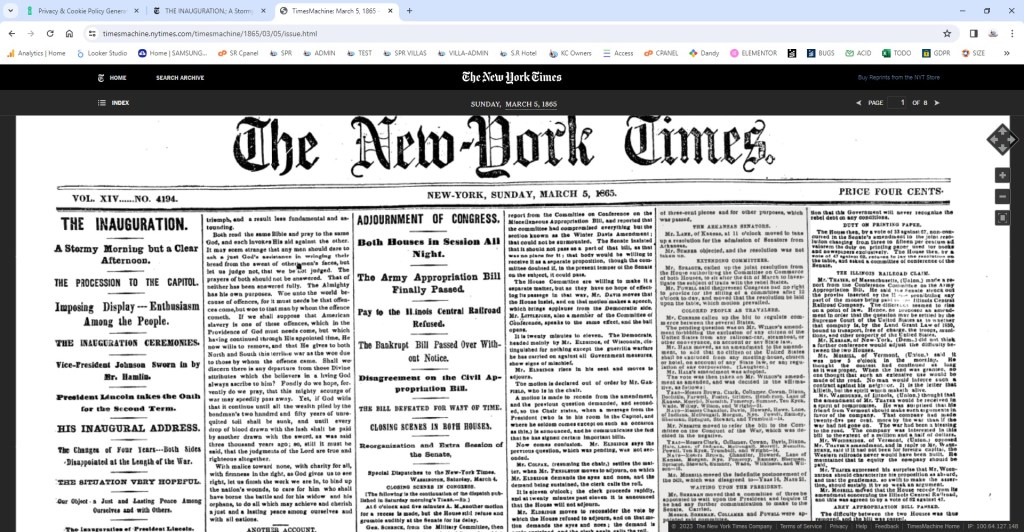
The New York Times slugged its coverage of the speech stating:

THE INAUGURATION

A Stormy Morning but a Clear Afternoon.

THE PROCESSION TO THE CAPITOL.

Imposing Display–Enthusiasm Among the People.

THE INAUGURATION CEREMONIES.

Vice-president Johnson Sworn in by Mr. Hamlin.

President Lincoln takes the Oath for the Second Term.

HIS INAUGURAL ADDRESS.

The Changes of Four Years–Both Sides Disappointed at the Length of the War.

HE SITUATION VERY HOPEFUL.

Our Object a Just and Lasting Peace Among Ourselves and with Others.
No one said, “PRESIDENT OFFERS NEW REASON FOR WAR.”

No one said, “SLAVERY? REALLY?”

Mr. Lincoln said, ALL KNEW and all seemed to understand what he meant by all and what he meant what it was they knew when he said ALL KNEW.

Mr. Lincoln was the man on scene.

Mr. Lincoln would have been the one to know what he meant when he said ‘all knew’ and he knew what it WAS that ‘all knew’ when he said ‘all knew’.

Over the years since, the question has not changed.

What caused the Civil War.

Back in 1865, Mr. Lincoln said all knew what caused the Civil War.

I mean, at this moment, I am not pointing fingers at who or what was said, but that, today, the newsroom discussions to answer the question are searching searching searching.

Might has well ask what color was George Washington’s White Horse.

OH … ohhhhhhhh. .. oh, gee whiz.

PS That was asked once in a class I was in and the kid next me yelled back, How am I supposed to know that??

Mr. Lincoln .. possibly at the moment he said, “All knew that this interest was somehow the cause of the war.

12.28.2023 – as if woke from nap

as if woke from nap
didn’t mean to take, into world
don’t quite recognize

I grew up with comic books.

A lot of comic books.

Not the Marvel – Super Hero genre, but the Gold Key / Walt Disney comic books of Uncle Scrooge the Billionaire and Moby Duck the Whaler.

Comic books were community property in our house.

There was a built in cabinet along one wall of our family room and in the cabinet were three drawers and all the comic books got tossed in there to be read and re-read by all of us.

With their drawings and balloons of text or bubbles of text to show the text was just a thought, me and my brothers and sisters had no problems reading through the pages of dialogue.

With this in mind, I had no problems navigating the work of Mira Jacob’s OP-ART piece in the New York Times titled, Things I Thought Made Sense Just Don’t Anymore.

Her first panel has the text:

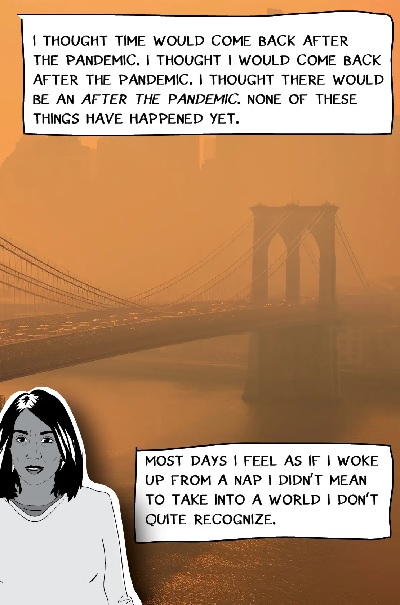
I thought time would come back after the pandemic. I thought I would come back after the pandemic. I thought there would be an AFTER THE PANDMEIC. None of these things have happened yet.

Most days I feel as if I woke from a nap I didn’t mean to take into a world I don’t quite recognize.

Boy howdy but BOY HOWDY do I get it.

Most days I feel as if I woke from a nap I didn’t mean to take into a world I don’t quite recognize.

I thought about that line.

Most days I feel as if I woke from a nap I didn’t mean to take into a world I don’t quite recognize.

I am a champion napper.

I like to say I want napping to be in the Olympics and I am in training to win the gold medal.

I used to be able to take a 15 minute nap.

No matter where and no matter when, I could close my eyes and be asleep and wake up, without fail, in 15 minutes.

Wake up and be ready to go.

Of late, those naps are lasting about 20 to 25 to 30 minutes.

I wake up feeling muzzy (is there a better example of onomatopoeia than muzzy?).

I wake up sometimes in a world I don’t quite recognize.

Then I come back around.

But …

I am reminded of the story of Rip Van Winkle who feel asleep and woke up 20 years later.

Washington Irving wrote that back in 1819.

Not sure but pretty sure there wasn’t a pandemic back in 1819 but something had to motivate Mr. Irving.

Looking for an answer I dove into Wikipedia to learn that the storyline of napping and waking up in a world the hero doesn’t quite recognize goes way back in history.

Along with Mr. Van Winkle there is Honi HaMe’agel, the Seven Sleepers of Ephesus, Uzair Epimenides of Knossos, Peter Klaus, Ranka and a feller named Urashima Tarō.

According to Wikipedia, “Multiple sources have identified the story of Epimenides as the earliest known variant of the “Rip Van Winkle” fairy tale.”

That was back in the 3rd Century AD.

All through the sad and sorry history of this world, there are writers who feel displaced and give voice to their feelings in fables and stories about people who feel as if they woke from a nap they didn’t mean to take into a world they don’t quite recognize.

I sure feel that way today.

Much like Justice Oliver Wendall Holmes who at age 92, feel asleep during an argument in the United States Supreme Court.

When nudged by the Justice next to him, Justice Holmes is reported to opened his eyes and yelled, “Jesus Christ! Where the hell am I?”

Lucky for me I still pick up my tablet in the morning to read my Bible.

This morning I read, “I consider that our present sufferings are not worth comparing with the glory that will be revealed in us.” (Romans 8:18 NIV)

Our present sufferings are not worth comparing with the glory that will be revealed in us.

In his Hornblower series of novels, CS Forester describes how our hero, Horatio Hornblower, is taking his oral examination for promotion to Lieutenant and is about to fail when the proceedings are broken up by an enemy attack.

When things settle down, young Hornblower askes one of his Officers who made up the examining board about his possible promotion.

The Officer askes Hornblower if he remembers that he was about to be failed when the attack ended the exam.

The Officer looks at Hornblower and says, “Then be thankful for small mercies. And even more thankful for big ones.”

I will remember that our present sufferings are not worth comparing with the glory that will be revealed in us.

And I will be thankful for small mercies.

And even more thankful for big ones.

12.24.2023 – path this year felt quite …

path this year felt quite …
bumpy … small steps can make a
world of difference

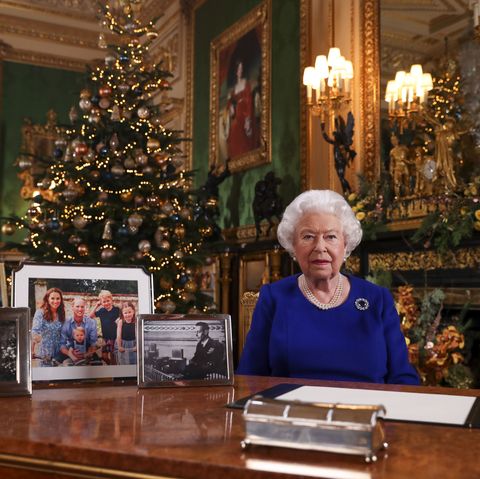
Of course, at the heart of the Christmas story lies the birth of a child: a seemingly small and insignificant step overlooked by many in Bethlehem. But in time, through his teaching and by his example, Jesus Christ would show the world how small steps taken in faith and in hope can overcome long-held differences and deep-seated divisions to bring harmony and understanding. Many of us already try to follow in his footsteps. The path, of course, is not always smooth, and may at times this year have felt quite bumpy, but small steps can make a world of difference.

As Christmas dawned, church congregations around the world joined in singing It Came Upon the Midnight Clear. Like many timeless carols, it speaks not just of the coming of Jesus Christ into a divided world, many years ago, but also of the relevance, even today, of the angels’ message of peace and goodwill.

It’s a timely reminder of what positive things can be achieved when people set aside past differences and come together in the spirit of friendship and reconciliation. And, as we all look forward to the start of a new decade, it’s worth remembering that it is often the small steps, not the giant leaps, that bring about the most lasting change.

From the Queen’s Christmas Speech, December 25, 2019.

It’s worth remembering that it is often the small steps, not the giant leaps, that bring about the most lasting change.

I like that.

I am reminded of Arlo Guthrie and the way he talked his way though his shows.

I remember a gentle reminisce of Mr. Guthrie’s as he sat has the keyboard at a concert from 1993 (Live at Wolftrap, August 8, 1993.) and he said this:

If the world was perfect and everybody had money, everybody drove BMWs or something, nobody was homeless, nobody ever got sick, everything was wonderful, everybody was smart and everyone was happy all the time you would have to go an awful long way out of your way to make a difference in this world.

You would have to do a whole hell of a lot to try and improve the way it was …

BUT IN WORLD THAT SUCKS …

Like this one …

You don’t have to do very much at all. There was never a time in the history of the world where you go do so little and get so much done.

That’s right.

You can do more with a little smile, just hold somebody, say hello to somebody or just feel good by yourself even when you don’t feel like feeling good.

As the Queen put it, “The path, of course, is not always smooth, and may at times this year have felt quite bumpy, but small steps can make a world of difference.

12.23.2023 – for one night be a

for one night be a
brightly-lighted island of
happiness and peace

On December 7, 1941, Pearl Harbor was attacked.

The next day, the President went to Congress and asked for a declaration of war against the Empire of Japan and the United States was in a war with Great Britain against Japan and Japan alone.

The next day, for reasons no one understands to this day, Germany declared war on the United States.

The United States was now in a war with Great Britain against Japan and Germany.

Two weeks later, Winston Churchill was at the White House to meet with Franklin Roosevelt.

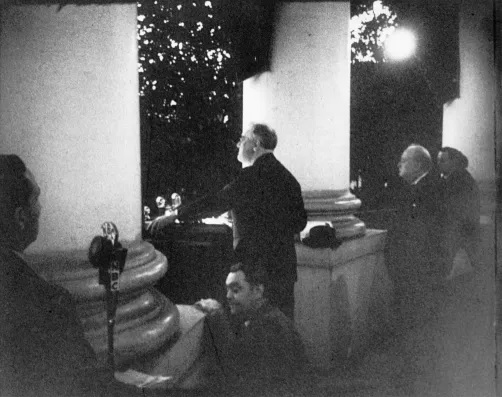
At dusk on Christmas Eve, The President lit the National Christmas tree on a live radio broadcast.

The President then turned the microphone over to Mr. Churhchill.

This is what he said.

I spend this anniversary and festival far from my country, far from my family, yet I cannot truthfully say that I feel far from home. Whether it be the ties of blood on my mother’s side, or the friendships I have developed here over many years of active life, or the commanding sentiment of comradeship in the common cause of great peoples who speak the same language, who kneel at the same altars and, to a very large extent, pursue the same ideals, I cannot feel myself a stranger here in the centre and at the summit of the United States. I feel a sense of unity and fraternal association which, added to the kindliness of your welcome, convinces me that I have a right to sit at your fireside and share your Christmas joys.

This is a strange Christmas Eve. Almost the whole world is locked in deadly struggle, and, with the most terrible weapons which science can devise, the nations advance upon each other. Ill would it be for us this Christmastide if we were not sure that no greed for the land or wealth of any other people, no vulgar ambition, no morbid lust for material gain at the expense of others, had led us to the field. Here, in the midst of war, raging and roaring over all the lands and seas, creeping nearer to our hearts and homes, here, amid all the tumult, we have tonight the peace of the spirit in each cottage home and in every generous heart. Therefore we may cast aside for this night at least the cares and dangers which beset us, and make for the children an evening of happiness in a world of storm. Here, then, for one night only, each home throughout the English-speaking world should be a brightly-lighted island of happiness and peace.

Let the children have their night of fun and laughter. Let the gifts of Father Christmas delight their play. Let us grown-ups share to the full in their unstinted pleasures before we turn again to the stern task and the formidable years that lie before us, resolved that, by our sacrifice and daring, these same children shall not be robbed of their inheritance or denied their right to live in a free and decent world.

And so, in God’s mercy, a happy Christmas to you all.

You can listen to it here …

12.19.2023 – anyone who knows

anyone who knows
what America’s all about?
sure, I can tell you …

I have read that the single most influential movie ever made is The Wizard of Oz.

Much of the reasoning behind that statement comes from the thought that no other movie has been seen by some much of the population of THE WORLD and that the age that people saw the movie was an age where the movie made a real impact.

For myself, I would rather take on any evil movie entity from Independence Day to Dracula over wanting to mess with those Flying Monkeys.

But I digress.

Staying with the thought of influences brought about by what people have seen, I am reminded of the impact of the cartoon or animated special, known as Charlie Brown’s Christmas.

Increasingly frustrated by the holiday season, Charlie Brown finally yells, “Isn’t there anyone who knows what Christmas is all about?”

Quietly, his buddy Linus says, “Sure, Charlie Brown. I can tell you what Christmas is all about.”

And famously, Linus recites the Bible verses, in King James English, that tell the story of the birth of Jesus.

But why am I telling you this when you know this.

We all grew up seeing this show and hearing those words and in a way, come Judgement Day, the folks at the gate can, with justification say to anyone of my generation and thereabouts, “Whadyya mean you didn’t know? You saw Charlie Brown’s Christmas 63 times!

A great holiday message but that’s not where I am going today.

I recently read the NYT Opinion piece, The Ivy League Flunks Out (Dec. 9, 2023) by Maureen Dowd.

Ms. Dowd is an Opinion columnist for the Times.

She won the 1999 Pulitzer Prize for distinguished commentary.

In this piece, she writes:

“I think this is still America.

But I don’t understand why I have to keep making the case on matters that should be self-evident.

Why should I have to make the case that a man who tried to overthrow the government should not be president again?

Why should I have to make the case that we can’t abandon Ukraine to the evil Vladimir Putin?”

I can hear her say, “Isn’t there anyone who knows what America is all about?”

And I want to say, “Sure, Maureen Dowd.

I can tell you what American is all about.”

And I want to say, “Lights Please.

And the rooms would go dark and a single spotlight would shine on me and I would say this.

We hold these truths to be self-evident,

that all men are created equal,

that they are endowed by their Creator with certain unalienable Rights,

that among these are Life,

Liberty

and the pursuit of Happiness.

And then I would say, “That’s what America is all about, Maureen Dowd.”

Linus reading the bare bones verses of the Bible leaves little wiggle room for what Christmas is all about.

Thomas Jefferson, a man who is now blown off when mentioned on News Talk shows as ‘oh that guy’, left little wiggle for what America is all about.

All are created equal.

Pretty simple.

Pretty easy.

All.

Now, so much time and effort is being put into just what that word, all, means.

Doesn’t all mean all?

There are those who will point to George Orwell’s Animal Farm and embrace the proclamation that “All animals are equal, but some animals are more equal than others.”

I hope we can reject that.

There are those who will point to the history of America and ask ‘where is the equality?’

To answer that I turn to Barbara Jorden, Representative from Texas.

Back in 1974, Barbara Jorden, made this statement to the House Judiciary Committee regarding the impeachment of President Richard Nixon:

Earlier today, we heard the beginning of the Preamble to the Constitution of the United States: “We, the people.”

It’s a very eloquent beginning.

But when that document was completed on the seventeenth of September in 1787, I was not included in that “We, the people.”

I felt somehow for many years that George Washington and Alexander Hamilton just left me out by mistake.

But through the process of amendment, interpretation, and court decision, I have finally been included in “We, the people.”

I hate to go to another movie to make a point, but the scene I have in mind works too well to ignore and since I started out this essay talking about movies and their influence on us all, I guess I am okay.

In the movie, Lincoln, Mr. Lincoln puzzles out the concept of equality in Euclid and in life.

Sitting in the War Department Telegraph Office, Mr. Lincoln says this.

Things which are equal to the same thing are equal to each other. That’s a rule of mathematical reasoning.

It’s true because it works; has done and always will do.

In his book, Euclid says this is “self-evident.

D’you see?

There it is, even in that two-thousand year old book of mechanical law: it is a self- evident truth that things which are equal to the same thing are equal to each other.

We begin with equality.

That’s the origin, isn’t it?

That balance …

that’s fairness …

that’s justice.”

That’s what America is all about, Maureen Dowd.