4.17.2021 – offered perspective

offered perspective
on how masses can assume
and convey meaning

Adapted from the book, The Architecture of Happiness (2009, Vintage Books) by Alain de Botton, and the passage:

We will, of course, run a risk if we spend extended periods analyzing the meanings that emanate from practical objects. To be preoccupied with deciphering the message encoded in a light switch or a tap is to leave ourselves more than usually vulnerable to the commonsensical scorn of those who seek little from such fittings beyond a means of illuminating their bedroom or rinsing their teeth.

To inoculate ourselves against this derision, and to gain confidence in cultivating a contrary, more meditative attitude towards objects, we might profitably pay a visit to a museum of modern art. In whitewashed galleries housing collections of twentieth-century abstract sculpture, we are offered a rare perspective on how exactly three-dimensional masses can assume and convey meaning – a perspective that may in turn enable us to regard our fittings and houses in a new way.

According the The New York Review of Books, this is “A perceptive, thoughtful, original, and richly illustrated exercise in the dramatic personification of buildings of all sorts.”

What I find irrestible in reading Mr. de Botton is his use of language.

I get the feeling that if you made a spread sheet of all the words, adverbs and adjectives used by Mr. de Botton, you just might find that he used each word just once.

Neat trick in writing a book.

If I knew how to do that, I would.
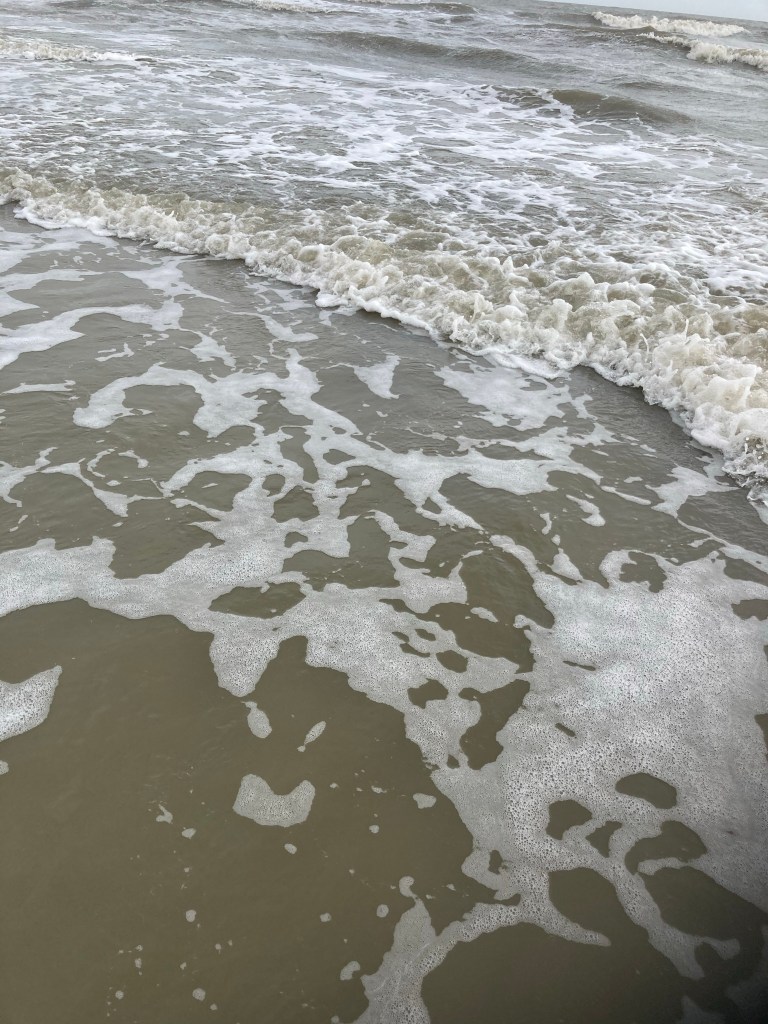
4.16.2021 – white water bubbles

white water bubbles
surf crashes foams flows flat clear
waves tide rolls up beach

Part of a series based on an afternoon spent at the beach on Hilton Head Island.

I wanted to see if I would be ‘inspired’ by what I saw, by what I heard, by what I smelled, by what I tasted, what I felt emotionally and what I felt tactilely.

Some turned out okay.

Some were too forced.

Some were just bad.

Some did involve some or all of those feelings.

As far as it goes, I guess I was inspired by by what I saw, by what I heard, by what I smelled, by what I tasted, what I felt emotionally and what I felt tactilely.

Click here for more Haiku in the BEACH category —

4.15.2021 – capacity to

capacity to
love anything attractive
however fragile

Adapted from the book, The Architecture of Happiness (2009, Vintage Books) by Alain de Botton, and the passage:

Freud was unsympathetic; for him, the capacity to love anything attractive, however fragile it might be, was a hallmark of psychological health. But Rilke’s stance, though inconvenient, helpfully emphasises how it can be those most in thrall to beauty who will be especially aware of, and saddened by, its ephemeral character. Such melancholic enthusiasts will see the moth hole beneath the curtain swatch and the ruin beneath the plan. They may at the last moment cancel an appointment with an estate agent, having realised that the house under offer, as well as the city and even civilisation itself, will soon enough be reduced to fragments of shattered brick over which cockroaches will triumphantly crawl. They may prefer to rent a room or live in a barrel out of a reluctance to contemplate the slow disintegration of the objects of their love.

According the The New York Review of Books, this is “A perceptive, thoughtful, original, and richly illustrated exercise in the dramatic personification of buildings of all sorts.”

What I find irrestible in reading Mr. de Botton is his use of language.

I get the feeling that if you made a spread sheet of all the words, adverbs and adjectives used by Mr. de Botton, you just might find that he used each word just once.

Neat trick in writing a book.

If I knew how to do that, I would.

4.13.2021 – sunny sun shinning

sunny sun shinning
out from the clouds warming down
rolling over my skin

Part of a series based on afternoons spent at the beach on Hilton Head Island.

I wanted to see if I would be ‘inspired’ by what I saw, by what I heard, by what I smelled, by what I tasted, what I felt emotionally and what I felt tactilely.

Some turned out okay.

Some were too forced.

Some were just bad.

Some did involve some or all of those feelings.

As far as it goes, I guess I was inspired by by what I saw, by what I heard, by what I smelled, by what I tasted, what I felt emotionally and what I felt tactilely.

Click here for more Haiku from the BEACH

4.12.30.2021 – rarely considered

rarely considered
the issues requiring thought
beyond practical

Adapted from the book, The Architecture of Happiness (2009, Vintage Books) by Alain de Botton, and the passage:

If our lives are dominated by a search for happiness, then perhaps few activities reveal as much about the dynamics of this quest—in all its ardour and paradoxes—than our travels. They express, however inarticulately, an understanding of what life might be about, outside of the constraints of work and of the struggle for survival. Yet rarely are they considered to present philosophical problems—that is, issues requiring thought beyond the practical. We are inundated with advice on whereto travel to, but we hear little of why and how we should go, even though the art of travel seems naturally to sustain a number of questions neither so simple nor so trivial, and whose study might in modest ways contribute to an understanding of what the Greek philosophers beautifully termed eudaimonia, or ‘human flourishing’.

Adapted from the book, The Art of Travel (2002, Vintage Books) by Alain de Botton.

According to the website, GOOD READS, Any Baedeker will tell us where we ought to travel, but only Alain de Botton will tell us how and why.

As I said in the section on Architecture , what I find irresistible in reading Mr. de Botton is his use of language.

I get the feeling that if you made a spread sheet of all the words, adverbs and adjectives used by Mr. de Botton, you just might find that he used each word just once.

Neat trick in writing a book.

If I knew how to do that, hey, I would.

** More from the category TRAVEL — click here