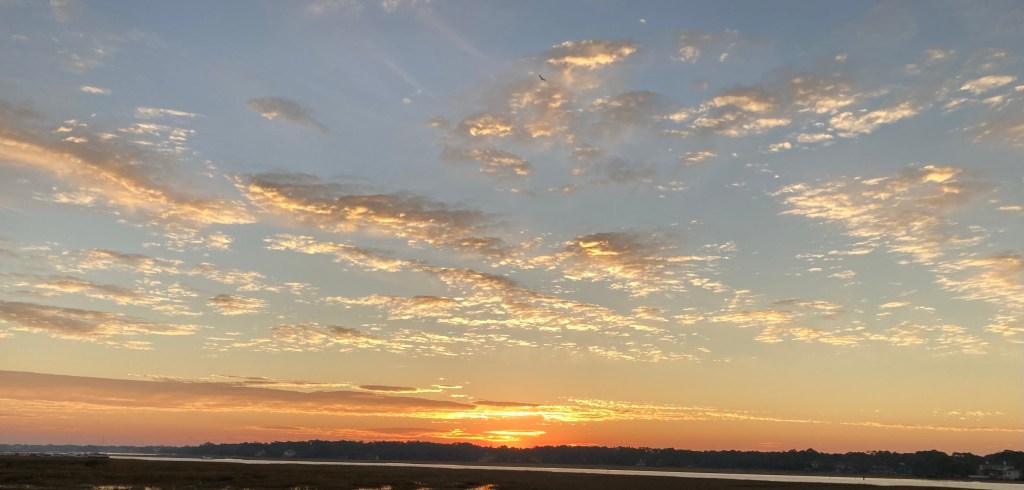
4.18.2024 – flock of creative

flock of creative
people … expression was
the need of their souls

In 1958, her job as an editor was coming to a close and this provided her with more time to look about, more time to think about the gardens of her life.

I suspect, though, that the thing that started her off was her discovery that the catalogue makers — the men and women of her dreams — were, in fact, writers.

Expression was the need of their souls.

To an editor of Katharine’s stature, a writer is a special being, as fascinating as a bright beetle.

Well, here in the garden catalogues, she stumbled on a whole new flock of creative people, handy substitutes for the O’Haras, the Nabokovs, the Staffords of her professional life.

From the introduction to Onward and Upward in the Garden by Katherine S. White.

The introduction is written by E. B. White.

The book is a collection of essays about gardening that Ms. White wrote over a span of years.

After her passing, her husband, E.B., arranged the essays into a book.

Frustrating as it is to read essays about gardening when one lives in an apartment, I still enjoyed the book very much.

Frustrating as it is to read essays about gardening when one lives in the low country of South Carolina where the colors of spring are all shades of green.

I admit I got spoiled living for a time in Atlanta.

No one mentions it much but Atlanta is in the foothills of the Blue Ridge mountains.

Here in the low country I am about 6 feet about sea level and that sea is just a few blocks away.

Atlanta is at just over 1,000 feet above sea level and the colors of a north Georgia, mountain springtime can hold their own with any fall colors I have ever enjoyed in Michigan where I grew up.

But down here, everything is just … green.

With the salt air, flowers have problems and while banks of petunias and buttercups manage and azaleas show up for a couple of weeks, for the most part, the salt marsh leaves a lot of color out of its presentation.

Back to the book, there is that introduction by Mr. White.

His bit about his wife’s struggle to write.

Writing, for her, was an agonizing ordeal. Writing is hard work for almost everyone: for Katharine it was particularly hard, because she was by temperament and by profession an editor, not a writer. (The exception was when she wrote letters. Her letters — to friends, relatives, contributors — flowed naturally from her in a clear and steady stream, a warm current of affection, concern, and eagerness to get through to the mind of the recipient. Letters were easy. How I envied her!) But when she sat down to compose a magazine piece on gardening, faced with all the strictures and disciplines of formal composition and suffering the uneasiness that goes with critical expression in the public print — this was something else again. Gone was the clear and steady stream. Katharine’s act of composition often achieved the turbulence of a shoot-out. The editor in her fought the writer every inch of the way; the struggle was felt all through the house. She would write eight or ten words, then draw her gun and shoot them down. This made for slow and torturous going. It was simple warfare — the editor ready to nip the writer before she committed all the sins and errors the editor clearly foresaw.

I get the occasional note about these essays that I work to produce.

Most often I get asked, why don’t I edit them better.

I won’t say I am a writer.

I won’t say I am an editor.

I will say I feel a need for expression.

Maybe not a need for my soul but for some need I guess.

I will also say, I am not going to enter into warfare with the editor over every word.

Then this expression might become work.
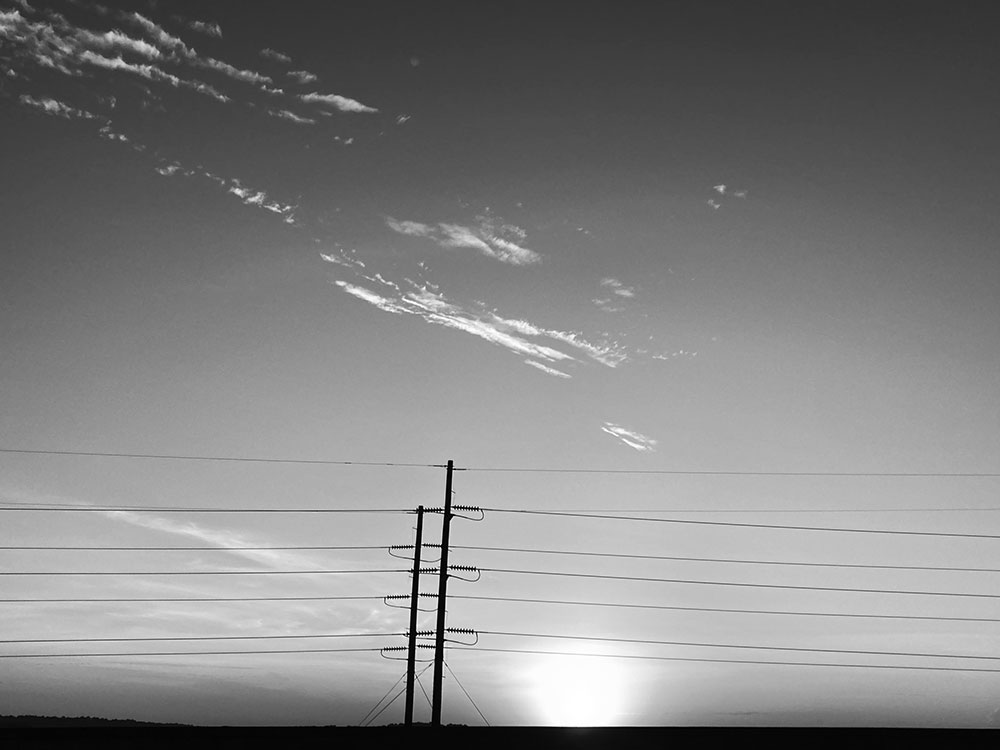
3.8.2024 – vexatious world of

vexatious world of
people were whole world, would not
enjoy it at all

If the vexatious world of people were the whole world, I would not enjoy it at all.

But it is only a small, though noisy, part of the whole; and I find the natural world as engaging and as innocent as it ever was.

When I get sick of what men do, I have only to walk a few steps in another direction to see what spiders do.

Or what the weather does.

This sustains me very well indeed, and I have no complaints.

From a letter to Carrie A. Wilson, May 1, 1951 in the Letters of EB White ( New York : Harper Collins, 2006)

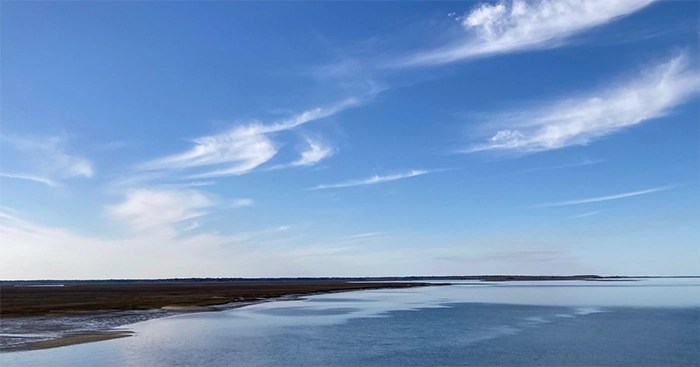
Port Royal Sound to Broad River – South Carolina

11.10.2023 – change the world and have

change the world and have
hell of a good time – planning
my day’s difficult

I took this image of the sunrise on Thursday as I drove over the Cross Island Parkway Bridge on Thursday.

I have to point out that had I waited another one or two seconds I would have reached the top of the bridge and the sun was the much more spectacular above the flat line of the Atlantic Ocean.

As I quote Alice Walker so often from her book the Color Purple, “I think it pisses God off if you walk by the color purple in a field somewhere and don’t notice it. People think pleasing God is all God cares about. But any fool living in the world can see it always trying to please us back.”

I have to append that to read, “I think it pisses God off if you walk by a sunrise somewhere and don’t notice it. People think pleasing God is all God cares about. But any fool living in the world can see it always trying to please us back.”

After taking the photo, I needed a quote on sunrise or getting up in the morning and I found this online, “I get up every morning determined to both change the world and have one hell of a good time. Sometimes this makes planning my day difficult.”

It was attributed to E. B. White.

That made me think, hmmmmmmmmmmmmmmmm.

It sounded familiar but I checked the wording and I had never used it before.

I checked online for the source and I checked and I checked and I checked until my checker was sore.

And then I found that Andy White never said “I get up every morning determined to both change the world and have one hell of a good time. Sometimes this makes planning my day difficult.”

But he did say:

If the world were merely seductive, that would be easy.

If it were merely challenging, that would be no problem.

But I arise in the morning torn between a desire to improve (or save) the world and a desire to enjoy (or savor) the world.

This makes it hard to plan the day.

I cited E. B. White: Notes and Comment, interview with Israel Shenker, July 11, 1969; New York Times; quoted in E. B. White: A Biography, by Scott Elledge, p. 3

And I did use that quote back in May.

And I used it one another haiku about sunrise viewed on a drive to work.

In May, I said:

rise in morning torn
desire improve, enjoy world
makes day hard to plan

Versus

change the world and have
hell of a good time – planning
my day’s difficult

I sure can imagine Mr. White having and saying he was having a hell of good time.

And I know of one scholar who says getting a quote kind of close but not word for word shows that maybe you didn’t memorize but that the thought certainly stuck in your head was more important.

Change the world and have one hell of a good time.

I might as well try.

5.16.2023 – rise in morning torn

rise in morning torn
desire improve, enjoy world
makes day hard to plan

If the world were merely seductive, that would be easy.

If it were merely challenging, that would be no problem.

But I arise in the morning torn between a desire to improve (or save) the world and a desire to enjoy (or savor) the world.

This makes it hard to plan the day.

E. B. White: Notes and Comment, interview with Israel Shenker, July 11, 1969; New York Times; quoted in E. B. White: A Biography, by Scott Elledge, p. 3

5.1.2023 – dyeing an orange,

dyeing an orange,
orange, man’s most impudent
gesture to this date

In the kitchen cabinet is a bag of oranges for morning juice.

Each orange is stamped “Color Added.”

The dyeing of an orange, to make it orange, is man’s most impudent gesture to date.

It is really an appalling piece of effrontery, carrying the clear implication that Nature doesn’t know what she is up to.

On a Florida Key, February 1941; Essays of E. B. White, p. 13