8.19.2023 – but cannot in good

but cannot in good
conscience support candidate
unworthy unfit

I shall continue to affiliate with the Republican Party, but I cannot in good conscience support for President a candidate who was not the real choice of his party and whom I regard as unworthy and unfit to be the Chief Executive of this nation by the tests of ability, public policies, official record and independence of character.”

The above quote from Illinois Politician Harold Ickes appeared in the New York Times today, but 103 years ago in the article, H.L. ICKES DESERTS HARDING AS ‘UNFIT’. (NYT, August 19, 1920)

103 years ago, political parties were pushing candidates unworthy and unfit to be the Chief Executive.

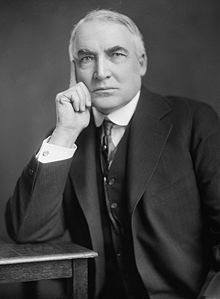
Mr. Ickes was talking about Warren Gamaliel Harding, who had just been nominated by the Republican party for their candidate for President of the United States at the 1920 convention.

Mr. Ickes would later go one to serve as United States Secretary of the Interior for nearly 13 years from 1933 to 1946 under Franklin Roosevelt and Harry S Truman.

The 1920 Republican convention was the one that made the term ‘smoke filled rooms’ famous.

The convention took 10 ballots to nominate Mr. Harding, who according to legend, was called into a meeting with the Party Bosses, in a smoke filled room and the Party Bosses asked Mr. Harding if there was anything … ANYTHING … in his background that might cause problems if he was nominated.

Mr. Harding, according to that legend, asked for 1 hour to think about it and came back and said nope, nothing in my background.

About Mr. Harding’s acceptance speech, Mr. Ickes said, “He proclaims himself a reactionary. He would turn back the hands of the clock and satisfy the aspirations of men’s souls by talking of a full stomach. No more uninspired and uninspiring utterance from a public man is on record in American political history.”

You remember Mr. Harding?

Even he himself felt the he was in over his head as President.

President Harding once said, “Somewhere there must be a book that tells all about it, where I could go to straighten it out in my mind.

But I don’t know where the book is, and maybe I couldn’t read it if I found it!

There must be a man in the country somewhere who could weigh both sides and know the truth. Probably he is in some college or other.

But I don’t know where to find him. I don’t know who he is, and I don’t know how to get him.

My God, this is a hell of a place for a man like me to be!”

According to Wikipedia, “In 1923, Harding died of a heart attack in San Francisco while on a western tour, and was succeeded by Vice President Calvin Coolidge.

Harding died as one of the most popular presidents in history, but the subsequent exposure of scandals eroded his popular regard, as did revelations of extramarital affairs. Harding’s interior secretary, Albert B. Fall, and his attorney general, Harry Daugherty, were each later tried for corruption in office. Fall was convicted though Daugherty was not. These trials greatly damaged Harding’s posthumous reputation. In historical rankings of the U.S. presidents during the decades after his term in office, Harding was often rated among the worst.

We, as a country, are once again in a cycle where the election mantra might be I cannot in good conscience support for President a candidate whom I regard as unworthy and unfit to be the Chief Executive.

Seems like folks who should be saying this, are not saying this.

For us and this country, my God, this is a hell of a place for us to be!

8.16.2023 – the country wants a

the country wants a
candidate can’t be injured
by past history

Adapted from the line:

What the country wants is a candidate who cannot be injured by investigation of his past history, so that the enemies of the party will be unable to rake up anything against him that nobody ever heard of before. If you know the worst about a candidate, to begin with, every attempt to spring things on him will be checkmated.

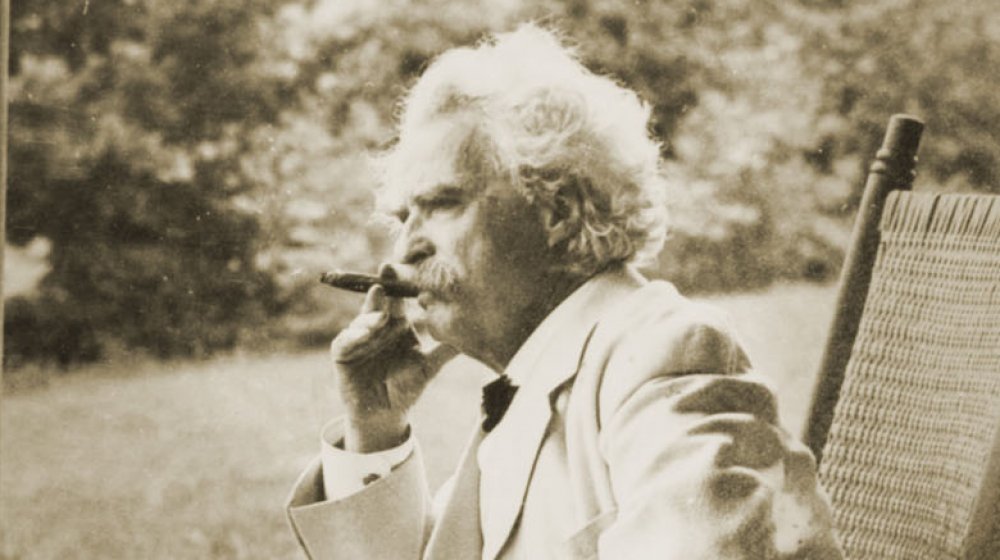
In the short story, Mark Twain as a Presidential Candidate, by Mark Twain.

Mr. Twain ends with this, “But I recommend myself as a safe man — a man who starts from the basis of total depravity and proposes to be fiendish to the last.”

Here is the short short story, first published in 1879.

Mark Twain as a Presidential Candidate.

I have pretty much made up my mind to run for President. What the country wants is a candidate who cannot be injured by investigation of his past history, so that the enemies of the party will be unable to rake up anything against him that nobody ever heard of before. If you know the worst about a candidate, to begin with, every attempt to spring things on him will be checkmated.

Now I am going to enter the field with an open record. I am going to own up in advance to all the wickedness I have done, and if any Congressional committee is disposed to prowl around my biography in the hope of discovering any dark and deadly deed that I have secreted, why — let it prowl.

In the first place, I admit that I treed a rheumatic grandfather of mine in the winter of 1850. He was old and inexpert in climbing trees, but with the heartless brutality that is characteristic of me I ran him out of the front door in his night shirt at the point of a shotgun, and caused him to bowl up a maple tree, where he remained all night, while I emptied shot into his legs. I did this because he snored. I will do it again if I ever have another grandfather. I am as inhuman now as I was in 1850.

I candidly acknowledge that I ran away at the battle of Gettysburg. My friends have tried to smooth over this fact by asserting that I did so for the purpose of imitating Washington, who went into the woods at Valley Forge for the purpose of saying his prayers. It was a miserable subterfuge. I struck out in a straight line for the Tropic of Cancer because I was scared. I wanted my country saved, but I preferred to have somebody else save it. I entertain that preference yet. If the bubble reputation can be obtained only at the cannon’s mouth, I am willing to go there for it, provided the cannon is empty. If it is loaded my immortal and inflexible purpose is to get over the fence and go home. My invariable practice in war has been to bring out of every fight two-thirds more men than when I went in. This seems to me to be Napoleonic in its grandeur.

My financial views are of the most decided character, but they are not likely, perhaps, to increase my popularity with the advocates of inflation. I do not insist upon the special supremacy of rag money or hard money. The great fundamental principle of my life is to take any kind I can get.

The rumor that I buried a dead aunt under my grapevine was correct. The vine needed fertilizing, my aunt had to be buried, and I dedicated her to this high purpose. Does that unfit me for the Presidency? The Constitution of our country does not say so. No other citizen was ever considered unworthy of this office because he enriched his grapevines with his dead relatives. Why should I be selected as the first victim of an absurd prejudice?

I admit also that I am not a friend of the poor man. I regard the poor man, in his present condition, as so much wasted raw material. Cut up and properly canned, he might be made useful to fatten the natives of the cannibal islands and to improve our export trade with that region. I shall recommend legislation upon the subject in my first message. My campaign cry will be: “Desiccate the poor workingman; stuff him into sausages.”

These are about the worst parts of my record. On them I come before the country. If my country don’t want me, I will go back again. But I recommend myself as a safe man—a man who starts from the basis of total depravity and proposes to be fiendish to the last.

What would Mr. Twain made of the political scene of today?

As he put it, in a conversation between the King and the Duke in the book, The Adventures of Huckleberry Finn … “Hain’t we got all the fools in town on our side? And ain’t that a big enough majority in any town?

That more or less sum’s up us voters and the government we elect.

As for the folks who run for office?

As Huckleberry Finn said, “… I wouldn’t approve of it, nor I wouldn’t stand by and see the rules broke — because right is right, and wrong is wrong, and a body ain’t got no business doing wrong when he ain’t ignorant and knows better.”

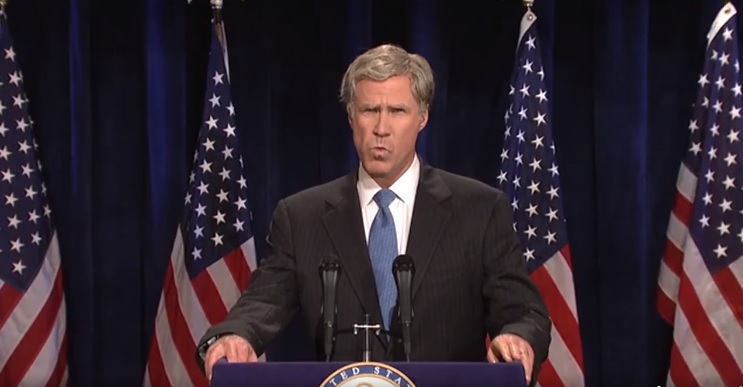
I am reminded of a Saturday Night Live bit with Will Ferrell as George W. Bush who summed up finding the right person to be President saying, “Running a government is kind of like driving a school bus: 

You don’t want a crazy person driving that bus.

You want a simple, underachieving, not very educated but reliable guy behind that wheel.

Someone with a steady hand who will be on time and get into one or two but no more than four accidents a year,”

Sounds about right.

But who wants to be a school bus driver these days?

7.20.2023 – will we look back and

will we look back and
blame only ourselves – it’s not
hard to imagine

In an opinion piece in the New York Times (Hoping for a Miracle, Hurtling Toward Disaster, July 20, 2023), Pamela Paul looks at the possible candidacy’s of Donald Trump and Joe Biden and states:

A Biden-Trump rematch feels like a concession, as if we couldn’t do any better or have given up trying.

I think of the New Deal era and Franklin D. Roosevelt.

So many good and thoughtful people, people eager to take part and help, signed on to FDR’s administration that it was known as the ‘Brain Trust.’

I think of the post World War 2 era and John F. Kennedy.

So many good and thoughtful people, people eager to take part and help, signed on to JFK’s administration that it was known as the ‘New Frontier.’

An ‘undergraduate-must-read-book’ about the JFK administration is titled, “The Best and the Brightest.

Today, who gets involved in Government?

Today, who would WANT to get involved with Government?

Today, who would volunteer for that kind of abuse?

Instead of a Brain Trust or the Best and the Brightest we have a paraphrase of Groucho Marx saying ‘I wouldn’t join any club that would let people like me be a member‘ sand end up with the idea that I wouldn’t vote for any person who want’s the job.

Ms. Paul writes, “One clear sign of America’s deepening hopelessness is the weird welcoming of loony-tune candidates …”

” … it’s as if we’re collectively paralyzed, less complacent than utterly bewildered, waiting for “something” to happen — say, a health crisis or an arrest or a supernatural event — before 2024. While we wait, we lurch ever closer to something of a historical re-enactment, our actual history hanging perilously in the balance.

It isn’t the last line of the Opinion piece, but the last line of the next to last paragraph that stands out.

Will we look back and have only ourselves to blame?

I am reminded of something someone wrote about JFK.

I can’t recall the book or article and I am too pressed for time at the moment to get into the google but the gist of it was that President Kennedy stood up and took the blame for the botched Bay of Pigs operation.

After all, wrote the author, there was no other President at the time.

It isn’t a question of being a question.

It is safe to say that we look back and have only ourselves to blame.

After all, there is nobody here but us at this time.

6.7.2023 – from day to day this

from day to day this
is no ordinary time
have to rise above

I know and you know that any man who is in an office of great responsibility faces a heavier responsibility perhaps than any man has ever faced before in this country.

Therefore, to be a candidate of either great political party is a very serious and a very solemn thing. You cannot treat it as an ordinary nomination, in an ordinary time.

We people in the United States have got to realize today that we face now a grave, a serious situation.

Therefore, this year, the candidate who is the President of the United States cannot make a campaign in the usual sense of the word.

He must be on his job.

So each and every one of you who give him this responsibility, because you will make the campaign, you will have to rise above considerations which are narrow and partisan.

You must know that this is the time when all Good men and women give every bit of service and strength to their country that they have to give.

This is a time when it is the United States that we fight for.

The domestic policies that we have established as a party, that we must believe in, that we must carry forward, and in the world we have a position of great responsibility.

We cannot tell from day to day what may come.

This is no ordinary time.

No time for weighing anything, except what we can best do for the country as a whole. And that rests, that responsibility on each and every one of us as individuals.

No man who is a candidate, or who is president, can carry this situation alone.

This is only carried by a united people who love their country and who will live for it to the fullest of their ability with the highest ideals, with the determination that their party shall be absolutely devoted to the good of the nation as a whole and to doing what this country can to bring the world to a safer and happier condition.

(Eleanor Roosevelt Speech to the 1940 Democratic National Convention in Chicago
July 18, 1940)
TO repeat:

a united people

who love their country

and who will live for it

to the fullest of their ability

with the highest ideals,

with the determination that their party shall be absolutely devoted

to the good of the nation as a whole

and to doing what this country can

to bring the world

to a safer and happier condition

5.17.2023 – eight years spent longing

eight years spent longing
for Hollywood’s realism
and sincerity

Lawyer, Actor and Politician Fred Thompson described his thoughts on who he might include in his autobiography.

Mr. Thompson wrote:

There were the early days when I was a federal prosecutor.

Then there would be a part about my role as counsel for the Watergate committee, and my part in revealing the taping system in the Nixon White House.

Then, of course, I would relate some of my experiences in the movie business as well as on the TV show Law & Order.

And there would be the eight years I spent in the U.S. Senate (which made me long for the realism and sincerity of Hollywood).

The U.S. Senate made me long for the realism and sincerity of Hollywood.

I am reminded of something I heard Jim Harrison say in an interview that the only way he, Mr. Harrison, could stand being in Hollywood was the knowledge that, due to air travel, he could be back where he lived in Michigan’s Upper Peninsula in just a matter of hours.

Mr. Thompson’s time in the US Senate made him long for Hollywood.

Mr. Harrison’s time in Hollywood made him long for Michigan’s Upper Peninsula.

Have you have been to the U.P.?

I’ll let you draw any conclusions but often I think it is not a question of whether or not this Republic WILL survive, but HOW did we make it this far?

*From Teaching the Pig to Dance: A Memoir of Growing Up and Second Chances by Fred Thompson, Crown, 2010.