11.9.2025 – we tend to house our

we tend to house our
products according to value
that we put on them

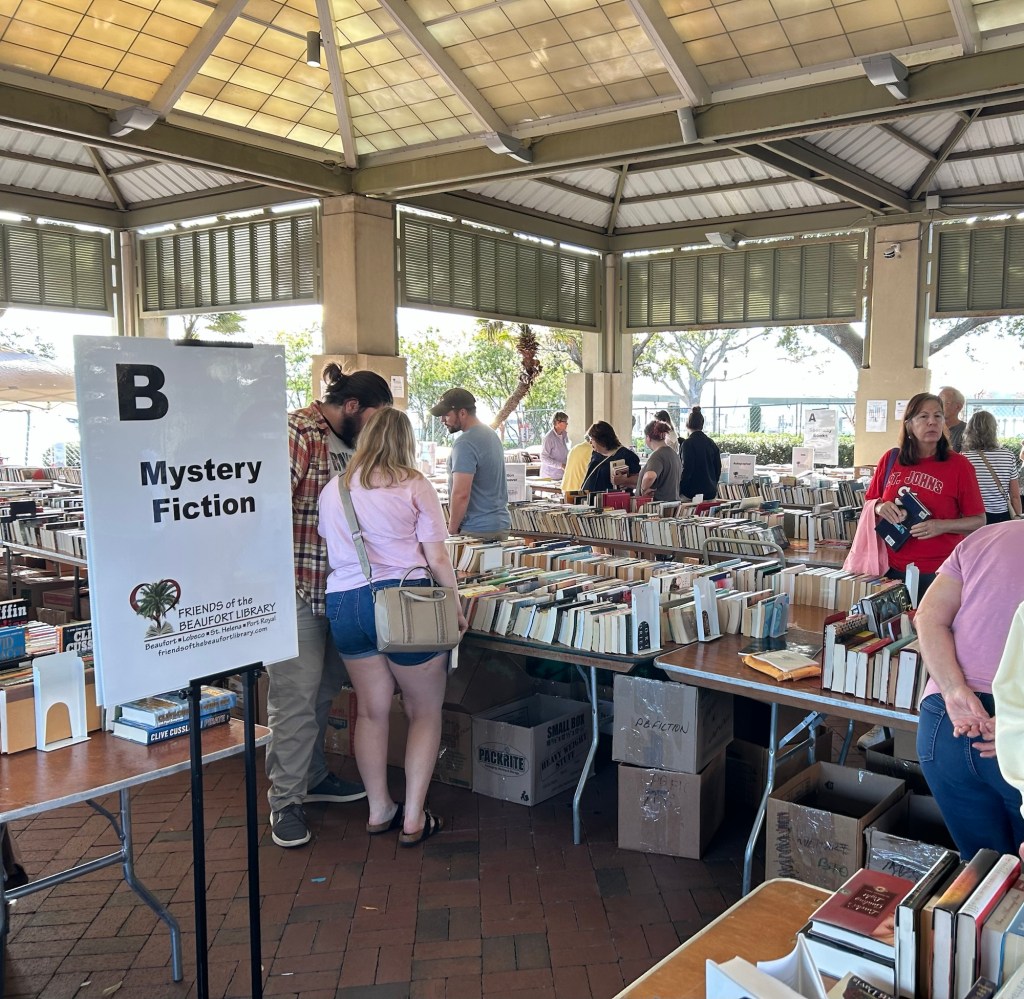
Yesterday my wife and I drove up to Beautiful Beaufort by the Sea, South Carolina for the Friends of the Beaufort County Library Book Sale.

It was held in the waterfront pavilion in downtown Beaufort.

I have been to and taken part in a lot of Friends of the Library book sales in my day but never one outdoors, along the coast, and in November.

I am at a time in my life when divesting of accumulated books is more on my mind than accumulating more physical books (As I buy more and more tablets to hold more and more e books – and for those who wag a finger, I also have a solar power tablet charger for when my Twilight Zone ‘Time enough at Last’ event happens) but then you just never know what a book sale might have and what I might find.

And what I found was a biography of the great …. MAX PERKINS!

Most likely you have never heard of him which is the way it should be.

He was a book editor and it was his job to remain anonymous while making an author’s writing better.

The author’s Mr. Perkins edited include F. Scott Fitzgerald, Ernest Hemingway and Thomas Wolfe.

I got through the first page, just the first page, where the author described the Charles Scribner and Son’s bookstore in New York City.

A bookstore that is no longer around, but it is still remembered as being in the top five of bookstores ever in the world.

Wikipedia writes: “The building opened by May 18, 1913, and became the seventh headquarters of Charles Scribner’s Sons. In addition to the bookstore and offices at 597 Fifth Avenue, Scribner’s had a building at 311–319 West 43rd Street for its printing press. The development of the 597 Fifth Avenue building was described by architectural writer Robert A. M. Stern in 1983 as “sure testimony to the rapid march of commerce to upper Fifth Avenue”. New York Times journalist David W. Dunlap, writing in 2012, said 597 Fifth Avenue was like “the Apple store of its day”. At opening, the bookstore contained shelves of books arranged along both the ground floor and the balconies.”

I went looking online for photographs of the store and came across the blog, Jeremiah’s
Vanishing New York
which on February 8, 2010, had a post titled, Scribner’s Bookstore, where the Jeremiah discusses the store and its contents.

The author wrote, It’s difficult to imagine anyone in New York today providing such an opulent setting in which to sell books. We tend to house our products according to the value we put on them.

I like that line as I think of the bookstores that are left to us today.

And then I thought about the book sale had just left.

In an open air pavilion.

In a park.

Along the waterfront, 2 miles from the Atlantic Ocean.

Such an opulent setting in which to sell books.

We do tend to house our products according to the value we put on them.

10.31.2025 – nature’s first green is

nature’s first green is
gold, her hardest hue to hold …
nothing gold can stay

Nature’s first green is gold,
Her hardest hue to hold.
Her early leaf’s a flower;
But only so an hour.
Then leaf subsides to leaf.
So Eden sank to grief,
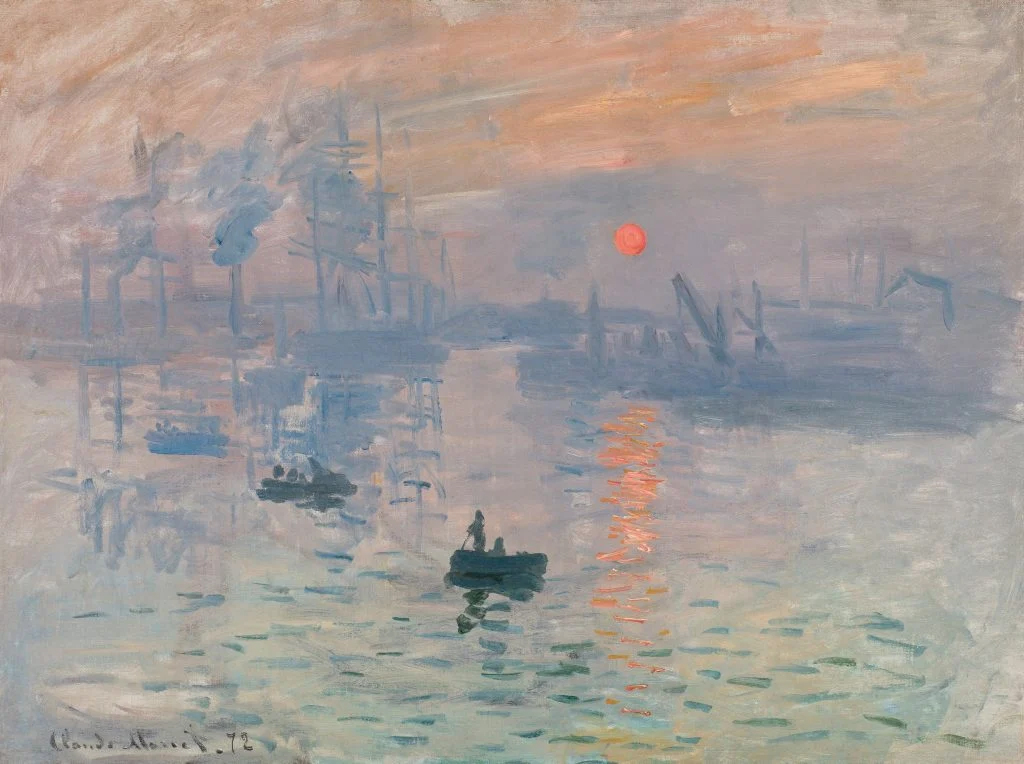
So dawn goes down to day.
Nothing gold can stay.

Nothing Gold Can Stay by Robert Frost, as published in The Poetry of Robert Frost edited by Edward Connery Lathem. (Henry Holt and Company, New York, 1942)

Ashley River with Pink Grass along the marsh, from the Magnolia Plantation near Charleston, SC.

10.28.2025 – sea forced us to tell

sea forced us to tell
ourselves property here is
no longer worth much

In the distance, about half a mile away, you can see the outline of the 400 or so buildings in the village of Miquelon. It sits only 2 metres above sea level on the archipelago of Saint-Pierre and Miquelon. Situated off the Canadian coast to the south of Newfoundland, it is an “overseas collectivity” of France, and the country’s last foothold in North America.

“The constraint of no longer being able to build here – of not being sure that we are sufficiently protected from the sea, with storms that are getting stronger and more frequent – forced us to tell ourselves that our property here is no longer worth much,” he says.

From the article, As rising tides eat away at Canada’s Saint-Pierre and Miquelon archipelago, plans to move the historic village to higher ground have divided friends and families By Sara Hashemi

The islands were an overseas territory of the Nazi-controlled regime of Vichy France after the fall of France in World War II, and were liberated a year and a half later by Free French forces in 1941. After the war, the fishing industry continued to languish, and now fish stocks have fallen so low that fishing is severely restricted. Saint Pierre and Miquelon are now trying to diversify their economy into tourism and other areas.

During the early years of World War II, the United States maintained formal relations with Vichy France. Under the Monroe Doctrine, the US was strongly opposed to any change in control of the islands by force. However, Canada (perhaps due to pressure from Winston Churchill) expressed worries about Vichy forces near Canada. De Gaulle realized that Canada might want to capture Saint Pierre and Miquelon (thereby eliminating French territory so close to Quebec), so he secretly planned its seizure by Free France. On Christmas Eve 1941, Free French forces (three corvettes and the submarine Surcouf, led by Rear-Admiral Émile Muselier) “invaded” the islands. The Vichy officials immediately surrendered.

In the late 1950s De Gaulle offered all French colonies political and financial independence. Saint Pierre and Miquelon chose to remain part of France.

I have long been fascinated with the islands of Saint-Pierre and Miquelon and that a legal part of France was off the coast of Newfoundland.

I remember the old joke of why go all the way to Paris when you can go to Quebec and have people be rude to you.

Of course, I would respond why go all the Quebec when you can shop at Jacobsen’s and have people be rude to you.

But you had to live in West Michigan a long time ago to get that joke.

But there it is, islands, ruled by Government of France, right there 13 miles off the coast of Canada.

It was like after the French and Indian War, those Europeans divvied up all the Risk Cards and someone dropped the Saint-Pierre and Miquelon card on the floor.

Conceivably during World War 2, then Nazis could have staged U Boats out of there, if they could have got there in the first place.

Now they are finding that the Atlantic Ocean is creeping in and that ocean front property, as they say, is no longer worth much.

The constraint of no longer being able to build here – of not being sure that we are sufficiently protected from the sea.

Here I sit in what is called the low country of South Carolina.

The pandemic era WORK FROM HOME concept has caused this area to blow up population wise.

The city of Bluffton, where I live had 900 people living here 25 years ago.

It now has 40,000 and more are moving in every day with new developments both for residents and vacationers.

Houses, Town Homes and Apartments turn up before our eyes.

Vacant marsh land overnight is now a golf course.

But the sea is still a problem for us and it pretty much runs the show.

First off, no one gets to live on the coast.

There is only so much of that.

Second, this is still the low country.

At high tide, 50% of the Beaufort County is under water.

As well as cutting back on available dry land, which pretty much was taken over for roads and railway right-of-ways a long time ago, the amount of fresh water here was maxed also a long time ago.

City and County leaders point out almost every day that the limit for water services and road expansion has been reached.

Then the zoning boards approve another 5,000 homes.

On to of that, the entire area could be wiped off the map by a hurricane.

At some point all of this has to come to smash and the folks here will be forced to tell themselves that their property here is no longer worth much.

10.26.2025 – one in sympathy

one in sympathy
with nature, each season in
turn … seems loveliest

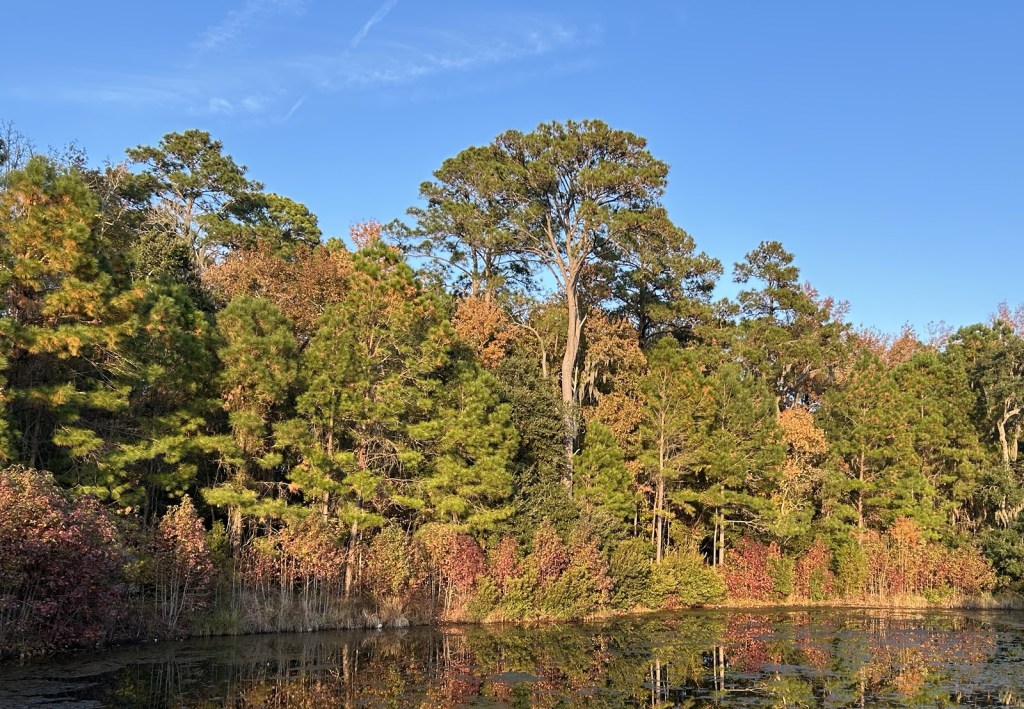
Fall on Pinckney Island, SC Oct 26, 2025

The land that has four well-defined seasons cannot lack beauty, or pall with monotony.

Each season brings a world of enjoyment and interest in the watching of its unfolding, its gradual, harmonious development, its culminating graces—and just as one begins to tire of it, it passes away and a radical change comes, with new witcheries and new glories in its train.

And I think that to one in sympathy with nature, each season, in its turn, seems the loveliest.

From Roughing It by Mark Twain (Harper & Brothers: New York, 1913).

Fall on Pinckney Island, SC Oct 26, 2025

10.16.2025 – shrimping boats are late today

shrimping boats are late today
swift mischief or stubborn sea
lost beneath the tide

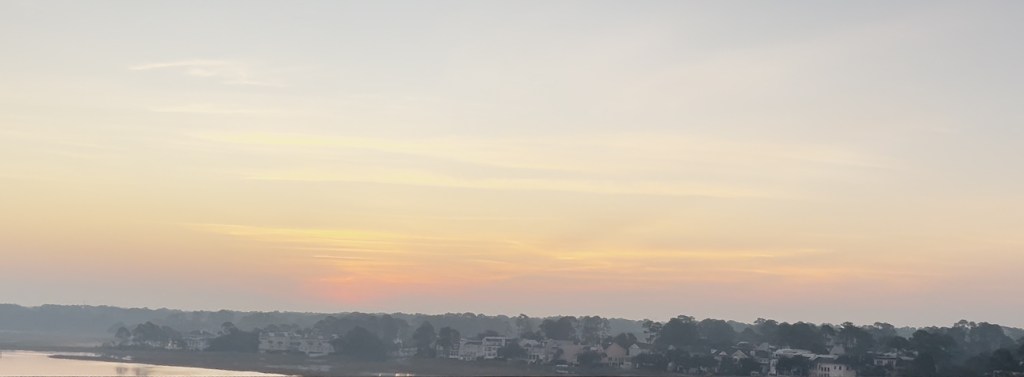
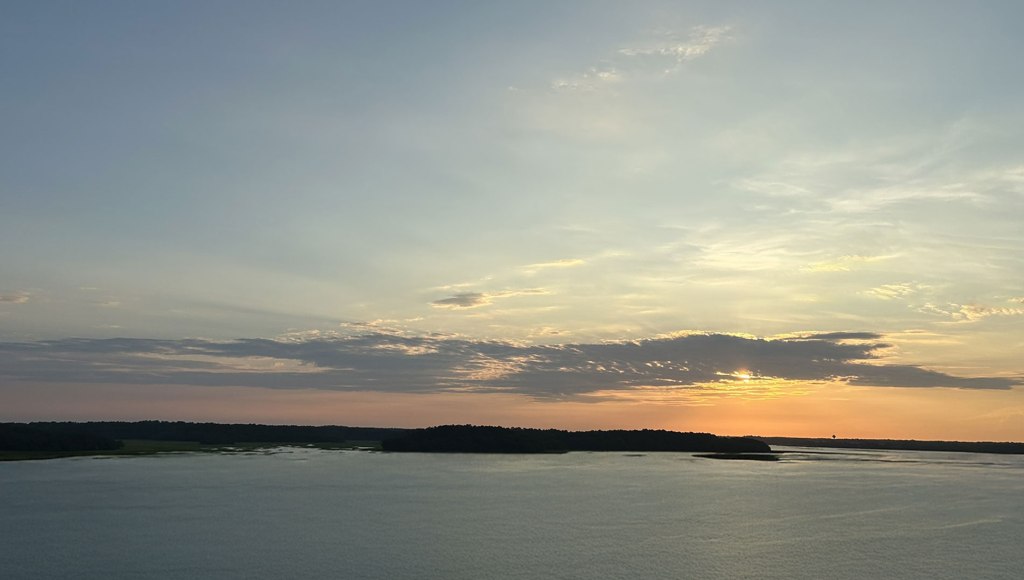
The shrimping boats are late today;
The dusk has caught them cold.
Swift darkness gathers up the sun,
And all the beckoning gold
That guides them safely into port
Is lost beneath the tide.
Now the lean moon swings overhead,
And Venus, salty-eyed.

They will be late an hour or more,
The fishermen, blaming dark’s
Swift mischief or the stubborn sea,
But as their lanterns’ sparks
Ride shoreward at the foam’s white rim,
Until they reach the pier
I cannot say if their catch is shrimp,
Or fireflies burning clear.

Nocturne: Georgia Coast by Daniel Whitehead Hicky as published in Poems of Daniel Whitehead Hicky by Daniel Whitehead Hicky (Atlanta : Cherokee Pub. Co.: Atlanta, 1975).