9.24.2022 – writers write from pain

writers write from pain
he closed up all wounds, all can
write are these small things

The diaries of Alan Rickman were recently published.

The review I read stated, “Why he kept a diary is unclear. Diarists come in all shapes, and their reasons for recording their lives are similarly diverse.”

My question is, did he know or want them to ever be published.

Historian Edmund Morris wrote that one cannot read the private letters and diary of Theodore Roosevelt with out feeling that TR knew and wanted them to be published to the point that letters were not so much written to any one person as much to posterity.

I cannot say I am much of an Alan Rickman fan and then I think about all the movies I have seen in him and I say my gosh was that Alan Rickman?

Die Hard, Love Actually, one of those Jane Austen period pieces and all those Harry Potter movies that I have never seen made from books that I have never read (there, I said it, I have not read any Harry Potter)

I skimmed through the excerpts of the diaries because of the tag line, “two decades of Rickman’s withering film reviews.

Few things I enjoy reading more than withering film reviews except maybe the back story behind withering film reviews.

Like Pauline Kael writing that The Sound of Music was “the single most repressive influence on artistic freedom in movies” and getting fired from her job because of writing that.

But this is all digression.

What caught my eye was a comment Mr. Rickman wrote into his diary on December 29, 2000 when he had a four hour conversation with Edna O’Brien.

Josephine Edna O’Brien is an Irish novelist, memoirist, playwright, poet and short-story writer and Philip Roth described her as “the most gifted woman now writing in English”, all according to wikipedia.

Mr. Rickman quoted Ms. O’Brien commenting on Harold Pinter, the play write.

Just to keep this all straight, I am repeating something Alan Rickman wrote down that he claimed Edna O’Brien said about another person, Harold Pinter.

Got it straight now?

He said that she said that “The trouble is writers write from pain and Harold has closed up all his wounds, so all he can write now are these small things.”

Of late I have been bothered by, OF ALL THINGS, the quality of my haiku.

Not that I am any great poet let alone a poet let alone a writer.

I pretty much set at my keyboard and my fingers ran away which you can tell from typos and grammar all too often.

Still, when I read some of my earlier stuff, I think, this isn’t too bad.

The stuff inspired by a bizarre work environment and daily commutes in and out of Atlanta, Georgia and an extended family situation that was less than settled.

Now I pretty much enjoy my job.

My commute, when I have to go in to the office, if across tidal wetlands on palm tree lined roads.

And my kids, for the most part, are slowly getting their act together (though lots of rough edges remain).

Recently a friend commented that I ‘ … have a charmed life.’

I cannot argue.

Maybe I have closed up all the wounds.

Maybe all I can write are these small things.

If I have to complain, what I complain about is mostly that covid fatigue (along with political fatigue – well this soap opera ever end?)

Can I call those wounds?

Hardly.

I live a charmed life.

I should start acting like I know that.
9.20.2022 – occupational

occupational
citizenship behaviors
leaving work on time

In an article about the quiet quitting concept, Mr. James Tapper wrote:

Rather than working late on a Friday evening, organising the annual team-building trip to Slough or volunteering to supervise the boss’s teenager on work experience, the quiet quitters are avoiding the above and beyond, the hustle culture mentality, or what psychologists call “occupational citizenship behaviours”.

Instead, they are doing just enough in the office to keep up, then leaving work on time and muting Slack. Then posting about it on social media.

Occupational citizenship behaviours.

These, I think used to be called ‘Conventions‘ as in, “The conventions demand it.

In the movie Revenge (which is based on a Jim Harrison short story but achieved more fame when Kevin Costner told the story that he was signed up to do the movie ‘Revenge’ and the script went into re-write and Costner asked how long it would take as if there was enough time, he was going to go do this baseball movie in Iowa), the killer anti-hero says out loud something along the lines of , ‘I have to do this. The conventions demand it … I don’t even know what means.’

Occupational citizenship behaviours.

I do know what that means and while I am back in the office only two days a week so far, I just don’t want to have to follow through with them anymore.

Suffice it say, leaving work on time used to go against the conventions.

9.17.2022 – I always had a

I always had a
motto – I make the number
number don’t make me

Reading the article, Julio Jones primed for a revival with Buccaneers after strong start as Tom Brady target, I enjoyed a bit of writing and a quote from Mr. Jones.

Jarrett Bell of USA TODAY wrote that:

“Julio can play,” Bucs coach Todd Bowles trumpeted on Sunday night, echoing the tone he expressed during training camp. “We keep saying it all along. He got in shape. He got healthy. He’s a warrior. He’s one of those guys that’s going to come out every week and compete.”

He’s also a guy with a new ID.

Jones is wearing No. 6 for the Bucs. It’s nothing sentimental, nothing superstitious.

“It’s just a number, man,” he said. “I didn’t want to take nobody out of their number. It was, ‘Whatever’s available, I’m going to take it.’ No significance.”

Brady’s backup, Blaine Gabbert, wears No. 11 for the Bucs. Third-string quarterback Kyle Trask is No. 2, the jersey number Jones had last year with the Tennessee Titans.

“I always had a motto, man: I make the number, the number don’t make me,” Jones declared. “That’s how I go about it

I liked that.

I always had a motto, man: I make the number, the number don’t make me.

I am reminded of being back in High School at Grand Rapids Creston in the late 1970’s.

This was in the OLD GYM Creston before they built the new gym and way before the decision was made to close the school.

The OLD GYM was so small that in winter months gym class took turns between the boys and girls and who got to use the gym and who had an alternative class.

Alternative meant a movie or maybe a Gym Teacher led lecture class on some topic.

One teacher I had like to give a quiz on sports rules to see what we didn’t know about sports.

He would call on individual students one at a time.

One time, I got this this question.

What are the limits on numbers on basketball uniforms and why?

I did not understand the question.

The teacher rephrased it as what numbers can you have on a basketball uniform and why?

That didn’t help.

The teacher, Don Edwards, who really was pretty cool but thought I was one of the oddest people he had ever had in class, stared at me and said, “Come on Hoffman.”

I felt out of place in gym class often but rarely did I feel stupid and at that moment I felt really dumb.

I stared right back and said, “Okay, I give up. What numbers CAN you have in basketball and why.”

Coach Edwards shook his head and said, “Oh come on. You can only have combinations of 1 thru 5.”

That was the dumbest thing I had ever heard.

“You know, 11, 12, 13, 14, 15 or 51, 52, 53, 54, 55 … 31,32, 33, 34, 35 … only combinations of 1 through 5.”

My eyes must have glazed over as I listened but I did manage to say, “Why?”

“So the ref can signal the scorer with the number of any player with two hands.”

Coach Edwards them demonstrated, “Foul on number 15.”

And he held up 1 finger on the left hand and 5 fingers on the right.

“Basket by number 33” and he help up three and three.

At once I was struck by the meaning and the simple magic in it.

Basketball numbers had limits.

Limits created by the five fingers on our hands.

I understood.

That made 33 THE number to have.

Think of the great 33’s (starting the list with Cazzie Russell)

I understood.

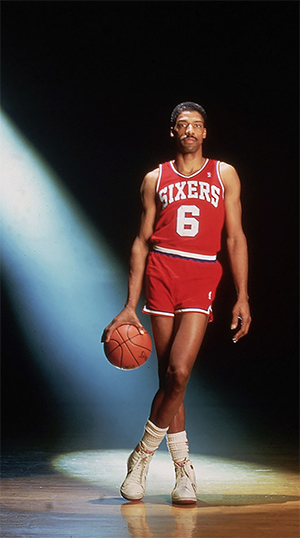
And in that moment I suddenly understood the magic involved in the silent protest and statement of using an illegal number.

DR J and number 6.

Big Bob Lanier wearing number 16.

I understood.

I make the number, the number don’t make me.

9.16.2022 – but the truth that

but the truth that
nobody knows does nothing
to settle debate

In an article about the US and World economy, Mr. Paul Krugman used some very interesting words when discussing the ecomony.

Mr. Krugman, according to his short bio, joined The New York Times in 2000 as an Op-Ed columnist. He is distinguished professor in the Graduate Center Economics Ph.D. program and distinguished scholar at the Luxembourg Income Study Center at the City University of New York. In addition, he is professor emeritus at the Princeton School of Public and International Affairs.

He is, all at the same time, a distinguished professor and a distinguished scholar as well as a professor emeritus which should be good enough for anyone.

Mr. Krugman’s latest observations appear in the NYT Opinion piece, Who’s Afraid of the Consumer Price Index?

Like any good opinion piece on economics, Mr. Krugman uses all the standard terms like inflation expectations, Bureau of Labor Statistics, consumer prices, alternative formulation, immaculate disinflation, significant cooling off, job vacancies, higher unemployment and the ever popular, temporary phenomenon.

Entirely appropriate and expected use of language.

But unexpectedly Mr. Krugman also uses the terms If you still believed, I guess and But the truth is.

If you still believed.

I guess

But the truth is.

NOW that is a gutty enconomist.

Mr. Krugman wraps up his piece with this paragraph:

But the truth is that nobody knows for sure, and the fact that a hot economy is still producing heated inflation does nothing to settle the debate.

Mr. Krugman wraps up his piece with these paragraphs:

The good news, sort of, is that the Fed seems to know what it doesn’t know. It’s talking tough on inflation, as it must to retain credibility, but it’s also talking about looking at the “totality of the incoming data,” which means that it’s prepared to ease off if and when inflation is clearly coming down.

My guess is that this moment will come sooner than many think. But we’ll just have to wait and see.

But we’ll just have to wait and see.

But we’ll just have to wait and see?

I would like to refer Mr. Krugman to Chance the Gardener in the old movie, Being There.

Mr. Gardener said: As long as the roots are not severed, all is well. And all will be well in the garden. In the garden, growth has it seasons. First comes spring and summer, but then we have fall and winter. And then we get spring and summer again.”

In the movie, the President listens to this and says, “I admire your good, solid sense. That’s precisely what we lack on Capitol Hill.”

BTW, the movie Being There was released in 1979.

We’ll just have to wait and see.