Ms. Stockman writes: Given their résumés, one might think that Tony Perkins, the president of the Family Research Council, and Anurima Bhargava, who worked in President Barack Obama’s Justice Department, would be adversaries — if they ever crossed paths at all. Yet, over the past five years, they have managed to forge a bond that transcends politics and proves that you don’t have to agree on values here at home to promote basic human rights abroad.
But they found common ground.
“Wrong things bother her,” Mr. Perkins told me. “And wrong things bother me.”
Ms. Stocmman quotes Ms. Bhargrava, “He’d treated her with respect from the first moment she met him, Ms. Bhargava told me. He made an effort to learn how to pronounce her name, even as another Republican commissioner refused to do so. They sat next to each other at a dinner retreat in North Carolina and started chatting.“
The friendship made her realize that “respect and trust don’t require agreement,” she [Anurima Bhargava] said.
Friendship.
Respect.
Trust.
Post hoc ergo propter hoc, the Romans liked to say.
In its most common usage the saying is used to disprove an argument.
‘With this, therefore because of this’ is the translation and it usually means event B followed event A so event B MUST HAVE BE CAUSED BY event A.
But in this case.
Friendship.
Trust.
Respect.
Not only can they depend on each other, but the parts in the equation, they might be interchangeable.
Maybe it is better to say of three things, it is hard to have any of one of these three without the other two.
Perhaps the key here is that while all of these there things need the other, none of the three require agreement.
Ms. Stockman closes with the comment:
[Mr. Perkins’] friendship with Ms. Bhargava hasn’t changed his core beliefs, he told me.
He still fights for Bible-believing Christians, whom he views as under attack in the West. But he has changed how he expresses himself.
In an age when others write over-the-top tweets just to outrage their political opponents, he chooses his words more carefully and imagines his good friend is listening.
see taste touch smell hear Saturday morning traveling magic world wide web
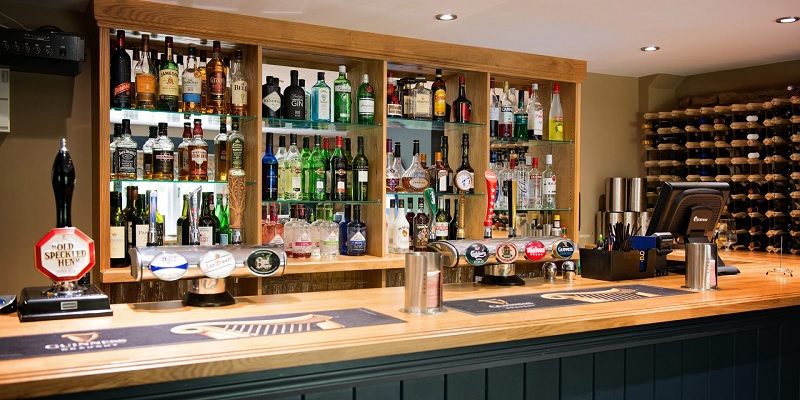
I traveled to the town of Market Harborough, near Great Oxendon, this morning and fell for a place named The George.
The George bills itself as A former 16th century inn set in the beautiful surroundings of South Leicestershire.
The George features a traditional village bar and a large patio area to while away your days in the rolling Northamptonshire countryside.
It is, they say, “A place to eat, drink and sleep.“
The George offers an Auberge Supper, which I think means supper in the style of an inn or small hotel in France where three days a week, lunchtime and evening, we will surprise you with a different tempting 3 course meal. The Auberge Supper is always full of flavours and at a fantastic price.
The George offers afternoon tea where you can “Treat yourself and your friends to afternoon tea at The George. Homemade sandwiches, scones and cakes are served on the patio or in the dining room overlooking the garden. Indulge in a selection of teas or a glass of champagne.“
The bar at the George lets you, “Enjoy a handcrafted real ale or a chilled white wine in our cosy bar. An extensive drinks menu hand-picked from around the world, there is no excuse not to stop in and relax.”
The Sunday Lunch at the George is “Served midday till 3pm every Sunday, you will always find the finest Roast Sirloin of Beef.”
I clicked on an online link for the place and managed to spend a half hour on their website.
I looked at the all the pictures.
I read all the menus.
I could see it.
The photos showed a clean, well lighted place (to steal from Mr. Hemingway).
I could taste it.
Scones, cakes, a glass of champagne, finest roast sirloin of beef.
I could feel it.
I could sense the polished wood and the weight of the crockery.
I could smell it.
The smell of an old bar, of whisky’s and beers and the smell of the kitchen and again the roast meats.
I could hear it.
The clack of crockery and china. Chairs sliding on a wood floor.
It all looked so … civilized.
Far from the maddening crowd.
It is where a warm welcome will always await you.
There was a jingle when I was kid that went, “Let you fingers do the walking in the Yellow Pages.”
I let my mind do my traveling on the world wide web.
I had never heard of Market Harborough or Great Oxendon.
Not quite sure I know where they are.
I feel like I have been there, at the least to The George.
Mr. Desai gets to use wonderful $5 words when he writes:
Pervasive consumer-facing technology allowed individuals to believe that the latest platform company or arrogant tech entrepreneur could change everything. Anger after the 2008 global financial crisis created a receptivity to radical economic solutions, and disappointment with traditional politics displaced social ambitions onto the world of commerce. The hothouse of Covid’s peaks turbocharged all these impulses as we sat bored in front of screens, fueled by seemingly free money.
For me, this opinion piece was summed up in two sentences.
The first, These illusory and ridiculous promises share a common anti-establishment sentiment fueled by a technology that most of us never understood. Who needs governments, banks, the traditional internet or homespun wisdom when we can operate above and beyond?
Not only does it explain, for me the bitcoin fixation but most of the aspects of the covid era.
What I found fascinating was that Mr. Desai linked two worlds together for me.
There is this group, right, that for the most part, boiled down to its essence DOES NOT TRUST GOVERNMENT.
Vaccines, elections, gun rights and border control.
This group does not trust the government and wants the government out of their lives.
Who are these people?
As Mr. Desai pointed out, they are ANTI-ESTABLISHMENT.
They are the 1960’s HIPPIES come to life as 2020’s conservatives.
And at their core, just like the hippies, they are against everything.
As Brando said when asked, “Hey Johnny, what are you rebelling against?“, replied, “Whadda you got?“
Who needs governments, banks, the traditional internet or homespun wisdom when we can operate above and beyond?
And really what do these people want to accomplish?
Don’t ask me.
these illusory and ridiculous promises never understood
Not only did Mr. Desai explain identify this New Hippie Era to me, he also explained the mystery of cyber currency for me.
Mr. Desai writes, “Speculative assets without any economic function should be worth nothing.”
I feel that way and I am not a professor at Harvard Business School and Harvard Law School.
May I paraphrase and say, something without value is should be worth nothing!
BOY HOWDY!
What to do?
Of late James Garner’s tag line from that goofy old western, Support Your Local Sherriff, keeps coming to mind.
Me?
I am just passing through on my way to Australia.
these illusory and ridiculous promises never understood
its basically an insurance company … with its own army
What is the Government of the United States of America?
For the federal government is, as an old line puts it, basically an insurance company with an army. Other than military spending — only a small fraction of which, even now, goes to defending democracy in Ukraine — federal dollars mainly go to retirement and health care programs on which scores of millions of Americans, including many Republicans, depend.
I have to admit that instead of thinking of government being those buildings in Washington and politicians and such, picture George F. Babbitt sitting behind a desk.
spontaneous and natural not requiring of so much effort
“In an ideal world it is not good to put limits on museum attendance as going to a museum should be spontaneous and natural and not requiring of so much effort,” he said. “Adding yet another barrier is not a good idea.”
So says Guillaume Kientz, who served for nine years as curator of Spanish and Latin American Art at the Louvre and is now the director of the Hispanic Society Museum & Library in New York.
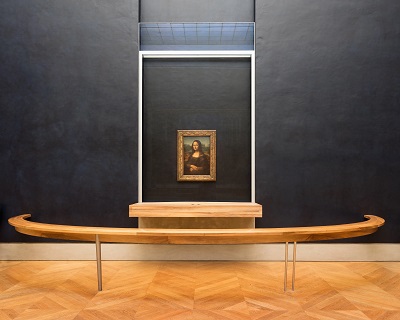
Mr. Kientz was talking about the recently announced 30,000 people a day who are allowed tickets to get entrance to the Louvre.
Back in 2019, it was noted that “Some 80 percent of visitors, according to the Louvre’s research, are here for the Mona Lisa — and most of them leave unhappy.”
Today, according to the article, “Attendance at the museum in 2022, she added, had bounced back to 7.8 million people, 170 percent more than in pandemic-battered 2021 but 19 percent less than 2019, before the coronavirus hit. The renaissance, which Louvre officials attributed to tourists from the United States and Europe, was emblematic of the extent to which the Louvre had recovered after coronavirus travel restrictions buffeted museums in Paris and across the world.”
And most of those folks want to jostle and push and stand in line for a glimpse of one painting so they can tell friends that they jostled and pushed and stood in line to glimpse this one painting and maybe they have a selfie to prove it.
Going to a museum should be spontaneous and natural and not requiring of so much effort.
Growing up in Grand Rapids, it wasn’t too hard to talk my Dad into taking us downtown to the Grand Rapids Public Museum on a Sunday Afternoon.
The museum was never crowded.
There was easy parking though my Dad would look for something within 50 feet of the front door and wonder out loud if the trip was worth it if we had to park at the medical supply building across the street.
We had been to these museum 100s of times and we knew the way around the place front and back.
The diorama’s of stuffed animals.
The oldtime gas light village that represented Grand Rapids in the late 1800’s.
The odd furniture museum up the back stairs.
The Roger B. Chaffee Space corner and Planetarium.
Sometimes we might go the Grand Rapids Art Museum.
The hardest part of a spontaneous and natural visit not requiring of so much effort to this museum focused hitting that magic time when it might be open and there seemed to be no published listing of hours
You just went, it was in an old house, and if it was open, it was open.
Then there were trips to Chicago and Detroit.
Most of my family went off to college at Ann Arbor.
My sister Mary went to college in Chicago for two or three years.
Also my Aunt and Uncle live there.
When ever some needed to be picked up for Thanksgiving or Spring Break my Dad would arrange to take one of two of us kids along and leave early and spend the day in the big city at any of their museums.
Chicago had the Museum of Science and Industry and the Chicago Institute of Art while Detroit had Greenfield Village and the Detroit Institute of Art.
I guess I was raised on the concept that going to a museum should be spontaneous and natural and not requiring of so much effort.
I stayed with that as I got older.
History of Art was my minor in college,
Through this course of study, I had unusual access to the Detroit Institute of Art and a sort-of defacto membership in a group of museum guests that was a little bit above the norm.
I remember that I had a meeting scheduled with one of my professors to see some early Tuscan Renaissance works there at the DIA and I was late.
Never mind how I arranged to get a car to get to Detroit or how I got the gas money to get BACK from Detroit but that’s for another day.
Not knowing when I would be back at the DIA, I had to run upstairs and look at their 3 Van Gogh’s.
As an aside, with Vincent back in the news with this new modern exhibit, and the big show in Detroit, I did a little research to see close the nearest Van Gogh is to me where I now live.
Sad to say I’d have to drive to the National Gallery in Washington.
But I digress.
I spotted my professor waiting in the lobby and ran over and apologized for being late.
“Sorry,” I said, “but I had to go and see the Van Gogh’s.”
My professor smiled and nodded and then looked over his shoulder, took my by the arm and leaned in close and said, “I have real doubts about that self portrait.”
I smiled and nodded.
See, I was in the club.
This may have been the same visit that the professor and I were sitting on a bench in the center of a gallery and the professor pointed out the habits of most of the patrons.
“They come in with their guidebooks, check to make sure they are in the right gallery, look at the guidebook, look back at the plates next to artwork THEN they look at the work itself.”
He clucked his tongue, shook his head and said, “Why should that make such a difference?”
But he knew it did and he taught me that it did, but he still wondered.
He also once more looked over his shoulder and then leaned over and said to me, “And I know of enough times paintings and plaques got messed up.”
Reminded me of story told by the great Tom Wolfe of being at a Picasso exhibit and seeing a man who had rented one of those audio tours that back in the day was on a tape cassette player with a headset.
Mr. Wolfe noted that the man was getting more and more frustrated as he walked through the exhibit until the man finally yelled out loud, THIS IS NOT PICASSO’S BLUE PERIOD.
A docent came over and together they figured out that the man had been playing the wrong side of the tape.
So everyone wants to see the Mona Lisa.
I understand that.
But there are more paintings and other Museums.
Close to me is the Telfair Museum in Savannah.
I haven’t been yet but I do want to go.
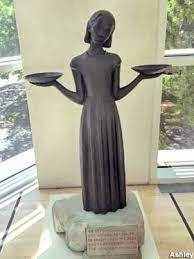
It its where the the statue of the young lady feeding birds, known as the Bird Girl Statue, is now located.
Sad to say that after being featured in the movie, Midnight in the Garden of Good and Evil, the statue got so much attention and had to be removed from its location in a cemetery and placed in the art museum.
Maybe sometime access to art can be too spontaneous and too natural and should require a little effort.
I also want to see the EK le by Josef Albers.
It is listed as being part of the Telfair Museum Collection.
Going to the Telfair museum for me can be be spontaneous and natural and not requiring of so much effort.
Alas, the online listing for EL le states, “STATUS – Not on view”



 No Haiku For You