And I wrote an essay about the worries I created for myself by my need to always have something to read and always seeming to worry that there was some new fact I might be missing by not reading.
I find it interesting that I use the phrase, ‘Bound Box of Moonlight” but I don’t credit the source of the thought.
My wife and I had just watched the odd movie Box of Moonlight where the hero or anti-hero if you will, brings home a bound box of moonlight.
Not sure what I was thinking that morning back four years ago.
It was a Saturday and I would have just finished a week of commuting back and forth into the city of Atlanta.
An election was coming up in 9 months.
We were looking at the 1st Spring of Covid but the March 13 lockdowns were unimaginable.
The affects of Covid overall could not have been taken seriously.
My daughter was expecting a baby at any moment.
But what was I thinking?
I can tell what I wasn’t thinking.
I wasn’t thinking that in October my job would be made redundant.
I wasn’t thinking that I would be living in South Carolina.
I would never have ever ever thought that on a regular basis I would be walking on the beach along the Atlantic Ocean.
And once again, a daughter is expecting a baby at any moment.
Here is the point.
This day, leap day, won’t come again for another 4 years.
What will change in those 4 years.
What will I be thinking in 4 years from today.
I might be retired and not going into work every day.
I might be a lot of things.
But this I do know.
There will be 1,461 days until February 29, 2028.
The sun will rise, Lord willing of course, 1,461 times and set 1,460 times.
Here on the island, the tide will come in 2,932 times and sweep everything away and go out 2,931 times, leaving a clean tides wept beachscape behind.
See you in four years.
As Bette Davis said in All About Eve, “fasten your seat belts, it’s going to be a bumpy night.”
PS: Those stories about the millennial who showed up for meeting at 10:25 because they were told the meeting was a quarter past 10 must be true. I explained leap year to a coworker who fits that demographic. She asked what happened to the extra day everyone was talking about and when I said there wasn’t a February 29th last year or next year, she didn’t believe me and had to look it up but then looked very satisfied that she now knew what leap year and leap day meant.
twice two makes four is an excellent thing, makes five is sometimes charming too
But man is a frivolous and incongruous creature,
and perhaps, like a chess player,
loves the process of the game,
not the end of it.
And who knows (there is no saying with certainty),
perhaps the only goal on earth to which mankind is striving lies in this incessant process of attaining,
in other words,
in life itself, and not in the thing to be attained, which must always be expressed as a formula,
as positive as twice two makes four,
and such positiveness is not life, gentlemen,
but is the beginning of death.
Anyway,
man has always been afraid of this mathematical certainty,
and I am afraid of it now.
Granted that man does nothing but seek that mathematical certainty,
he traverses oceans,
sacrifices his life in the quest,
but to succeed,
really to find it,
he dreads, I assure you.
He feels that when he has found it there will be nothing for him to look for.
When workmen have finished their work they do at least receive their pay,
they go to the tavern,
then they are taken to the police-station —
and there is occupation for a week.
But where can man go?
Anyway,
one can observe a certain awkwardness about him when he has attained such objects.
He loves the process of attaining,
but does not quite like to have attained,
and that,
of course,
is very absurd.
In fact, man is a comical creature;
there seems to be a kind of jest in it all.
But yet mathematical certainty is after all,
something insufferable.
Twice two makes four seems to me simply a piece of insolence.
Twice two makes four is a pert coxcomb who stands with arms akimbo barring your path and spitting.
I admit that twice two makes four is an excellent thing,
but if we are to give everything its due,
twice two makes five is sometimes a very charming thing too.
From Notes from the Underground by Fyodor Dostoevsky, first published in the journal Epoch in 1864.
It is well documented that when Winston Churchill spoke publicly in the House of Commons, he would have his speeches on paper 8 by 4 inches with a hole punched in the upper corner and a string through the holes to keep the speech in order.
The words would be typed out in short phrases that lent the words to pausing, hesitation and emphasis as Mr. Churchill delivered the speech.
Insiders referred to this style as Churchill’s Psalm form and once you know about it, you cannot help picture the prepared text as you hear the words.
Unconsciously or sub consciously as well as by design, I have adapted this style into my writing of short phrases and sentences.
I don’t know that I could write a paragraph if I had too.
The short staccato AP style of one line, one thought also lurks in my background especially as the news writing I did the most were with stories that were meant to be READ out loud by a reporter or presenter.
So ends my confessional.
Considering all that, I think this bit of Mr. Dostoevsky’s writing works quite well when read out loud in the fashion in which I present it.
But what is Mr. Dostoevsky saying?
And I ask this in a the latest edition of ‘In a World Gone Crazy’.
And I put it to you that as now, so little makes sense from what it used to mean that truly, twice two makes four is the beginning of death.
And that twice two makes five is sometimes a very charming thing.
But beware of those who tell you twice two makes five.
In the end, it always comes out four.
Boy, Howdy! but man is one frivolous and incongruous creature.
Mr. Dowling’s list includes, “I live in fear of being scammed, I feel a strange obligation to monitor bad news in real time, It’s given me unfiltered access to the opinions of stupid people and It’s given stupid people unfiltered access to each other’s opinions.
I like “I’m no longer able to have arguments in pubs.”
Mr. Dowling writes, “I can remember a time when it was considered ungentlemanly to check the factual accuracy of a statement made by a drinking companion. You were just meant to counter their argument by presenting specious facts of your own. But when everyone has the GDP of every Brics country at their fingertips, there doesn’t seem to be much point in spirited debate. You end up spending the whole evening looking things up and saying, “Huh.” These days, if you want to get into a petty squabble over obscure facts in an environment where phone use is banned, you have to go to prison. Or do the pub quiz. Either way, it’s no life.”
I remember listening to a call in sports show from New Zealand once and they asked a trivia question and got a caller on the line who was a bit shocked that he got through and spent some time chatting up the two hosts of the show.
Then one of the hosts caught on and says, “Hey, you’re playing for time while you’re doing the Google!”
And Yes, that is when I started referring to using Google with the definite article, The or as the host said, “Doing THE Google.”
(Admit it, it sounds better with a bit of the kiwi/down under upper lift interrogative accent when saying “Doing THE Goggle”).
Back in the day my toughest baseball trivia question was, “What player started a game as a member of one team, was traded in the middle the game to the other team and ended up scoring for the other team?“
This gets interesting as this question cannot be answered using The Google but I didn’t know that until today.
I am saving this story for another day.
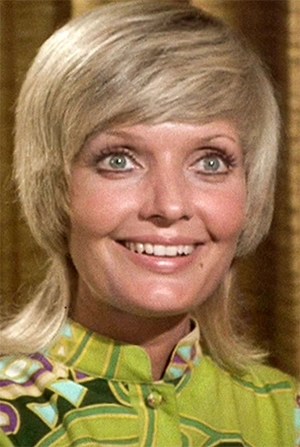
In a final twist, I can ask what does the TV show, the Brady Bunch and the the only player in MLB History who started the game as a member of one time, was traded in the middle the game to the other team and ended up scoring for the other team have in common?
But to the point, you could raise these points to make a point and counter points with presenting specious facts of your own.
It was fun.
It was real engagement.
But when everyone has the GDP of every Brics country at their fingertips, there doesn’t seem to be much point in spirited debate.
You can challenge.
You can prove your point.
Or you don’t talk amongst yourselves, you just play the trivia contest that you can access via the QR Code on the coasters.
You can call out your score, but who cares?
Either way, it’s no life.
BTW, I knew Carol Brady’s maiden name because a book on the Brady Bunch came out back in 1990 with a complete cast list for the pilot and each season along with Guest Stars and in the pilot, two actors I cannot remember were listed as … Mr. and Mrs. Tyler (Parents of the Bride) and this factoid was added to the library of useless knowledge that is my brain.
Carol Brady was Caroline Ann “Carol” Brady or Caroline Ann “Carol” Martin née Carol Ann Tyler when see married Mike Brady.
here we are again the days of the long shadows were we ever here?
Plus ça change, plus c’est la même chose.
The more things change, the more they stay the same.
My wife and I try to walk around out in the neighborhood everyday, twice if the weather and my schedule work out.
It is an exercise regime that works with my outlook on physical exercise.
I have noticed that several times a year (it really should be only twice a year but the time change throws a curveball into the mix) the sun lines up low in the sky with a length of sidewalk and produces these long shadows.
From the picture, you can see we are some minutes or maybe a day or two away from the shadow lining up exactly with the sidewalk but you can’t count on sunny days even here in the low country of South Carolina so I thought I better grab the image while the grabbing was good.
I have, by the calendar, seen these shadows stretch out and line up about 16 times since we moved here.
The sidewalk is the same.
The street ahead is the same.
The shadows pretty much look the same thought the bulky of our clothes changes from early spring to late fall.
The sun is the same.
What has changed in the last four years?
Truly the more things change the more they stay the same.
With this in mind though, I agree with Delwin Brown, who in his 1994 book, Boundaries of Our Habitations: Tradition and Theological Construction, (State University of New York Press) wrote, “There must be some continuity with the past, “or else the world is a madhouse.” Hence, the more things change, the more they stay the same; the more things stay the same, the more they change.”
Full disclosure I am not familiar with this book but when I looked up the the saying to get the french spelling of Plus ça change, plus c’est la même chose, I came across Mr. Brown’s quote in the lazy man’s best friend, Wikipedia.
I am reminded of snow.
If you grew in the western part of the State of Michigan in the back half of the 20th century like I did, you saw a lot of snow.
Early in your life, your learned from your Mom or your brothers or your sisters or your kindergarten teacher that NO TWO SNOWFLAKES are the same.
I put it to you that NO TWO OF ANYTHING are the same.
No two snowflakes.
No two days.
No two nothing.
But besides being different, all snowflakes are snowflakes.
They are all the same.
The more things change, the more they stay the same.
The more things stay the same, the more they change.
Then again, there is the shadow.
Here and gone.
Dark and bold in its outline in bright sun and a cloud comes along and covers the sun and the shadow is gone.
Was it really there?
The more things change, the more they stay the same.
The more things stay the same, the more they change.



 No Haiku For You