October 17 – Caramel, Carmel?

Caramel, Carmel?
one is candy, one is in
California

Caramel can be pronounced Carmel.

To tell the truth, I always thought that Carmels were the light brown hard-soft candies from Kraft.

They were wrapped in clear plastic that would often rip and stick to your fingers when you unwrapped them.
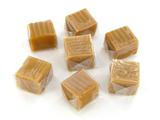
It took an entire package of unwrapped carmels to put on the stove to make carmel apples.

The commercials showed a happy Mom and happy kids, happily sticking a small wooden stick into an apple and happily dipping the apple in a vast vat of melted carmel and removing perfectly coated carmel apples.

While my Mom let us make carmel apples every year, we never came close to this pool of carmel.

We would ask if we could use two bags of carmels but the limit was one bag.

We all helped unwrap the candy and the plastic wrappings were everywhere.

Using a double boiler, we would melt the carmels and wait.

And wait.

An wait.

After a couple of hours Mom would say it looked ready and we grabbed our apples.

Into the carmel the apples would go.

Instead of disappearing into a thick ooziness, the apples would go in about half way and hit the bottom of the pan.

My Mom and learned the trick from years of doing this and had taught us to turn the apple sideways and spin the stick so that the apple was coated with carmel.

It wasn’t the dipped apples from the commerical but it worked pretty good.

Mom had a piece of butter wax paper ready and we would plunk the coated apples down on the paper.

The carmel would slowly slide down the sides and create the traditional crown or cap.

Into the fridge and wait for the carmel to harden.

I loved these things.

I never bought on in a store or farmer’s market that came close to how good these were.

I mean, some places actually rolled the apples in nut pieces.

Near sacrilege in my book.

As much as I enjoyed Carmel Apples, I had a major problem eating them.

When I was nine, I chipped a front tooth.

Broke the thing in half actually.

Lucky for me, my Dad was a Dentist and was able to cap the tooth.

But nothing put a capped front tooth to the test like eated a carmel apple.

I don’t remember how many caps I broke off.

It may have been just one.

But I was fearful everytime I had one.

It seems to me that Mom would had me mine out the fridge and say, ‘you be careful of your tooth.”

Yes, later in life, I tried the ‘Caramel Dip” for apples.

Well, just not the same is it?

Just today I saw a restaurant review that stated, ‘Caramel is on the bottom on the bottom of the pudding.”

And I said to myself, ‘what is the difference between Caramel and Carmel.

Turns out that all these years I have been eating Caramel Apples.

No kidding.

Carmel is a town in California made famous by the photos of Ansel Adams.

I knew that.
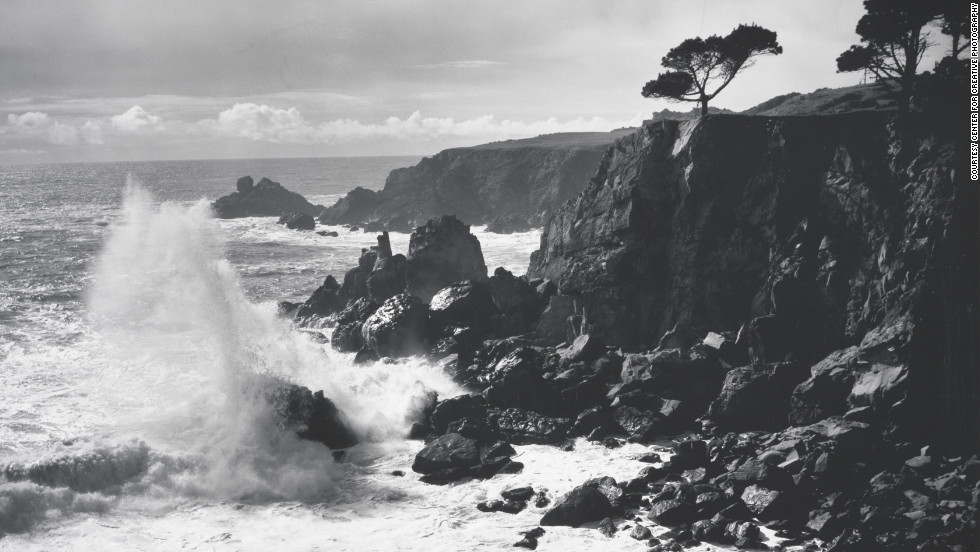
Either pronunciation, Caramel (/ˈkærəmɛl/ or /ˈkɑːrməl/), can be used so I feel better about that but still.

Caramel Apples looks so pretentious.

Caramel Apples sounds pretentious.

A fruit covered in sticky candy on a stick.

Carmel Apple.
October 16 – rainy Wednesday

rainy Wednesday
Piano Sonata 8
the perfect sound track

After a slow, gray and rainy commute, Beethoven’s Piano Sonata No. 8 in C minor, Op. 13, or the Pathétique, was playing on the radio.

Wikipedia reports that Beethoven’s Piano Sonata No. 8 in C minor, Op. 13, commonly known as Sonata Pathétique, was written in 1798 when the composer was 27 years old, and was published in 1799. It has remained one of his most celebrated compositions.

Although commonly thought to be one of the few works to be named by the composer himself, it was actually named Grande sonate pathétique by the publisher, who was impressed by the sonata’s tragic sonorities.

Wiktionary defines pathétique as (post-classical) full of pathos, affecting, pathetic.

Tragic sonorities full of pathos, affecting.

Wow!

Perfect for a rainy day in Georgia.

October 14 – big win for pizza

big win for pizza
no Columbian Exchange
no tomato sauce

Many changes for the world after Columbus discovered America,

In 1972 Alfred W. Crosby, an American historian at the University of Texas at Austin, published The Columbian Exchange. He published subsequent volumes within the same decade. His primary focus was mapping the biological and cultural transfers that occurred between the Old and New World. He studied the effects of Columbus’ voyages between the two – specifically, the global diffusion of crops, seeds, and plants from the New World back into the Old. His research made a lasting contribution to the way scholars understand the variety of contemporary ecosystems that arose due to these transfers.

Lots of wins, lots of losses.

Many positives and many negatives.

I guess if it hadn’t been Columbus, someone from Europe was going to get here and offer the natives a choice of the Cross or the Gallows.

Might has well celebrate Columbus.

Perfectly appropriate that he is remember as the capitol of Ohio.

Please let me focus on one food item that fascinates me.

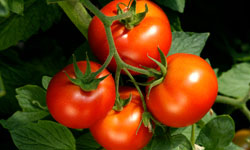
Tomatoes.

Tomatoes, which came to Europe from the New World via Spain, were initially prized in Italy mainly for their ornamental value. From the 19th-century tomato sauces became typical of Neapolitan cooking and, ultimately, Italian food in general.

No Italian tomato sauce until after 1492?

Even though they were available in the new world, how accepted were they?

Thomas Jefferson was one of the first Virginians to grow and eat tomatoes, or ‘tomatas,’ as he called them. Most Americans thought the tomato was poisonous (and, indeed, it is a member of the deadly nightshade family, though its low toxicity levels pose no risk to humans), and so it was an astonishing event when, in 1806, Jefferson served them to guests at the President’s House.

There is the famous FABLE that Jefferson at tomatoes on the courthouse steps to prove they wouldn’t kill you.

The truly odd aspect of the Jefferson involvement with the tomato is that Jefferson grew his tomatoes from seeds he sent from France.

Celebrate Columbus.

Celebrate the Tomato.

Order a pizza with extra sauce.

October 12 – Abraham’s Promise

Abraham’s Promise
look out at Plains at Mamre
promise made and kept

Standing on the Summit Overlook of Black Rock State Park in North Georgia, looking out over Rabun Gap, the story of Abraham on the Plains of Mamre from Genesis came to my mind.

So many Bible stories from this point in time.

Abram and Lot.

Lot’s choice.

The promise to Abraham.

God said to Abraham, “I will make your offspring like the dust of the earth.”

Today Abraham is a father figure in Christianity, Judaism and Islam.

Why worry about tomorrow indeed.

I am willing to trust God with my little life.

The Lord said to Abram after Lot had parted from him, “Look around from where you are, to the north and south, to the east and west. All the land that you see I will give to you and your offspring[a] forever. I will make your offspring like the dust of the earth, so that if anyone could count the dust, then your offspring could be counted. Go, walk through the length and breadth of the land, for I am giving it to you.” So Abram went to live near the great trees of Mamre at Hebron, where he pitched his tents.

Genesis 13: 14-18 (NIV)

October 11 – who speaks for reason?

who speaks for reason?
reason has no natural voice
social media, not!

“… in the first place reason has no natural voice. Mob orators of the sort we have, the Boris Johnson sort, do not speak reason. When you get into that category, your task is to fire up the people with nostalgia, with anger. It’s almost unbelievable that these people of the establishment – Farage, for instance – are speaking of betrayal: ‘I’m betrayed by parliament, betrayed by government – I’m speaking to you as a betrayed person, and I’m a man of the people like you.’”

John le Carré

My ties to England have loosened’: John le Carré on Britain, Boris and Brexit
John Banville – The Guardian Oct 11, 2019