11.7.2020 – confusion or shame

confusion or shame
good deeds someone has done
before, defend them

Based on this line of poetry and thereby hangs a tale.

The line is:

In sleep, in confusion, in the depths of shame,
The good deeds a man has done before defend him

The line was used by Dr.  J. Robert Oppenheimer, head of the Manhattan Atomic Bomb project in World War 2.

The lines is purported to have been translated from by Dr. Oppenheimer from the Bhagavad Gita.

I will not try to explain what the Bhagavad Gita is as I don’t know that I can as I don’t know exactly what it is.

Dr. Oppenheimer remembered the lines out loud just prior to the first atomic bomb test in 1945.

Almost every book and biography about Dr. Oppenheimer or about the bomb have the quote.

They also have his more remembered and quoted quote when the bomb went off successfully, also from the Bhagavad Gita, that goes:

Now I am become Death, the destroyer of worlds”

I am reading a book on the a bomb, fascinating stuff by the way, and came across todays quote and worked it into today’s haiku.

I wanted a citation.

The book cites the poetry as coming from Dr. Oppenheimer’s personal translation of the Bhagavad Gita.

Searching an online copy of the Gita, I could not come anywhere close to finding lines that reflected these thoughts and words.

I went Back to the Google.

It did not take long to one, find the original source and two, to learn it isn’t in the Gita AT ALL.

I have seen the quote cited to the Gita in countless books and articles.

Does anyone bother any more to check these things?

Does anyone higher editors and fact checkers anymore?

The quote actually comes from the the Śatakatraya, a work of Sanskrit poetry, comprising three collections of about 100 stanzas each by Bhartṛhari, a 5th century (CE) Sanskrit writer.

I am just to going to leave it at that rather than try to give any explanation of the Śatakatraya or the Bhagavad Gita as I don’t know the difference and I don’t know if it can be explained.

I will BET thought it cannot be explained in less than a fall term graduate level lecture class some where.

What Bhartṛhari wrote was:

vane raṇe śatrujalāgnimadhye
mahārṇave parvatamastake vā ।
sup‍taṃ pramattaṃ viṣamasthitaṃ vā
rakṣanti puṇyāni purākṛtāni ॥
nītiśataka

or

In a forest, in a battle, amongst enemies, amidst water or fire, in a vast ocean or on the tip of a mountain, while asleep, awake or in danger – virtuous deeds from (our) past are the protectors.

Where the Google can take you on a Saturday morning, I tell you.

Virtuous deeds from (our past are the protectors.

A good thought to start a Saturday in the midst of a pandemic and never ending election.

I do have to think about some of those figures in the election.

And I do have to ask, what if you have no good or virtuous deeds in your past?
11.3.2020 – There is ruin, decay

There is ruin, decay
winds blow bleak, all gone away
nothing more to say

Adapted from The House on the Hill by Edwin Arlington Robinson

They are all gone away,
The House is shut and still,
There is nothing more to say.

Through broken walls and gray
The winds blow bleak and shrill:
They are all gone away.

Nor is there one to-day
To speak them good or ill:
There is nothing more to say.

Why is it then we stray
Around the sunken sill?
They are all gone away,

And our poor fancy-play
For them is wasted skill:
There is nothing more to say.

There is ruin and decay
In the House on the Hill:
They are all gone away,
There is nothing more to say.

I was attracted to this poem for today, election day 2020, as finally, there is nothing more to say.

I have always felt that one of the most forlorn sights is a Halloween Pumpkin on November 1st.

How much more so election signs all across everywhere the day after an election.

All those candidates, they are all gone away.

I looked up the poem to make sure I got the poet’s first name correct and I learned that this poem:

‘The House on the Hill’ by Edward Arlington Robinson is a six stanza villanelle that is divided into sets of three lines, known as tercets, and then one final set of four lines, or quatrain. The lines follow a very simple rhyme scheme of ABA, with the traditional repetition one can expect from a villanelle. The first and third lines of the first stanza is repeated, alternatively, in the next five.

It isn’t just a poem but a a six stanza villanelle!

WOW.

Villanelle.

Never ran across that term before.

Sounds much harder than a haiku but explains why I had trouble getting a seven syllable line out of it when all the lines are six syllables.

The page I learned this on also said, in the way of analysis:

It is meant to be a symbol for the speaker’s past and it’s decay a representative of how he’s losing contact with his own past acquaintances and experiences.

On election day 2020, I hope we aren’t losing contact with our past.

I hope it isn’t all gone away.

Bleak and shrill.

No good or ill.

And I hope it is not ruin and decay.

But we all have to wait.

There is nothing more to say.

10.29.2020 – looking forward back

looking forward back
are there any new ideas
old ideas re-thought

Came across the name Vannevar Bush in my reading the other night.

His entry in Wikipedia states, “an American engineer, inventor and science administrator, who during World War II headed the U.S. Office of Scientific Research and Development (OSRD), through which almost all wartime military R&D was carried out, including important developments in radar and the initiation and early administration of the Manhattan Project. He emphasized the importance of scientific research to national security and economic well-being, and was chiefly responsible for the movement that led to the creation of the National Science Foundation.

In other words, he was the civil administrator of the operation that delivered the atomic bomb.

But he was an idea guy.

As the entry stated, Mr. Bush saw “the importance of scientific research to national security and economic well-being.

He also envisioned a research tool tor a “device in which an individual stores all his books, records, and communications, and which is mechanized so that it may be consulted with exceeding speed and flexibility.”

Mr. Bush advanced this concept in the early 1930’s.

With the tools available at the time, Mr. Bush wondered if somehow microfilm readers could some ‘link’ text to other sources.

When computers were first introduced there were often connected in a network or ‘internet’ that allowed information to be stored and shared.

In 1990’s, the world wide web was launched and that information became open to everyone.

Mr. Bush also predicted a time when “there is a growing mountain of research. But there is increased evidence that we are being bogged down today as specialization extends. The investigator is staggered by the findings and conclusions of thousands of other workers.

The investigator is staggered by the findings and conclusions of thousands of other workers!

I am staggered by the amount of information now online.

I am glad its there though.

Lucky for me the world needs people to help find the way through this mountain of information.

I am here to help folks find their way to Hilton Head Island.

10.27.2020 – picture the graces

picture the graces
winning ways, and rare promise
not the faults and flaws

I love the book Tom Sawyer/

There are passages as full of what makes writing writing that had I written, I could die a happy man/

White washing the fence.

The unearned prize Bible.

Lost in the cave.

Right there with is the scene when Tom, Huckleberry Finn and Joe Harper march down the aisle at their own funeral.

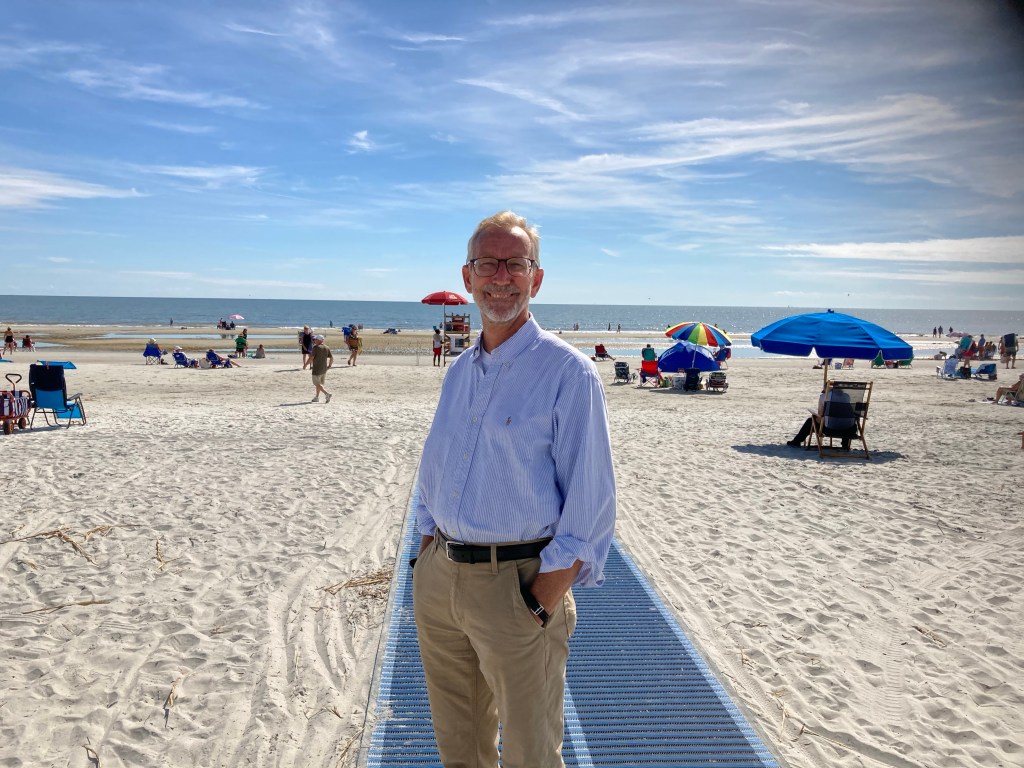
Recent events have allowed me to reveal a great piece of personal news.

Lunch time walk

The comments, congratulations and well wishes of so many friends and family and folks whose comments and friendship I value a lot have reminded me of this scene.

Had I known I would heard such wonderful things I would have arranged to die a long time ago.

Thank you all.

As Mr. Twain put it, “Tom got more cuffs and kisses that day — according to Aunt Polly’s varying moods — than he had earned before in a year; and he hardly knew which expressed the most gratefulness to God and affection for himself.”

I am grateful to God for his affection.

I am grateful to God for your affection.

From The Adventures of Tom Sawyer by Mark Twain.

As the service proceeded, the clergyman drew such pictures of the graces, the winning ways, and the rare promise of the lost lads that every soul there, thinking he recognized these pictures, felt a pang in remembering that he had persistently blinded himself to them always before, and had as persistently seen only faults and flaws in the poor boys. The minister related many a touching incident in the lives of the departed, too, which illustrated their sweet, generous natures, and the people could easily see, now, how noble and beautiful those episodes were, and remembered with grief that at the time they occurred they had seemed rank rascalities, well deserving of the cowhide. The congregation became more and more moved, as the pathetic tale went on, till at last the whole company broke down and joined the weeping mourners in a chorus of anguished sobs, the preacher himself giving way to his feelings, and crying in the pulpit.

There was a rustle in the gallery, which nobody noticed; a moment later the church door creaked; the minister raised his streaming eyes above his handkerchief, and stood transfixed! First one and then another pair of eyes followed the minister’s, and then almost with one impulse the congregation rose and stared while the three dead boys came marching up the aisle, Tom in the lead, Joe next, and Huck, a ruin of drooping rags, sneaking sheepishly in the rear! They had been hid in the unused gallery listening to their own funeral sermon!

10.27.2020 – walking on the beach

walking on the beach
between me and Morocco
no one else to see

Recent life changes has moved the Atlantic Ocean so close that I have gone walking on the beach everyday for the last couple of days.

Feet in the waves.

Feet in the salt water.

If I look to the east, there is no one to be seen between me an Morocco.

4,200 miles of ocean.

When I think about that to my right, I tip over on my left.