Some of these beach haiku were written by random trips to beach.
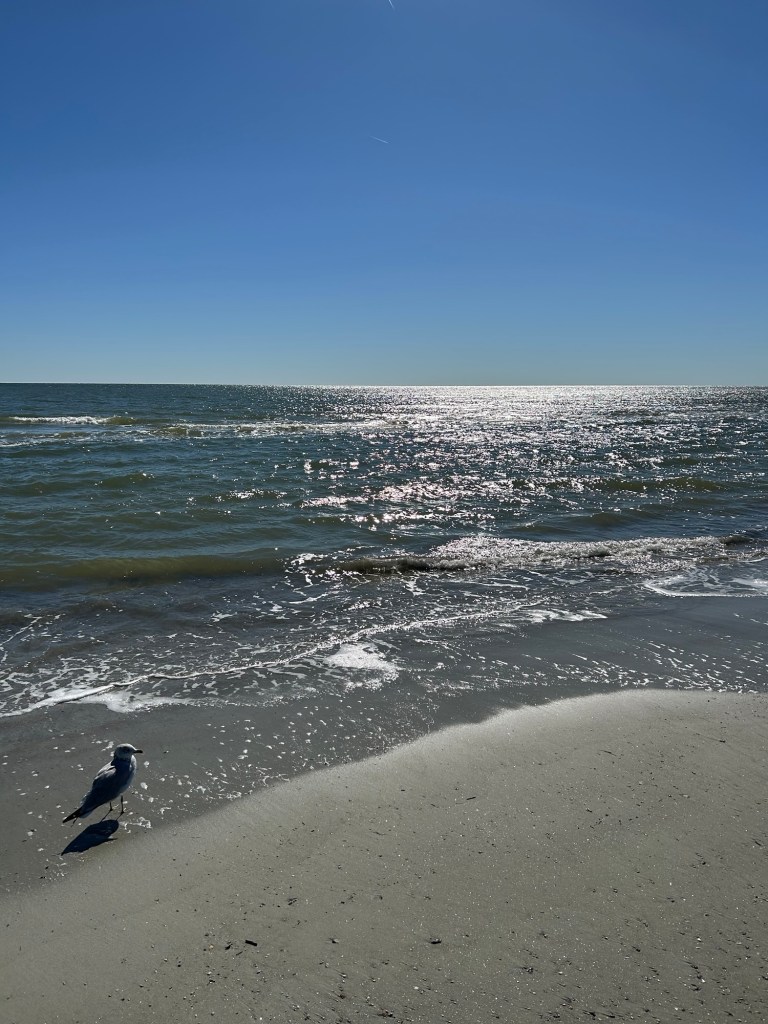
Most of these are part of a series based on afternoons spent at the beach on Hilton Head Island with my pad out ( a real paper note pad), hoping for words with my iPhone camera handy to add illustration to my thoughts.
I wanted to see if I would be ‘inspired’ by what I saw, by what I heard, by what I smelled, by what I tasted, what I felt emotionally and what I felt tactilely.
Some turned out okay.
Some were too forced.
Some were just bad.
Some did involve some or all of those feelings.
As far as it goes, I guess I was inspired by by what I saw, by what I heard, by what I smelled, by what I tasted, what I felt emotionally and what I felt tactilely.
Please aware that most of these haiku were NOT WRITTEN on the date in the title – for an explanation of this please see The Series link in the navigation table.
a grey mist sea’s face, must go down to the seas, call of the running tide
I must go down to the seas again, to the lonely sea and the sky, And all I ask is a tall ship and a star to steer her by; And the wheel’s kick and the wind’s song and the white sail’s shaking, And a grey mist on the sea’s face, and a grey dawn breaking.
I must go down to the seas again, for the call of the running tide Is a wild call and a clear call that may not be denied; And all I ask is a windy day with the white clouds flying, And the flung spray and the blown spume, and the sea-gulls crying.
I must go down to the seas again, to the vagrant gypsy life, To the gull’s way and the whale’s way where the wind’s like a whetted knife; And all I ask is a merry yarn from a laughing fellow-rover, And quiet sleep and a sweet dream when the long trick’s over.
Sea-Fever By John Masefield.
This poem is forever in my mind remembered from the original Willy Wonka & the Chocolate Factory movie when everyone gets on board he Wonkatania and Gene Wilder gestures towards the ship and says, “And all I ask is a tall ship and a star to steer her by;“
Then the boat goes through what has been considered to one of the most bizarre 3 minutes in movie history.
It has been written that, “ … you can see the abject terror plastered on the faces of children and adults alike in the scene. He didn’t tell any of the performers how Wilder would behave in character for that particular sequence, which led some of the younger actors, like Denise Nickerson (aka Violet Beauregarde), to believe Wilder was suffering a very sincere, very alarming psychotic breakdown.”
I feel like we are all about to start that boat ride.
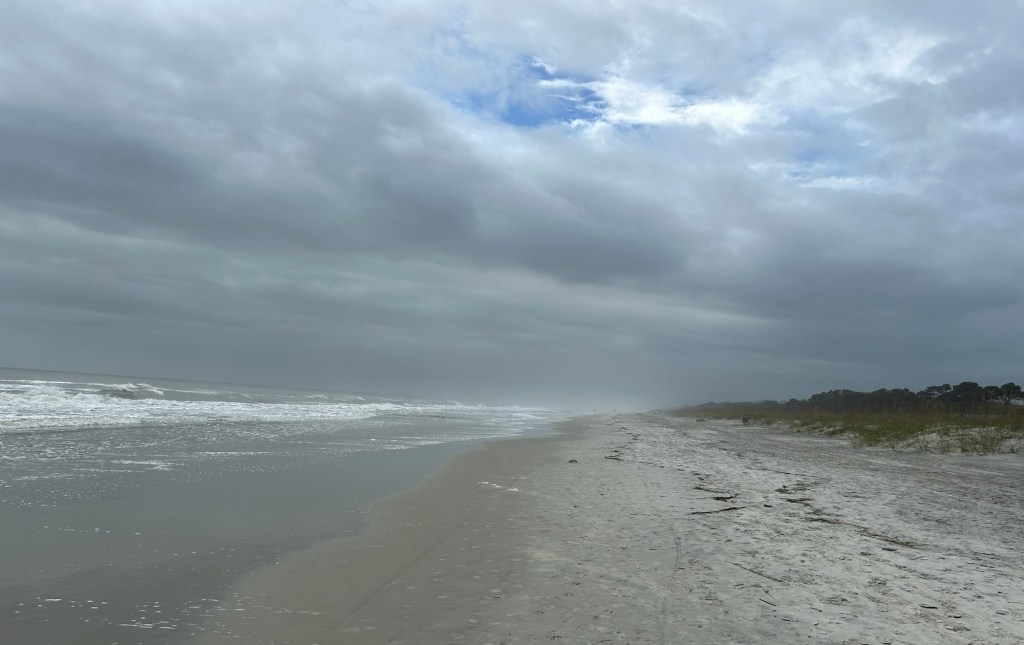
Walking on the beach yesterday the clouds closed in to the south and you couldn’t see far down the beach or across the water to Tybee Island.
The horizon of the water and the horizon of the sky were together.
A light rain fell.
I must go down to the seas again, for the call of the running tide
is a wild call and a clear call that may not be denied.
The mist will clear and we will see the way through.
heard the sound of waves someone heard them years ago as will years from now
Driving to work in the dark again, I park and get out of the car for the short walk to the office.
It is quiet, very quiet, even the birds are silent in the pre-dawn.
There is just of a low rumble sound of the surf to remind me that I am standing about a half mile from the Atlantic Coast.
Doing the math and staying with the median of 2800 miles for the width of the United States, the distance between me and the ocean is 0.0178571429% of the median width of the country.
The tide is coming and will reach a peak around 8 a.m. and cycle through to the day’s 2nd high tide around 8 p.m. tonight.
Happens twice every day.
Has happened twice every day since all this started and will continue twice a day for as long as it us supposed to.
Someone years ago, decades ago, centuries ago, could have stood here and heard the waves and watched the tide come in and go out.
Someone years from now, decades from now, centuries from now, might stand here and hear the waves and watch the tide come in and go out.
As Mr. Lincoln said one the field at Gettysburg, “The world will little note nor long remember what we say here but it can never forget what they did here.”
I used to think that was pretty cool.
Back in the day when America dreamed big dreams for all people.
Back in the day when America stood up for dreaming big dreams for all people.
Back in the day when America was recognized for dreaming big dreams for all people.
Today?
Today, I am reminded of something else Mr. Lincoln.
“Fellow-citizens, we cannot escape history.
We of this Congress and this administration, will be remembered in spite of ourselves.
No personal significance, or insignificance, can spare one or another of us.
The fiery trial through which we pass, will light us down, in honor or dishonor, to the latest generation.“
Years from now, about all I count on is that the tide will come in and go out and someone might be here to see it and hear the waves.
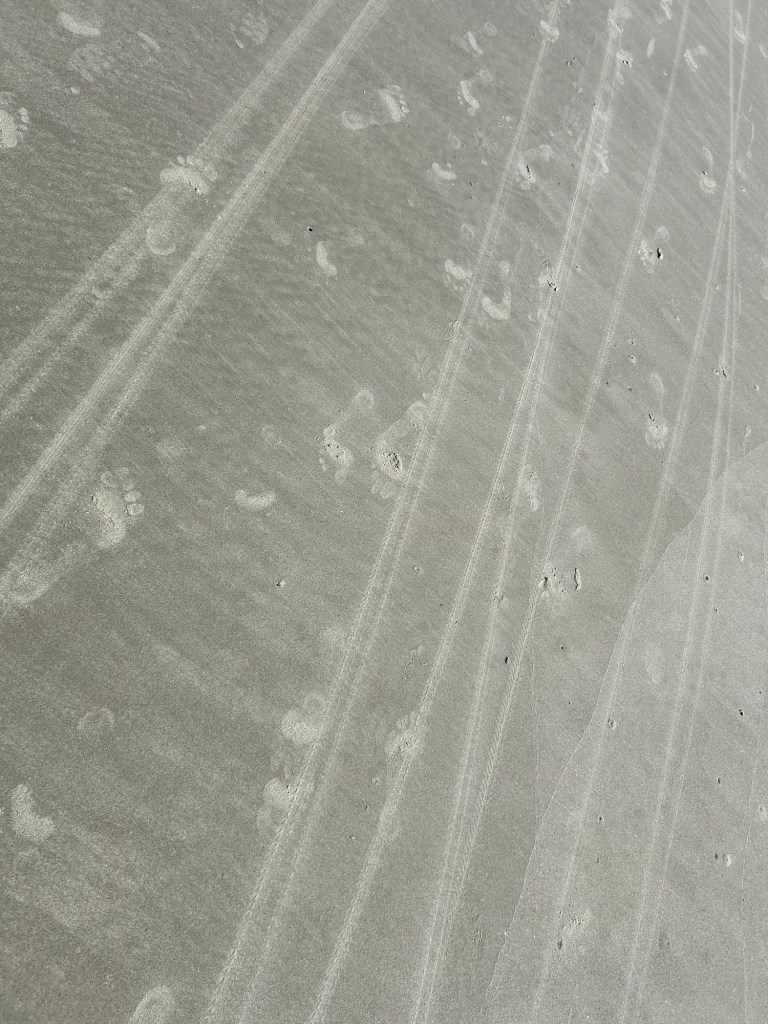
Any marks we may have made will all be washed away.
cycling means freedom we don’t allow anything to interfere with that
It’s a joy from the start as cycling is so delightfully normal here: no one’s in Lycra, or wearing a helmet. “For us, cycling means freedom,” says our guide, Remco. “We don’t allow anything to interfere with that, like special clothing or helmet laws.” Old women are riding around in frocks; we see men in blazers and even one in a DJ and bow tie.
I work on a resort island that is famous for biking.
Unlike that island up north in the straits of Mackinac, one of the perks of biking on this island is the hard packed sand at low tide that lets you ride along the water.
Be aware that most of the bike rental locations will charge you a cleaning fee if you bring back a bike covered with sand so make sure you give ur bike a good hosing off.
But for clothes …
Sure I see ‘bikers’ in their … ‘uniform’ but for the most part, the folks down here are biking in swimsuits and flip flops and it all seems so delightfully normal.
There don’t seem to be any helmet rules and the only rule is the rule of common sense.
Which I admit is non to common among these local bike riders but we all seem to survive.
I do remember watching a young lady walking from the beach to her bike that had been sitting in the blazing sun all afternoon.
The young lady was wearing the briefest of briefest bikini swimsuits and she leaped onto the bike and in the same motion leaped right off as her bottom came into contact with the sun heated bike seat.
It was like it had been choregraphed.
Cycling means to do what you want even if that means burning your butt I guess.
looking out the car grandson said to just himself … the best day ever
“It seemed to me, as I kept remembering all this, that those times and those summers had been infinitely precious and worth saving. There had been jollity and peace and goodness. ”
Excerpt From The Essays of E. B. White by E. B. White.
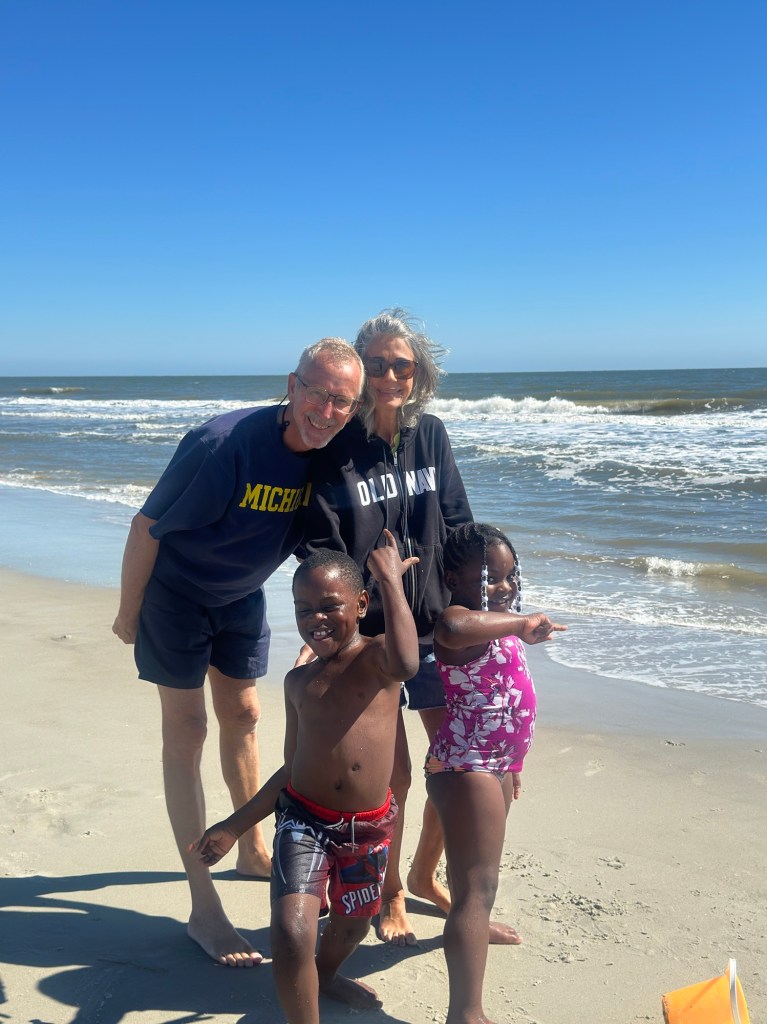
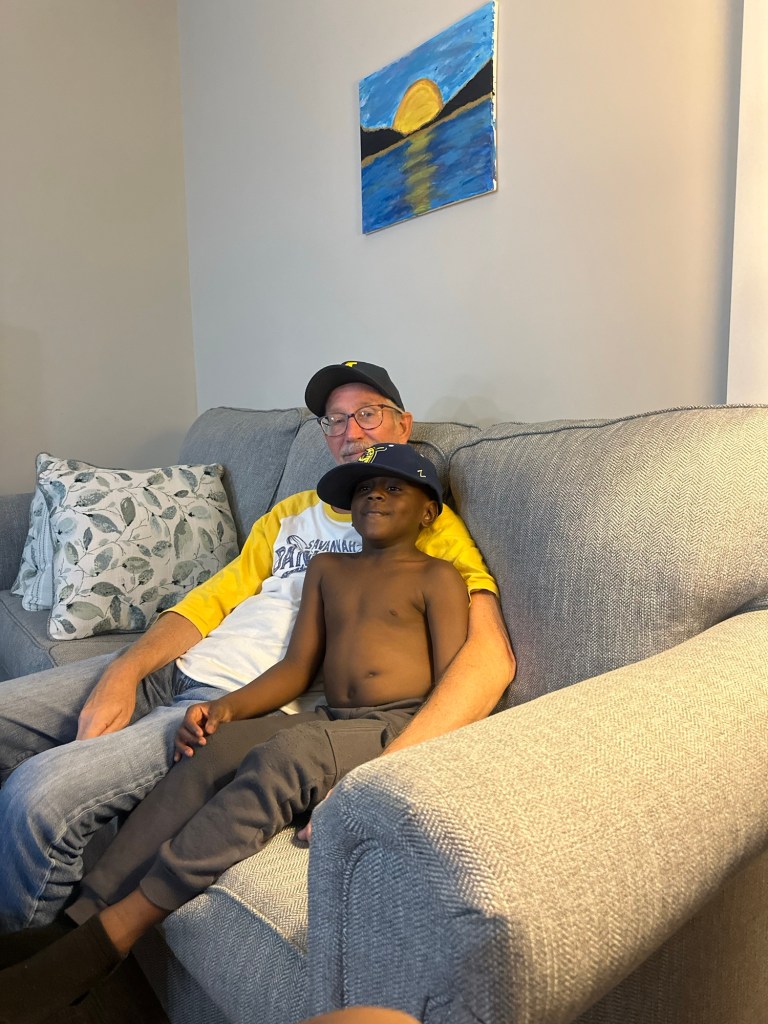
Had the pleasure … let me repeat that … had the pleasure of a visit from grandkids this weekend.
We went to the beach.
We went to dinner.
We played games.
We made and ate breakfast together.
And we talked in the tones of little kids to whom so much is so much more important.
I loved every minute of it.
I am not responsible for the daily maintenance and upkeep of my grand kids which lets me focus on the finer points like saying there is nothing wrong with waffles with chocolate chips and syrup and a powered sugar doughnuts and coffee for breakfast.
We spent the day at the beach and while 20 mph northerly breezes and 70 degree temps kept me out of the water, the grands spent the day in the Atlantic Ocean.
We had a picnic lunch.
We had boogie boards and sand toys and on the way home stopped at a local park known for its alligators and we were rewarded with a large prehistoric monsters lying just off shore.
As we drove back gone and went over the bridge to the mainland, I heard my grandson say to himself … “this been the best day ever!“
“It seemed to me, as I kept remembering all this, that those times and those summers had been infinitely precious and worth saving. There had been jollity and peace and goodness. ”

 No Haiku For You