12.1.2023 – more down-to-earth terms …

more down-to-earth terms …
composed for music-lovers
refresh their spirits

I am not sure when I first heard the music known as the ‘Goldberg Variations’ by J.S. Bach.

Much like the ending in Casablanca, I don’t remember when I didn’t know how the movie ended and I don’t remember not knowing the Goldberg Variations.

I envy my wife because, one, she didn’t know the ending to Casablanca and was shocked to see Rick not get on the plane and two, she can’t remember how it ends, so she is consistently re-surprised by the ending.

I wish I could remember what it was like to see that for the first time.

And I wish I could remember what it was like to hear the Goldberg Variations for the first time.

I realized I would never be able to play the piano after I took piano lessons when I was the 3rd grade.

Me taking piano lessons had not be planned but happened by accident.

My sister Lisa had been signed up for lessons as my other two sisters, Mary and Janet had both had lessons from ‘Ol Lady Schonfeld.

Then Lisa started to play the violin and she told Mom that, much as she loved the piano, she felt she did not have time for two instruments.

Well, those lessons had been paid for so I was called in and told that from now on, no more carefree Wednesday afternoons, I would be going to see ‘Ol Lady Schonfeld.

Her real name was Miss Schonfield and I have no idea how old she was but all I ever thought of her was as ‘Ol Lady Schonfeld.

‘Ol Lady Schonfeld was the scariest person I have ever met in my life and as proof, talking about her with Lisa, who is a really good person, admitted, she too was scared to death of her.

But I went along with the idea without complaint and goodness knows I was good at complaining in those days.

In the back of my mind it seems I had the idea that soon I would be sitting down at the piano and effortlessly calling the notes of the Goldberg Variations out the keys much to amazement of everyone in my family, so I figured why not.

With genuine enthusiasm I got out of the car and ran up the steps to ‘Ol Lady Schonfeld ‘s house and knocked on the door.

The door opened like something out of Dracula movie and I swear she said, “Von’t you Come innnnnnnnn,” just like Bela Lugosi, and I entered a room where time had been stopped for many years.

I swear I could hear timid little voices calling from the walls, run … run now.. get out of here, but I shook them off and sat at the piano bench ready to learn.

That was my first mistake.

Lesson’s didn’t start at the piano.

They started at her dining room table where she taught me to drop my hand straight down and collapse my fingers into the proper, relaxed position to have my hands on the keyboard.

You did not drop your hand from your wrist, but from your elbow.

I positioned my hand and dropped it down on the table with what I thought, a graceful lilt.

‘Ol Lady Schonfeld tightened her lips and demonstrated the drop once more and then told me to do it again.

She kind of squinted as she crossed her arms and glared at me as I practiced.

“Again”, she would say then shake her head and say, “again!”

And I would do it again and again, and again and again, I would do it wrong.

That hand dropping took up the first lesson.

It lasted one hour and I saw my Mom’s station wagon out front and ‘Ol Lady Schonfeld was as grateful as I was that the hour was over as I felt I had aged a year.

My Mom asked how it went.

I replied, “I learned to drop my hand.”

Mom said you had to start somewhere.

And I thought about it and decided Mom was right and was ready for another go.

The next Wednesday came and I ran up the steps of ‘Ol Lady Schonfeld’s house and once inside, again sat at the piano.

She kinda glared a minute then crossed her arms and set, ‘Let me see you drop your hands.’

And I held out my right hand and let it fall on the piano keys and collapse on my fingers.

Which made a pretty loud and satisfying bang

I turned and looked at ‘Ol Lady Schonfeld with a big smile and she turned red and her eyes got big and with her arms crossed, she squeezed her upper arms until the muscles bulged (she must have weighed about 57 pounds).

Then she uncrossed her arms and raised a bony finger and pointed at me and said, “You didn’t practice!”

I remember looking around the room like people were going to jump out and yell surprise!

This had to be a joke, right?

But it wasn’t.

The only things in that room were me, that piano and one very mad ‘Ol Lady Schonfeld.

Things went down hill from there.

I think something clicked in my mind that day about the value of upper education.

But we slogged on together side by side on the piano bench.

Me trying so hard, not to play right but to play in such a way that she wouldn’t touch my hands with those bony fingers that could turn a glass of water into ice.

I do remember that I learned a little tune at some point but I never was able to grasp the barest rudiments of playing a piano.

I also found that sitting on the piano bench, I would be so nervous that my legs would start swinging like a pendulum and the arc would get bigger and bigger until I kicked the piano with the loud bang that set ‘Ol Lady Schonfeld into a tizzy for about 5 minutes.

It wasn’t long until I realized the more often I kicked the piano, the less often she was trying to teach me.

After a couple of months, we both realized that this wasn’t going to work.

Me, I more or less quit even pretending to have practiced.

And ‘Ol Lady Schonfeld?

Well, sorry to say, she had a stroke.

Sometimes these things work out.

I understand that she made a good recovery but on Doctors orders she had to give up teaching the piano.

Sometimes these things really work out.

I never made another serious attempt at learning a musical instrument.

And it was years later that it was discovered that I had no natural sense of rhythm.

I can’t even clap in time to the Michigan Fight Song.

All those times of gym teachers being mad at me for being out of step or unable to bang my rhythm blocks with the rest of class were all real, not me going for a laugh.
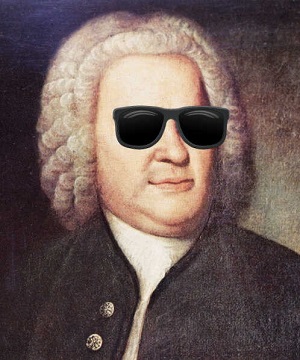
But I have always liked music.

Recently the Icelandic pianist Víkingur Ólafsson released a new recording of Mr. Bach’s Goldberg Variations.

As a bit of an extra, the Guardian published the story about the recordings titled, “An encyclopedia of how to think and dream on the piano.”

The article is written by Víkingur Ólafsson.

How does Mr. Ólafsson explain the effect of Bach’s music?

He quotes Mr. Bach and the words Bach wrote on the score.

Mr. Ólafsson writes, “Or, in the rather more down-to-earth terms that Bach himself used to describe his variations on the title page of the original 1741 edition, they truly are a work “composed for music-lovers to refresh their spirits”.

Mr. Ólafsson writes, “The one thing that rivals Bach’s complete intellectual mastery of his craft is his inspired, creative playfulness. When we play and listen to the Goldberg Variations, we are also in the company of Bach the cheerful, at times ecstatic, master improviser, the greatest keyboard virtuoso of his time.

When I was younger the recording of the Goldberg Variations you just HAD to listen to was the recording by Glenn Gould.

Mr. Gould was a gifted musician but with the reputation of someone wrapped so tight he just might burst.

I don’t know.

Maybe he had ‘Ol Lady Schonfeld as a teacher.

Maybe he had ‘Ol Lady Schonfeld as a teacher and LIKED IT.

For me, listening to the Gould recording, you can hear the anguish, the tense nature.

Maybe I am listening with a suspect animus but that’s what I hear, tho I love the recording.

I don’t know but I’ll tell you this.

I remember reading about Duke Ellington and John Coltrane collaborated on an album.

They would finish a take and Duke would sit back and say that’s a wrap.

Mr. Coltrane would shake his head and say, one more time.

The story went that by they 30th take, Duke would almost be in tears and Mr. Coltrane would still be searching for ‘that’ sound.

If you listen to their recording of In a Sentimental Mood YOU CAN HEAR THAT.

It is an incredible piece of music in my ears but in my head, I see Duke Ellington about to clobber John Coltrane.

But I digress.

Listening to Mr. Ólafsson play the exact same music played by Mr. Gould, I hear the inspired, creative playfulness of Mr. Bach.

Let tell you, inspired, creative playfulness were words never mentioned at ‘Ol Lady Schonfeld’s house.

But this recording.

This music.

The music is composed for music-lovers to refresh their spirits.

11.30.2023 – these are tawny days

these are tawny days
bashful mornings hurl gray mist
on stripes of sunrise

These are the tawny days your face comes back
The grapes take on purple the sunsets redden early on the trellis.
The bashful mornings hurl gray mist on the stripes of sunrise.
Creep, silver on the field, the frost is welcome
Run on, yellow halls on the hills, and you tawny
pumpkin flowers, chasing your lines of orange
Tawny days and your face again

Tawny by Carl Sandburg in his book, Smoke and Steel, New York: Harcourt, Brace and Co., (1920).

The website, https://www.vocabulary.com/, defines tawny as an adjective meaning of a light brown to brownish orange color; the color of tanned leather.

The online Merriam-Webster says that tawny is from the Middle English, from Anglo-French tané, tauné, literally, tanned, from past participle of tanner to tan and that the first recorded use of the word is from the 14th century.

The book of Genesis, Chapter 1, verses 2-5 state:

And God said, “Let there be light,” and there was light. God saw that the light was good, and he separated the light from the darkness. God called the light “day,” and the darkness he called “night.” And there was evening, and there was morning—the first day.

For myself, when the Bible reports he separated the light from the darkness, I think that God set up what we know as the planet earth and when he separated the light from the darkness, God gave the planet a push that started it in motion so that on the planet, day was separated from night by the rotation of the planet.

From that moment all laws of what we now know as physics came into play.

Neither here nor there, that means, for me anyway, that God had a timer running as the earth revolved on its axis and when the Bible reports “… the first day”, God knew just what he meant, but I digress.

Anyway, at the end of that first day, the light sank below the horizon and on the morning of the 2nd day the light came up.

I am betting that when that light came, it was a tawny day and anyone who might be there to see it would see that the bashful mornings hurl gray mist on the stripes of sunrise.

My wife is not fond of these sunrise pictures I take with my iPhone because she knows that to take them, I am driving one handed, with my other hand holding my iPhone as I cross the Cross Island Bridge on Hilton Head Island.

I know it’s goofy but what can one do?

We live in the low country and it is flat.

There are few views to be had anywhere.

The Cross Island Bridge is one of few places you can see anything of the area.

And, as Augustus McCrae said the book Lonesome Dove, “, and “…if he missed sunrise, he would have to wait out a long stretch of heat and dust before he got to see anything so pretty.”

11.29.2023 – snow drifted, the wind

snow drifted, the wind
crying because it could not
get in by the fire

From the book Little House in the Big Woods by Laura Ingalls Wilder and the line, “But Laura and Mary listened to that lonely sound in the dark and the cold of the Big Woods, and they were not afraid.

They were cosy and comfortable in their little house made of logs, with the snow drifted around it and the wind crying because it could not get in by the fire.

It was 32 degrees Fahrenheit this morning in the low country.

I didn’t come here for the cool weather let me tell you.

Much is made of, in the News, when the snow storms in the South because the South doesn’t think about snow.

There are no snow shovels.

There is no road salt.

There are no snow plows.

There are no shoulders along the roads to put the snow or to direct your car when you lose control.

It is a big deal.

More so it seems to the people up north that the people in the south don’t prepare for snow.

Do you know why the people in the south don’t prepare for snow?

They DON’T HAVE TO!

If it snows down here, it IS a surprise … not something you have to prepare for like you do up north.

Today there is no snow, no ice.

Just cold.

And the south doesn’t think about cold.

I am sitting in my office and my fingers are numb.

My feet are blocks of ice.

I have on 4 shirts and a fleece vest.

BTW, the vest is something I picked up on sale one summer in an outfitters store in Mackinac, Michigan.

It would be just the thing, I said, to wear at work IN MICHIGAN … IN THE SUMMER TIME, when the air conditioning was set to 65.

When I started work here, the building I work in had central air and central heating, South Carolina style, which means these huge on-the-wall units in each area of the building.

We had a remote control for the unit and we could turn up the heat or turn down the AC as we wanted.

Over the summer the building went through a multi-million dollar renovation and standard central HVAC was installed.

The thermostat is NOT in my office.

I am not sure where that thermostat is located.

What I do know is that whatever room it is in, it must be about 85 degrees because in my office, on a morning where it is 32 degree’s outside, the air conditioning is running.

The sunny south.

It IS sunny outside but you cannot see the cold.

I can feel it, but I can’t see it.

What do I miss from living in the north.

The change in seasons?

Somehow that seems to be on most folks lists.

The food?

The beauty of the Great Lake State?

Nope.

I think back to warm heat.

The heat from a fire place.

The warmth of being inside where the wind is crying … because it can’t get in by the fire.

View from my office on Nov 29 – Can’t see the cold can you??

11.28.2023 – ask the question …

ask the question …
want to be helped, heard or hugged?
positive action

From the article, When Someone You Love Is Upset, Ask This One Question by Jancee Dunn.

Ms. Dunn writes that she was talking with her sister who is special-education teacher at an elementary school in upstate New York.

“What do you do when a kid is emotionally overwhelmed?” I asked. Many teachers at her school, she told me, ask students a simple question: Do you want to be helped, heard or hugged?

The choice gives children a sense of control, which is important when they’re following school rules all day, Heather said. “And all kids handle their emotions differently,” she explained. “Some need a box of tissues, or they want to talk about a problem on the bus, and I’ll just listen.”

It struck me that this question could be just as effective for adults.

The article got me to thinking because it sounded so good and so simple.

The part that reads:

Each option — an embrace, thoughtful but solicited advice or an empathetic ear — has the power to comfort and calm.

Receiving a hug from your partner increases levels of oxytocin, the bonding hormone, and helps dial down stress.

There’s evidence that being heard, known as “high-quality listening,” can reduce defensiveness during difficult and intimate conversations.

And some research suggests that couples who give each other supportive advice have higher relationship satisfaction.

Just makes so much sense.

But still something bothered me.

If we are talking about folks with whom we are in a close relationship with, shouldn’t I know the answer to the question before or without needing to ask?

Shouldn’t I know when someone close to me needs a hug, an ear, or advice?

Maybe …

Maybe not …

Ms. Dunn does write, “Now, when one of us is upset about something (if I’m honest, it’s usually me), the other will ask that question. It has been a game changer over the last few months. It clarifies needs. It de-escalates swirling emotions. It helps us take positive action.

Maybe you need to set some ground rules about when to ask the question.

So I puzzled it someone and I realized something.

There are times when I myself am emotionally overwhelmed.

If someone asked me if I wanted to be helped, heard or hugged, I wouldn’t know what to say.

Anywhere from ALL THREE to AGGGGHHHHHH JUST LEAVE ME ALONE.

Don’t get me wrong, Do you want to be helped, heard or hugged? is a great question to ask.

It helps us take positive action.

Do I want to be helped, heard or hugged? is just as good a question … and maybe the place to start.

11.27.2023 – shadows on the waves

shadows on the waves
frozen on the phone moments
caught once forever

Barriers such as islands and breakwaters intercept the normal transmission of wave energy and thus create a sheltered area in the wave lee from which waves are excluded.

This sheltered area is called the zone of wave shadow.

The size and location of the shadow zone can have great importance in the protection of the coastline and coastal structures and in the control of the longshore transport of sand.

Further, the wave shadow phenomenon can be used as an aid to navigation as evidenced by the early Micronesians and Polynesians and the early explorer-navigators who used the shadow zone disturbances of Pacific islands for island-to-island travel.

Wave shadow by John R. Dingler In: Beaches and Coastal Geology. Encyclopedia of Earth Sciences Series. Springer, New York, NY. (1982)

A shadow on the waves, brought in by the tide from the sunlight shining as is passes overhead.

A lot of intersections of the moment to be captured by the magic of a smart phone.