Down and out semi poet who is down and out in the Low Country of South Carolina after living in Atlanta which is not to be confused with the south, the old south or the new south. Atlanta was a global metropolis with all the pluses and minuses that comes with that. The low country, low because it is low, 8 feet above sea level, is not Podunk but once you get to Podunk, turn left. I try to chronicle a small part of all that through my daily haiku for you.
when it’s not your day and you can still win, that’s a … sign of a good team
“For me I’m not going to tell him anything because I don’t feel like this is, oh, man, what are you doing? These weren’t ill-advised throws. It wasn’t our day. When it’s not your day and you can still win, that’s a sign of a good team.”
Detroit Lions Head Coach on the 5 interception performance of Lions Quarterback Jerod Goff in a game that saw Detroit score 19 second half points Houston Texans, 26-23.
“Man, that is the definition of resiliency,” Campbell said. “You guys just kept bangin’ away, right? We did whatever we had to do. And we just bought our time.”
“We get our points. Bates, that was freakin’ ginormous, alright?“
My college team is awful.
My pro team, for the first time in my life, is good.
Good good.
Lucky good.
Rather be lucky than good good.
Finding ways to win games they have no business winning.
Winning games they should win.
Going to sit on the beach of this Detroit Lions team and enjoy the warm sunshine and soft breeze as long as I can.
succumbed criminal pride vanquished by the free peoples it tried to enslave
On November 11, 1918, an armistice was signed to end the fighting known as then, the Great War and now as the humble, World War 1.
According to one travel website, To avoid humiliating the German delegation, Marshal Foch sought an out-of-the-way location near Paris. For this reason, the Rethondes Clearing in the Compiègne Forest was chosen. The World War I Armistice was signed on 11 November 1918 by the Allies and the German plenipotentiaries.
The allied commander in chief, Marshall Ferdinand Foch had his personal rail car moved to a rail siding in the Compiegne forest and in this rail car, the armistice was signed.
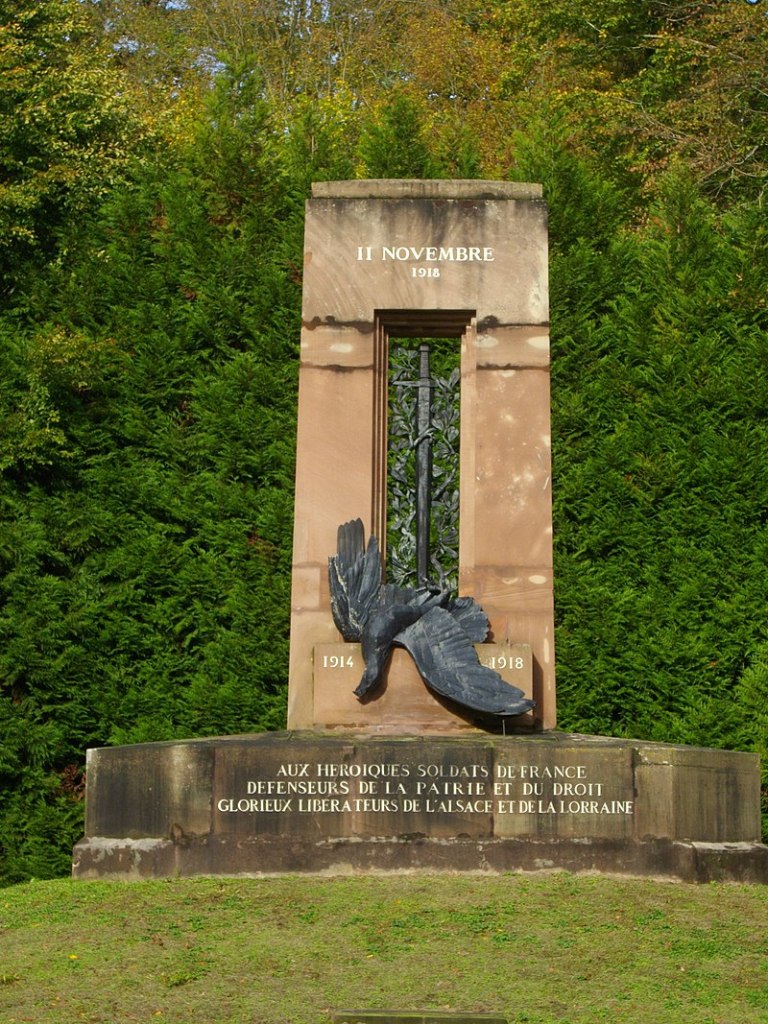
The forest clearing or Clairière de l’Armistice (“Glade of the Armistice”, or “Armistice Clearing”) became a memorial and large monument went up with the legend:
Here on the eleventh of November 1918 succumbed the criminal pride of the German Reich. Vanquished by the free peoples which it tried to enslave.
In June of 1940, France was over run by German armies and France gave up.
Adolf Hitler had no thoughts about avoiding humiliation and ordered that the French surrender at the same place in the same rail car which would be brought out from the museum where it was on display.
Hitler would sit in the same chair used by Marshall Foch.
History records that a car arrived with the representatives of France who were visibly shaken to find where they had been brought.
They had not been told where the surrender would take place.
William Shirer was on the scene for CBS Radio and he later wrote:
“Through my glasses I saw the Führer stop, glance at the [Alsace-Lorraine] monument. … Then he read the inscription on the great granite block in the center of the clearing: Here on the eleventh of November 1918 succumbed the criminal pride of the German empire … vanquished by the free peoples which it tried to enslave.” I look for the expression on Hitler’s face. I am but fifty yards from him and see him through my glasses as though he were directly in front of me. I have seen that face many times at the great moments of his life. But today! It is afire with scorn, anger, hate, revenge, triumph. He steps off the monument and contrives to make even this gesture a masterpiece of contempt. He glances back at it contemptuous, angry. … Suddenly, as though his face were not giving quite complete expression to his feelings, he throws his whole body into harmony with his mood. He swiftly snaps his hands on his hips, arches his shoulders, plants his feet wide apart. It is a magnificent gesture of defiance, of burning contempt.
All the memorials in the Clairière de l’Armistice were later destroyed by the Germans the Rail Car itself was brought to Berlin.
Five years later Hitler was dead.
Many years later the Clairière de l’Armistice was restored.
History still records that it was on this spot that is was Here on the eleventh of November 1918 succumbed the criminal pride of the German Reich. Vanquished by the free peoples which it tried to enslave.
America singing each singing what belongs to him or her, none else
I hear America singing, the varied carols I hear, Those of mechanics, each one singing his as it should be blithe and strong, The carpenter singing his as he measures his plank or beam, The mason singing his as he makes ready for work, or leaves off work, The boatman singing what belongs to him in his boat, the deckhand singing on the steamboat deck, The shoemaker singing as he sits on his bench, the hatter singing as he stands, The wood-cutter’s song, the ploughboy’s on his way in the morning, or at noon intermission or at sundown, The delicious singing of the mother, or of the young wife at work, or of the girl sewing or washing, Each singing what belongs to him or her and to none else, The day what belongs to the day — at night the party of young fellows, robust, friendly, Singing with open mouths their strong melodious songs.
I Hear America Singing by Walt Whitman as published in Leaves of Grass (Garden City, N. Y. : Doubleday, 1919 Edition).
According to Wikipedia, “The book received its strongest praise from Ralph Waldo Emerson, who wrote a flattering five-page letter to Whitman and spoke highly of the book to friends. Emerson called it “the most extraordinary piece of wit and wisdom that America has yet contributed.” Emerson had called for the first truly American poet, saying that aspects of America “are yet unsung. Yet America is a poem in our eyes.”
I like that last part a lot.
Aspects of America “are yet unsung. Yet America is a poem in our eyes.”
And I want to believe that holds through to today.
There are poems yet to be written.
Songs yet to be sung.
Each singing what belongs to him or her and to none else.
I look forward to hearing America singing, the varied carols to hear.
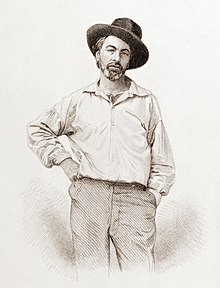
PS: According to Wikipedia this engraving of Mr. Whitman from 1856 was printed in the front piece of the Leave of Grass. Not yet the white haired, bearded old guy that first comes to mind now was he?



 No Haiku For You