9.25.2021 – my being able

my being able
to read, get hold of a book
these impressions last

Came across this statement the other day.

I mention that away back in my childhood, the earliest days of my being able to read, I got hold of a small book … I remember all the accounts there given of the battle fields and struggles for the liberties of the country … [that] fixed themselves upon my imagination … and you all know, for you have all been boys, how these early impressions last longer than any others.

This was said by Abraham Lincoln.

I didn’t read that statement as a kid but I knew this painting as a kid.
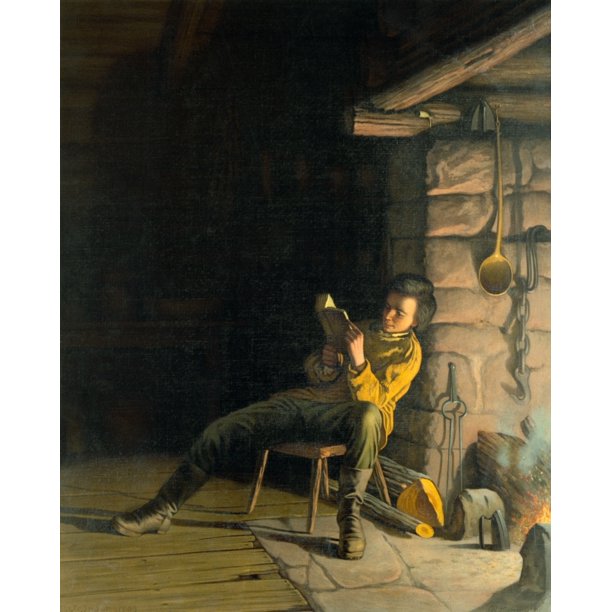
Young Abe Lincoln by Eastman Johnson – 1868 – University of Michigan Museum of Art

I cannot remember a time in my life that I didn’t know the images and story of this painting.

Imagine my delight when I happened to walk through the University of Michigan Art Museums (it what was supposed to be Alumni Memorial Hall) and discovered that Michigan OWNED the painting but another time – it’s a great story.)

I grew up in Grand Rapids, Michigan, in a home with a fireplace.

A fireplace for show and not for heat but a real working fireplace that we used often.

When I could, I would turn off all the lights and try to read by firelight.

Maybe that is why I needed glasses so soon.

It was fun.

It was cozy.

It made me really appreciate Thomas Edison and the stories of the Rural Electrification Act.

I cannot remember when I started reading or maybe I should say I cannot remember my life without reading.

Back in the day, if you attended the Grand Rapids Public Schools, your family had to buy school books.

This changed by the time I started school but being the 8th kid in a family of 11 kids, it meant that we had piles of school books all over the house.

At some point I picked up the early Dick and Jane books and went on from there.

But the time I got into school it seems like I had already read many of the text books I would use in elementary school.

And I got bored.

Me being bored led to me finding other things to do during class.

This is sometimes known as disruptive behavior.

I wasn’t trying to be disruptive but goodness it was boring to just sit.

This often led to interactions with my teacher that resulted in me being sent out into the hall.

The hallways at Crestview Elementary school were lined with benches and shelves and pegs for coats.

I was supposed to sit there and reflect on my disruptive ways.

I didn’t mind being out there alone but there was always a chance that another class might walk by and see me on their way to gym or music or something.

If that happened there was a chance that one of my brothers or sisters would see me.

If they saw me, they would tell on me when I got home and who needs that.

One time I saw my brother’s class coming and I hid under the coats hanging there.

When we got home my brother, all so innocently says, “Mike, what were you doing in the hallway?”

I of course denied it and he says he saw me.

I forgot that I was denying it and yelled that he couldn’t have seen me as I was hidden.

My brother yelled right back that maybe my top half was hidden but my legs and shoes were there in the hallway.

At some point the decision was made that instead of the hallway I would be sent to the library.

This may have something to do with the fact that the classroom wall along the hallway had a row of windows across the top.

In the hallway, if you climbed up the wall and stood on the shelf over the coat pegs and jumped up you could see and be seen through those windows.

Don’t ask me how I know that but like I said, it may have something to do with why I was now being sent to the library.

I was ready to complain about it because I complained about everything.

Then it sunk in where I was going.

I was going to the library.

Honestly, and I remember this clear as day, my first thought was of Brer Rabbit and don’t throw me in that briar patch and I almost said, “Don’t send me to that library” but somehow I figured that my teacher knew all about Brer Rabbit so I kept my mouth shut for once.

Also, somehow or other, as much I understood the relationship between being a little disruptive and being sent to the library and that this relationship was open to exploitation but I decided to play it honest and not push it.

Someway I knew this punishment was privilege and I could mess it up.

And I was disruptive enough without trying.

So I kept my disruptive behavior to organic origins.

From then on, at some point in any given day I would get wound up or bored or both and my teacher would catch my eye.

I would hang my head for a second or two, I got real good at showing despair, and get up and walk to the door.

‘Shall we saw 15 minutes?’ my teacher would say.

I would nod and walk out.

I would walk down the hallway first to the Principal’s office.

There I would approach the school secretary who would open a drawer and get out a set of keys and find the library key.

I would take the keys and walk to the library and unlock and open the door.

Then I would take the keys back to the School Secretary and say, “15 minutes today.”

She would replace the keys in the drawer and nod her head.

I returned to the library and closed the door and turned on the lights.

I was in third grade.

I was in the library by myself.

I was alone with all those books.

Few things in life have been more enjoyable than that moment.

At different times in my life, being alone in the bookstore where I worked or first one to the various public libraries where I later worked I have come close to this feeling of empowered freedom.

The library was filled with books.

Books were the keys to everything.

I had the key to the library.

What more could anyone want?

Some philosopher is in the back of my brain, George Santayana seems to be attached to this thought but why ruin a moment with the google, saying that happiness is a shack to live in within 5 miles of a major university library.

And then there was young Abe Lincoln.

Young Abe Lincoln loved to read.

Young Abe Lincoln reading by fire light.

Young Abe Lincoln walking miles to borrow books.

Young Abe Lincoln waking up to find a book wrecked by dripping snow and walking miles to offer to work for days to pay for the damage.

Young Abe Lincoln’s delight at being given the self same book when the debt was paid.

Young Abe Lincoln alone with his book.

This is the kicker about these young Abe Lincoln stories.

They all seem to be pretty much darn close to the truth.

What is about Mr. Lincoln?

Of all people, Leo Tolstoy was recorded as saying, “If one would know the greatness of Lincoln one should lis­ten to the stories which are told about him in other parts of the world. Once while travelling in the Caucasus I happened to be the guest of a Caucasian chief of the Circassian … {This Chief] lifted his hand and said very gravely ‘But you have not told us a syllable about the greatest gen­eral and greatest ruler of the world. We want to know some­thing about him. He was a hero. He spoke with a voice of thunder; he laughed like the sunrise and his deeds were strong as the rock and as sweet as the fragrance of roses. The angels appeared to his mother and predicted that the son whom she would con­ceive would become the greatest the stars had ever seen. He was so great that he even forgave the crimes of his greatest enemies and shook brotherly hands with those who had plotted against his life. His name was Lincoln and the country in which he lived is called America, which is so far away that if a youth should journey to reach it he would be an old man when he arrived. Tell us of that man.

I am not sure of all that.

I know I was once a little kid in America.

I knew that Mr. Lincoln was once a little kid in America.

I liked to read.

He liked to read.

I think we could have hung out in the library.

That fixed itself upon my imagination, and you all know, for you have all been kids, how these early impressions last longer than any others.
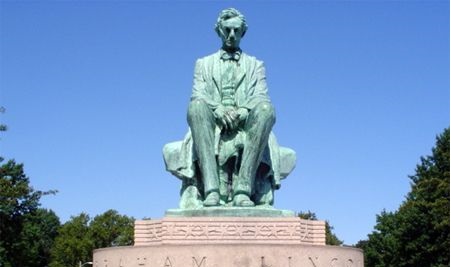
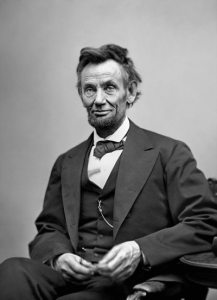
9.24.2021- so quiet and dark

so quiet and dark
star has flickered into dust
song has faded away

Down the rabbit hole again.

Listening to my favorite online radio station, a piece of music caught my ear and I was in time to access the play list.

I discovered I was listening to Schwanenlied or swan song written by Fanny Mendelssohn.

You read that right.

Fanny not Felix Mendelssohn.

Fanny is Felix’s little sister.

Into the google goes Fanny Mendelssohn.

The piece I had heard was a flute and harp version of a piece of music or lieder or simple song that according to wikipedia, Ms. Mendelssohn felt, as she wrote to her brother, “lieder suit me best.”

This version is hauntingly (love to use that word) arresting and somehow familiar.

Yet I never heard it before that I remember so how could it be familiar?

It also has words, sung in German of course but I have never had much luck listening to German lieder.

Silly but it may have to do with an episode of Cheers where Woody’s rich in-laws have a party where the entertainment is to be Kindertotenlieder … or Songs on the death of Children.

Just the look on Sam Malone’s face when the word Kindertotenlieder it is explained to him is worth the price of admission.

Anyway the words for Ms. Mendelsshon’s song were written by the German poet, Heinrich Heine.

I am not up on my German poetry but I defend myself saying, who is.

According to one critic, the text and music “resembles a lullaby. In its clear separation of melody and accompaniment it is akin to the style of many Songs Without Words, for piano solo, some composed by Hensel and some by Mendelssohn. Formally it is simple, like most Hensel settings, consisting of two strophes with the second slightly modified. That slight modification proves significant, however, for it fashions the climax of the song. (Historical Anthology of Music by Women, Fanny Mendelssohn Hensel (1805-1847) by MARCIA J. CITRON – 1987 by Indiana University Press)

I am not sure what to say about using the poetical words of Heinrich Heine for a song without words but I am uneducated in these matters.

The words are simple:

A star falls down
From its twinkling height,
It is the star of love
That I see falling there.
So much falls from the apple tree,
From the white leaves;
The teasing breezes come
And urge on their game.

The swan sings in the pond,
And paddles up and down,
And singing more and more gently,
He disappears into the depths of the river.
It is so quiet and dark,
Scattered is leaf and blossom,
The star has flickered into dust,
The swan song has faded away.

Now the odd part of todays trip.

I was curious as to chicken-egg time of the term Swan Song.

Was it possible that this simple piece by Fanny Mendelssohn was the source of the term swan song as the swan of song of someone’s career?

The Google will tell you that Swan Song has become a euphuism for the final act of someone’s career but it is vague as when this started being used.

I continued down the rabbit hole to read this.

Swan Song as described by the online Merriam-Webster says that: Swans don’t sing. They whistle or trumpet, or in the case of the swan most common in ponds, the mute swan, they only hiss and snort. But according to ancient legend, the swan does sing one beautiful song in its life – just before it dies.

The swan sings one beautiful song in its life – just before it dies.

The swan song.

I wanted to know the name of a piece of music.

Sometimes the world wide web can be a beautiful thing.

so quiet and dark
star has flickered into dust
song has faded away

9.23.2021 – something that held out

something that held out
great promise to all people
to all time to come

Quoting Mr. Lincoln here.

What he said was, “. . . there must have been something more than common that those men struggled for; that something even more than National Independence; that something that held out a great promise to all the people of the world to all time to come.

Mr. Lincoln was on his way to Washington DC to be sworn in as President of what was left of the United States of America.

To get from his home in Springfield, Illinois (A home I have visited several times. The last time We took all seven kids on a spring break trip. Once inside, my then 7 year old daughter, D’asia, stuck her foot through the railings that held back the visitors and set her foot on the floor of the Lincoln’s parlor. This caused the Park Ranger to yell at her, “WE DON’T PUT FEET ON THE CARPET IN THE LINCOLN HOUSE.” Which got me upset and I wanted to say ‘hey, you are yelling at a little black kid in Lincoln’s house. Think about it!’ But I didn’t. I got even when that Park Ranger, reading from notes in his smokey bear hat described Mr. Lincoln sitting at the desk writing his famous speeches. ‘Like the Gettysburg Address (4 score and 7) and 2nd Inaugural (With malice toward none; with charity for all)? I asked – and the Ranger starts nodding his head – and I say THAT HE WROTE IN WASHINGTON??) to Washington DC by train through as many of the major Northern cities as could be lined up so that Mr. Lincoln could make public speeches.

By some accounts Mr. Lincoln made 93 stops and 93 speeches, addresses and remarks.

It was at a stop in Trenton, NJ on February 21, 1861 that these he made these remarks he made to New Jersey State Senate that today’s Haiku is drawn from.

something that held out a great promise to all the people of the world to all time to come.

Something held out a great promise.

To all the people of the world.

To all time to come.

Anyone want to come along and help?

I going to Texas to spray paint this on a border wall.

If Lincoln were alive today I am afraid he wouldn’t stop crying or throwing up or both.

Here is the full text of what Mr. Lincoln said.

Mr. President and Gentlemen of the Senate of the State of New-Jersey: I am very grateful to you for the honorable reception of which I have been the object.

I cannot but remember the place that New-Jersey holds in our early history. In the early Revolutionary struggle, few of the States among the old Thirteen had more of the battle-fields of the country within their limits than old New-Jersey. May I be pardoned if, upon this occasion, I mention that away back in my childhood, the earliest days of my being able to read, I got hold of a small book, such a one as few of the younger members have ever seen, “Weem’s Life of Washington.” I remember all the accounts there given of the battle fields and struggles for the liberties of the country, and none fixed themselves upon my imagination so deeply as the struggle here at Trenton, New-Jersey. The crossing of the river; the contest with the Hessians; the great hardships endured at that time, all fixed themselves on my memory more than any single revolutionary event; and you all know, for you have all been boys, how these early impressions last longer than any others.

I recollect thinking then, boy even though I was, that there must have been something more than common that those men struggled for; that something even more than National Independence; that something that held out a great promise to all the people of the world to all time to come; I am exceedingly anxious that this Union, the Constitution, and the liberties of the people shall be perpetuated in accordance with the original idea for which that struggle was made, and I shall be most happy indeed if I shall be an humble instrument in the hands of the Almighty, and of this, his almost chosen people, for perpetuating the object of that great struggle. You give me this reception, as I understand, without distinction of party.

I learn that this body is composed of a majority of gentlemen who, in the exercise of their best judgment in the choice of a Chief Magistrate, did not think I was the man. I understand, nevertheless, that they came forward here to greet me as the constitutional President of the United States — as citizens of the United States, to meet the man who, for the time being, is the representative man of the nation, united by a purpose to perpetuate the Union and liberties of the people. As such, I accept this reception more gratefully than I could do did I believe it was tendered to me as an individual.

9.22.2021 – lyricism as

lyricism as
vague as it was beguiling
find words to express

Adapted from this phrase in the book, A Week at the Airport: A Heathrow Diary by Alain de Botton.

It seemed astonishing and touching that in our distracted age, literature could have retained sufficient prestige to inspire a multinational enterprise, otherwise focused on the management of landing fees and efluents, to underwrite a venture invested with such elevated artistic ambitions. Nevertheless, as the man from the airport company put it to me over the telephone, with a lyricism as vague as it was beguiling, there were still many aspects of the world that perhaps only writers could be counted on to find the right words to express. A glossy marketing brochure, while in certain contexts a supremely effective instrument of communication, might not always convey the authenticity achievable by a single authorial voice – or, as my friend suggested with greater concision, could more easily be dismissed as ‘bullshit’.

Part of the series of Haiku inspired by from A Week at the Airport: A Heathrow Diary by Alain de Botton. I discovered this book entirely by accident. When searching for books online, I will use the term ‘collections’ and see what turns up. I figure that someone who has taken the time to gather together the etexts of any one author to create a collected works folder is enough for me to see what this author might be all about.

In this case I came across the writing of Alain de Botton. I enjoyed his use of language very much. Much of the words he strings together lend themselves to what I do.

As for his book, I recommend it very much though written in 2009, it misses the added layer of travel under covid but still the picture of the modern airport is worth the read.

9.21.2021 – long road dissolving

long road dissolving
limit of sight, scintillant
yet ethereal

Adapted from the book, Dutch: A Memoir of Ronald Reagan (1999 – Random House) A biography with fictional elements by Edmund Morris and the passage:

All his life, Ronald Reagan has ridden a long road dissolving, at the limit of sight, into something scintillant yet ethereal. His vagueness about that vision is the typical mythopoesis of Fools or mystics.’