part our history be re-created over and over again
Based on a passage from My Life Through Food, (Gallery Books, New York, 2021).
The passage reads:
Losing a beloved family heirloom is a very real personal loss; they’re things that cannot ever be replaced or re-created.
But perhaps the most precious heirlooms are family recipes.
Like a physical heirloom, they remind us from whom and where we came and give others, in a bite, the story of another people from another place and another time.
Yet unlike a lost physical heirloom, recipes are a part of our history that can be re-created over and over again.
The only way they can be lost is if we choose to lose them.
shifting the focus of discussion to become able handle talk
Adapted from the book, The Architecture of Happiness (2009, Vintage Books) by Alain de Botton, and the passage:
The advantage of shifting the focus of discussion away from the strictly visual towards the values promoted by buildings is that we become able to handle talk about the appearance of works of architecture rather as we do wider debates about people, ideas and political agendas.
According the The New York Review of Books, this is “A perceptive, thoughtful, original, and richly illustrated exercise in the dramatic personification of buildings of all sorts.”
What I find irrestible in reading Mr. de Botton is his use of language.
I get the feeling that if you made a spread sheet of all the words, adverbs and adjectives used by Mr. de Botton, you just might find that he used each word just once.
no easier to resolve, but then no harder what is beautiful
Adapted from the book, The Architecture of Happiness (2009, Vintage Books) by Alain de Botton, and the passage:
Arguments about what is beautiful emerge as no easier to resolve, but then again no harder, than disputes about what is wise or right. We can learn to defend or attack a concept of beauty in the same way we might defend or attack a legal position or an ethical stance. We can understand, and publically explain, why we believe a building to be desirable or offensive on the basis of the things it talks to us about.
According the The New York Review of Books, this is “A perceptive, thoughtful, original, and richly illustrated exercise in the dramatic personification of buildings of all sorts.”
What I find irrestible in reading Mr. de Botton is his use of language.
I get the feeling that if you made a spread sheet of all the words, adverbs and adjectives used by Mr. de Botton, you just might find that he used each word just once.
“The mental health benefits of this trip were much greater than any vacation I’ve ever taken, as it gave me great hope that, at some point, we’ll fully return to the ease of normal life. It was healing to have this experience with the person that I love and, thanks to science, I’d do it all again.“
I grew up in West Michigan and late in life my job moved me to Atlanta.
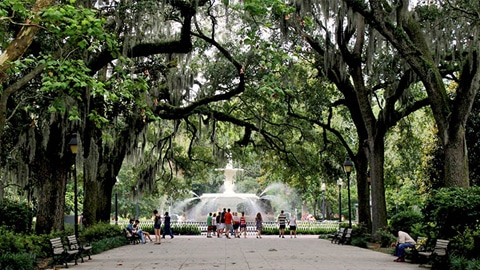
While there, my wife and I discovered the city of Savannah and the “low country” or “Gullah-Geechee Corridor” that runs along the east coast from North Carolina to Florida.
Much to my surprise after another job change and we find ourselves living here.
There is much to enjoy and we enjoy it very much.
I now wear a Savannah Banana’s Baseball cap.
It was fun to come across this article about our adopted location.
It was fun to read about things we are accustomed to through the words of someone who was seeing these things for the first time.
But it was awful, truly awful to read and think about the awful impact of this awful virus.
People like to use the term, Game Changer.
Covid is the GAME CHANGER of this age.
Will its impact ever be understood?
Will it impact ever be overcome?
I love that last line.
” … great hope that, at some point, we’ll fully return to the ease of normal life. “

 No Haiku For You