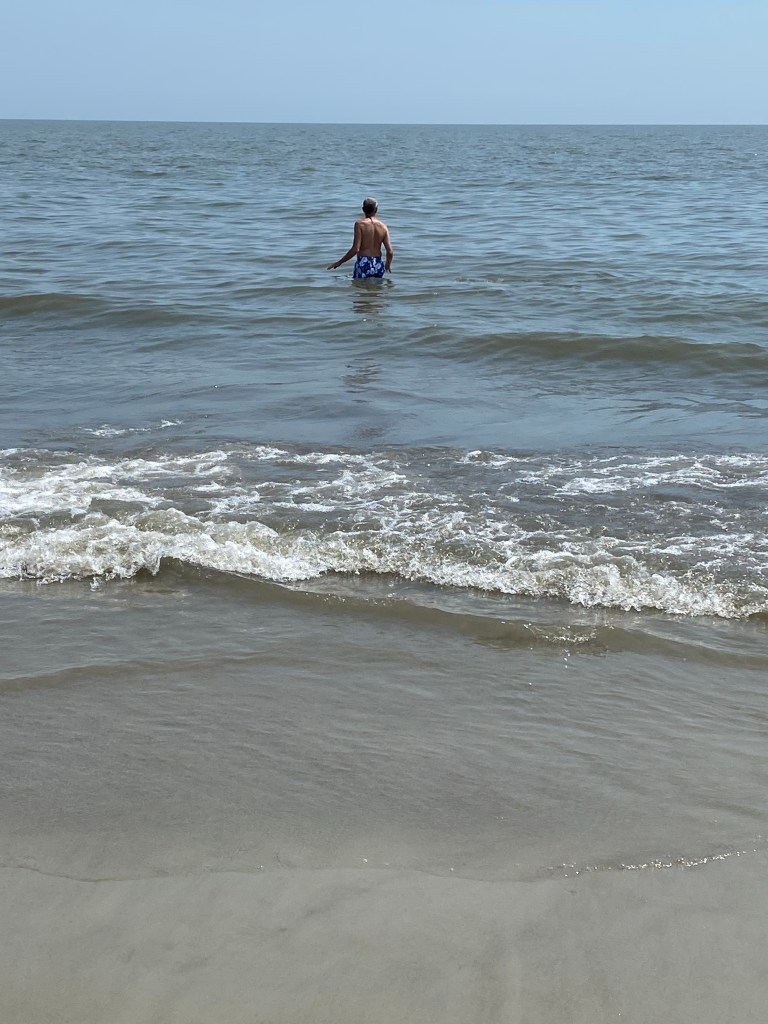
3.31.2021 – alternative lives

alternative lives,
might appeal at moments of
claustrophobia

Adapted from the book, A Week at the Airport: A Heathrow Diary (2009, Vintage Books) by Alain de Botton, and the passage:

The lack of detail about the destinations served only to stir unfocused images of nostalgia and longing: Tel Aviv, Tripoli, St Petersburg, Miami, Muscat via Abu Dhabi, Algiers, Grand Cayman via Nassau … all of these promises of alternative lives, to which we might appeal at moments of claustrophobia and stagnation.

Part of the series of Haiku inspired by from A Week at the Airport: A Heathrow Diary (2009, Vintage Books) by Alain de Botton. I discovered this book entirely by accident. When searching for books online, I will use the term ‘collections’ and see what turns up. I figure that someone who has taken the time to gather together the etexts of any one author to create a collected works folder is enough for me to see what this author might be all about.

In this case I came across the writing of Alain de Botton. I enjoyed his use of language very much. Much of the words he strings together lend themselves to what I do.

As for his book, I recommend it very much though written in 2009, it misses the added layer of travel under covid but still the picture of the modern airport is worth the read.

3.30.2021 – place never return

place never return
resulting from rare conjunctions
season, light, weather

Adapted from the book, The Art of Travel (2002, Vintage Books) by Alain de Botton, and the passage:

A dominant impulse on encountering beauty is to wish to hold on to it, to possess it and give it weight in one’s life. There is an urge to say, ‘I was here, I saw this and it mattered to me.’

But beauty is fugitive, being frequently found in places to which we may never return or else resulting from rare conjunctions of season, light and weather.

How then to possess it, how to hold on to the floating train, the halvalike bricks or the English valley?

The camera provides one option. Taking photographs can assuage the itch for possession sparked by the beauty of a place; our anxiety over losing a precious scene can decline with every click of the shutter.

According to the website, GOOD READS, Any Baedeker will tell us where we ought to travel, but only Alain de Botton will tell us how and why.

As I said in the section on Architecture , what I find irresistible in reading Mr. de Botton is his use of language.

I get the feeling that if you made a spread sheet of all the words, adverbs and adjectives used by Mr. de Botton, you just might find that he used each word just once.

Neat trick in writing a book.

If I knew how to do that, hey, I would.

** More from the category TRAVEL — click here

3.29.2001 – large ideas about

large ideas about
intelligence kindness, youth
or serenity

Adapted from the book, The Architecture of Happiness (2009, Vintage Books) by Alain de Botton, and the passage:

It may be easy to laugh at the grandiloquence of claims directed at objects which on occasion resemble giant earplugs or upturned lawnmowers. But, instead of accusing critics of reading too much into too little, we should allow abstract sculptures to demonstrate to us the range of thoughts and emotions that every kind of non-representational object can convey. The gift of the most talented sculptors has been to teach us that large ideas, for example, about intelligence or kindness, youth or serenity, can be communicated in chunks of wood and string, or in plaster and metal contraptions, as well as they can in words or in human or animal likenesses. The great abstract sculptures have succeeded in speaking to us, in their peculiar dissociated language, of the important themes of our lives.

According the The New York Review of Books, this is “A perceptive, thoughtful, original, and richly illustrated exercise in the dramatic personification of buildings of all sorts.”

What I find irrestible in reading Mr. de Botton is his use of language.

I get the feeling that if you made a spread sheet of all the words, adverbs and adjectives used by Mr. de Botton, you just might find that he used each word just once.

Neat trick in writing a book.

If I knew how to do that, I would.

3.28.2021 – busy with nothing

busy with nothing
time weighs heavy on my hands
why I like the beach

I decided something.

After 20 years in online news, I no longer know how to relax.

After 20 years of never being ‘off’ the job.

After 20 years of always being ‘on’ the job.

I find myself thinking I should be doing something.

When recent weather cycles went across the country, I gratefully thought I had no part to play.

But then what?

I really enjoy going to beach.

Something happens to me there.

Not just mental but physical.

I hate cold feet.

My dresser drawer is filled with thick thick socks.

I have a collection of thick slippers.

I like to wear cowboy boots because they keep my ankles from drafts.

I keep a room heater on the floor by my feet.

What will keep my feet warm is among my first questions each day.

Then I go to the beach.

I go to the beach in sandals (me? sandals?).

And they don’t stay on very long.

Barefoot in the sand.

Barefoot in the ocean.

I should be freezing.

Thinking about it makes me cold.

Thinking about it makes me shudder and shake and shiver.

Doing it?

I don’t feel the cold.

My toes dig into the sand and make patterns and it almost someone else’s feet.

If I could stand having all those electrodes and such stuck to my head, I would love to see what a brain scan shows when my feet are cold and when my feet are not cold at the beach.

Something in shifts the gears in my brain at the beach.

And when I am at the beach I am at the beach.

I am not doing nothing.

I am at the beach.

I am occupied.

I am busy being at the beach.

I am keeping myself busy.

It’s my job now.

At least part of my job.

I get paid partly to get the beach experience online somehow.

So I have to experience the beach.

It IS my job!

I am at the beach.

3.27.2021 – Beverly Cleary

Beverly Cleary
for Henry, Ribsy, Beezus
Thank you very much

The other day I wrote about how a book I was reading made me laugh out loud.

I clearly remember the first time a book I was reading made me laugh, I mean really laugh, not the polite guffaw, but the unable to suppress hilarity and I don’t care who knows it laugh.

It was in 4th grade and I was reading to myself.

If I was reading to myself in 4th grade there is a good chance it was during a time I was supposed to be doing something else.

Most likely arithmetic.

If I was reading, I was being quiet.

Me being quiet was not a state of affairs that any teacher wanted to interrupt.

I was happy.

She was happy.

I was reading the book Henry and Beezus by Beverly Cleary.

Most likely the book was tucked inside my arithmetic book.

Henry was in a crowd at a bike auction with his friend Beezus and her little sister, the now very famous Ramona.

At that time in literary history, Ramona was still a footnote and not a defining character.

I was rolling through the words and could feel the hot crowd of sullen people gathered at a Police Auction of old bikes.

I was there at the auction for all intents and purposes.

I certainly was not following along with the arithmetic lesson.

Henry and Beezus and I were stuck in the crowd, surrounded by tall adults with no room to see.

All seemed hopeless in the airless, hot crowd.

When Ramona yells out, “I am going to throw up!”

Have you seen or experienced something so funny that you lose yourself in the humor of the situation?

Laughter burst out of me with the same explosiveness as if I HAD thrown up.

Maybe the fact that I suffered from ‘barfphobia’ the fear of throwing up in public made it extra funny.

I was there and I heard and saw the crowd react, which was to get out of the way and get out of the way quick.

I laughed and laughed.

And laughed and laughed.

This is where the magic that followed me my whole life steps into the story.

After a bit the mists cleared and I came back to the classroom.

I realized someone was calling, “Mr. Hoffman?”

It was my teacher.

My teacher, at the time ‘Miss’ Critchell, who later became a very dear friend, was looking at me.

“Well”

The arithmetic lesson had stopped.

Everyone in class had stopped.

Everyone was looking at me.

Everyone could see that I had a book open inside my arithmetic book.

But it was too funny.

I could see and hear Ramona and I could feel just the way Henry felt.

“Oh that Ramona,” I said out loud.

“She had to throw up!”

Miss Critchell wanted to laugh.

Miss Critchell tried really had to not laugh.

But I could tell, she wanted to laugh.

Maybe she remembered reading this part of the book.

I was in for it I knew.

“Why don’t you close your book and join us for bit,” said Miss Critchell.

No hallway.

No sentences.

No appointment to see the Principal.

I put Henry and Beezus into my desk and life went on.

And I can remember the relief like it was yesterday.

I read all the Henry Huggins books.

I read them all several times.

Had I known I would have made a mark on the inside cover like I did later with “The Caine Mutiny” to know how many times I had read them.

Somehow Beverly Cleary really understood the way kids brains worked.

Why a kid wanted a bike.

Why a boy could not ride a girls bike.

Why a clubhouse was the single most cool thing, after a tree house, any kid could every want.

According to Wikipedia, “As a children’s librarian, Cleary empathized with her young patrons, who had difficulty finding books with characters they could identify with, and she struggled to find enough books to suggest that would appeal to them. After a few years of making recommendations and performing live storytelling in her role as librarian, Cleary decided to start writing children’s books about characters that young readers could relate to. Cleary has said, “I believe in that ‘missionary spirit’ among children’s librarians. Kids deserve books of literary quality, and librarians are so important in encouraging them to read and selecting books that are appropriate.”

See that line, decided to start writing children’s books about characters that young readers could relate to?

I knew every kid in the Henry Huggins books.

I hated and feared Scooter.

I really like Beezus.

Was I Ramona?

They were all my friends.

Ernest Hemingway wrote something along the line of if what you write becomes part of the collective experience of the reader, you are indeed a writer.

TO THIS DAY I think the first bite of any apple tastes the best.

And WHY?

In the book Beezus and Ramona, Beezus hears a CHOMP … bump bump bump.

She investigates and finds Ramona by a crate of apples surrounded by a dozens of apples on the floor.

Each apple has one bite taken out of it.

As Beezus watches, Ramona selects an apple and bites it, CHOMP, and drops it, bump bump bump.

Ramona looks at Beezus and says, “You know how the first bite tastes best?”

The thought became part of my collective consciousness.

Using the Hemingway test, Ms. Cleary was indeed a writer.

Ms. Cleary it was announced Friday, has died.

She was 104.

She was named a Living Legend in 2000 by the Library of Congress. In 2003, she was chosen as one of the winners of the National Medal of Arts and met George W Bush. Her books have won awards, and she is lauded in literary circles far and wide.

In and interview she once said, “By sixth or seventh grade, “I decided that I was going to write children’s stories,” she said.”

I hope she knew how much I enjoyed her books.

They are a river that ran though my life.

And I am grateful for it.

Thank you very much.