1.26.2021 – there is nothing more

there is nothing more
draining, exhausting than hate
meannesses of life

I came across a biography of Winston Churchill by Mr. Paul Johnson.

A small quick overview of Mr. Churchill’s life but Mr. Johnson included an epilogue with 5 lessons that he segued into saying, ” Winston Churchill led a full life, and few people are ever likely to equal it – its amplitude, variety, and success on so many fronts. But all can learn from it, especially in five ways.”

“The first lesson is: always aim high.”

“Lesson number two is: there is no substitute for hard work.”

“Third, and in its way most important, Churchill never allowed mistakes, disaster—personal or national—accidents, illnesses, unpopularity, and criticism to get him down.”

It the fourth lesson I want to focus on.

Mr. Johnson wrote:

“Fourth, Churchill wasted an extraordinarily small amount of his time and emotional energy on the meannesses of life: recrimination, shifting the blame onto others, malice, revenge seeking, dirty tricks, spreading rumors, harboring grudges, waging vendettas.

Having fought hard, he washed his hands and went on to the next contest.

It is one reason for his success.

There is nothing more draining and exhausting than hatred.

And malice is bad for the judgment.

Churchill loved to forgive and make up.

His treatment of Baldwin and Chamberlain after he became prime minister is an object lesson in sublime magnanimity.

Nothing gave him more pleasure than to replace enmity with friendship, not least with the Germans.”

Let me go over that first line again.

“Churchill wasted an extraordinarily small amount of his time and emotional energy on the meannesses of life:

recrimination,

shifting the blame onto others,

malice,

revenge seeking,

dirty tricks,

spreading rumors,

harboring grudges,

waging vendettas.

Some one could take that sentence and easily turn it into a list of charges against the current time.

I don’t expect there are more Churchill’s around as much I don’t expect anymore Lincoln’s or Washington’s or Groucho Marx’s.

BUT GOOD NIGHT MOON, isn’t there anyone anybody that even aspires to this outlook in public life anymore?

God help us all.

One last bit on Churchill though I may have told this story before.

Mr. Churchill’s public image is one of a gruff, grumbling crusty old man.

A curmudgeon.

Yet if you read the book that written by his official biographer ABOUT writing the 9 volume official biography, that was not the impression either he ( Martin Gilbert ) got or the impression he got from those who worked closest and knew him best.

They all swear Mr. Curchill was fun and fun filled.

In fact the fifth lesson Mr. Johnson lists is “Finally, the absence of hatred left plenty of room for joy in Churchill’s life.”

There is much talk in the Churchill historiography about Mr. Churchill’s “Black Dog” and dealing with depression.

Mr. Gilbert’s research shows that Having a Black Dog or a Black Dog Day or Kicking the Black Dog was a common saying among British Nannies of the Victorian Period.

Can’t you just hear Mary Poppins saying, “Having a bit of a black dog day are we?”

Mr. Gilbert says he truly can only find one occasion where Mr. Churchill used the term, My Black Dog and Mr. Gilbert says it caught fire and started a whole school of interpretation of Mr. Churchill’s life as a Functioning Manic Depressive all authored by a bunch of people whose education missed the lecture on Words of the Victorian Nursery.

Mr. Gilbert tells this story in his book, “In Search of Churchill.

Mr. Gilbert says that perhaps the most famous photo of Churchill was taken in Ottawa, Canada by Yousuf Karsh.

Mr. Gilbert thought it was a photo of grumbling crusty old man.

Mr. Gilbert also says that it was man he did not recognize.

Mr. Gilbert also knew of a less famous photograph that had been taken just a minute earlier.
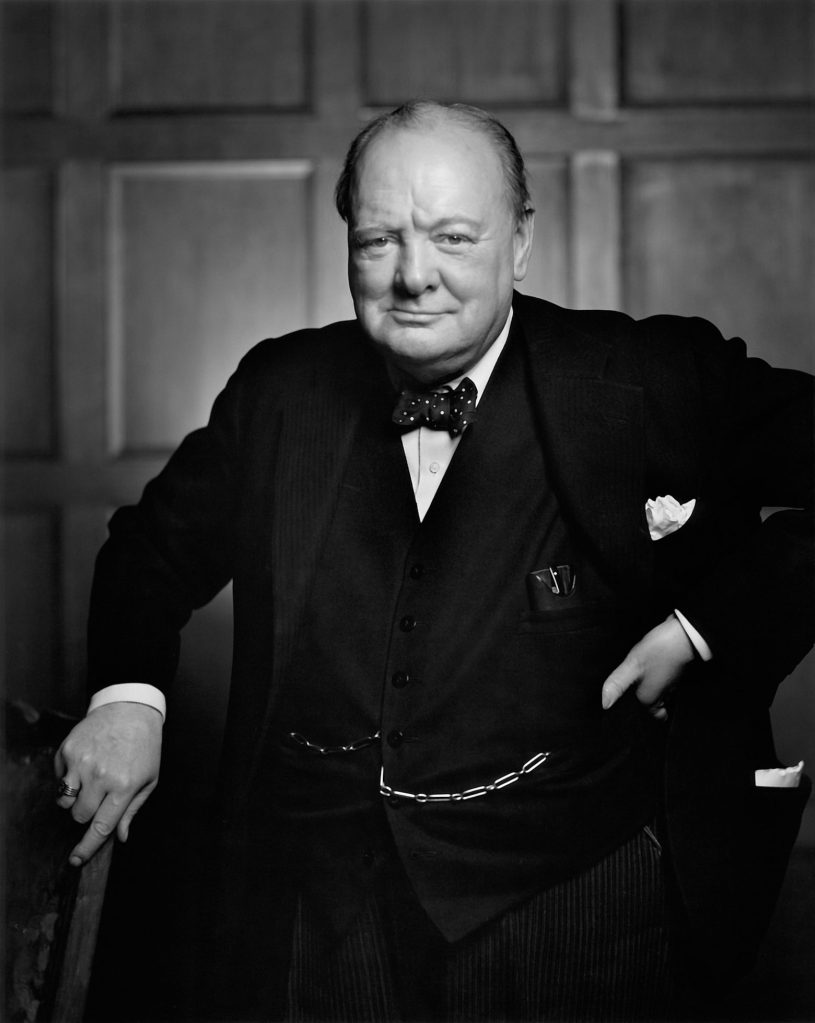
This was the man Mr. Gilbert knew.

Years later, Mr. Gillber met Mr. Karsh and Mr. Gilbert asked how did he achieve such a quick change of expression and temperament?

“I took away his cigar,” said, Mr. Karsh.

1.25.2021 – looking east over

looking east over
Atlantic nothing until
Mauritania

Part of a series based on afternoons spent at the beach on Hilton Head Island.

I wanted to see if I would be ‘inspired’ by what I saw, by what I heard, by what I smelled, by what I tasted, what I felt emotionally and what I felt tactilely.

Some turned out okay.

Some were too forced.

Some were just bad.

Some did involve some or all of those feelings.

As far as it goes, I guess I was inspired by by what I saw, by what I heard, by what I smelled, by what I tasted, what I felt emotionally and what I felt tactilely.

Click here for more Haiku from the BEACH

1.24.2021 – sublimate under

sublimate under
homogeneity our
diverse inclusion

E Pluribus Unam so it still says on our money.

I haven’t carried coins in so long I had to check to make sure.

One country with many many sources and origins.

I ran across this use of words today in a sentence describing the United States.

Writing on the concept of E Pluribus Unam and ‘the inclusion of the excluded’, Jorge Castañeda Gutman in his book, America through Foreign Eyes, writes that “This homogeneity sublimated an underlying diversity.”

Feeding the phrase word by word in the Google I can reconstruct this as saying:

The quality or state of being all the same or all of the same kind diverted or modified into a culturally higher or socially more acceptable activity as a cause or basis for the practice or quality of including or involving people from a range of different social and ethnic backgrounds.

Say that three times fast.

I think it boils down to the duck analogy.

Gliding along the surface, paddling like hell underneath.

Mr. Gutnam was writing how foreign observers have both historically and recently came away with a feeling that the United States is all so much the same place with same quality of sameness.

Mr. Gutnam quotes the eminent Jean-Paul Satre (showing my own ignorance of his value, I have to observe that had Jean-Paul’s first name been Butch, his work would not be talked about today … but I digress) when Satre wrote about America:

Life is so standardized here that I found no significant difference between the menus of luxury restaurants and the canteens. In restaurants, you pay mostly for cutlery, the service, and the atmosphere, but no matter where you go you find, whether it is in the “Automats” or the dining room of the great hotels, the same green peas whose color is so garish that you think they were hand-painted, the same unsalted white beans which are served in little dishes, the same brown and odd looking gravy; it is semi-sweet, semi salty, and they spread it on a refrigerated piece of beef. To finish up, the worker, just like his boss, eats a big piece of sponge cake with cream or an “ice cream”. They drink the same chlorinated ice water and the same bad coffee.”

The text I am quoting notes that the word “Ice Cream” is in ENGLISH is Satre’s original French essay.

A couple of things here.

One, this essay was written in the middle of World War 2 when all restaurant fare was on the down side.

Two, that being understood, I will agree with the essay for the most part.

The CHAIN or FRANCHISE restaurant has insured that a steak or hamburger or southern-fried-chicken is the same whether you are in a KFC in Duluth, Minnesota or Duluth, Georgia.

I remember a conversation with a friend years ago who pointed out that you drive down the street and see all these different restaurants and varieties of food and then drive down the alley behind the restaurants and the same Gordon Foods or Sysco truck is delivering to all of them.

Third, I find it fascinating that Mr. Satre focused on food.

Where is America more diverse that at its dining room table?

And we all to have eat.

Somewhere along the line as my wife and I built a family of seven adopted kids I asked one of many social workers if they had any advice.

“Love them through their stomachs,” was the reply.

I have always been fascinated by food.

I tell folks who are interested and those who aren’t but are stuck talking with me, that I was starting in school I would somehow develop of course of study on food through history.

The taste of honey from day one to today.

Flavour, texture, cooking and the Boston School of Measurement.

Much as I loved how in Bill & Ted’s Excellent Adventure, Beethoven wanders into a music store in a mall and immediately adapts to an electronic keyboard, I want to see Thomas Jefferson in a modern kitchen.

Look at cookbooks!

I have a long history of working in bookstores, libraries and publishing.

When all else fails, bring out a cookbook.

I have seen and read so many cookbooks I finally came up with MIKES LAW OF COOKBOOKS.

For a cookbook to be a good cookbook it must have ONE good recipe you have made more than once.

Want to know something?

There are a lot of BAD cookbooks out there.

Diversity.

Kind of a scary word and a dangerous one and maybe even a misunderstood one.

Lets just use to look at our food.

When I moved south I embraced southern cooking and learned that Southern Cooking down here was what we called Soul Food up North.

I learned how to cook collards (kinda, my daughter Lauren does them better) black eyed peas (with hog jowls at New Years for good luck) and the best biscuits ever.

I try and try but I just don’t like grits.

As a fringe benefit of the NEW south, living in Atlanta we also added Korean Bulgari Beef and Romanian Mici to the recipe list.

Now we are in the Low Country.

A part of South Carolina and Georgia known for being barely above sea level.

So guess what, with a focus on sea food.

Never have I had so much shrimp, scallops, gumbo and hush puppies.

Celebrate diversity!

Celebrate this homogeneity sublimated an underlying diversity of FOOD.

Celebrate the quality or state of being all the same or all of the same kind diverted or modified into a culturally higher or socially more acceptable activity as a cause or basis for the practice or quality of including or involving people from a range of different social and ethnic backgrounds with food!

Being diverse together.

Love this country and its people through our stomachs.

And pass that Louisiana Remoulade sauce for the Maryland crab cakes.

1.23.2021 – best lack conviction, while

best lack conviction, while
passionate intensity
the worst are full of

Adapted from The Second Coming by William Butler Yeats.

Surely some revelation must be at hand.

Mr. Yeats wrote this back in 1919 just after World War 1.

The world recovered from that war and the Spanish Flu.

Maybe …

Turning and turning in the widening gyre
The falcon cannot hear the falconer;
Things fall apart; the center cannot hold;
Mere anarchy is loosed upon the world,
The blood-dimmed tide is loosed, and everywhere
The ceremony of innocence is drowned;
The best lack all conviction, while the worst
Are full of passionate intensity.
 
Surely some revelation is at hand;
Surely the Second Coming is at hand.
The Second Coming! Hardly are those words out
When a vast image out of Spiritus Mundi
Troubles my sight: somewhere in the sands of the desert
A shape with lion body and the head of a man,
A gaze blank and pitiless as the sun,
Is moving its slow thighs, while all about it
Reel shadows of the indignant desert birds.
The darkness drops again; but now I know
That twenty centuries of stony sleep
Were vexed to nightmare by a rocking cradle,
And what rough beast, its hour come round at last,
Slouches towards Bethleem to be born?

1.22.2021 – its in the morning

its in the morning
when I feel my age, slowly
so slowly to wake up

I have never, so long at least that I can remember, been a morning person.

Getting up for me has never been easy.

When I came across Larry McMurtry’s, in his worth-the-while to read book, “Lonesome Dove”, description of how Captain Woodrow Call felt when he got up writing thusly, “Getting up early and feeling awake was the one skill he had never truly perfected – he got up, of course, but it never felt natural.”, I felt I knew just what Mr. McMurtry meant.

Am I a night owl?

A night hawk?

Maybe so.

Feed MORNING PERSON into the Google and you learn from wikipedia that:

A lark, early bird, morning person or, in Scandinavian countries, an A-person, is a person who usually gets up early in the morning and goes to bed early in the evening. The lark (bird) starts its day very early, which explains the choice of the word lark for people who may sleep from around 10 p.m. to 5 or 6 a.m. or earlier. Human “larks” tend to feel most energetic just after they get up in the morning. They are thus well-suited for working the day shift.

The opposite of the lark is the owl, often awake at night. A person called a night owl is someone who usually stays up late and may feel most awake in the evening and at night. Researchers have traditionally used the terms morningness and eveningness to describe these two phenotypes.

Morningness and eveningness?

I have to say I have not run into those two terms before.

I also have the predisposition of eveningness to look down on and even RESENT those who have Morningness.

When I am having trouble waking up I often recall that my sister Janet would tell a story of how one of her college roommates would start each singing GOOD MORNING MR ZIP ZIP ZIP.

Just on thinking about the title of the song and NEVER EVER experiencing it first hand I want to shoot the roommate.

I haven’t thought about this in years but realizing that with the Google at my fingertips I could search for the song

So I did.

Good gracious, worse than I thought.

Also now this song is my head.

Oh just shoot me.

Night time.

Late night time.

The greatest painting in the world for me, if you want to talk about something that moves something deep in my soul is Ed Hopper’s Night Hawks.

And just the title of Hemingway’s A Clean Well Lighted Place and the bells ring down in my toes.

Mr. Hemingway writes, “”I am of those who like to stay late at the cafe,” the older waiter said. “With all those who do not want to go to bed. With all those who need a light for the night.”

This is a clean and pleasant cafe. It is well lighted. The light is very good
and also, now, there are shadows of the leaves.””

But life dealt me a hand that called on me to up and up early.

The last couple of days I have been dealing with a head cold as well.

Its a hole I am finding it hard to dig myself out of.

I get and shower and the coffee is ready when I walk into the kitchen.

I pour myself a big cup of coffee and sit down with the morning papers.

And I sigh.

Then I remember.

I remember that going back the last dozen years I got up a whole lot earlier.

And was in an even bigger funk in the morning.

Waiting for the caffeine hit to kick so I could somehow, someway, get into a car and drive myself into downtown Atlanta.

I know I did this.

From this angle I cannot imagine how I did this.

Moreover, how did I ever except that this was normal?

It was insanity in a harness.

It is the morning, trying to wake up, trying to come to life, that I feel my age.

Slowly so slowly I become awake.

Achy, eyes and joints filled with glue.

Thick cobwebs in my brain.

Is this what being 60 feels like?

Some days I climb out of this morning hole.

Other days I feel I am in the bucket and am content to be winched out slowly.

Either I do get out and up.

Or as the US Marine Corp might say OFF AND ON!

Off my butt and on my feet.

I’ll get there.