sunshine patriots service shrinks in this crisis these times try my soul
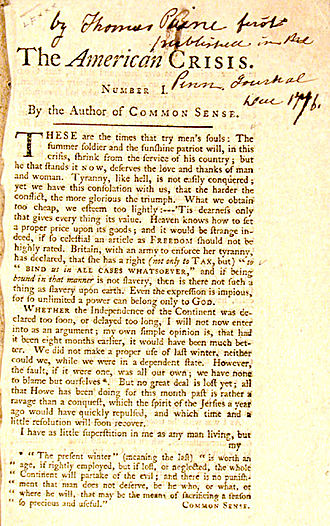
These are the times that try men’s souls: The summer soldier and the sunshine patriot will, in this crisis, shrink from the service of his country; but he that stands it now, deserves the love and thanks of man and woman.
Thomas Paine –
The American Crisis, or simply The Crisis, is a pamphlet series by eighteenth century Enlightenment philosopher and author, Thomas Paine, originally published from 1776 to 1783 during the American Revolution. Thirteen numbered pamphlets were published between 1776 and 1777, with three additional pamphlets released between 1777 and 1783. The first of the pamphlets was published in The Pennsylvania Journal on December 19, 1776. Paine signed the pamphlets with the pseudonym, “Common Sense”. (Wikipedia)
warm days never cease? mists and mellow fruitfulness? what happened to fall?
Temperatures across the continent plunge in a cruel mockery of autumnal thoughts of a “Close bosom-friend of the maturing sun.”
What happened to fall in this, the year of our Lord, 2019?
I have been informed that Keats was thinking about England when he penned this.
To Autumn BY JOHN KEATS
Season of mists and mellow fruitfulness, Close bosom-friend of the maturing sun; Conspiring with him how to load and bless With fruit the vines that round the thatch-eves run; To bend with apples the moss’d cottage-trees, And fill all fruit with ripeness to the core; To swell the gourd, and plump the hazel shells With a sweet kernel; to set budding more, And still more, later flowers for the bees, Until they think warm days will never cease, For summer has o’er-brimm’d their clammy cells.
Who hath not seen thee oft amid thy store?
Sometimes whoever seeks abroad may find
Thee sitting careless on a granary floor,
Thy hair soft-lifted by the winnowing wind;
Or on a half-reap’d furrow sound asleep,
Drows’d with the fume of poppies, while thy hook
Spares the next swath and all its twined flowers:
And sometimes like a gleaner thou dost keep
Steady thy laden head across a brook;
Or by a cyder-press, with patient look,
Thou watchest the last oozings hours by hours.
Where are the songs of spring? Ay, Where are they?
Think not of them, thou hast thy music too,—
While barred clouds bloom the soft-dying day,
And touch the stubble-plains with rosy hue;
Then in a wailful choir the small gnats mourn
Among the river sallows, borne aloft
Or sinking as the light wind lives or dies;
And full-grown lambs loud bleat from hilly bourn;
Hedge-crickets sing; and now with treble soft
The red-breast whistles from a garden-croft;
And gathering swallows twitter in the skies.
Mozart, his music library recorded sound and we have it all
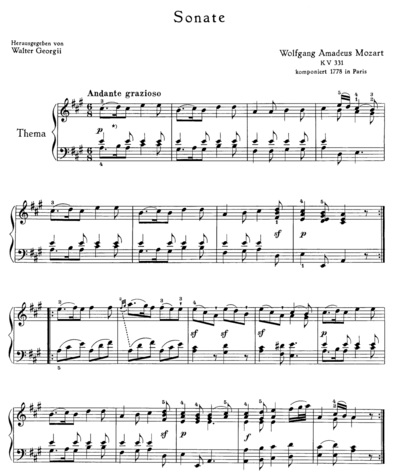
In the movie, Amadeus, Antonio Salieri shuffles through pages of sheet music penned by Mozart and says, ” … music, finished as no music is ever finished. Displace one note and there would be diminishment. Displace one phrase and the structure would fall.”
I often think that had only the 1st measures of this piece survived, Mozart would still be according greatness.
Simple.
Magical.
Simply magical.
What kept this arrangement of notes hidden until Mozart came along?
I like to tell myself that if I ever I managed an accomplishment to equal just the first page of the score of this piece, I could die quite pleased with my life.
I can barely read music.
I have no natural sense of rhythm (no lie, I have to count between stanzas of the Michigan Fight Song or I am yelling, HAIL, HAIL, all by myself).
No musical ability.
But I have the music.
All of it.
Writing the obituary of another musical giant, Alistair Cooke wrote about Duke Ellington, “He has left us, in the blessed library of recorded sound a huge anthology of his music, which never got stuck in the groove from his 28th birthday to his 75th.
When I was in college, my roommate was not only a jazz maniac but also one of the very first knowledgeable jazz critics, and when he left Cambridge – as I did in the summer of 1932 – he wrote in the university weekly a tribute to the Duke. “Bands may come,” he wrote, “and bands may go, but the Duke goes on forever.” In other words, we thought it a marvel that the Duke had ridden out all fashions and lasted five long years. In fact, his music grew and developed through an incredible 47 years, and we have it all.“
Duke Ellington – 31 May 1974 – Letter to America by Alistair Cooke – READ IT HERE – HEAR IT HERE
morning drive, traffic slowed by fatality just inconvenienced?
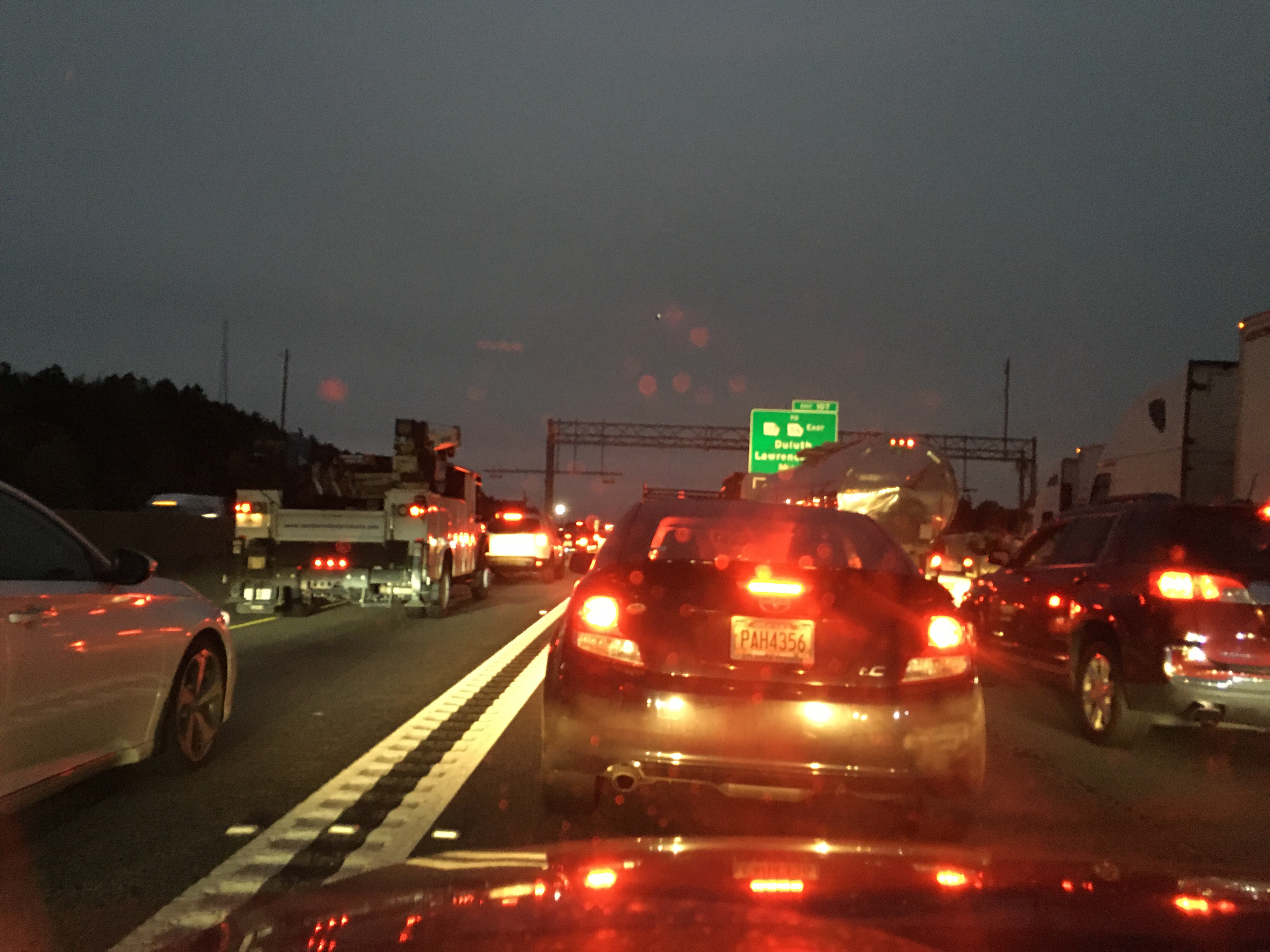
Minutes after merging onto I85 Southbound to midtown Atlanta, traffic started slowing down and then stopped.
Not good but not terrible.
This often happens as the freeway climbs up Peachtree Ridge in Gwinnett County and the trucks slow down.
I stayed stopped for a minute and then two minutes and I open up the WAZE app on my iPhone.
Checking Route … HEAVY TRAFFIC … You will reach your destination in …. 2 HOURS!!
TWO HOURS?
Radio on in time to catch the traffic report and it opens with RED FLAG ALERT for I85 in Gwinnett County. Traffic accident with fatalities has all lanes closed just past Boggs Rd.
When I was in college and drove back home it took 2 to 3 hours to get to Grand Rapids from Ann Arbor.
It seemed like forever.
I was going to be in my car that long just to get to work this morning.
Where I want to be, is not where I am today. Accept that, go on.
Inspired by Cleveland Browns Head Coach Freddie Kitchens on the Brown’s season so far, “It is not where we want to be, but it is where we are and that is who our record is so we have to own that.”
The life I lead right now is the result of choices I made long ago.
Husband, Father, Grand Father, were all there, lurking in the background.
Home, job, relationships, were all there, lurking in the background.
Seven kids, 5 (and a half) grand kids, web work, Atlanta, and almost 60 years old.

 No Haiku For You