waves and gray-white beach salt, monotonous, senseless subtler than poems
The attractions, fascinations there are in sea and shore!
How one dwells on their simplicity, even vacuity!
What is it in us, arous’d by those indirections and directions?
That spread of waves and gray-white beach, salt, monotonous, senseless —
such an entire absence of art, books, talk, elegance —
so indescribably comforting, even this winter day —
grim, yet so delicate-looking, so spiritual — striking emotional, impalpable depths, subtler than all the poems, paintings, music, I have ever read, seen, heard.
(Yet let me be fair, perhaps it is because I have read those poems and heard that music.)
From A Winter Day on the Sea-beach by Walt Whitman as published in Complete prose works: Specimen days and Collect, November Boughs and Good Bye My Fancy by Walt Whitman (D. Appleton and Co: New York and London, 1910).
age is an issue … mind over matter – don’t mind … it doesn’t matter
Check the world wide web and ask who said, Age is an issue of mind over matter. If you don’t mind, it doesn’t matter, and you will find lots of those meme graphics that attribute the saying to Mr. Mark Twain.
But ask for a citation and you go down that rabbit hole that conveys the information super highway to nether regions of obscurity.
I turned to my favorite website for attribution, Quote Investigator, to learn that the first recorded use of “Age is an issue of mind over matter. If you don’t mind, it doesn’t matter” was in in 1968 and Mark Twain, died in 1910.
According to Quote Investigator, the earliest evidence appeared in an article about aging that was published in multiple newspapers in 1968. The saying was attributed to an anonymous scientific researcher. The prefatory phrase was somewhat shorter:
As one government researcher puts it: “Aging is a matter of mind. If you don’t mind, it doesn’t matter.”
That line, according to QI appeared in the June 28 1968 , Statesville Record and Landmark, in a story headlined Facts Listed On Aging (Quote Page 7-A, Statesville, North Carolina).
Once, said, the line took on a life of its own and it appeared in print over and over through the years, attributed to Jack Benny, Satchel Paige and Muhammad Ali as well as Mr. Twain.
Just think of what you could get away back when attribution of almost anything wasn’t a few clicks away.
Regardless or iregardless* of who said it, I say it again, Age is an issue of mind over matter. If you don’t mind, it doesn’t matter and I am saying it to say, Happy Birthday today to my wife.
I hope you don’t mind and it doesn’t matter to me as we battle that issue of mind over matter together.
Love you!
*Use regardless, as irregardless is a nonstandard, redundant word considered incorrect in formal writing, though dictionaries acknowledge its usage to mean the same as “regardless” (despite everything) due to a double negative (ir- + -less) and confusion with “irrespective”. While some find “irregardless” acceptable in very informal speech, sticking to “regardless” avoids criticism and ensures clarity in professional or academic settings, as it’s the universally accepted, standard term, but I digress.
arc of the moral universe is long, but it bends toward justice
On March 25, 1965, Dr. Martin Luther King, Jr. gave a speech on the steps of the State Capitol in Montgomery, Alabama, after the completion of the Selma to Montgomery March.
Rhetorically he asked a question.
“How Long?”
And he answered himself, “Not long.”
Dr. King said:
I come to say to you this afternoon, however difficult the moment, however frustrating the hour, it will not be long, because “truth crushed to earth will rise again.”
How long? Not long, because “no lie can live forever.”
How long? Not long, because “you shall reap what you sow.”
How long? Not long:
Truth forever on the scaffold,
Wrong forever on the throne,
Yet that scaffold sways the future,
And, behind the dim unknown,
Standeth God within the shadow,
Keeping watch above his own.
I like that.
I like that a lot.
For today, remember that Dr. King said that, ” … however difficult the moment, however frustrating the hour, it will not be long, because “truth crushed to earth will rise again.”
And with that in mind, remember that Dr. King said:
Let us march on ballot boxes, march on ballot boxes until race-baiters disappear from the political arena.
Let us march on ballot boxes until the salient misdeeds of bloodthirsty mobs will be transformed into the calculated good deeds of orderly citizens.
Let us march on ballot boxes until the Wallaces of our nation tremble away in silence.
Let us march on ballot boxes until we send to our city councils, state legislatures, and the United States Congress, men who will not fear to do justly, love mercy, and walk humbly with thy God.
Let us march on ballot boxes until brotherhood becomes more than a meaningless word in an opening prayer, but the order of the day on every legislative agenda.
For today
Let us march on ballot boxes until the Trumps of our nation tremble away in silence.
Let us march on ballot boxes until we send to our city councils …
State legislatures …
And the United States Congress …
people who will not fear to do justly …
love mercy …
And walk humbly with thy God!
(I digress but how cannot this simple line burn through with white hot fire into the consciousness of Christians in America today as a comment on that man in office?
And ask, How Long?
And answer, “Not long, because the arc of the moral universe is long, but it bends toward justice.”
Say that outloud.
The arc of the moral universe is long, but it bends toward justice.
That applies to all people regardless of the level of their own personal “morality”.
And I will point some important aspects of the calendar.
This nation hold mid-term elections in 9 months.
This nations hold a Presidential referendum in 33 months.
And I thought I might mention that in the State of Minnesota, indictments or complaints for any crime resulting in the death of the victim may be found or made at any time after the death of the person killed.
In Minnesota, there is no statute of limitations on a charge on murder and in the United States, murder is a State not a Federal crime.
The arc of the moral universe is long, but it bends toward justice.
morally bankrupt past the point of no return unhinged entirely
I asked ChatGPT to give me words that describe someone who has finally gone too far, gone past the limit.
ChatGPT responded!
Here are words and phrases that capture the idea of someone who’s finally crossed the line / gone past the limit, grouped by tone and nuance:
Blunt / Strong Unhinged Out of control Over the edge Beyond saving Past the point of no return Too far gone Irredeemable
Psychological / Emotional Unraveled Broken Fractured Unstable Snapped Lost Unmoored
Moral / Ethical Corrupted Depraved Debased Morally bankrupt Tainted Fallen
Poetic / Dramatic Crossed the Rubicon Burned the last bridge Stepped into the abyss Past the brink Overreached Damned Claimed by the dark
Colloquial / Modern Off the rails Went feral Lost the plot Unchecked Unhinged entirely
Quiet but Heavy There’s no coming back Something in them broke They chose the wrong side They crossed a line they can’t uncross
I ask you, which of these terms has NOT been used in a headline at sometime, somewhere in the last year to describe some action by the current person in office and his administration?
Then, I ask you, when will enough be enough?
Famously, Senator Joseph McCarthy also met this grading scale and most of these terms were used to describe his actions and his list of 205, 57, no 81, to finally, 1 known communist in the State Department is 1 too many.
According to Wikipedia:
While he never produced a verified list of communists, his investigations had significant consequences: > 500+ people were called to testify before his subcommittee. > Over 2,000 government employees lost their jobs as a result of his investigations and the general climate of the “Red Scare”. > Zero of the individuals he publicly named were ever convicted of subversion or espionage.
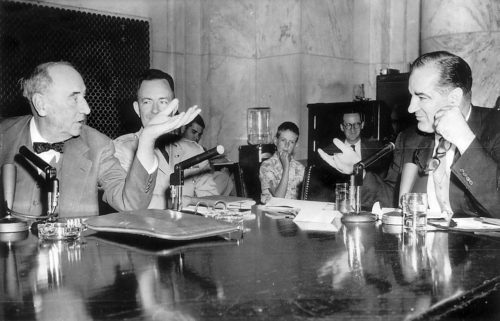
The Senator kept at it until finally, in the famous televised Army-McCarthy hearings (televised by the way, because network newcomer ABC had such a weak afternoon programming schedule they could afford to broadcast the hearings live), Joseph Welch, the defense attorney appearing for the US Army looked at the Senator and on live TV asked, “At long last, have you no decency?”
If you have ever seen the movie, Anatomy of a Murder, set in the Upper Peninsula of Michigan, Joseph Welch was hired by the director Otto Preminger as a legal consultant and Preminger ended up casting Mr. Welch as the mild mannered Judge in the movie.
This quiet, unassuming man, looked at Joe McCarthy and said in his quiet, unassuming voice, “At long last, have you no decency?”
And he held up a mirror to the country and the country said, BLEEECHHHHHHHHHHHHHHHHHH, where did this McCarthy guy come from?
Where have you gone, Joe DiMaggio? Our nation turns its lonely eyes to you …
tyrants remember hurrah for flag of the free it waves forever
Other nations may deem their flags the best And cheer them with fervid elation But the flag of the North and South and West Is the flag of flags, the flag of Freedom’s nation.
Hurrah for the flag of the free! May it wave as our standard forever, The gem of the land and the sea, The banner of the right. Let tyrants remember the day When our fathers with mighty endeavor Proclaimed as they marched to the fray That by their might and by their right It waves forever.
The Stars and Stripes Forever, music AND LYRICS by John Philip Sousa.
By a 1987 act of the U.S. Congress, it is the official National March of the United States of America.
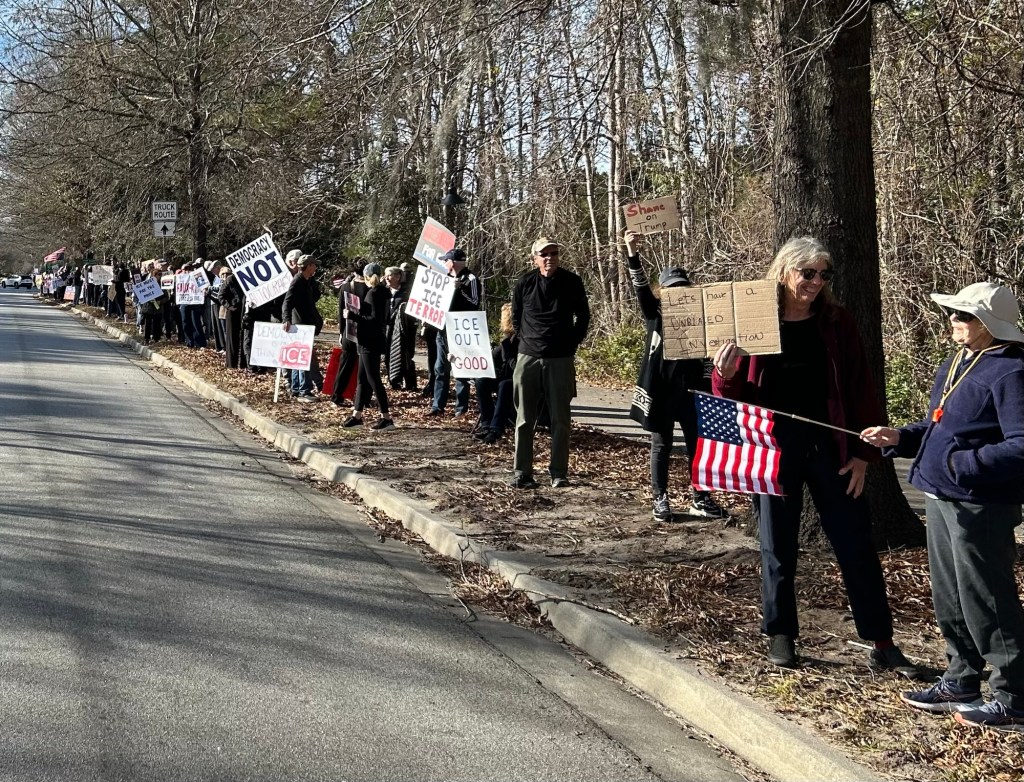
Goodness gracious but remember the times when Congress used to ACT and we didn’t have to take to streets to protest on behalf of Democracy, Life and Liberty?




 No Haiku For You