to sleep the sleep of the apples, get far away from the busyness
I want to sleep the sleep of the apples, I want to get far away from the busyness of the cemeteries. I want to sleep the sleep of that child who longed to cut his heart open far out at sea.
I don’t want them to tell me again how the corpse keeps all its blood, how the decaying mouth goes on begging for water. I’d rather not hear about the torture sessions the grass arranges for nor about how the moon does all its work before dawn with its snakelike nose.
I want to sleep for half a second, a second, a minute, a century, but I want everyone to know that I am still alive, that I have a golden manger inside my lips, that I am the little friend of the west wind, that I am the elephantine shadow of my own tears.
When it’s dawn just throw some sort of cloth over me because I know dawn will toss fistfuls of ants at me, and pour a little hard water over my shoes so that the scorpion claws of the dawn will slip off.
Because I want to sleep the sleep of the apples, and learn a mournful song that will clean all earth away from me, because I want to live with that shadowy child who longed to cut his heart open far out at sea.
I took the one less traveled by and that has made all the difference
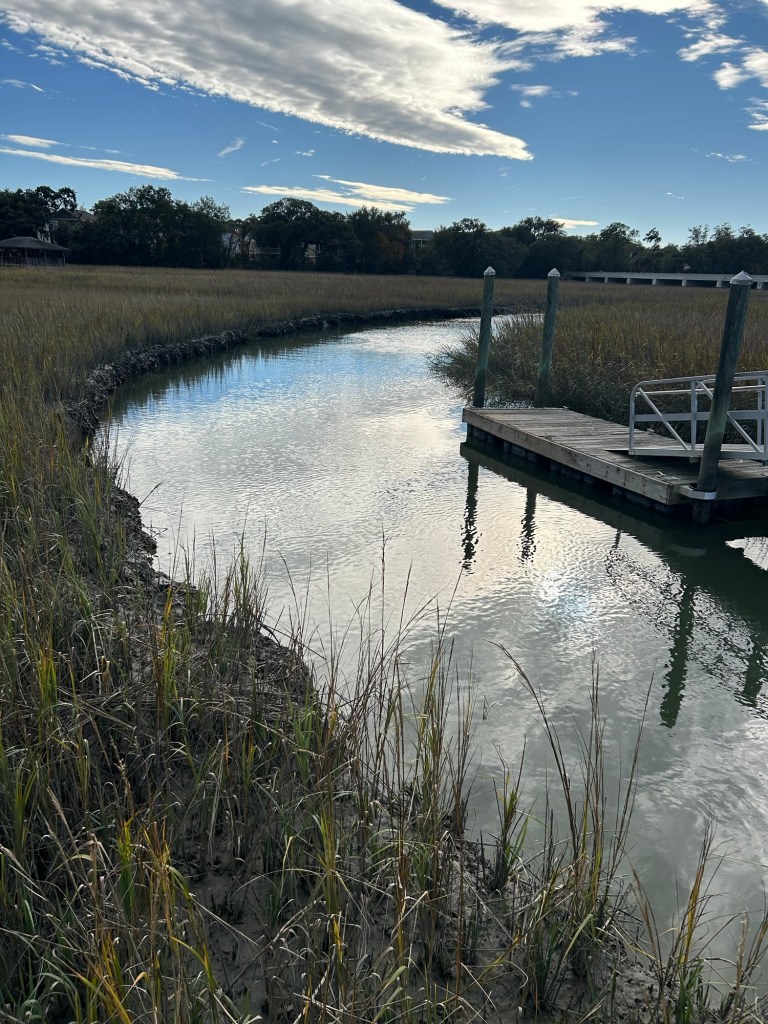
Main Road on Pinckney Island NWR on Dec 28, 2025
Two roads diverged in a yellow wood, And sorry I could not travel both And be one traveler, long I stood And looked down one as far as I could To where it bent in the undergrowth;
Then took the other, as just as fair, And having perhaps the better claim, Because it was grassy and wanted wear; Though as for that the passing there Had worn them really about the same,
And both that morning equally lay In leaves no step had trodden black. Oh, I kept the first for another day! Yet knowing how way leads on to way, I doubted if I should ever come back.
I shall be telling this with a sigh Somewhere ages and ages hence: Two roads diverged in a wood, and I— I took the one less traveled by, And that has made all the difference.
The Road Not Taken by Robert Frost as published in Complete Poems of Robert Frost by Robert Frost (Holt, Rinehart and Winston: New York, 1949).
sleepless reduces past awesome, distorted essence of all we have met
Adapted from the passage:
It was a night I would remember poignantly but not wish to repeat. Insomnia opens the door to previously untraced memories, makes a mockery of the good sense that possesses us at high noon, and any effort we make to channel our thoughts twists the energy, rebukes us with half-finished faces, sexless bodies; we learn again that our minds are full of snares, knots, goblins, the backward march of the dead, the bridges that end halfway and still hang in the air, those who failed to love us, those who irreparably harmed us, intentionally or not, even those we hurt badly and live on incapsulated in our regret. The past thrives on a sleepless night, reduces it to the awesome, distorted essence of all we have met.
From Sundog: a novel : the story of an American foreman, Robert Corvus Strang, as told to Jim Harrison by Jim Harrison (Washington Square Press Collection: New Yor, 1989).
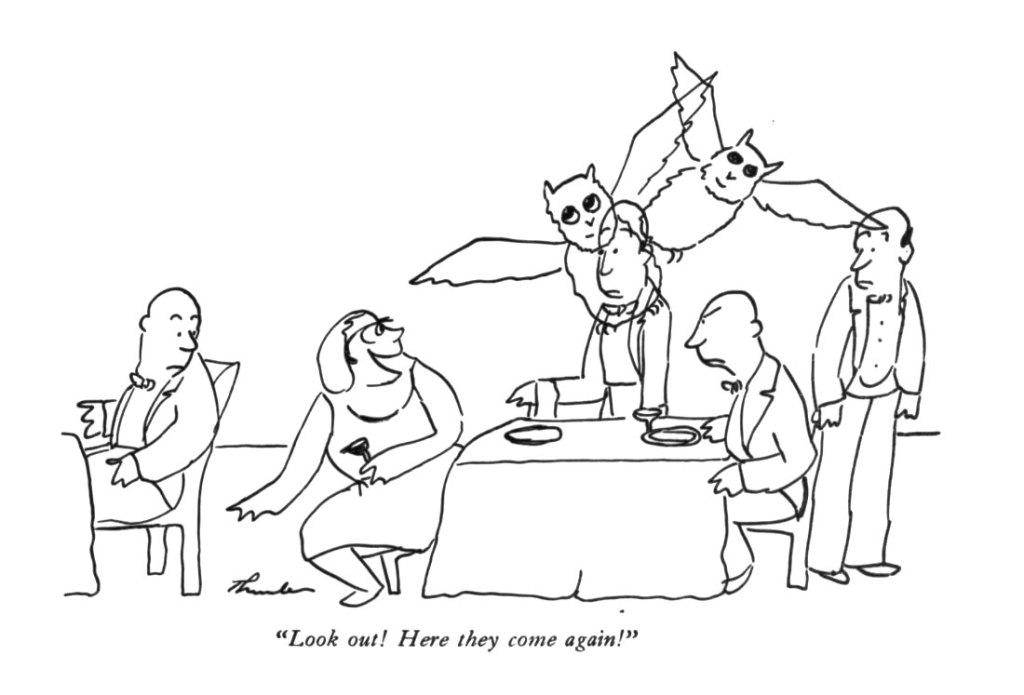
It had to happen didn’t it?
I am now of the age when too much can impact my sleep, but on the other hand, when hasn’t too much impacted my sleep.
I mean how many plates of turkey, pieces of pie, chunks of chocolate, handfuls of cookies covered in icing and gallons of drink can one person imbibe and not pay for it later?
It was little surprise that laying down my brain and my stomach where both operating at 1000mph.
A Christmas carol earwig was stuck in my mind and maybe Dicken’s Christmas Carol was on my mind as well as it started.
The previously untraced memories, makes a mockery of the good sense that possesses us at high noon.
Any effort we make to channel our thoughts twists the energy, rebukes us with half-finished faces, sexless bodies.
We learn again that our minds are full of snares, knots, goblins.
The backward march of the dead, the bridges that end halfway and still hang in the air, those who failed to love us, those who irreparably harmed us, intentionally or not, even those we hurt badly and live on incapsulated in our regret.
The past thrives on a sleepless night, reduces it to the awesome, distorted essence of all we have met.
It was a night I would remember poignantly but not wish to repeat.
desire to learn for pleasure’s of learning such a joy to experience
Salt March at Coastal Discovery Museum, Hilton Head Island, SC
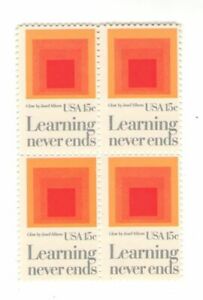
Adapted from the line, “Gunnar Danielsson, secretary general of Folkuniversitetet, said: “The desire to learn for pleasure’s sake, or for the sake of learning as such, is a joy to experience in a society which is increasingly obsessed with learning and education as preparation for work.” as it appears in the article, ‘Keeps your mind alert’: older Swedes reap the benefits of learning for pleasure by the Nordic correspondent for the Guardian, Miranda Bryant.
Back in the day when I was in college this three older ladies sat next to me in the class, History of the High Renaissance in Tuscany.
There were assigned seats but we always found each and sat in a group and chatted before class.
They were lifelong residents of Ann Arbor and the University offered locals the chance to ‘audit’ class (if there was room) for the fee of $25.
The ladies said they had been ‘going to school’ for years and loved learning new things.
That has stayed with me and I have always had this need to know and a curiosity about everything.
For example, we moved to the coastal low country of South Carolina.
Maybe I was aware of things like salt marshes and tides but they had never entered my life before.
Now my tablets are full of books and articles on the salt marshes.
I follow and try to understand tides and tidal information which is something good to know when you live in a county that at high tide, is 50% underwater.
And I wholeheartedly endorses that line that states, “The desire to learn for pleasure’s sake, or for the sake of learning as such, is a joy to experience.”
Back in college, my major was US History and I read for most of my out of class classwork.
My roommates were engineers and nightly crouched over paper and textbooks and calculators.
They would look at me and ask was I reading for class or for fun.
187 that of all who give gifts these two were the wisest
The Gift of the Magi ONE DOLLAR AND eighty-seven cents. That was all. And sixty cents of it was in pennies. Pennies saved one and two at a time by bulldozing the grocer and the vegetable man and the butcher until one’s cheeks burned with the silent imputation of parsimony that such close dealing implied. Three times Della counted it. One dollar and eighty-seven cents. And the next day would be Christmas.
There was clearly nothing to do but flop down on the shabby little couch and howl. So Della did it. Which instigates the moral reflection that life is made up of sobs, sniffles, and smiles, with sniffles predominating.
While the mistress of the home is gradually subsiding from the first stage to the second, take a look at the home. A furnished flat at $8 per week. It did not exactly beggar description, but it certainly had that word on the lookout for the mendicancy squad.
In the vestibule below was a letter-box into which no letter would go, and an electric button from which no mortal finger could coax a ring. Also appertaining thereunto was a card bearing the name “Mr. James Dillingham Young.” The “Dillingham” had been flung to the breeze during a former period of prosperity when its possessor was being paid $30 per week. Now, when the income was shrunk to $20, the letters of “Dillingham” looked blurred, as though they were thinking seriously of contracting to a modest and unassuming D. But whenever Mr. James Dillingham Young came home and reached his flat above he was called “Jim” and greatly hugged by Mrs. James Dillingham Young, already introduced to you as Della. Which is all very good.
Della finished her cry and attended to her cheeks with the powder rag. She stood by the window and looked out dully at a grey cat walking a grey fence in a grey backyard. Tomorrow would be Christmas Day, and she had only $1.87 with which to buy Jim a present. She had been saving every penny she could for months, with this result. Twenty dollars a week doesn’t go far. Expenses had been greater than she had calculated. They always are. Only $1.87 to buy a present for Jim. Her Jim. Many a happy hour she had spent planning for something nice for him. Something fine and rare and sterling—something just a little bit near to being worthy of the honor of being owned by Jim.
There was a pier-glass between the windows of the room. Perhaps you have seen a pier-glass in an $8 flat. A very thin and very agile person may, by observing his reflection in a rapid sequence of longitudinal strips, obtain a fairly accurate conception of his looks. Della, being slender, had mastered the art.
Suddenly she whirled from the window and stood before the glass. Her eyes were shining brilliantly, but her face had lost its color within twenty seconds. Rapidly she pulled down her hair and let it fall to its full length.
Now, there were two possessions of the James Dillingham Youngs in which they both took a mighty pride. One was Jim’s gold watch that had been his father’s and his grandfather’s. The other was Della’s hair. Had the Queen of Sheba lived in the flat across the airshaft, Della would have let her hair hang out the window some day to dry just to depreciate Her Majesty’s jewels and gifts. Had King Solomon been the janitor, with all his treasures piled up in the basement, Jim would have pulled out his watch every time he passed, just to see him pluck at his beard from envy.
So now Della’s beautiful hair fell about her, rippling and shining like a cascade of brown waters. It reached below her knee and made itself almost a garment for her. And then she did it up again nervously and quickly. Once she faltered for a minute and stood still while a tear or two splashed on the worn red carpet.
On went her old brown jacket; on went her old brown hat. With a whirl of skirts and with the brilliant sparkle still in her eyes, she fluttered out the door and down the stairs to the street.
Where she stopped the sign read: “Mme. Sofronie. Hair Goods of All Kinds.” One flight up Della ran, and collected herself, panting. Madame, large, too white, chilly, hardly looked the “Sofronie.”
“Will you buy my hair?” asked Della.
“I buy hair,” said Madame. “Take yer hat off and let’s have a sight at the looks of it.”
Down rippled the brown cascade. “Twenty dollars,” said Madame, lifting the mass with a practised hand.
“Give it to me quick,” said Della.
Oh, and the next two hours tripped by on rosy wings. Forget the hashed metaphor. She was ransacking the stores for Jim’s present.
She found it at last. It surely had been made for Jim and no one else. There was no other like it in any of the stores, and she had turned all of them inside out. It was a platinum fob chain simple and chaste in design, properly proclaiming its value by substance alone and not by meretricious ornamentation—as all good things should do. It was even worthy of The Watch. As soon as she saw it she knew that it must be Jim’s. It was like him. Quietness and value—the description applied to both. Twenty-one dollars they took from her for it, and she hurried home with the 87 cents. With that chain on his watch Jim might be properly anxious about the time in any company. Grand as the watch was, he sometimes looked at it on the sly on account of the old leather strap that he used in place of a chain.
When Della reached home her intoxication gave way a little to prudence and reason. She got out her curling irons and lighted the gas and went to work repairing the ravages made by generosity added to love. Which is always a tremendous task, dear friends—a mammoth task.
Within forty minutes her head was covered with tiny, close-lying curls that made her look wonderfully like a truant schoolboy. She looked at her reflection in the mirror long, carefully, and critically.
“If Jim doesn’t kill me,” she said to herself, “before he takes a second look at me, he’ll say I look like a Coney Island chorus girl. But what could I do—oh! what could I do with a dollar and eighty-seven cents?”
At 7 o’clock the coffee was made and the frying-pan was on the back of the stove hot and ready to cook the chops.
Jim was never late. Della doubled the fob chain in her hand and sat on the corner of the table near the door that he always entered. Then she heard his step on the stair away down on the first flight, and she turned white for just a moment. She had a habit for saying little silent prayers about the simplest everyday things, and now she whispered: “Please God, make him think I am still pretty.”
The door opened and Jim stepped in and closed it. He looked thin and very serious. Poor fellow, he was only twenty-two—and to be burdened with a family! He needed a new overcoat and he was without gloves.
Jim stopped inside the door, as immovable as a setter at the scent of quail. His eyes were fixed upon Della, and there was an expression in them that she could not read, and it terrified her. It was not anger, nor surprise, nor disapproval, nor horror, nor any of the sentiments that she had been prepared for. He simply stared at her fixedly with that peculiar expression on his face.
Della wriggled off the table and went for him.
“Jim, darling,” she cried, “don’t look at me that way. I had my hair cut off and sold it because I couldn’t have lived through Christmas without giving you a present. It’ll grow out again—you won’t mind, will you? I just had to do it. My hair grows awfully fast. Say ‘Merry Christmas!’ Jim, and let’s be happy. You don’t know what a nice—what a beautiful, nice gift I’ve got for you.”
“You’ve cut off your hair?” asked Jim, laboriously, as if he had not arrived at that patent fact yet even after the hardest mental labor.
“Cut it off and sold it,” said Della. “Don’t you like me just as well, anyhow? I’m me without my hair, ain’t I?”
Jim looked about the room curiously.
“You say your hair is gone?” he said, with an air almost of idiocy.
“You needn’t look for it,” said Della. “It’s sold, I tell you—sold and gone, too. It’s Christmas Eve, boy. Be good to me, for it went for you. Maybe the hairs of my head were numbered,” she went on with sudden serious sweetness, “but nobody could ever count my love for you. Shall I put the chops on, Jim?”
Out of his trance Jim seemed quickly to wake. He enfolded his Della. For ten seconds let us regard with discreet scrutiny some inconsequential object in the other direction. Eight dollars a week or a million a year—what is the difference? A mathematician or a wit would give you the wrong answer. The magi brought valuable gifts, but that was not among them. This dark assertion will be illuminated later on.
Jim drew a package from his overcoat pocket and threw it upon the table.
“Don’t make any mistake, Dell,” he said, “about me. I don’t think there’s anything in the way of a haircut or a shave or a shampoo that could make me like my girl any less. But if you’ll unwrap that package you may see why you had me going a while at first.”
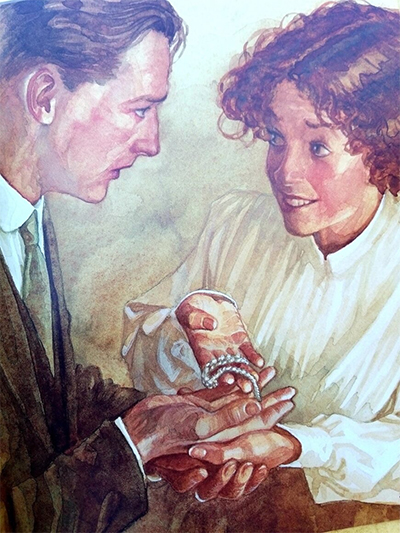
White fingers and nimble tore at the string and paper. And then an ecstatic scream of joy; and then, alas! a quick feminine change to hysterical tears and wails, necessitating the immediate employment of all the comforting powers of the lord of the flat.
For there lay The Combs—the set of combs, side and back, that Della had worshipped long in a Broadway window. Beautiful combs, pure tortoise shell, with jewelled rims—just the shade to wear in the beautiful vanished hair. They were expensive combs, she knew, and her heart had simply craved and yearned over them without the least hope of possession. And now, they were hers, but the tresses that should have adorned the coveted adornments were gone.
But she hugged them to her bosom, and at length she was able to look up with dim eyes and a smile and say: “My hair grows so fast, Jim!”
And them Della leaped up like a little singed cat and cried, “Oh, oh!”
Jim had not yet seen his beautiful present. She held it out to him eagerly upon her open palm. The dull precious metal seemed to flash with a reflection of her bright and ardent spirit.
“Isn’t it a dandy, Jim? I hunted all over town to find it. You’ll have to look at the time a hundred times a day now. Give me your watch. I want to see how it looks on it.”
Instead of obeying, Jim tumbled down on the couch and put his hands under the back of his head and smiled.
“Dell,” said he, “let’s put our Christmas presents away and keep ’em a while. They’re too nice to use just at present. I sold the watch to get the money to buy your combs. And now suppose you put the chops on.”
The magi, as you know, were wise men—wonderfully wise men—who brought gifts to the Babe in the manger. They invented the art of giving Christmas presents. Being wise, their gifts were no doubt wise ones, possibly bearing the privilege of exchange in case of duplication. And here I have lamely related to you the uneventful chronicle of two foolish children in a flat who most unwisely sacrificed for each other the greatest treasures of their house. But in a last word to the wise of these days let it be said that of all who give gifts these two were the wisest. Of all who give and receive gifts, such as they are wisest. Everywhere they are wisest. They are the magi.
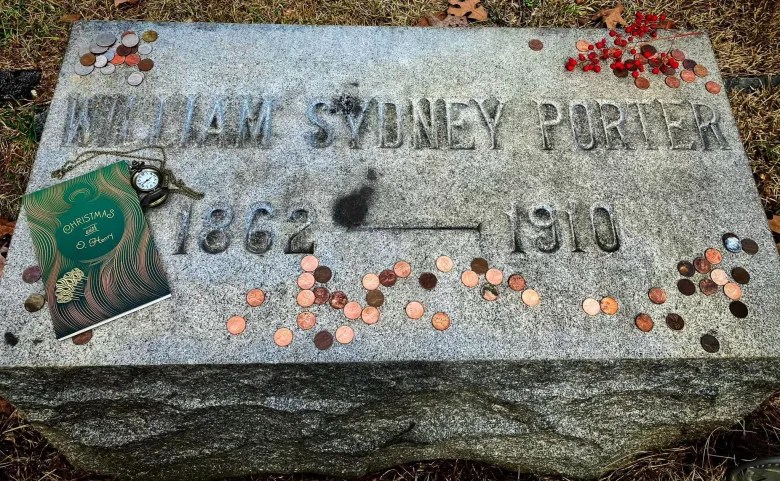
POSTSCRIPT: According to Wikipedia, William Sydney Porter (September 11, 1862 – June 5, 1910), better known by his pen name O. Henry, was a heavy drinker, and by 1908, his markedly deteriorating health affected his writing. In 1909, Sarah left him, and he died on June 5, 1910, of cirrhosis of the liver, complications of diabetes, and an enlarged heart. According to one account, he died of cerebral hemorrhage.
After funeral services in New York City, he was buried in the Riverside Cemetery in Asheville, North Carolina. His daughter Margaret Worth Porter had a short writing career from 1913 to 1916. She married cartoonist Oscar Cesare of New York in 1916; they were divorced four years later. She died of tuberculosis in 1927 and was buried next to her father.
According to the cemetery, as of 2023, people have been leaving $1.87 in change (the amount of Della’s savings at the beginning of “The Gift of the Magi”) on Porter’s grave for at least 30 years. The cemetery says the money is given to area libraries.



 No Haiku For You