break the law, let your life be a counter friction to stop the machine
what I have to do is not lend myself to the wrong which I condemn
If the injustice is part of the necessary friction of the machine of government, let it go, let it go: perchance it will wear smooth—certainly the machine will wear out.
If the injustice has a spring, or a pulley, or a rope, or a crank, exclusively for itself, then perhaps you may consider whether the remedy will not be worse than the evil;
but if it is of such a nature that it requires you to be the agent of injustice to another, then, I say, break the law.
Let your life be a counter‑friction to stop the machine.
What I have to do is to see, at any rate, that I do not lend myself to the wrong which I condemn.
From Walden; or, Life in the Woods by Henry David Thoreau (Boston: Ticknor and Fields, 1854).
Or, as it he said, Ralph, what are you doing … out there.
hang it on the wall the last thing before she sleeps first when you waken
Chair, Pocket Knife, Guitar
The slatted folding chair you sat upon, The scantlings and ad hoc stuff of that playroom You screened out as you just rocked on and on In perfect time before the television, To-day let all that tick-tock bric-a-brac Come like a drumstick stick-man rolling home.
The one-blade pocket knife you coveted In a shop window that first evening in France And I bought then on the spot in thanksgiving For us just being there: although it’s lost I stand like a glad Macbeth faced with its ghost Handle towards my hand, saying, ‘Thank, thank God’.
The guitar you got the day you started school And were photographed with, up on the picnic table, Play it again to-day, fierce Andalucian Serenades and country wedding songs, Then hang it on the wall, your true love’s token, Last thing before she sleeps, first when you waken.
Unpublished poem by Seamus Heaney to be released on October 9th.
The reviewer in the Guardian writes:
Unlike other unpublished poems, some of which had tens of pages of drafts, there seems to be just one version of Chair, Pocket Knife, Guitar in existence. Heaney may have had more focus writing the poem because it was for an occasion, said Hollis. “It seems to have arrived with confidence, with force, and with purity of heart.”
It seems to have arrived with confidence, with force, and with purity of heart.
I still like to wear a wristwatch.
I like to wear it on the inside of my wrist instead of the outside.
A longtime ago somewhere I read that wristwatches were designed during World War 1 so officers in the trenches didn’t have to pull out a pocket watch to check the time.
It was learned to wear the watch on the inside to protect the crystal.
Years later I read that Ronald Reagan also wore his wristwatch on the inside.
When asked, he said the had worn his watch that way since the days he had been an announcer on Radio and wearing the watch on the inside allowed him to check the time while holding a script.
Standard practice for folks onair back in the day.
The one I wear now was a gift from my wife on the occasion of our 25th Wedding anniversary.
It’s one of those self winding watches that winds itself as I swing my arm.
I like to say if my watch isn’t running, I must be dead.
Of late it hasn’t been running so well.
Admittedly, working at a computer all day, I don’t get much opportunity to swing my arms.
But last Christmas my wife bought me a self winding watch winder.
It’s a little box with a spinner in it.
I set my watch in there overnight and the spinner spins every once in a while to keep it wound.
My wife also suggested it’s time for a new watch.
Something I resist vehemently.
Just needs a good cleaning, I say.
See, it was a gift from my wife on out 25th anniversary.
For me, it’s my true love’s token.
I hang it on my wrist.
Last thing before she sleeps.
First when I waken.
It seems to have arrived with confidence, with force, and with purity of heart.
news unstoppably not by week and day but by the hour and minute
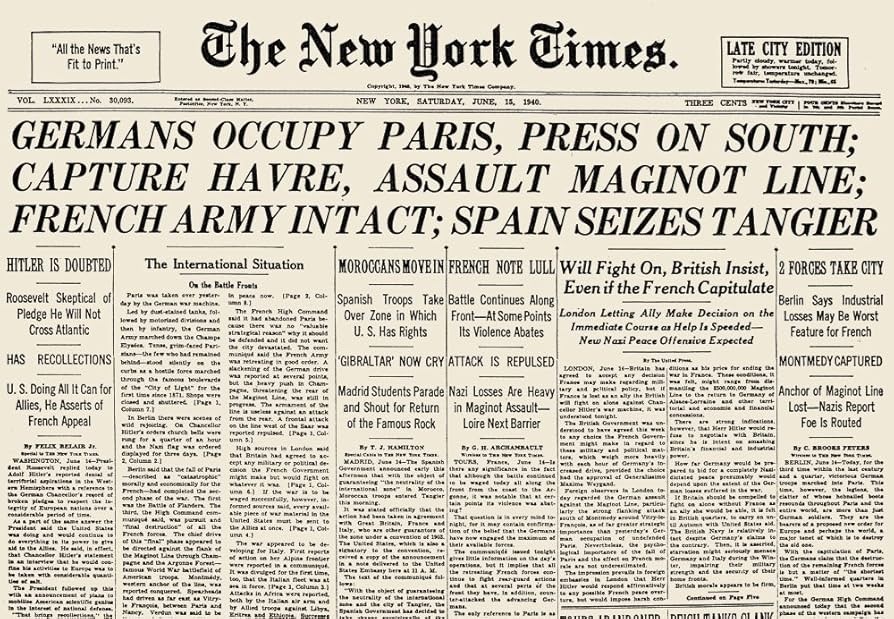
During the Second World War, the volume of information dispensed by what were beginning to be called the media — newspapers, magazines, books, movies, and, a few years later, TV — multiplied to an extent that nobody has been able so far to make an accurate reckoning of.
It was a change so great that even the remotest illiterate hermit could not fail to be altered by it; for the first time, with astonishment and sometimes with dismay, one sensed that a Niagara of news was flooding unstoppably in upon us, not by the week and day but by the hour and minute.
People sat by their radios and listened with satisfaction to news bulletins, infinitesimally rewritten as they were repeated, about victories and defeats throughout the world, and then went out and bought newspapers and magazines and gorged themselves on the same information for a tenth or twentieth time.
From Here at the New Yorker by Gill, Brendan, (New York: Viking Press, 1975).
Can you imagine such a world?
One sensed that a Niagara of news was flooding unstoppably in upon us, not by the week and day but by the hour and minute.
Let’s repeat that.
Not by the week.
Not by the day.
But by the hour
But by the minute.
People gorged themselves on the same information for a tenth or twentieth time.
Flooding unstoppably.
Unstoppably!
What a great word, but I digress.
A change so great that even the remotest illiterate hermit could not fail to be altered by it.
1941.
The state of news once the United States got into World War 2.
Looking back at the change wrought in the “media”, Mr. Gill wrote in 1975 that “nobody has been able so far to make an accurate reckoning of.”
On the one hand … no kidding.
On the other, how long will it take to make an accurate reckoning of the social media age?
gallup poll results? half country never even heard word watergate
You know the results of the latest Gallup Poll?
Half the country never even heard of the word, Watergate.
Nobody gives a shit.
You guys are probably pretty tired, right?
Well, you should be.
Go on home, get a nice hot bath. Rest up… 15 minutes.
Then get your asses back in gear.
We’re under a lot of pressure, you know, and you put us there.
Nothing’s riding on this except the, uh, first amendment to the Constitution, freedom of the press, and maybe the future of the country.
Not that any of that matters, but if you guys fuck up again, I’m going to get mad.
Goodnight.
Jason Robards playing the role of Ben Bradlee in the movie, All the President’s Men.
I was 12 years old in 1972.
I had heard of Watergate.
I have always had a problem with this line in the book and the movie, All the President’s Men.
I find it difficult to believe that 50% of the Country had not heard the word Watergate in 1972.
But there it is.
Today, there are people in the news that capture a world wide discussion that I have never heard of.
But I digress.
Its the Watergate story of Nixon versus the Washington Post that intrigues me.
With the passing of Robert Redford, the movie, All the President’s Men, is getting a lot of air time.
Like so many movies of good versus evil, To Kill a Mockingbird, Casablanca, The Diary of Anne Frank, the Hiding Place, I have to ask, who watches these movies and pulls for the other side, who identifies with the other side.
In this movie, All the President’s Men, are some viewers sad for what happened to Nixon?
Or are they sad that Nixon went down, as I view it today, because he played by the rules, at the least the rules that said what he did was wrong.
Democracy only works if both sides abide by the rules of Democracy.
When Nixon was caught outside the rules, he complied with rule of law and the Constitution and he left.
Who knew back then, All he had to do was ignore the rules and the resignation never had to have taken place.
No Gerald Ford moment.
No Gerald Ford quote, “My fellow Americans, our long national nightmare is over. Our Constitution works; our great Republic is a government of laws and not of men. Here the people rule.”
It is my fondest hope that once again and maybe soon we hear those words again:
Our long national nightmare is over.
Our Constitution works; our great Republic is a government of laws and not of men.
Here the people rule.
But ASIDE from all that, are there folks who watch this movie, All the President’s Men, and well …
Or are those folks just smart enough to not watch the movie.
Who wants to waste their time on a happy ending?
BTW – I have more respect in my heart for Corrie Ten Boom than I ever could imagine.




 No Haiku For You