1.23.2022 – have to remember

have to remember
how different past was see
how much has changed

Adapted from the text in the article, Why are US rightwingers so angry? Because they know social change is coming, by Rebecca Solnit.

Ms Solnit writes, “What’s happening goes far beyond public monuments. The statues mark the rejection of old versions of who we are and what we value, but those versions and values matter most as they play out in everyday private and public life.

1.17.2022 – so you may master

so you may master
the intricacies of the
English language

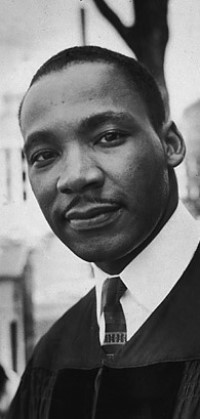
In his famous sermon, Paul’s Letter to American Christians Delivered at Dexter Avenue Baptist Church, Montgomery, Alabama, on 4 November 1956, Dr. Martin Luther King, Jr. said, “So American Christians, you may master the intricacies of the English language. You may possess all of the eloquence of articulate speech. But even if you “speak with the tongues of man and angels, and have not love, you are become as sounding brass, or a tinkling cymbal.”

In a famous documentary of Frank Lloyd Wright, Architect Philip Johnson says that he doesn’t know how Wright designed his buildings.

Mr. Johnson then says, “If I knew how it did it, I would do it.”

Listening and reading the speeches of Dr. Martin Luther King, Jr., I say to myself, how did he do that?

Listening and reading the sermons of Dr. Martin Luther King, Jr., I say to myself, how did he do that?

If I knew, I would do it.

I ask myself, what must it have been like to be a regular at the Ebenezer Baptist Church when Dr. King was in the pulpit.

I grew up Dutch in West Michigan.

I also grew up Baptist.

That meant church twice on Sunday, Wednesday Meeting, Tuesday Bible Club and Monday Awana.

I heard a lot of preaching growing up.

I often felt that Sheriff Andy Taylor’s assessment of the preaching in Mayberry when he says that he, ” … holds with Rev. Tucker. But he can be as dry as dust,” could apply to my years growing up Baptist.

The church I grew was strongly associated with both the Grand Rapids Baptist College and Grand Rapids Baptist Seminary.

Both places still exist but now that the word ‘Baptist’ is a determent to marketing, they are known as Cornerstone University and Grand Rapids Theological Seminary.

My Church did not so much have ‘Preaching’ as it had ‘Teaching’.

If ever in need of what was known as ‘Pulpit Supply’, the Church leaders would turn to the Seminary for someone to preach on Memorial Day Weekend, Labor Day Weekend or in the event that the Church was without a Preacher.

Once when searching for a new Pastor, Dr. Leon Wood of the Seminary spoke for two years using his course and latest book on the Prophet Daniel as the basis for his Sunday sermons.

Dr. Wood’s style was to teach, word by word, through each verse, and explain in detail, the meaning, history and use of the word.

My Dad used to remark on how many verses of the Book of Daniel that Dr. Wood might cover in a Sunday Sermon.

The average was about 2.

I was 10 and when I was told about the upcoming Sunday Sermons, I was excited because the Book of Daniel had those great stories of Daniel in the Lion’s Den and Shadrach, Meshach, and Abednego.

I was so excited, my Mom got me his book for my birthday.

I loved the gift.

I loved that I GOT a gift.

I loved that my Mom remembered.

But what was really cool about that gift was how it came about.

Every summer, my Dad would take a week off and we would take a State of Michigan vacation.

This meant Sleeping Bear Dunes, Mackinaw or Michigan’s Upper Peninsula.

This vacation also usually happened around my Birthday on July 17th.

That meant my birthday was celebrated on the road.

For me, this was (as Jim Harrison writes in his book “The Big Seven”) the kind of injustice that weighs heavily on children who collect injustices for later possible use.

That year we were in Eagle Harbor Michigan up in the Keweenaw Peninsula of Michigan’s Upper peninsula, on my birthday and we trooped into a restaurant for lunch and with about 10 or 12 of us, we took three tables of 4.

Understand that by car, Eagle Harbor Michigan was a far away from Grand Rapids as Washington, DC,

Check a map, it is a LONG way there to get there.

I sat with Mom and Dad and probably little Stevie who would have been about 6.

Not sure why, but it seems like I always got to sit with Mom and Dad.

And most likely I was moping about it being my birthday and no cake or celebration as I was not going to let such an opportunity to whine get by when my Mom reached into her purse and pulled out a wrapped present.

She had packed it away and kept it hidden from me the entire trip.

Few gifts through out my life have been more a surprise.

And it was Dr. Wood’s book on Daniel.

I did read it – or at least tried to read it but I was just 10 years old and I still have it my shelf all these years later.

But I digress.

Dr. Wood, as I remember it, spent three weeks of Sunday Services dissecting the word, word history and meanings of the word ‘pulse’.

(For those who weren’t there, pulse is the veggie diet that Daniel asked for in place of the royal food’s that had been offered up before the Babylonia gods)

Where was the lion’s den?

Where was Shadrach, Meshach, and Abednego?

Daniel’s 70 weeks?

And the missing week?

Minutes seemed like hours.

And hours seemed like days.

Years later, moving to the south, my wife and I (she grew up the same church) decided that anyone who attend our church when we did should be award a M.Div degree from the Seminary AND if anyone, and I mean ANYONE, had tried to preach any of those sermons in the south, biblical stoning would have made come back.

And I have to wonder why.

To be sure, Dr. King had a gift.

But was there anything else?

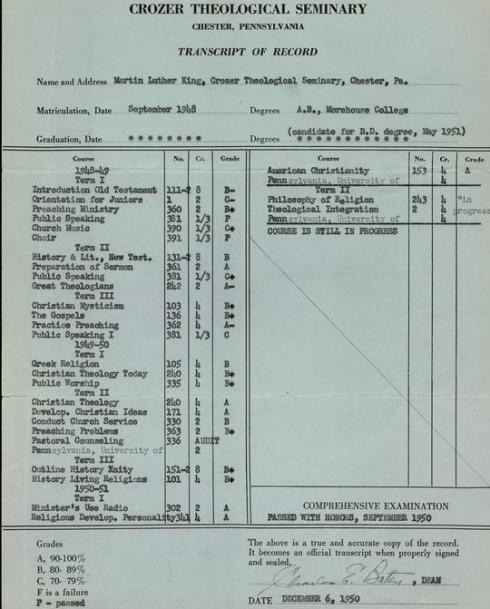
Dr. King after attending Morehouse in Atlanta, went off to post graduate work at Crozer Theological Seminary in Chester, Pennsylvania to work on a Bachelor’s of Divinity degree in 1948.

Dr. King took some 35 courses.

Of those 35 course, 11, almost 1/3 of the course of study, were classes on HOW TO PREACH or other pulpit skills.

Dr. King took the following courses.

Preaching Ministry of the Church
Public Speaking (twice)
Public Speaking I
Preparation of the Sermon
Practice Preaching
Preaching Problems
Conduct of Church Services
The Minister’s Use of Radio
Church Music
Choir

Thinking about my experiences with sermons and preaching, I checked the current catalog list of required courses for a Master of Divinity or M.Div at the Grand Rapids Theological Seminary.

There are 32 required classes.

BBL-501 Biblical Hermeneutics
BBL-510 Greek I
THE-501 Program Introduction
BBL-511 Greek II
THE-540 Systematic Theology I
MIN-500 Christian Spiritual
MIN-543 Christian Formation in the Church
MIN-545 Teaching & Learning
THE-640 Systematic Theology II
MIN-560 Global Impact
BBL-516 Hebrew I
BBL-672 NT I: Introduction to Exegesis. 3
THE-641 Systematic Theology III
BBL-517 Hebrew II
BBL-601 Experiencing the Ancient World of the Bible (Israel)
BBL-677 NT II: The Gospels
MIN-685 Ministry Residency I
MIN-510 Organizational Leadership General Elective
BBL-640 OT I: Intro to Hebrew Exegesis
BBL-678 NT III: Hebrews to Revelation. 3
Ministry Specialization Course
MIN-686 Ministry Residency II
BBL-641 OT II: Exegesis in the Pentateuch
Historical Theology Elective
Ministry Specialization Course
MIN-781 Ministry Residency III
MIN-711 Program Completion
MIN-782 Ministry Residency IV
BBL-642 OT III: Exegesis in the Prophets and Writings
THE-676 Apologetics and Moral Issues in Christian Ministry
Historical Theology Elective
Ministry Specialization Course

For specialization in Pulpit Ministry, Homelitics (the art of preaching or writing sermons) I & II are recommended Specialization courses.

Otherwise, nothing on how to speak or preach.

Boy Howdy!

That course list reads like a list of sermon titles I have sat through.

I held with the preaching, but it was dry as dust.

Now I am not saying that just the study of preaching and the classes that Dr. King took might have helped but I will say it wouldn’t hurt.

How much did it help Dr. King?

That is hard to say.

According to his transcript, Dr. King got a C’s in public speaking.

1.10.2022 – lost along the way

lost along the way
had a talk with history
can help? Then do it
!

What do you do in January if you live in a beach community and the weather, wind and waves conspire together to take the beach out of your afternoon options?

If new to the Low Country, like we are, exploring the area is next on the list.

Was about to write, “The Low Country is famous for …” when it came to me that the while the Low Country is a lot of things, famous is not one of them.

Still, things happened here.

Things happened here that did not happen other places.

And some things happened here for the first time.

One of the things that happened here during the United States Civil War is that the armed forces of the United States had some of its earliest success stories here.

The Battle of Bull Run is fought in July of 1861 and as Stonewall Jackson got one of the great nicknames in military history the Union Army got chased out of Virginia.

In November of 1861, combined Union Army and Navy forces took over the Low Country when they attacked Port Royal Sound and the South Carolina Sea Islands of St. Helena and Hilton Head.

This led to what the South Carolina history books called the “Big Skedaddle” as all the white South Carolinians got out of the Low Country and went to Charleston or Savannah.

Leaving all their former slaves behind for the most part.

This early the war, Abraham Lincoln was not ready to declare and end to slavery and the Union Government really didn’t know what to do with former slaves until one Union General, a real off the wall political General but able lawyer, Ben Butler, said that the slaves were former property and as ‘abandoned property’ could now be considered ‘contraband of war’ that could be seized by the forces of the Federal Government and as such, free.

Okay, so then what?

Then what became known as the Port Royal Experiment.

According to Wikipedia, “The Port Royal Experiment was a program begun during the American Civil War in which former slaves successfully worked on the land abandoned by planters. In 1861 the Union captured the Sea Islands off the coast of South Carolina and their main harbor, Port Royal. The white residents fled, leaving behind 10,000 black slaves. Several private Northern charity organizations stepped in to help the former slaves become self-sufficient. The result was a model of what Reconstruction could have been.”

A special education commission was established which led to the establishment of the Penn Center on St. Helena island, just over a half hour drive away from where we live.

The Penn Center, Founded in 1862 by Quaker and Unitarian missionaries from Pennsylvania, it was the first school founded in the Southern United States specifically for the education of African-Americans.

It provided critical educational facilities to Gullah slaves freed after plantation owners fled the island, and continues to fulfill an educational mission.

The campus was designated a National Historic Landmark District in 1974 and you can tour the grounds and buildings to this day.

St. Helena Island is one of those places where you can say take THE ROAD, turn left at THE STOP LIGHT and go past THE GAS STATION because out on St. Helena there is pretty much one road (2 if you count the north-south road and the east-west road) one, stop light and one gas station.

Before the Civil War there were 50 Plantations out here.

The road is lined with flat (what else) fields being prepared for (in January!) strawberry planting.

Tunnels through the live oaks and Spanish moss with dust from the strawberry fields cloud the sun.

And we drove up to St. Helena to explore and one of our stops was the Penn Center.

Be we kinda, even with just two roads, got lost along the way and got there late.

We drove and parked by a building with a sign that said Welcome Center.

There was a small OPEN sign on the door.

But when we went in the room was dark.

Dark and empty of other people.

There were displays and such but no people.

Behind us the door opens and a voice calls out, “I am so sorry, but we are closed.”

We turned around and there was this lady with this smile who took the open sign down and turned it around to closed.

So they were closed but the lady with a smile took some time to talk with us for a minute about the Penn Center.

The minute turned into 10 minutes or more as we learned that the lady we were talking too had graduated from the Penn Center back in 1952.

She had moved away but when retirement came, she moved back to St. Helena and started to volunteer where she could.

She was amazing to listen.

It was like to TO history.

There was history in her voice and a graciousness to her style I could not describe with the words that I have.

We apologized for making her stay over long and told her we would be back and that we would bring out grand children.

As we left, I asked her name.

“Gardenia,” she said with her smile on her face.

And she locked the door behind us.

When I got a chance, I punched ‘Gardenia’ and ‘Penn Center Volunteer’ in the Google and found out who we had been talking to.

She was Ms. Gardenia Simmons-White.

Gardenia Simmons-White was born on St. Helena Island, SC in 1934.

She was one of the last living graduates of the Penn Center.

NO

Now 87 years old, this wonderful lady was a wonder to listen too.

She said that volunteering as a docent at the Penn Center, “[is her] way of giving back to Penn for helping to shape my life and never forgetting the education I received which enabled me to reach higher heights. 

I admit I have been a little off on everything with the covid and the economy and the news lately.

Kinda lost along the way.

To have talked with Ms. Simmons-White and heard her stories, heard just her voice, was a long drink of cool water.

Her story is one of those stories that makes you hope that maybe things can and will turn out okay.

You can click here to read an article written about her BACK in 2013. (She seems to be just as active today.)

I was struck by something she said in that article.

Ms. Simmons-White said, ““If anyone asks, if I can help, I will.”

I like that.

I like that a lot.

Maybe if I can get my rear in gear and make the effort my tombstone can say:

“If anyone asked, if I can help, I did.”

1.7.2022 – cultural despair

cultural despair
loss, grievance anxiety when
feel dislocated

If you want to read a disturbing take on the world today, the writing of Fiona Hill is the writer for you.

You remember Ms. Hill.

She is the American lady with the brit accent who testified in one of the many hearings about important matters that mattered to important people back in the day when everyone was trying to get someone to say something that might get someone else in trouble.

Ms. Hill was an intelligence analyst under Presidents George W. Bush and Barack Obama from 2006 to 2009. She was appointed, in the first quarter of 2017, by President Donald Trump as deputy assistant to the president and senior director for European and Russian affairs on his National Security Council staff. (Wikipedia)

Ms. Hill has a command of language and prose and wit that produces wonderful, easy to read and grasp, important books that we all should read but no one will.

In her latest book, commenting on the United States at the beginning of the century, the millennium era, Ms. Hill wrote this.

Cultural despair is the sense of loss, grievance, and anxiety that occurs when people feel dislocated from their communities and broader society as everything and everyone shifts around them.

Especially when the sense of identity that develops from working in a particular job or industry, also recedes or is abruptly removed, people lose their grasp of the familiar.

They can then easily fall prey to those who promise to put things – including jobs, people, or even entire countries – back in “their rightful place.

If what it takes is a sense of loss, grievance as everything and everyone shifts around them, it is safe to say the United States is in a state of cultural despair.

The goofy thing about the THEY in the line that starts, They can then easily fall prey … is that it can apply to either side of our great debates.

Take money.

Rich people are in despair due to a sense of loss, grievance as everything and everyone shifts around them and they fall prey to anyone who says they will return and keep the I in RICH. Back in their rightful place.

Poor people are in despair due to a sense of loss, grievance as everything and everyone shifts around them and they fall prey to anyone who says they will replace the rich people with the poor people. In their rightful place.

The right places are not the same places.

And if someone is right, why would they want to consider another point of view that has to be wrong?

Something for everyone and at the same time nothing for anyone.

Did I leave out the title of Ms. Hill’s latest book?

There is nothing for you here.

12.29.2021 – miss the pace of it

miss the pace of it
the sheer multicultural
wonder of it all

We recently made a weekend trip to see the kids and grands.

For us, this means a return to the ATL.

Atlanta.

Atlanta, Georgia.

While we were stopped in traffic on the connector in downtown, I turned to my wife and said, “You realize there are more people stuck around us then live where we live?”

My wife says she loves where we live but she misses the energy of Atlanta.

I understand what she is saying.

But for me, I don’t miss it one bit.

Recently in the Guardian, a Ms. Laura Barton wrote an article titled, “I moved to the coast for a better life – now I’m back in London where I belong.”

In this article, Ms. Barton recounts how she had left London in 2014, “ … looking for something that felt more like a community, close enough for creativity to mingle. Somewhere, perhaps, to finally feel settled.

Ms. Barton says that while she found something close to this on the Kent Coast near Dover, she ” ... thought about the city and all the things I missed – galleries and gigs and theatres, city parks, city trees, architecture, friends, restaurants, 24-hour grocery shops stocked with everything from za’atar to rambutan, the pace of it, the constant evolution, the sheer multicultural wonder of it all. More than anything I missed people who talked about things other than themselves. The possibility it offered. The quiet, beautiful anonymity.”

Her article ends, “At last, I thought, I have escaped back to the city.

First off, let me point out that Ms. Barton’s life out of London took seven years to reach the breaking point.

We have been here on the coast or the low country, country under 20 feet above sea level, for just over a year.

Maybe I will get there in a few more years but for now …

With that understood, let me take a look at what she says she missed and what we had in the ATL.

Galleries and gigs and theatres.

We were not much into the arts in ATL.

And the age of COVID didn’t help much with getting out and about to see shows.

We went to the Art Museum [sic] and we had tickets to the ATL symphony that got cancelled due to covid.

There were lots of community art fairs and shows and such that we liked but a good number of those take place here in the low country as well.

Architecture.

ATL wins this hands down.

When you live in a hurricane zone, not much thought is put into structures that might need to be rebuilt every couple of years.

Friends.

This one is a toss up right now.

ATL was so big and changed so often, friends were not something we made a lot of.

We are working at that here but, well, anyone who has moved has lived this part of the story.

If this includes family and our kids and grand kids, ATL wins easily.

On the other hand, our family loves to come to the coast.

One grand daughter got out of the car, run for hugs and then said, “Can we go to the beach now?”

Restaurants.

There are about 300 restaurants here in our immediate area but its pretty much seafood.

This might be a down side but I love how it worked out.

Still I wish there was a decent pho shop or Indian place.

When you come right down to it, Fat Matt’s may be what I miss the most about ATL.

24-hour grocery shops stocked with everything from za’atar to rambutan.

ATL wins this one.

There are NO 24 hour grocery shops in the Low Country and I am pretty sure you could decide to go shopping for almost anything, anytime in ATL.

Published or online listed hours for places of business here in the Low Country are like , you know, suggestions?

The pace of it, the constant evolution.

Again ATL wins this hands down.

There is a pulse to the air in ATL.

There is a smell in the air here in the Low Country.

(It’s the pluff mud.)

The sheer multicultural wonder of it all.

ATL in this respect, is almost beyond belief.

I would watch the news and see video of a crowd of people and I would say it was either a UN Refuge Camp or a Gwinnett County Park on Sunday Afternoon.

The low country, especially the resort area where we live, is a lot of things, but multicultural is not one of them.

Add on that most folks are vacationers here for a week and the faces constantly change but the people don’t.

(Or is the other way ’round?)

More than anything I missed people who talked about things other than themselves.

This line bothers me a bit.

Is Ms. Barton complaining that no one wanted to hear about her?

I read somewhere once that to be interesting, be interested.

For me, I feel I AM interesting because everyone is so interested in me.

I have to tell myself to listen at least once in a while.

The possibility it offered.

ATL is all about the possibilities it offers.

If you are young and live in America today and you do not live in ATL, I feel sorry for you.

I like to joke that suppose if for a social experiment, we identified everyone with ideas, get-up-and-go, gumption and the like and took them out of the mix.

What would be left?

EUROPE!

After 20 years in the TV News Business, working with TV stations across the country, I feel I can say the same thing about the United States.

If its happening in America, it’s happening in ATL.

That leaves us with The quiet, beautiful anonymity.

Here is the head scratcher.

I know what Ms. Barton means but it seems to fly in the face of all else that she has written.

She wants the hustle and bustle … without the hustle and bustle?

In college I tried to describe days filled with an overwhelming desire to be alone coupled with the overwhelming sense of loneliness.

If there is anything I have found a lot of here in the Low Country along the Atlantic coast it is a quiet, beautiful anonymity.

In the essay, Cape Cod, Henry Thoreau writes about the coast that, “A man may stand there and put all America behind him.”

And that is the slam dunk for me.

As I said, I spent the last 20 years in online news.

The urgency of news and the immediacy of online meant that for me, when I started in the year 2000, I worked, I was on, I was wired in, 24×7 365 until I was told my services were no longer needed.

Maybe I got some form of PTSD.

Today I seek a quiet, beautiful anonymity.

I like to stand on the coast.

I like stand on the coast with my feet in the ocean.

I like to stand on the coast with my feet in the ocean with all America behind me.