9.26.2022 – be disappointed

be disappointed,
may be angry, frustrated
but rarely shocked

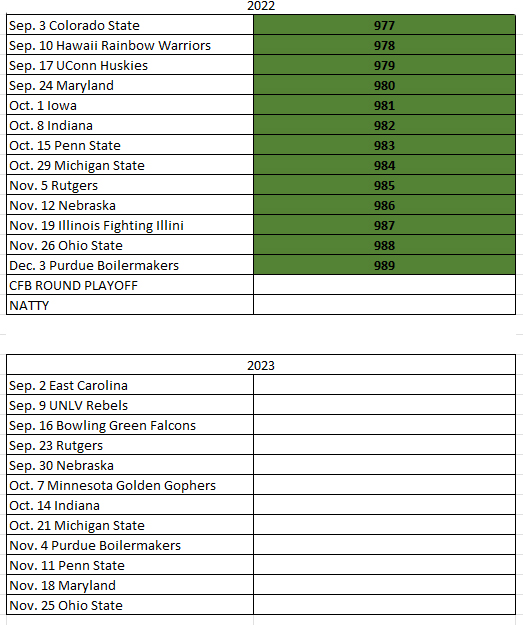
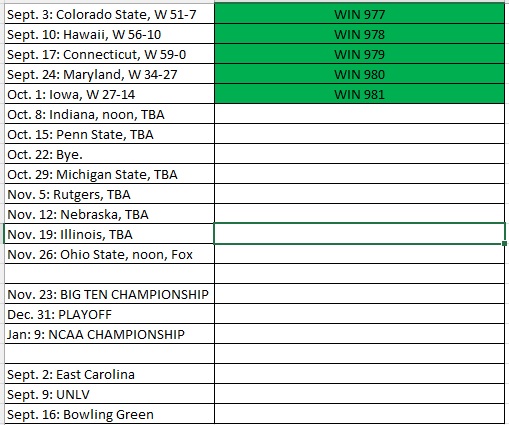
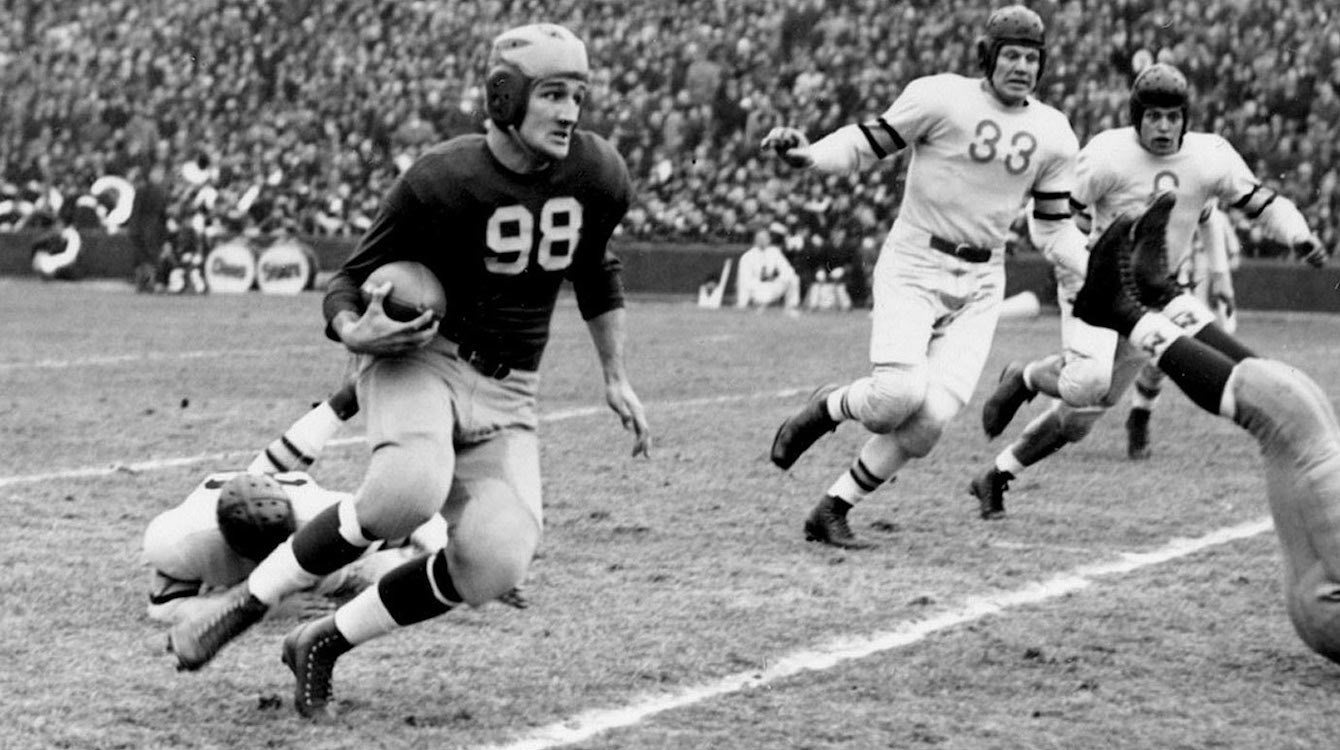
So its fall so sports will turn up a little more often as Michigan continues its march to be the first college team with 1,000 football victories.

I start by asking just how bad a time was the Rich Rodriguez era at Michigan.

He lasted all of three years at Michigan with a 15-22 record.

Over the years since Michigan began playing football in 1883, they have averaged 7 wins a season to get to 920 so far.

Rich Rod was 6 wins below that average.

But here is the thing.

In 2008, with the Morgantown Miracle worker in charge, Michigan lost to Toledo.

Toledo beat Michigan, got that?

Toledo beat Michigan AND fired their coach!

There was a time where any team any where any time that managed to BEAT MICHIGAN, the Coach of that team would get a building on campus named after them.

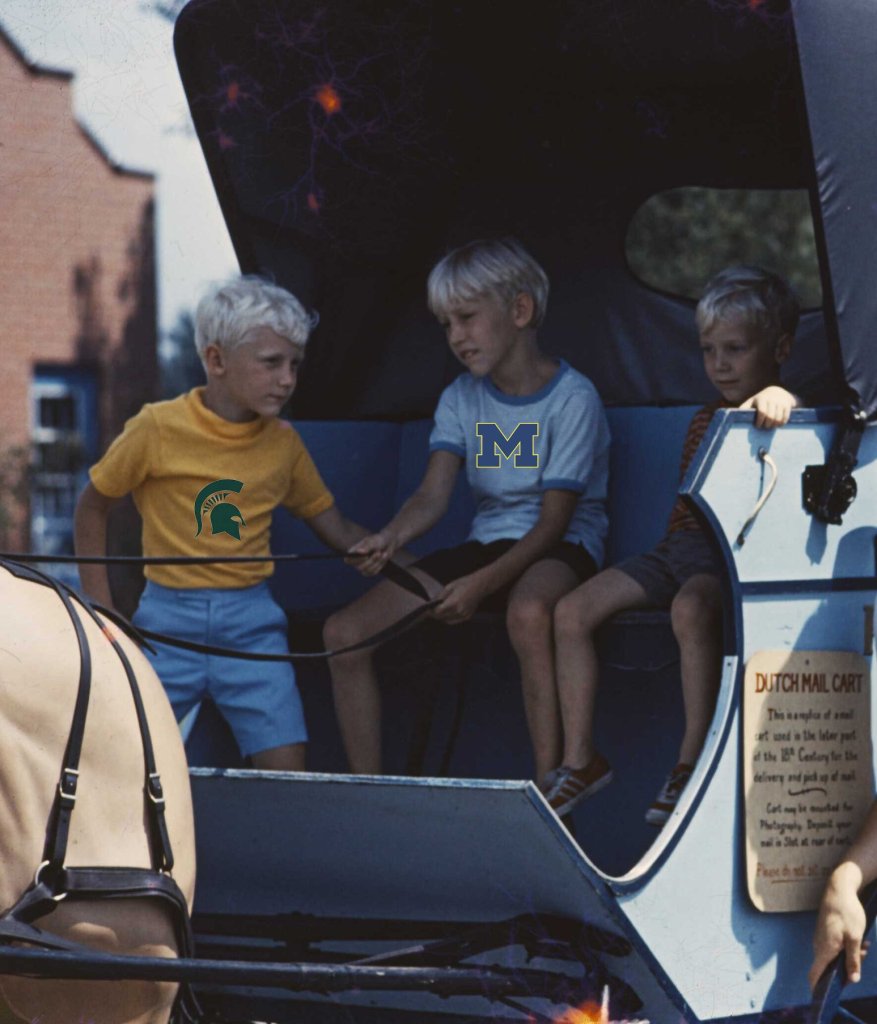
me and my little brother

There was a time where any team any where any time that managed to BEAT MICHIGAN, the Coach of that team could count on his next contract to be the big one.

You know that time.

That time last year.

Michigan gave up 5 touchdowns to the same player (hmmmm maybe tackle the guy with the ball?) and Sparty walked off with win and Coach Mel Tucker walked off with $95 Million Dollars and a 10 year contract in his pocket.

In many ways, Michigan was back and beating Michigan was worth something once again.

Of course, as with the morning after hangover that often makes you question the actions of the night before, this year is a new year.

And while Sparty fans have the hope which springs eternal in the human breast, reports are that in the loss in Minnesota Saturday,  more than a few got up to go in deep despair and today there is no joy in Mudville.

Sparty fans are looking back, perhaps fondly, on the Legion of Gloom and Mark Dantonio.

Still it is early and the chuckle heads still have Michigan on their schedule, so they have reason to hope for a good year.

I enjoyed Mr. Tuckers comments in reply to a question if he was shocked by the loss to the Golder Gophers.

Mr. Tucker said, AND I QUOTE, “There’s really nothing that happens out there that’s like a shock to me, just because I’ve seen too much football. I’m not really shocked. I may be disappointed. I may be angry. I may get frustrated at times, which I do, but we all want to compete and play better and win. But I’m rarely shocked at something I see on the football field.

Shocked?

The man has 95 million reasons to not be shocked.

If that doesn’t shock him, then I have to agree that there’s really nothing that happens out there that’s like a shock.

9.17.2022 – I always had a

I always had a
motto – I make the number
number don’t make me

Reading the article, Julio Jones primed for a revival with Buccaneers after strong start as Tom Brady target, I enjoyed a bit of writing and a quote from Mr. Jones.

Jarrett Bell of USA TODAY wrote that:

“Julio can play,” Bucs coach Todd Bowles trumpeted on Sunday night, echoing the tone he expressed during training camp. “We keep saying it all along. He got in shape. He got healthy. He’s a warrior. He’s one of those guys that’s going to come out every week and compete.”

He’s also a guy with a new ID.

Jones is wearing No. 6 for the Bucs. It’s nothing sentimental, nothing superstitious.

“It’s just a number, man,” he said. “I didn’t want to take nobody out of their number. It was, ‘Whatever’s available, I’m going to take it.’ No significance.”

Brady’s backup, Blaine Gabbert, wears No. 11 for the Bucs. Third-string quarterback Kyle Trask is No. 2, the jersey number Jones had last year with the Tennessee Titans.

“I always had a motto, man: I make the number, the number don’t make me,” Jones declared. “That’s how I go about it

I liked that.

I always had a motto, man: I make the number, the number don’t make me.

I am reminded of being back in High School at Grand Rapids Creston in the late 1970’s.

This was in the OLD GYM Creston before they built the new gym and way before the decision was made to close the school.

The OLD GYM was so small that in winter months gym class took turns between the boys and girls and who got to use the gym and who had an alternative class.

Alternative meant a movie or maybe a Gym Teacher led lecture class on some topic.

One teacher I had like to give a quiz on sports rules to see what we didn’t know about sports.

He would call on individual students one at a time.

One time, I got this this question.

What are the limits on numbers on basketball uniforms and why?

I did not understand the question.

The teacher rephrased it as what numbers can you have on a basketball uniform and why?

That didn’t help.

The teacher, Don Edwards, who really was pretty cool but thought I was one of the oddest people he had ever had in class, stared at me and said, “Come on Hoffman.”

I felt out of place in gym class often but rarely did I feel stupid and at that moment I felt really dumb.

I stared right back and said, “Okay, I give up. What numbers CAN you have in basketball and why.”

Coach Edwards shook his head and said, “Oh come on. You can only have combinations of 1 thru 5.”

That was the dumbest thing I had ever heard.

“You know, 11, 12, 13, 14, 15 or 51, 52, 53, 54, 55 … 31,32, 33, 34, 35 … only combinations of 1 through 5.”

My eyes must have glazed over as I listened but I did manage to say, “Why?”

“So the ref can signal the scorer with the number of any player with two hands.”

Coach Edwards them demonstrated, “Foul on number 15.”

And he held up 1 finger on the left hand and 5 fingers on the right.

“Basket by number 33” and he help up three and three.

At once I was struck by the meaning and the simple magic in it.

Basketball numbers had limits.

Limits created by the five fingers on our hands.

I understood.

That made 33 THE number to have.

Think of the great 33’s (starting the list with Cazzie Russell)

I understood.

And in that moment I suddenly understood the magic involved in the silent protest and statement of using an illegal number.

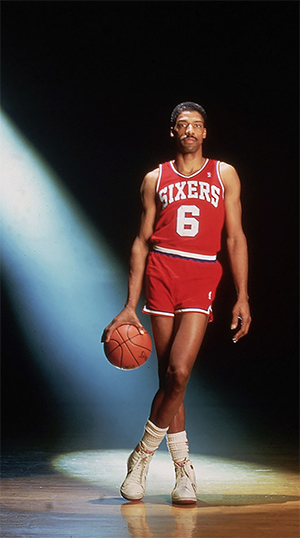
DR J and number 6.

Big Bob Lanier wearing number 16.

I understood.

I make the number, the number don’t make me.

9.4.2022 is subject to the

is subject to the
accumulated capital
power incentives

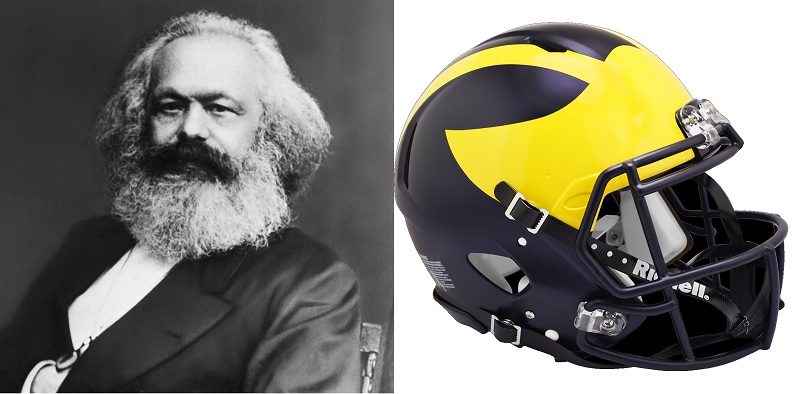
Referencing Karl Marx, Ben Mathis-Lilley wrote that, “Karl Marx held that alienation is the condition people experience when they have no autonomy over something personally or socially meaningful to them because it is subject to the power and incentives of accumulated capital.”

Mr. Mathis-Lilley’s reference was, of course, referring to the world of college football on TV.

In the article, Does Watching College Football on TV Have to Be So Miserable?, Mr. Mathis-Lilley writes, “I believe I embody the concept, as so defined by Marx, when I am watching five to eight consecutive commercials 16 times during a college football broadcast so that Disney shareholders and Rupert Murdoch might benefit.”

Mr. Mathis-Lilley does ask that most important question, “Is this a silly thing to worry about?

And he answers, “Yes and No.”

On the one hand,” he writes, “college football is not as materially crucial of an issue as, to take two examples, climate change and cancer. On the other, like all cultural narratives, highbrow and low, it has an intangible but foundational importance to the lives of those who use it to define their social communities and to explain their personal origins and values — to understand how life works, basically.

The CEO of the major communications company where I used to work once said 30% of Americans are rabid sports fans. 100% of rabid sports fans think all American’s are rabid sports fans.

My wife is one of those American’s who could care less about sports.

Somehow, after over 30 years of marriage, she cannot remember when the Michigan-Ohio State game is played every year.

Yet last night as we flipped around the channels on TV, when a promo for the Notre Dame – Ohio State game came on she looked at me and said, “The evil empire versus the bad guys … who do want to win?”

(For the record, while for most of my life I have wanted OSU to be undefeated when Michigan beats so it hurts more and for the most part, I am happy whenever ND loses at anything, I (maybe I am getting old or something) but I wouldn’t mind seeing this new coach at ND succeed and I have a growing concern over OSUs lifetime win total which thanks to Rich Rodriguez, the Morgantown Miracle Worker – no one in any sport ended one team list of accomplishments as fast as he did (consecutive bowl games, winning seasons, Top 25 Rankings etc) ((For crying out loud, at one point in Rich Rod’s career, Jim Tressel of that team down south had more BIG TEN wins in Michigan Stadium than Rich Rod did – But I digress)) and the one thing I want out of sports is that Michigan has wore total victories that that other team in my lifetime).

College football like all cultural narratives, highbrow and low, it has an intangible but foundational importance to the lives of those who use it to define their social communities and to explain their personal origins and values — to understand how life works, basically.

For me, when Michigan wins, the world just makes a little more sense.

And I have to say – watching some college football over the past couple of days … it just felt … normal.

It just felt fun and even good.

A step back or maybe beyond all the Covid/Political/News industrial complex that seems to have taken over.

I have to say I enjoyed it.

But why do I have to watch sooooooooooooooo many commercials!

BTW – For those who haven’t figured out that most public libraries offer access to New York Times, I have uploaded a PDF of this article that you can read here.

7.15.2022 – subject to ruthless

subject to ruthless
pseudo-efficient logic
of acquisition

I liked yesterday’s essay so much I created another haiku from the same line in the same piece.

The haiku is different but my thoughts, a day later, are still the same.

Today’s haiku is adapted from the line, These teams in their ancient configurations, which emerged through years of slow, organic development, should be the objects of harmlessly fideistic devotion by fans, not subject to the ruthless pseudo-efficient corporate logic of endless acquisition, in the opinion piece, The Big Ten Is Growing, But All I See Is Decline, by Matthew Walther in the New York Times.

You can read it here –

Mr. Walther as might be guessed, was writing about college sports in general and the Big 10 and Pac 12 announcement of either a gain or a loss of two teams.

But it was this statement that expressed my feelings exactly about college sports except for the conclusion.

Like so many of history’s great tragedies — the dissolution of the monasteries under Henry VIII, the French Revolution, the end of ashtrays in cars — the decline of college football began with reasonable calls for reform. There really was something odd about the fact that Michigan and Nebraska, two undefeated football teams that had never played each other, were both able to call themselves the 1997 national champions. Surely, fans thought, it should be possible to come up with a system that determines who the real champion is. But it was precisely this uncertainty that once gave college football something of its idiosyncratic charm. To this day, in any dive bar in Michigan or Nebraska you can meet fans who will offer lovingly detailed arguments for why their team would have won 25 years ago if the two schools had faced off. (In 1998, a group of dedicated Nebraska fans went so far as to script and record a mock radio broadcast featuring the hypothetical matchup.)

These conversations were part of the sport’s appeal. They also belonged to a world in which college football was, in ways that are scarcely imaginable today, a regional and somewhat parochial affair. Who cared if a bunch of newspapermen decided (as they did in 1985) that Oklahoma was No. 1 and that a Michigan team with an identical record and its own victory in a major bowl game was No. 2? What mattered was winning rivalry games and conference championships.

Rivalries often involved implicit, class-based rooting interests: urban versus rural, research versus land grant, upper-middle-class professionals and the exurban working classes versus middle-class suburbia. These games were played for ancient, often absurd trophies such as the Old Brass Spittoon, which goes to the winner of the annual Indiana-Michigan State game.

When Mr. Walther wrote, … the decline of college football began with reasonable calls for reform. There really was something odd about the fact that Michigan and Nebraska … I saw this as the silver in the lining, not the sliver in the eye of college sports.

Mr. Walther states that ever since 1997, that season is still a daily presence in the lives of fans just because there was no clear winner.

When the Cubs finally one a World Series, I felt the price, that they won, was too high to give up the 100 years plus memories of trying.

How many teams have won ONE World Series since 1908?

So many dumb teams I tell you.

And how many teams had not won any?

JUST ONE.

But not anymore.

I can’t even name the year that it was that the Cubs won.

The price was too high

But that 1997 year when Scotty Frost apologized for not being able to pose with a rose in his teeth but please please please vote for my team.

Never ever ever forget.

I have a harmless fideistic devotion to a certain team.

That will not be changed by wins or losses or coaches or player commitments.

That will not change.

That there are folks that do change strikes me as too bad.

That those in charge of the game know there is enough of those people that all the ruthless pseudo-efficient corporate logic of endless acquisition is what makes the changes strikes also as too bad.

But I ain’t going change.

Go Blue!

7.14.2022 – configurations

configurations
fideistic fan devotion
emerged harmlessly

Fideistic got thrown out by spell check and that is sure sign that the word is worthy of being in a haiku.

Today’s haiku is adapted from the line, These teams in their ancient configurations, which emerged through years of slow, organic development, should be the objects of harmlessly fideistic devotion by fans, not subject to the ruthless pseudo-efficient corporate logic of endless acquisition, in the opinion piece, The Big Ten Is Growing, But All I See Is Decline, by Matthew Walther in the New York Times.

You can read it here –

Mr. Walther as might be guessed, was writing about college sports in general and the Big 10 and Pac 12 announcement of either a gain or a loss of two teams.

But it was this statement that expressed my feelings exactly about college sports except for the conclusion.

Like so many of history’s great tragedies — the dissolution of the monasteries under Henry VIII, the French Revolution, the end of ashtrays in cars — the decline of college football began with reasonable calls for reform. There really was something odd about the fact that Michigan and Nebraska, two undefeated football teams that had never played each other, were both able to call themselves the 1997 national champions. Surely, fans thought, it should be possible to come up with a system that determines who the real champion is. But it was precisely this uncertainty that once gave college football something of its idiosyncratic charm. To this day, in any dive bar in Michigan or Nebraska you can meet fans who will offer lovingly detailed arguments for why their team would have won 25 years ago if the two schools had faced off. (In 1998, a group of dedicated Nebraska fans went so far as to script and record a mock radio broadcast featuring the hypothetical matchup.)

These conversations were part of the sport’s appeal. They also belonged to a world in which college football was, in ways that are scarcely imaginable today, a regional and somewhat parochial affair. Who cared if a bunch of newspapermen decided (as they did in 1985) that Oklahoma was No. 1 and that a Michigan team with an identical record and its own victory in a major bowl game was No. 2? What mattered was winning rivalry games and conference championships.

Rivalries often involved implicit, class-based rooting interests: urban versus rural, research versus land grant, upper-middle-class professionals and the exurban working classes versus middle-class suburbia. These games were played for ancient, often absurd trophies such as the Old Brass Spittoon, which goes to the winner of the annual Indiana-Michigan State game.

When Mr. Walther wrote, … the decline of college football began with reasonable calls for reform. There really was something odd about the fact that Michigan and Nebraska … I saw this as the silver in the lining, not the sliver in the eye of college sports.

Mr. Walther states that ever since 1997, that season is still a daily presence in the lives of fans just because there was no clear winner.

When the Cubs finally one a World Series, I felt the price, that they won, was too high to give up the 100 years plus memories of trying.

How many teams have won ONE World Series since 1908?

So many dumb teams I tell you.

And how many teams had not won any?

JUST ONE.

But not anymore.

I can’t even name the year that it was that the Cubs won.

The price was too high

But that 1997 year when Scotty Frost apologized for not being able to pose with a rose in his teeth but please please please vote for my team.

Never ever ever forget.

I have a harmless fideistic devotion to a certain team.

That will not be changed by wins or losses or coaches or player commitments.

That will not change.

That there are folks that do change strikes me as too bad.

That those in charge of the game know there is enough of those people that all the ruthless pseudo-efficient corporate logic of endless acquisition is what makes the changes strikes also as too bad.

But I ain’t going change.

Go Blue!