5.22.2023 – just give it all back

just give it all back
go home, then you don’t have to
do that anymore

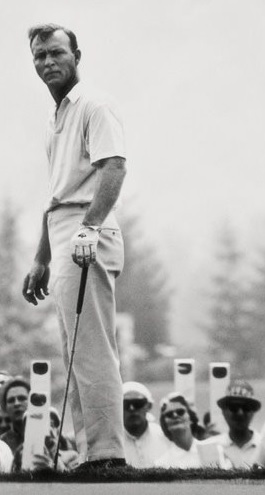
Right from the beginning, Palmer got celebrity — he understood it and embraced it.

When Curtis Strange — who always bridled at being a public figure — became the No. 1 player in the world in the 1980s, he complained to Palmer, who had been close to Strange’s father, about the responsibilities that came with stardom: signing autographs, dealing with the media, spending time with sponsors.

Palmer shrugged and said, “You don’t have to do any of that if you don’t want to.”

Strange was stunned. “I don’t?” he said.

“How do I not do any of that?”

“Go home,” Palmer answered.

“Don’t get paid to play golf for a living.

Don’t take money from sponsors.

Don’t get paid to wear a shirt or a hat or play with a certain kind of golf club or golf ball.

Just give all that back and go home.

Then you don’t have to do any of that anymore.”

Adapted from The Classic Palmer by John Feinstein (Stewart, Tabori and Chang (April 1, 2012).

I am not a golfer.

I am more of public danger on a golf course than a participant.

My Dad took me along to a driving range when I was in High School and showed me the basics of the grip and swing and such and then had me take a swing at a ball.

I put my head done, having read once, in an article by Alistair Cooke, how Jack Nicolaus’ Coach would stand behind Nicolaus and hold his head for hours so he would keep looking down when he swung, and I swung as hard as I could at the ball.

I followed through with my swing, hit the ball, and kept my head down.

Then I brought my arms down and noticed something.

The club was missing.

Using the golf club grip with my left thumb inside my right fist, I managed, without noticing, to let the club slip through my hands and fly up and away somewhere.

I turned to my Dad and held out my hands.

Look Dad, No Club!

He looked at me.

I looked at him.

We both tried to hunker down and look up at the same time.

The club came down to earth about 10 yards away on the concrete sidewalk with a whanga whanga whanga that attracted a lot of attention.

I haven’t picked up a club since.

But I have always been aware of golf.

Even before cable TV, golf was on TV a lot.

Growing up when I did, I would have watched algebra on TV if it was the only thing on so in the spring before baseball season started, if you were going to watch Sunday afternoon TV, you watched golf.

It was the only thing on.

It is an interesting historical aspect of televised Golf that it got terrible ratings.

Except among one group.

And that one group being those people in sales who bought TV advertising time.

Those people loved golf.

Playing golf made them happy and expansive.

Watching golf made them happy and expansive.

TV Stations were happy to make them happy.

So TV Sales people played a lot of golf.

And TV networks broadcast a lot of golf.

And we watched a lot of golf.

And the names of the golfers became familiar to us as household items.

And no name more familiar than Arnold Palmer.

The other night I was thinking about a passage of writing by the author, John Feinstein.

I enjoy Mr. Feinstein’s writing.

He found a formula that works and does a good job making it work.

His first book, A Season on the Brink, is an inside look at the Indiana University basketball team and Coach Bobby Knight during the 1985-86 season.

I love this book.

In 1985, my team, Michigan, had a pretty good team that won the Big Ten and Mr. Feinstein goes into detail on the two games between Michigan and Indiana.

Michigan won both games.

Michigan winning at Indiana is fairly rare in my lifetime.

Michigan blew Indiana out of Crisler Arena 80-52 to win the Big Ten in the final game of the season.

Both games are wonderfully described in Mr. Feinstein’s book.

But I digress.

As I said, I was looking for another Feinstein book when I came across his book, The Classic Palmer.

I really enjoyed Mr. Feinstein’s book on golf.

“A Long Walk Ruined.”

So I took a chance on the Classic Palmer.

It isn’t a long book.

Took me about 30 minutes to read.

And I came away with the feeling that Arnold Palmer was a good guy who happened to be good at golf, really good, and he let his ability take him where it would and enjoyed the ride.

I remembered a conversation about football I had once, that it was a game that used to be played by guys who were athletic enough to play football.

Now it is like we have football players, who through specialized training, medical prowess and determination, also happen to be guys.

I mean when I read the book Slow Getting Up: A Story of NFL Survival from the Bottom of the Pile by Nate Jackson and Mr. Jackson described how he had to give some blood so a specialized super glue could be created just for him that would be kept frozen until he needed a muscle glued back together in way that that his body wouldn’t reject, well sir …

AGAIN I digress.

Back to Mr. Palmer, I came across the passage quoted above.

I read it a couple of times.

I thought of soooooooooooo many notables in today’s news cycle.

The whining.

The moaning.

The whiny moaning.

About being a celebrity.

Don’t whine.

Don’t moan.

Just give it all back.

Then you won’t have anything to whine and moan about.

On the other hand, this clearly is the case between fame and celebrity.

Most golfers are just that.

Celebraties.

People who are celebrated.

And celebrations come to end.

Mr. Palmer was famous.

Fame has a way of sticking around.

You can’t go out to eat and order a Tiger Woods, a Kardashian or even a Trump now can you?

4.2.2023 – becomes clear none can

becomes clear none can
conquer unpredictable
impossible game

Hard to believe but I think the last major league baseball game I went to was more than 30 years ago.

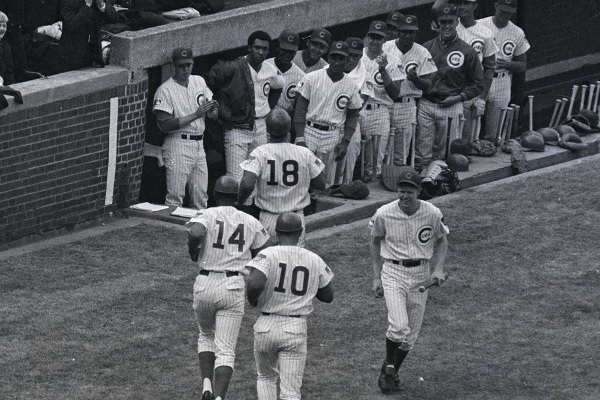
We had tickets to a Cubs-Cardinals game in Chicago at Wrigley Field as a wedding present.

As I remember it, with a little help from the WWW, it was on September 8, 1989.

The Cubs had a 7-2 lead going into the 7th inning and lost 8-11.

Pedro Guerrero went 4 for 4 with 5 rbi’s.

I tried to concentrate on the game even though I had been married less than a month and my drop dead gorgeous wife was there with me.

But something else was going on in the stands that was new and distracting.

I didn’t realize it but I was experiencing the faint beginnings of the end of my civilationsation.

Because all around us were people using their new ‘mobile’ phones calling anyone and everyone they could think of to tell them that they were at Wrigley Field watching the Cubs and because of their new mobile phone, they just wanted to share the moment.

This was 15 years even before the invention of the iPhone.

This was when you paid dearly for every minute you were connected.

What else would you do with this new device but call people to run it in that one, you were at a Cubs game and they weren’t and two, you had a mobile phone and they didn’t.

A device that allowed you to capture the moment.

The moment that led to an INSTA GRAM.

The moment.

The moment you stopped time to prove to the world you were somewhere or with someone … for that moment.

Those moments that are about you are now more important than the game.

Somehow the game has become a backdrop for your moment.

So the game is being changed to get your attention back from the device six inches in front your nose.

Bigger bases.

And clocks.

Lots and lots of clocks.

Limit time to bat.

Limit time to pitch.

Limit time for commercials?

Now DON’T BE SILLY.

Time was one my mind after I happened to pick up a copy of Roger Angell’s The Summer Game that came out in 1972.

Roger Angell covered baseball for the New Yorker Magazine.

How does one get to cover baseball for the New Yorker you ask?

You have to be a good writer but having Katherine Angell White for your Mother and EB White for your Mom’s Husband sure doesn’t hurt.

The forward to the book states, “THESE PIECES COVER A span of ten years, but this book is certainly not offered as a comprehensive baseball history of the period. Most of the great winning teams and a good many of the horrendous losers of the decade are here, while the middle ground is often sketchy. I have written about some celebrated players.

And inside the book are stories about a game that I remember but no longer can recognize.

I long held to Harry Caray’s comment about changes in the game when he said, “You still have to put the ball across the plate.”

Still, it has changed and I am not so sure for the better.

Mr. White wrote, “This is a difficult game. It is so demanding that the best teams and the weakest teams can meet on almost even terms, with no assurance about the result of any one game.

No one, it becomes clear, can conquer this impossible and unpredictable game. Yet every player tries, and now and again — very rarely — we see a man who seems to have met all the demands, challenged all the implacable averages, spurned the mere luck.

The last dimension is time. Within the ballpark, time moves differently, marked by no clock except the events of the game. This is the unique, unchangeable feature of baseball, and perhaps explains why this sport, for all the enormous changes it has undergone in the past decade or two, remains somehow rustic, unviolent, and introspective. Baseball’s time is seamless and invisible, a bubble within which players move at exactly the same pace and rhythms as all their predecessors. This is the way the game was played in our youth and in our fathers’ youth, and even back then—back in the country days — there must have been the same feeling that time could be stopped. Since baseball time is measured only in outs, all you have to do is succeed utterly; keep hitting, keep the rally alive, and you have defeated time. You remain forever young. Sitting in the stands, we sense this, if only dimly. The players below us — Mays, DiMaggio, Ruth, Snodgrass — swim and blur in memory, the ball floats over to Terry Turner, and the end of this game may never come.

You know what?

Somehow I think, Roger Angell would have ended up as the baseball writer for New York regardless of who his parents were.

3.25.2023 – prognosticators

prognosticators,
I expect, to pick us fifth
in the final four

Florida Atlantic University is making just their second appearance in the NCAA Tournament, won the East Region at Madison Square Garden and will head to Houston to play the winner of Sunday’s South Region final between Creighton and San Diego State.

After beating Kansas State and advancing to the final four, their coach, Dusty May said, “I expect the prognosticators to pick us fifth in the Final Four.”

Points for unexpectedly winning and advancing this far in the Tournement.

AND BIGGER POINTS for Coach May using the word, prognosticators!

OKAY, Coach May!

(Which is a tribute to Groucho Marx in Horsefeathers. I hope I need not elaborate.)

2.4.2023 – pickleball convince

pickleball convince
spectators that game is as
fun to watch as play

How many sewers could you hit?

The Sportswriter Joe Falls tells the story of interviewing a baseball player when he was just starting out on the Tigers Beat for the Detroit Free Press.

I cannot remember the player in question but the great Rocky Colavito stands out as a possibility as the sports star in the story as Falls was a young kid, fresh on the job, approaching a big star.

Falls also mentioned that the star, like Falls, was a native New Yorker from New York City.

Falls tells how he had a pad and pencil and walked into the locker room and joined the queue around the star who was describing his performance on the field that day.

There was a pause in the question and Falls asked the first question that popped into his head on meeting a big league baseball player from New York City.

“How many sewers could you hit?” Falls asked.

Falls remembered that in the bouquet of sportswriters clustered around Colavito, there was more than one smirk, more than one person rolling their eyes.

But not Colavito.

He look at Falls for a second and said, “Three, on a good day. How many COULD YOU HIT?”

Falls wrote that with that, he was allowed entrance in the brotherhood of sportswriters.

It also seems that Falls said it led to a lifelong relationship with Rocky.

How many sewers could you hit?

What they were talking about was the sport of stick ball.

The game kids played when they wanted to play baseball but they didn’t have a baseball, baseball mitts and gloves, baseball bats or, maybe most importantly, a baseball field.

They got what they could, a sawed off broom stick and a rubber spaulding (spaul DEEN) ball and they played in the street and measured the field by the number of sewers the City of New York spaced down the street.

To hit three sewers was the marque d’excellence.

The point is, they made do and had a great time.

Kids were allowed to be kids and play.

And most those stick ball games went on all day and kids played and played.

Then along came the adults who looked at the lack of equipment and the lack of organization and lack of rules and they asked how can this be allowed to happen?

The asked, how can they be having any fun?

And along came little league.

Orgnaization.

Uniforms, leagues, fields and RULES.

Now the fun can start said the adults.

And kids sat and watched from the dugout and waited.

Oh boy.

Now these kids are older.

Seeing empty tennis courts all over the place they came up with a little game that uses these un-used courts.

Seems that tennis and golf need a big marquee name to justify anyone else spending time on the sport and the big names in tennis and golf are all retiring as is interest … or so some say, but I digress.

Anyway, these empty tennis courts are being used as this simple game that picked up the name, pickleball, is in and being played everywhere.

As might be expected, someone starts asking about equipment and leagues and RULES.

As might be expected there are some people who excel at pickleball.

Say that out loud please.

Some people think they just might be the best pickleball player ever.

Which just leads you to think that there should be PRO pickleball.

This morning in the New York Times is the story headlined, “Will Pickleball Be as Fun to Watch as It Is to Play?

The sub header states: “Pickleball had no problem attracting millions of amateur players. Now, as the sport looks to grow at the professional level, it must convince spectators that the game is as fun to watch as it is to play.

Did you catch the key word here?

Might be FUN but nope.

Must.

Must!

The sport must convince spectators that the game is as fun to watch as it is to play

Boy howdy can’t we just once do something for fun anymore?

How many sewers can you hit?

1.16.2023 – watched him tie his shoes

watched him tie his shoes
moment I knew never would
I be an athlete

Getting ready for a walk with my wife, I got my walking shoes on my feet and holding onto the shoestrings, I stretched out my leg and pulled the shoestrings tight and tied the shoestrings into a proper knot.

Watching the laces slide through the metal grommets on my shoes as I pulled them tight, a moment in my life came back to me.

It was a moment from when I attended the Grand Rapids Junior College in Grand Rapids, Michigan.

GRJC, as it was known claimed to be famous as one of the first satellite two year colleges ever set up in the United States.

GRJC was established in 1914 as a joint venture between the University of Michigan and the Grand Rapids Board of Education.

From what my I remember, it was slated to be called the University of Michigan – Grand Rapids until the GR School Board felt that as they would be running the show, the name should reflect that and Grand Rapids Junior College would be more appropriate as well as more prestigious.

It was famous for having such a strict curriculum, set up by UofM, that students never ever had any problems with transferring credits to a 4 year institution.

It wasn’t until much later that it took on the more anonymous name of a Community College or GRCC.

To me it was and is GRRR-JIK or GRJC.

It was also known as Raider High or the Grand Rapids Public Schools’ 13th Grade.

It was where you went if you didn’t want to pay a 4 year college tuition for Freshman English 101.

I never gave much thought about whether or not I would be going there.

I think I heard those stories about 13th grade and just assumed I would show up on the first day of class and get my schedule.

I mean I knew I would END UP in Ann Arbor at the University of Michigan but as there were 4 of my siblings currently enrolled at UofM, I also knew that I would be starting my college career at GRJC as my matriculation would be delayed.

It was in conversation with a friend of mine who I later ended sharing an apartment with in Ann Arbor, that I realized I had to apply and even be accepted at GRJC.

Even after that delay, it was no surprise at all to me that I walked into my first class at JC, CHEM 114, and saw most of my friends, Doug, Dan, Dave and Carl from Creston High School sitting in the same class.

This group of friends stayed together and for reason I have cannot recall, we decided to form a team and enter the JC Intramural Lunchtime Basketball League.

I must have pushed for it so my friends made me player / coach.

We named the team after our Chemistry instructor, Ms. Wurn.

It was a bit of thrill to see the Intramural League schedule posted around JC and find the name, WURN’S WORMS, listed.

These games were played in the GRJC Main Fieldhouse, at lunchtime.

It seems to me that we played two 20 minute halves on the main court of the fieldhouse.

The league was run by Gene Paxton, the head coach of the GRJC Varsity Basketball Program.

I was on the GRJC Collegiate, the student newspaper as a photographer, so I was familiar to Coach Gene.

The fieldhouse at lunch time was full of people as the fieldhouse had one of those multipurpose composite floors with a running track and people would be in there on their lunch hour jogging on the track or taking part in other basketball games on the side courts.

But the main court, the court surrounded by the running track, was our court.

And we showed up to play.

After we showed and got out on the court, any resemblance to any other organized basketball games ended.

What were we thinking?

If we got the ball off the opening tip, that would be the high point of the game and there weren’t many games that opened on a high point.

We were given possession of the ball after each basket by the other team but unless the other team set up their defense on their end of the court, we rarely got the ball over the time line.

We played games with scores like 62-10, 88-10, 102-10.

We were a bunch of guys who shot the ball around in our driveway’s once in awhile playing in a league of teams that took the game seriously.

It wasn’t that sad.

But it was that funny!

We would run around for 20 minutes and the horn would sound at the half (they used the real scoreboard and clock for all to see) and Coach Gene, who with two players from his team, ref’ed the games, would blow a whistle and look at me and say THE FIRST HALF IS OVER … SECOND HALF BEGINS IMMEDIATLY.

What was the point of delaying the inevitable.

After the game, I remember how joggers who been running on the track would look at us in the locker room and try to be positive by saying things like, “You guy’s aren’t that … well … aren’t … that … well … good.”

Hey, we knew that.

Ms. Wurn came to watch a game once.

She left after about 10 minutes.

The scores would be posted with the updated schedules in the fieldhouse hallways.

I think most folks felt it had to be typo.

It seems like we even had a following as people would see me around school and ask me if maybe we might break 20 points today?

One friend of mine from Creston who knew about the team but was smart enough to not be on the team would yell out the latest score anytime he saw me on campus.

Well, if you are going down, go down in flames, I guess.

And goofy things beyond the score happened to us too.

One game, Carl went down screaming.

“My foot is on fire”, he screamed.

He lay on the floor and we removed his shoe and sock and the bottom of his foot looked like it fell off.

Somehow his skin had melded to his sweaty socks and when he turned to change direction in a single motion he twisted his foot inside his shoe and all the callous stripped off the bottom of his foot.

This one big creepy piece of skin, an exact match to his foot, fell out of his sock.

Coach Gene came over and looked and said that happens and he told Carl his foot might tingle or sting a bit for a couple of days.

Then he looked at me and asked who was coming in to the game to replace Carl?

I can’t remember how many games there were on the schedule, but we always showed up.

Until the last game and I realized we were short a few players.

I talked to Coach Gene and he looked at me with this big smile on his face as if to say you aren’t getting out of this that easy.

Coach Gene looked across the crowd in the fieldhouse and called out to two of his players, real players from the GRJC team, that he saw over in another part of the fieldhouse.

“Here,” he said, “you two play with these guys.”

One of the two was this massive round kid.

I don’t remember much about him but that he was BIG.

And looked really mean.

The other was a tall basketball player who later in life, I might describe as a younger, thinner Ben Wallace type.

My memory says his name was Walter Jordan.

For Wurn’s Worms, it was like we had won the draft lottery and got two players better than anyone else in the entire intramural league.

The game started and while it didn’t go great, it didn’t go too bad as we started getting some rebounds.

That big round kid would stand under the basket and grab the ball out of the air with one massive hand and hold the ball out of bounds behind him and dare anyone on the other team to come and try and take it.

No one dared and he would flip the ball to one of us to get the ball up to the court to Walter.

The other team would gang up on Walter so we didn’t score a lot but it seems to me that at the half it was something like 24 – 16.

The best score we ever had.

A couple of things happened at half time.

One, we actually got a 5 minute half time.

Two, Coach Gene called the other team over and said that he was the League Commissioner and he made the rules so in the 2nd half, they, the other team, had to play man to man defense.

This meant that the rest of us could really contribute as even though there was no way we were going to get the ball, someone had to guard us and that meant Walter would be playing 1 on 1.

And three, Walter tied his shoes.

I was sitting on the bench and Walter came over and put his foot next to me and untied the shoestrings.

He was wearing Nike white high tops and the shoestrings were laced through holes punched through the leather.

I was wearing Nike white low cuts also with shoestrings that were laced through holes punched through the leather.

When I tied my shoes and I pulled on the shoestrings, maybe the top of the laces pulled closed together but no other part of my stiff leather shoe budged.

If I pulled really hard, all I could do was tighten the top part of the shoe around my ankle in a way that made me feel like I had cut off the blood flow

No matter how hard I pulled, there was no impact below the 2nd or 3rd lace and that was that for tying them tight.

Walter had the leather high tops and he wrapped the end of each shoestring around his hands and slowly pulled back with the muscles in his arms that exerted, some unimageable to me, pressure on those shoestrings.

Have you ever seen someone shooting a compound bow and arrow.

How when they pull back on the string, the string is strung through all these little pulleys that all move in unison in response to the pressure on the bow?

That was Walter tying his shoes.

He pulled and the shoestring, snaking its way back and forth over the front of the shoe from the top to the bottom of laces moved together and the stiff leather shoe reformed itself to Walter’s foot.

I stared.

I couldn’t believe what I just saw.

I looked at the miserable way the laces looked on my shoes, all out of line.

And I looked at Walter’s shoe and the shoestring was as taught a bowstring and the entire shape of the shoe changed before my eyes.

Then he switched feet, and without any real sign of effort, did it again.

I was in awe.

All I did was watch someone tie his shoes.

Someone to whom, a properly tied shoe was very important, tie his shoes.

I marveled at how strong this tall skinny kid really had to be.

Not that I was wondering much, but at that moment, I understood why, I would never be an athlete.

The second half started and it was the Walter Jordan show.

We would cross half court, the big kid would park under the basket, the three of us out on the court went to the corner as far away as possible so someone had to cover us and Walter got the ball.

Layup.

Banker.

Jumper.

You name it.

Swish.

The other team kept rotating players on Walter but he could not be stopped.

And with the big kid, we even got some defensive rebounds.

I want to say that once, maybe twice, a missed shot hit me in the head and I was able to redirect the ball to Walter for an assist.

Possible the only stats I ever got in a game.

We were in the game.

Walter scored some 30 points and with under a minute left we were up 47-46 and the other team had the ball.

I called time out.

The team actually came over and looked at me.

From somewhere I don’t know where, I said, “stop the shot and get the ball to Walter.

Everyone looked at me then at each other and nodded.

Then the big kid said, “NO EASY TWO, they go for a layup … RACK’HIM GOOD!”

My first thought was, “U tawkin to me?”

My second thought was, “Look at me, then look at those other players.”

I weighed in at 110 lbs spread thin over 6 feet.

But I repeated “NO EASY TWO!” then yelled “LETS GO” as Coach Gene blew his whistle.

The other team inbounded and took the ball the length of the court.

As I remember it, one of the players on the other team drove the lane and laid it up and, boy oh boy, that big kid racked’him good, seems like he knocked him about 4 rows deep into the stands, but that player had dished off at the last moment and someone else put it off the glass for 2, we were down by 1.

I cannot remember who in bounded the ball but Walter had it in hand as the timer ran down.

The crowd in the fieldhouse all stopped to watch.

Walter crossed mid court faked a rush, bought some space, pulled up and let go a beautiful, Cazzie Russell, classic jumper.

I raised both arms and yelled YES YES YES!

I was dancing backward as I yelled and tripped over someone behind me.

It was Coach Gene.

He caught me but never took his eyes off the ball.

“OH OH OH”, he was yelling.

Time stopped I am telling you!.

The ball went in, hit the side of the rim, bounced up, bounced left, and bounced out.

“OH OH OHHHHHHHHHHHHHH … NO”, yelled Coach Gene.

And he steadied me on my feet and said, “Thought you had one Hoff.” and he slapped me on my back.

There was a collective “OHHHHHHHHHHHHHHHH” from the crowd in the gym.

Coach blew his whistle and yelled “Game Over.”

Walter stared at the backboard for a second and then jogged off to the locker room.

I yelled, “HEY WALTER!” from across the fieldhouse.

He stopped and turned and looked me.

“GREAT GAME,” I yelled.

He looked me in the eye and slowly raised one fist and then nodded.

I am not kidding when I say that I thought of the sportswriter Grandland Rice and his, “For when the One Great Scorer comes to mark against your name, He writes not that you won or lost, but how you played the game!

I had seen that today come to life, I thought.

Here was a guy who for no other reason played a great game because there was a game to be played.

I couldn’t even tie his shoes.

Boy, howdy, I couldn’t even tie mine.

And I knew, I would never be an athlete.

But I had seen one today.