5.8.2023 – beware stations near

beware stations near
notorious Orlando
International

I was discussing travel advisories that countries around the world issue for the United States and I got to thinking, just what do these advisories say?

At this time, I have a Niece and Nephew-in-law who are working in at a hospital in the Democratic Republic of the Congo about which the United States Dept of State has issued a Level 3: Reconsider Travel warning with the usual comments like:

The eastern DRC region and the three Kasai provinces (Kasai, Kasai-Oriental, Kasai-Central) due to crime, civil unrest, armed conflict and kidnapping.

The U.S. government has extremely limited ability to provide emergency consular services to U.S. citizens outside of Kinshasa due to poor infrastructure and security conditions.

So I looked up the the current and official Foreign travel advice for Travel in the United States as issued by His Majesty’s Government Foreign, Commonwealth & Development Office.

Under Safety and Security: Road Travel, HMG warns:

Driving is on the right hand side of the road.

Check the weather conditions before embarking on a long journey.

Do not sleep in your car by the roadside or in rest areas and avoid leaving any items on display in your car.

Petrol stations that do not display the price of fuel usually charge considerably more than the national average for a gallon of fuel. They’re often found close to tourist destinations and airports, and notoriously near to Orlando International Airport.
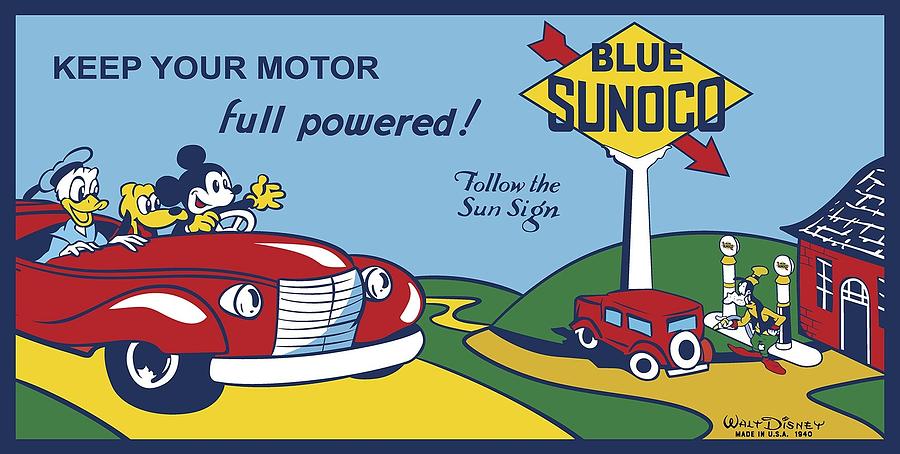
There you are.

Beware gas stations notoriously near to Orlando International Airport.

The Online Oxford Learners dictionary defines notoriously as in a way that is well known for being bad.

On the other hand, those have Gas Stations made the list.

You can almost hear, The U.K. government has extremely limited ability to provide emergency consular services to U.K. Subjects close to tourist destinations and airports, and notoriously near to Orlando International Airport.

1.9.2023 – instagrammable

instagrammable
moments lacking are listed
don’t we need to pee?

Ginia Bellafante, writing in the New York Times (Must We Gentrify the Rest Stop?) about the changes at rest stops on the New York State Thruway stated:

Five years ago, the New York State Thruway Authority conducted a survey of more than 2,600 drivers to take measure of the customer experience at the service areas lining the 570 miles of road that make up one of the largest toll highways in the country, stretching from the edge of the Bronx up past Buffalo. Whether participants were traveling for work or for pleasure, they had needs that apparently were going unfulfilled.

The resulting report listed as chief takeaways that leisure travelers complained about unappealing interiors and the lack of “Instagrammable moments.”

Instagrammable moments?

Instagrammable moments!

When I was studying history back in college, I was taught over and over, in lectures, in statements, in LOUD RED LETTERS WRITTEN on term papers, to AVOID A SENSE OF PRESENT MINDEDNESS.

What was an instagrammable moment 10 years ago?

What will be an instagrammable moment be ten years from now.

Since the beginning of time people traveling from point A to point B have hoped for a clean, well lighted place to answer a call to nature.

And if it wasn’t too much trouble, maybe a decent cup of coffee and a bun or a biscuit or a doughnut maybe.

Why do these two things do not figure in as the chief takeaway on a survey of customer experience of service areas?

As Ms. Bellafante writes: In a society so casually stratified that major airlines now offer five classes of service and airport security lines can be bypassed for an annual fee, rest stops remain one of the few spaces in modern life that can be generally counted on to level us. 

As my Dad would have put it, “Everybody has to pee.”

That won’t change but if it comes it to that, spare me anything instagrammable that captures that moment.

12.14.2021 – to look around me

to look around me
as though I had never been
in this place before

I based this haiku and several others like it from the writing in the book, The Art of Travel (2002, Vintage Books) by Alain de Botton, and the passage:

I tried to reverse the process of habituation, to dissociate my surroundings from the uses I had previously found for them. I forced myself to obey a strange sort of mental command: I was to look around me as though I had never been in this place before. And slowly, my travels began to bear fruit.

According to the website, GOOD READS, Any Baedeker will tell us where we ought to travel, but only Alain de Botton will tell us how and why.

As I said in the section on Architecture , what I find irresistible in reading Mr. de Botton is his use of language.

To also quote myself, I get the feeling that if you made a spread sheet of all the words, adverbs and adjectives used by Mr. de Botton, you just might find that he used each word just once.

And to reemphasize, neat trick in writing a book.

If I knew how to do that, hey, I would.

** More from the category TRAVEL — click here

12.13.2021 – everything being

everything being
of potential interest,
layers of value

I based this haiku and several others like it from the writing in the book, The Art of Travel (2002, Vintage Books) by Alain de Botton, and the passage:

I tried to reverse the process of habituation, to dissociate my surroundings from the uses I had previously found for them. I forced myself to obey a strange sort of mental command: I was to look around me as though I had never been in this place before. And slowly, my travels began to bear fruit.

Once I began to consider everything as being of potential interest, objects released latent layers of value.

According to the website, GOOD READS, Any Baedeker will tell us where we ought to travel, but only Alain de Botton will tell us how and why.

As I said in the section on Architecture , what I find irresistible in reading Mr. de Botton is his use of language.

To also quote myself, I get the feeling that if you made a spread sheet of all the words, adverbs and adjectives used by Mr. de Botton, you just might find that he used each word just once.

And to reemphasize, neat trick in writing a book.

If I knew how to do that, hey, I would.

** More from the category TRAVEL — click here

12.4.2021 – if lives dominated

if lives dominated
by a search for happiness
travel reveals much

Adapted from the book, The Art of Travel (2002, Vintage Books) by Alain de Botton, and the passage:

If our lives are dominated by a search for happiness, then perhaps few activities reveal as much about the dynamics of this quest—in all its ardour and paradoxes—than our travels. They express, however inarticulately, an understanding of what life might be about, outside of the constraints of work and of the struggle for survival. Yet rarely are they considered to present philosophical problems—that is, issues requiring thought beyond the practical. We are inundated with advice on whereto travel to, but we hear little of why and how we should go, even though the art of travel seems naturally to sustain a number of questions neither so simple nor so trivial, and whose study might in modest ways contribute to an understanding of what the Greek philosophers beautifully termed eudaimonia, or ‘human flourishing’.

Adapted from the book, The Art of Travel (2002, Vintage Books) by Alain de Botton.

According to the website, GOOD READS, Any Baedeker will tell us where we ought to travel, but only Alain de Botton will tell us how and why.

As I said in the section on Architecture , what I find irresistible in reading Mr. de Botton is his use of language.

I get the feeling that if you made a spread sheet of all the words, adverbs and adjectives used by Mr. de Botton, you just might find that he used each word just once.

Neat trick in writing a book.

If I knew how to do that, hey, I would.

** More from the category TRAVEL — click here