9.22.2025 – in the middle way

in the middle way
only fight to recover what
has been lost and found

East Coker, V (last section):

So here I am, in the middle way, having had twenty years—
Twenty years largely wasted, the years of l’entre deux guerres
Trying to use words, and every attempt
Is a wholly new start, and a different kind of failure
Because one has only learnt to get the better of words
For the thing one no longer has to say, or the way in which
One is no longer disposed to say it. And so each venture
Is a new beginning, a raid on the inarticulate
With shabby equipment always deteriorating
In the general mess of imprecision of feeling,
Undisciplined squads of emotion. And what there is to conquer
By strength and submission, has already been discovered
Once or twice, or several times, by men whom one cannot hope
To emulate—but there is no competition—
There is only the fight to recover what has been lost
And found and lost again and again: and now, under conditions
That seem unpropitious. But perhaps neither gain nor loss.
For us, there is only the trying. The rest is not our business.”

From Four Quartets by T. S. Eliot (1888-1965), (Harcourt, Brace & Company: New York, 1943) by T. S. Eliot (1888-1965).

I was out walking today in the low country South Carolina town of Bluffton.

Bluffton is part of the reason that this part of South Carolina is showing the fastest growth of almost anywhere in the United States.

Its a small town that back in 1990 had less than 900 people and now has over 40,000.

Things are coming to town like stoplights and roundabouts and sidewalks.

All things going modern and very fast.

Yet, as I walked down the sidewalk I noticed the east west straight line path of the sidewalk took a big loop that was out of line.

See, someone on the town planning commission noticed that make a nice, straight sidewalk, the city would have to take down a long leaf pine tree.

There are two types of pine trees that grow in the low country.

The lob lolly pine, the lumbermans delight, is fast-growing, especially in its first 50 years. Because of this, it’s heavily used in timber and pulpwood plantations where trees are typically harvested at 25–35 years old.

The long leaf pine can is much slower to mature. In its “grass stage,” it may stay low to the ground for up to 5–7 years, putting energy into its root system before shooting upward.

These trees can stick around for 250 to 300 years and some have been documented to have lived 400 years.

In an age when you can’t fight city hall, someone decided this tree which was here before we were and will most likely be here when we are gone, was worth making the effort to make a loop in a stretch of sidewalk.

For some reason, I found comfort in this.

For some reason, I found confidence that there is something here worth the fight.

Maybe we will lose again and again and again.

For us, there is only the trying.

The rest is not our business.

The trees will last longer than we do.

5.17.2025 – I understand that

I understand that
he’s been reading James Joyce and
T. S. Eliot

100 years ago today, May 17, 1925, in the New York Times, there was a story that “Princeton’s Literary Magazine Banned By Dr. Hibben, Who Calls May Issue Obscene. “

Dr. Hibben objected that the author of an article, “Sketches from a Madhouse” by William Mode Spackman of the class of 1927 and editor of the Nassau, the student Literary Magazine, was one of the most sacriregious and and obscene pieces of writing he had ever seen.

Inside that article in something called, Preface for the American Public, Dr. Hidden says that Spackman attacks what he calls COSMIC INANITIES as “all faculties, deans, directors, lictors, hangman, all Philadelphians, both Cabinet and society, all rules, regulations, totems, taboos, and mumbo-jumberies, all credos, standards, debarments, band and prohibitions.

Dr, Hidden tells the New York Times that “I understand that he has been reading a good deal of James Joyce’s ‘Ulysses’ and T. S. Eliiot and other of the modernists in literature. He has evidently been well soaked in this type of literature and has tried to go the writers one better.”

Such problems American Universities had back then doncha think?

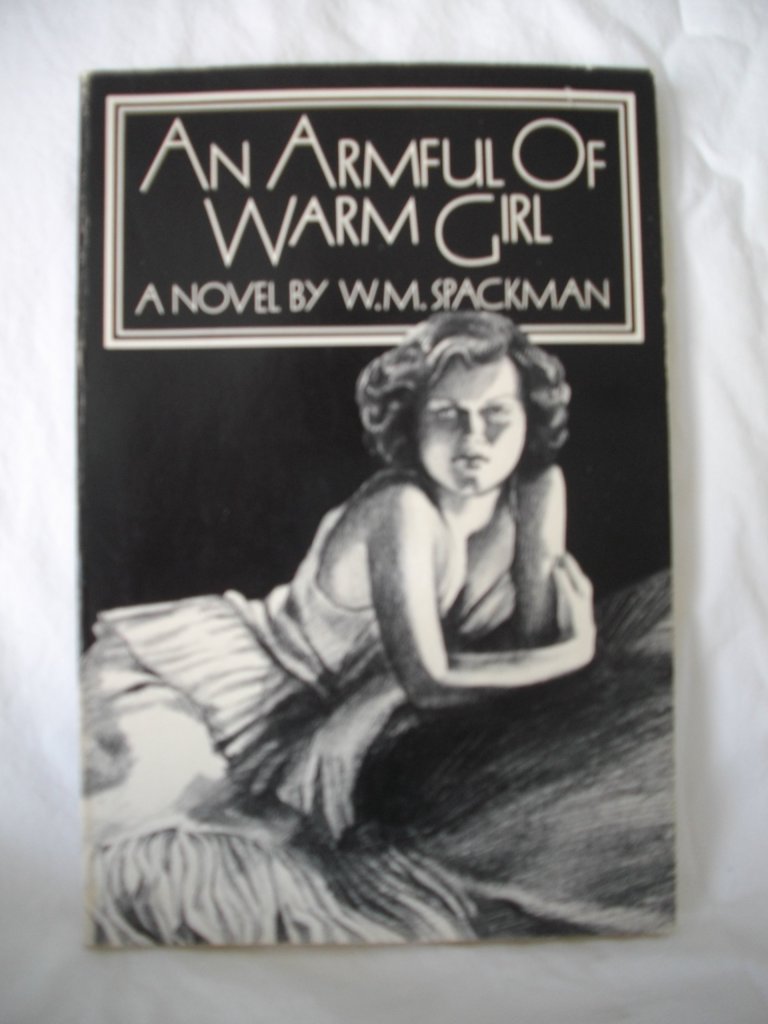
I had never heard of Mr. Spackman but wikipedia says:

William Mode Spackman (May 20, 1905 – August 3, 1990) was an American writer. He was born in Coatesville, Pennsylvania, the son of George Harvey Spackman and Alice Pennock Mode. A graduate of the Friends School of Wilmington, Delaware and in 1927 Princeton University (B.A.; later also an M.A.), he was also a Rhodes Scholar at Balliol College, Oxford. In 1929, he married Mary Ann Matthews (1902–1978); they had three children: Peter (1930–1995), Ann (1932–1961), and Harriet (born 1934). Spackman was awarded a Rockefeller Fellowship to study public opinion at Columbia University. Spackman also taught classics briefly at New York University and worked in radio.

Spackman’s literary success came relatively late in life. He wrote about romance from a realistic rather than a romantic perspective. Highly praised by critics like John Leonard, John Updike, and Stanley Elkin, he has been called a “Fabergé of novelists” and his works have been called “delicate comedies.” The characters in his novels are school friends, their associations, often in New York City, and the women with whom they spent time.

But when he died, it was this incident the NYT remembered, writing in Mr. Spackman’s OBIT on August 9, 1990:

The author, who was born in 1905 in Coatesville, Pa., was removed as editor of Princeton’s Nassau Literary Magazine while an undergraduate. The university president, John Grier Hibben, suppressed an issue that contained what he called the ”most sacrilegious and obscene articles” he had ever seen in print. About Mr. Spackman, he said: ”I understand that he has been reading a good deal of James Joyce’s ‘Ulysses’ and T. S. Eliiot and other of the modernists in literature. He has evidently been well soaked in this type of literature and has tried to go the writers one better.”

After graduation, Mr. Spackman became a Rhodes Scholar at Balliol College, Oxford. Later he worked as a Rockefeller Fellow in opinion research at Columbia University, as a radio writer, as a public relations executive and a literary critic. He also taught classics at New York University and the University of Colorado. His other novels are ”A Difference in Design,” and ”A Little Decorum.” ”On the Decay of Humanism” is a volume of essays.

The obit also said this:

Alice Quinn, poetry editor of The New Yorker magazine, who was his editor at Alfred A. Knopf, said yesterday, ”Mr. Spackman was a radiant human being and a radiant writer, a writer of great charm and high style, who took as his subject men and women who really liked and enjoyed each other.”

I had never heard of him.

I have now.

I will have to read his stuff and find out if he had been reading a good deal of James Joyce’s ‘Ulysses’ and T. S. Eliiot and other of the modernists in literature and if He had evidently been well soaked in this type of literature and has tried to go the writers one better.

Version 1.0.0

3.22.2024 – no wish to become

no wish to become
compulsory reading so
he regretted that

When I told him that my daughter Melinda was studying his poetry at Beverly High, he said he regretted that, because he had no wish to become compulsory reading.

In a letter from Groucho Marx to his brother, Gummo Marx, in which Groucho described his recent dinner and conversation at the home of T.S. Eliot in June, 1964.

I am not making this up.

It seems that in 1961, Mr. Eliot wrote a fan letter to Mr. Marx and a minor correspondence between the two continued over the next two years as the two men exchanged pleasantries about cigars and swapped autographed portraits.

Through this exchange, the two men also pursed the possibility of meeting for dinner either in New York City or London or anywhere the two men might happen to be at the same time.

The dinner finally took place in London in early June, 1964 and Mr. Eliot arranged for a car to pick up Groucho and his wife at the Savoy Hotel to bring them to his home in London.

Over drinks, Groucho quoted Eliot’s poems to Eliot and Eliot told Groucho jokes to Groucho.

Mr. Marx reported in his letter that he had re-read Wasteland 3 times to get ready for the dinner but that when he tossed off a bit of verse, Mr. Eliot smiled faintly, “as though to say he was thoroughly familiar with his poems and didn’t need me to recite them.”

Then when Mr. Eliot told Groucho jokes, Groucho reported that “Now it was my turn to smile faintly.”

The evening wore on.

That’s a nice expression.

With your permission I’ll say it again.

The evening wore on (I stole the last 4 lines from the movie, Harvey … the pooka, you remember) and Mr. Eliot and Mr. Marx parted.

Mr. Eliot died soon after in January of 1965

The following June, the friends of TS Eliot, folks of the like of Peter O’Toole, Laurence Olivier, Paul Scofield, Nicol Williamson, Cleo Laine, John Dankworth, Anna Quayle and Clive Revill, organized a “Homage To T.S. Eliot” at the Globe Theatre in London.

Mr. Marx was invited to say a few words.

And he did.

And he also read Mr. Eliot’s poem, “Gus – The Theatre Cat” from Old Possum’s Book of Practical Cats.

Cats may have been one of the longest running shows on Broadway but for my money, this reading of Gus – The Theatre Cat by Groucho Marx was better than the whole show and one of the best readings of the poem I know of as Mr. Marx doesn’t try to get cute with it but that is neither here nor there.

You can hear it for yourself here.

And here is the poem for that you can read for yourself as well.

Gus – The Theatre Cat

Gus is the Cat at the Theatre Door.
His name, as I ought to have told you before,
Is really Asparagus. That’s such a fuss
To pronounce, that we usually call him just Gus.
His coat’s very shabby, he’s thin as a rake,
And he suffers from palsy that makes his paw shake.
Yet he was, in his youth, quite the smartest of Cats –
But no longer a terror to mice and to rats.
For he isn’t the Cat that he was in his prime;
Though his name was quite famous, he says, in its time.
And whenever he joins his friends at their club
(Which takes place at the back of the neighbouring pub)
He loves to regale them, if someone else pays,
With anecdotes drawn from his palmiest days.
For he once was a Star of the highest degree –
He has acted with Irving, he’s acted with Tree.
And he likes to relate his success on the Halls,
Where the Gallery once gave him seven cat-calls.
But his grandest creation, as he loves to tell,
Was Firefrorefiddle, the Fiend of the Fell.

“I have played,” so he says, “every possible part,
And I used to know seventy speeches by heart.
I’d extemporize back-chat, I knew how to gag,
And I knew how to let the cat out of the bag.
I knew how to act with my back and my tail;
With an hour of rehearsal, I never could fail.
I’d a voice that would soften the hardest of hearts,
Whether I took the lead, or in character parts.
I have sat by the bedside of poor Little Nell;
When the Curfew was rung, then I swung on the bell.
In the Pantomime season I never fell flat,
And I once understudied Dick Whittington’s Cat.
But my grandest creation, as history will tell,
Was Firefrorefiddle, the Fiend of the Fell.”

Then, if someone will give him a toothful of gin,
He will tell how he once played a part in East Lynne.
At a Shakespeare performance he once walked on pat,
When some actor suggested the need for a cat.
He once played a Tiger–could do it again–
Which an Indian Colonel pursued down a drain.
And he thinks that he still can, much better than most,
Produce blood-curdling noises to bring on the Ghost.
And he once crossed the stage on a telegraph wire,
To rescue a child when a house was on fire.
And he says: “Now then kittens, they do not get trained
As we did in the days when Victoria reigned.
They never get drilled in a regular troupe,
And they think they are smart, just to jump through a hoop.”
And he’ll say, as he scratches himself with his claws,
“Well, the Theatre’s certainly not what it was.
These modern productions are all very well,
But there’s nothing to equal, from what I hear tell,
That moment of mystery
When I made history
As Firefrorefiddle, the Fiend of the Fell.”

The letters are reprinted in The Essential Groucho Marx: Writings by, for and about Groucho Marx, Edited and with an Introduction by Stefan Kanfer (Penguin Books, 2000).

About the letters, Mr. Kanfer reports that, “In 1964 an official at the Library of Congress learned that Groucho had corresponded at some length with T. S. Eliot. Intrigued, he asked the comedian if the library could be the custodian of his letters. Groucho, reminding the world that he had never finished grade school, was only too glad to comply. Three years later a selection of those missives were included in The Groucho Letters.

8.21.2023 – thinking of death but

thinking of death but
dressing it in the raiment
lyric, metaphor

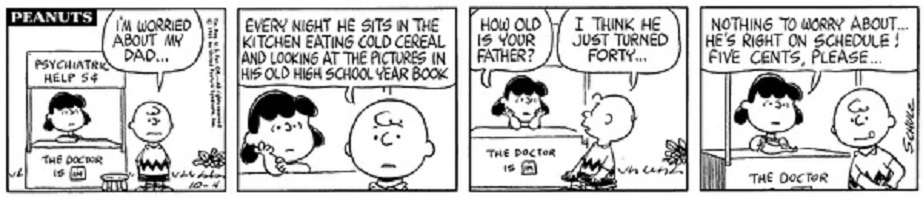
Most of the people I like, or love, or can barely stand are between the ages of forty-five and sixty-five, give or take a year or two at either end, and only about three of them are capable any longer of achieving what was once casually called, and is now wistfully called, a good night’s rest.

For ours is the age of the four “A”s: anxiety, apprehension, agonizing, and aspirin.

People are smoking more and enjoying it less, drinking more and feeling it more, and waking around three in the morning to lie there gloomily staring at the mushroom-shaped ceiling, listening for the approaching drone of enemy bombers, and thinking of death but dressing it in the raiment of lyric or metaphor: the gate in the garden wall, the putting out to sea, the mother of beauty, the fog in the throat, the ruffian on the stair, the man in the white coat, the sleep that rounds our little lives.

From The Watchers of the Night in Lanterns & Lances by James Thurber.

For ours is the age of the four “A”s:

Anxiety,

Apprehension,

Agonizing,

and Aspirin.

Change Aspirin to Advil and change mushroom-shaped ceiling to and waking around three in the morning to lie there gloomily staring at the ceiling fan and counting the blades as they go around and you got me, nearly 70 years after Thurber wrote these lines.

I agonize about my apprehension over my anxiety so I take an Advil.

Then though, reading this, I seem to be right on schedule.

One less thing to agonize over.

One thing to feel apprehension over.

One less thing to fuel my anxiety.

One less Advil to take.

I am right on schedule!

4.7.2022 – if you don’t like it

if you don’t like it
you can get on with it, others
pick choose if you can’t

Part of the series of Haiku inspired by The Wasteland by T.S. Eliot and the article, ‘It takes your hand off the panic button’: TS Eliot’s The Waste Land 100 years on by Andrew Dickson.

Mr. Dickson asks, ‘Is it genuinely one of the greatest works in the language, or – as the poet once claimed – just “a piece of rhythmical grumbling“?’

Readers of this blog may remember that from time to time I struggle with the weight of effort of producing a daily Haiku and any thoughts I may have about the words and time that went in the Haiku that day.

This daily schedule of missing a day can bring on a personal mental paralysis wherein writing these entries becomes impossible.

I learned to deal with this by not dealing with it and let it go.

Then when I look at my register of entries and see blank days with no post, I will grab a topic or book or poem for a source and produce a series of Haiku to fill in those blank dates.

This is one of the great benefits of this effort being my blog and my blog, my rules.

It IS cricket because I say it is.

It is ‘according to Hoyle’ because I say it is.

Thus I have this series based on ‘The Wasteland.’

A thoroughly enjoyable connection of wordplay and source of endless discussion in the search for meaning.

For myself, I like that bit about a piece of rhythmical grumbling by Mr. Eliot so said Mr. Eliot.

I have remembered this story before in these posts, but it reminds me of a story told by the actor Rex Harrison.

Mr. Harrison recounted rehearsing a play by George Bernard-Shaw and that the company was having a difficult time with a certain scene when, wonder of wonder, Bernard-Shaw himself dropped by to watch rehearsal.

Mr. Harrison tells how great this was as they went to the play write and asked how did he see this scene – what was he striving for?

Bernard-Shaw asked for a script and read over the scene, read it over again and a third time, then looked up and said, “This is rather bad isn’t it.”