God, it is something face the sun know you are free hear the undersong
IT is something to face the sun and know you are free. To hold your head in the shafts of daylight slanting the earth And know your heart has kept a promise and the blood runs clean: It is something. To go one day of your life among all men with clean hands, Clean for the day book today and the record of the after days, Held at your side proud, satisfied to the last, and ready, So to have clean hands: God, it is something, One day of life so And a memory fastened till the stars sputter out And a love washed as white linen in the noon drying. Yes, go find the men of clean hands one day and see the life, the memory, the love they have, to stay longer than the plunging sea wets the shores or the fires heave under the crust of the earth. O yes, clean hands is the chant and only one man knows its sob and its undersong and he dies clenching the secret more to him than any woman or chum. And O the great brave men, the silent little brave men, proud of their hands—clutching the knuckles of their fingers into fists ready for death and the dark, ready for life and the fight, the pay and the memories — O the men proud of their hands.
Clean Hands by Carl Sandburg as printed in Smoke and steel, (New York, Harcourt, Brace and Howe, 1920)
Yes, go find the men of clean hands one day and see the life, the memory, the love they have, to stay longer than the plunging sea wets the shores or the fires heave under the crust of the earth
On June 17, 1785, Thomas Jefferson wrote to James Monroe, “I sincerely wish you may find it convenient to come here. The pleasure of the trip will be less than you expect but the utility greater. It will make you adore your own country, it’s soil, it’s climate, it’s equality, liberty, laws, people and manners. My god! How little do my countrymen know what precious blessings they are in possession of, and which no other people on earth enjoy.”
Two years before the Constitution, they were both future Presidents but that was a job that didn’t even exist yet.
As I drive to work and face the sun with clean hands I feel the sun on my face but cannot help but hear the sob and its undersong.
I read the news and I think, My God! How little do my countrymen know what precious blessings they are in possession of.
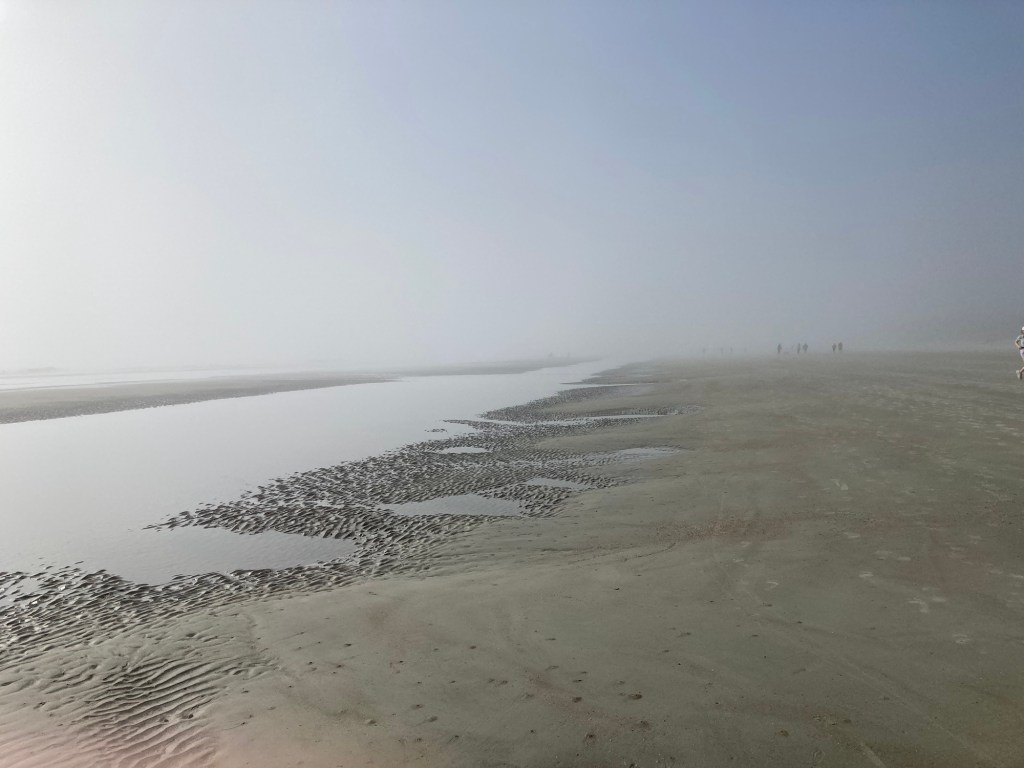
fog, little cat feet sits looking over harbor on silent haunches
From Fog in Chicago Poems by Carl Sandburg (Henry Holt and Company, 1916).
I will bet you one dollar you knew this poem.
I will double that bet and guess you knew it was Mr. Sandburg.
I will double that bet and guess that its the only poem by Mr. Sandburg you know.
Maybe a safe bet, but if there are two things I hope from all this is that most folks know this poem and that it is by this poet and for today, and you know what, that is enough!
So let us go on out to the kitchen and grab ourselves a beer to celebrate if I won or do the same thing if I lost.
Fog as published in Chicago Poems by Carl Sandburg (Henry Holt and Company, 1916).
The fog comes on little cat feet.
It sits looking over harbor and city on silent haunches and then moves on.
By the way with a 60 degree swing in the temperature since last weekend and with the ocean still at about 55 degrees, we gots ourselves a FOG warning here in the Low Country / Coastal Empire.
those who watch rainbows gather a reputation as rainbow chasers
Adapted from Moments of Dawn Riders by Carl Sandburg in “The People, Yes: Sky Talk” (Harcourt, Brace & Company, 1936).
Those who straddle foaming sea-horses and ride into the sunrise do so with no instrument board, no timetables Those who watch one rainbow after another dissolve in seven prisms they seem to gather reputations for being rainbow chasers — they also choose bright mornings of clear weather and fading daystars to study the organization of the sprockets of the bursting dawn …
Life is filled with talk of the path not taken and the road less traveled and the sounds of different drummers and the grass being greener over there on the other side of the fence.
Sometimes you get to look down those other paths, hear the different drums, look over that fence.
The past weekend, the Wife and I watched the movie, “The Holdovers.“
Charming film, though a bit disconcerting when the era of your childhood is the subject of what is called a “Period Piece”, where the look and feel of a by gone era is ‘historically accurate’ as recreated on screen.
Not wanting to become a movie review, the focus of the story is a teacher who is teaching at same small private school that he attended.
The teacher left the school for college and came back and never left.
As far as we know he moved into his ‘rooms’ and stayed there the rest of his life.
In those rooms he accumulated books, school papers to be graded and dust.
Here is my point.
The life of that teacher as portrayed in the movie, was a life I could easily imagine to have been mine and consider, more or less, one my paths not taken.
As the credits rolled over the screen at the end of the movie, I said to my wife, “That could have been my life.“
My Wife said, “Yes, it could have.“
I said, and full transparency here – spoiler alert, “I would have been fired.“
My Wife said, “Yes, you would have.”
I was thinking about that this morning as I drove to work.
I thought of a singular, solitary life, surrounded by books and a school schedule and dust.
And I thought of my life and jobs and kids and meetings and car problems and taxes and bills and grand kids and kids.
And I thought of the path not taken.
And I looked at the path I was on.
I was driving over the bridge to the island and I thought of George Bailey.
And I said, “Thank you, God.“
I would write more but I have to go chase some rainbows and study the sprockets of the bursting dawn.
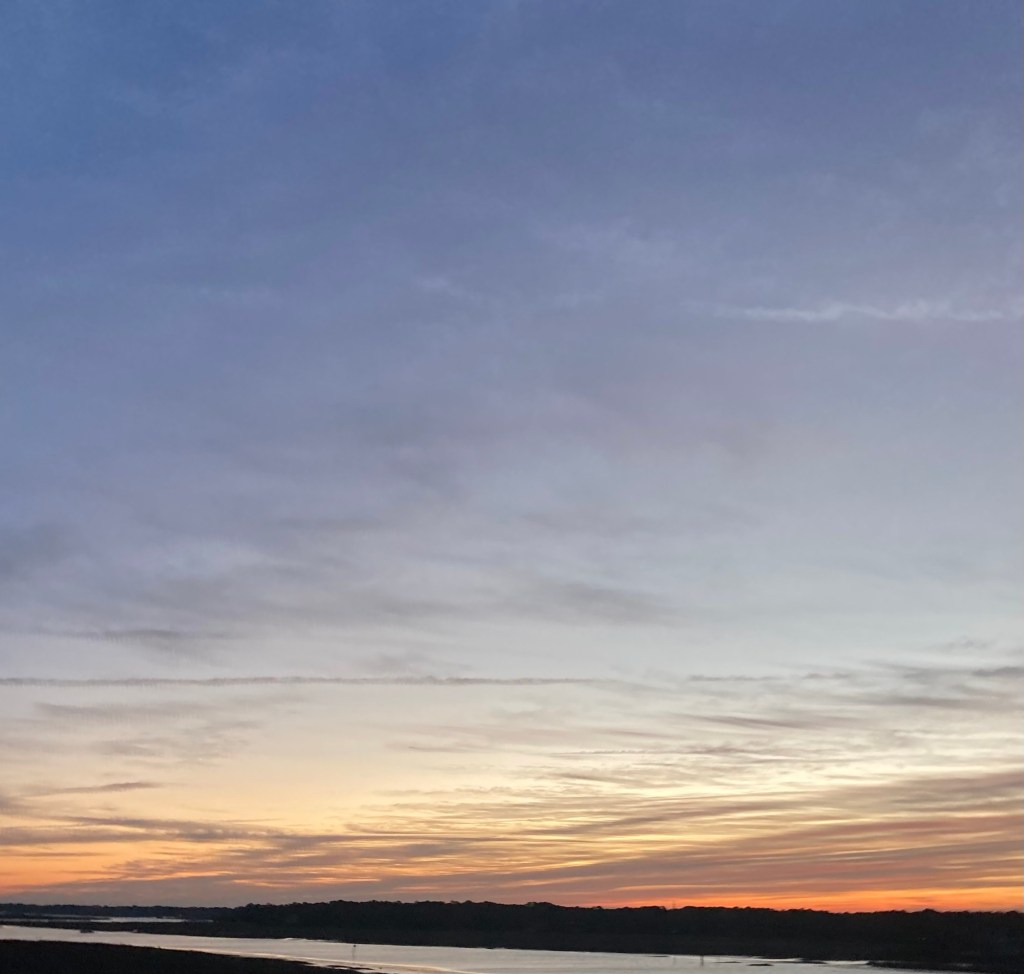
these are tawny days bashful mornings hurl gray mist on stripes of sunrise
These are the tawny days your face comes back The grapes take on purple the sunsets redden early on the trellis. The bashful mornings hurl gray mist on the stripes of sunrise. Creep, silver on the field, the frost is welcome Run on, yellow halls on the hills, and you tawny pumpkin flowers, chasing your lines of orange Tawny days and your face again
Tawny by Carl Sandburg in his book, Smoke and Steel, New York: Harcourt, Brace and Co., (1920).
The website, https://www.vocabulary.com/, defines tawny as an adjective meaning of a light brown to brownish orange color; the color of tanned leather.
The online Merriam-Webster says that tawny is from the Middle English, from Anglo-French tané, tauné, literally, tanned, from past participle of tanner to tan and that the first recorded use of the word is from the 14th century.
The book of Genesis, Chapter 1, verses 2-5 state:
And God said, “Let there be light,” and there was light. God saw that the light was good, and he separated the light from the darkness. God called the light “day,” and the darkness he called “night.” And there was evening, and there was morning—the first day.
For myself, when the Bible reports he separated the light from the darkness, I think that God set up what we know as the planet earth and when he separated the light from the darkness, God gave the planet a push that started it in motion so that on the planet, day was separated from night by the rotation of the planet.
From that moment all laws of what we now know as physics came into play.
Neither here nor there, that means, for me anyway, that God had a timer running as the earth revolved on its axis and when the Bible reports “… the first day”, God knew just what he meant, but I digress.
Anyway, at the end of that first day, the light sank below the horizon and on the morning of the 2nd day the light came up.
I am betting that when that light came, it was a tawny day and anyone who might be there to see it would see thatthe bashful mornings hurl gray mist on the stripes of sunrise.
My wife is not fond of these sunrise pictures I take with my iPhone because she knows that to take them, I am driving one handed, with my other hand holding my iPhone as I cross the Cross Island Bridge on Hilton Head Island.
I know it’s goofy but what can one do?
We live in the low country and it is flat.
There are few views to be had anywhere.
The Cross Island Bridge is one of few places you can see anything of the area.
And, as Augustus McCrae said the book Lonesome Dove, “, and “…if he missed sunrise, he would have to wait out a long stretch of heat and dust before he got to see anything so pretty.”



 No Haiku For You