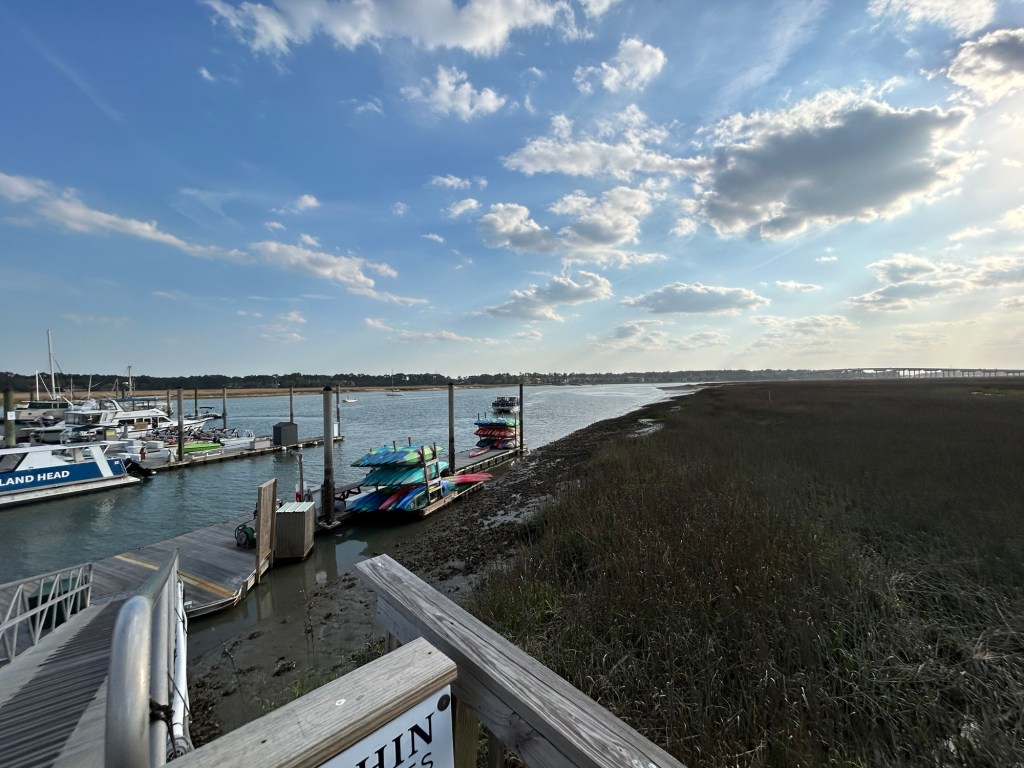
small wonder that men hold boats in the secret place cradle to the grave
Men who ache allover for tidiness and compactness in their lives often find relief for their pain in the cabin of a thirty-foot sailboat at anchor in a sheltered cove.
Here the sprawling panoply of The Home is compressed in orderly miniature and liquid delirium, suspended between the bottom of the sea and the top of the sky, ready to move on in the morning by the miracle of canvas and the witchcraft of rope.
It is small wonder that men hold boats in the secret place of their mind, almost from the cradle to the grave.
From the essay The Sea and the Wind that Blows by E. B. White and published in The Ford Times, June 1963 and re-published in The Essays of EB White by EB White (Harper and Row, New York, 1977).
I have never been really planetary since … farewell, my lovely
Back before Christmas I was in a Barnes & Noble bookstore.
Haven’t been in one in years but my wife had requested a couple of recently published books and she likes to have the book in her hand.
I walked in and felt pretty much at home.
My first job ever was working in a bookstore in a local mall.
I started working at Waldenbooks in the North Kent Mall in the spring of 1979 and I worked for this company until the spring of 1992 and then I went to work for the public library.
Today neither Waldenbooks or North Kent Mall is around.
But I still felt at home in the Barnes & Noble but … out of place.
I looked around and found the fiction section okay but it hit me that the shelves held only Hardcover and over sized paperbacks, what we called Trade editions.
Where were the paperbacks?
I wondered if maybe there was a paperback section but couldn’t find one.
I asked a clerk and she looked puzzled.
I tried to explain and asked ‘you know, the Mass Market editions.’
She shook her head.
This store not only didn’t have any ‘mass-market books’ but she had never heard of ‘mass-market books.’
Well there you are I thought and I bought two oversize paperbacks and more or less forget about the exchange.
Then this morning, I swiped through the New York Times on my tablet to see the headline, “So Long to Cheap Books You Could Fit in Your Pocket” by Elizabeth A. Harris, who covers books and the publishing industry .
The sub headline was, “The mass market paperback, light in the hand and on the wallet, once filled airport bookstores and supermarket media aisles. You may never buy a new one again.”
The gist of the article stated:
After almost a century in wide circulation, the mass market paperback is shuffling toward extinction. Sales have dropped for years, peeled away by e-books, digital audiobooks and even more expensive formats like hardcovers and trade paperbacks, the mass market’s larger and pricier cousin. Last year, ReaderLink — the country’s largest distributor of books to airport bookshops, pharmacies and big-box stores like Target and Walmart — announced that it would stop carrying mass markets altogether.
“You can still find them in some places,” said Ivan Held, the president of Putnam, Dutton and Berkley, publishing imprints that once did brisk business in mass markets. “But as a format, I would say it’s pretty much over.”
Wow.
For those 13 years I had worked in bookstore, paperbooks were a major part of the books we sold.
Getting them out, setting them up, selling them and returning them made up most of the work week.
They would arrive in boxes and if the title was big enough, they would come in a pre-made ‘dump’ which was a cardboard standup display that held about 48 copies of the book along with a header on top that featured a blow up of any cool cover art.
Fans of the author or if it was a movie tie-in, fans of the movie, would ask us if they could have those headers and we would write names and phone numbers on the back to call them when the display came down.
All the walls of the book store were covered with wire racks that were filled with paperbacks and the walls were divided into sections of fiction, mystery and what have you.
When we got a new delivery of books, it was a days work to shelve the books into place (alpha by author) shifting the stock back and forth and then remembering where all these books were when asked for a title by a customer.
I started work in the days before computer cash registers and we had to compute the Michigan 4% sales tax in our heads and to this day I can rattle off the final price of paperbacks –
$1.95 came to $2.03 $2.95 came to $3.07 $3.95 came to $4.11 $4.95 came to $5.15 $5.95??? There were no $5.95 paperbacks
I can remember those numbers as so many of the sales in this bookstore were to readers who stopped in quick to grab just one book for the week.
It was that type of mall.
I can still hear the voice of a good friend I worked with who was originally from Kentucky and the way she pronounced $4.11 in a sweet southern accent with this pause between the 4 and the eleven and this Australian like rising last syllable on the eleven.
Then there were the returns.
From time to time we would get printed lists of titles to pull off the shelves and send back.
Well, kinda send back.
Mass market paperbacks were so cheap to produce that it didn’t pay to return the entire book to publishers.
As Ms. Harris writes in her article about paperbacks:
“Such low prices required inexpensive production. Because mass market spines were glued together instead of sewn, the covers often came off, or pages fell out. Libraries rarely bought them, in part because they were too fragile.
What we did was take all the returned copies to the backroom and rip the cover off and throw the rest of the book, now known as a ‘strip’, in the trash.
The covers were sorted and returned to the publisher for credit but that left us with stacks of coverless paperback books.
This was tricky as we were required by the publishers to destroy the book or make it unreadable.
For myself, I felt that taking boxes of strips to the trash compacter and pressing the button was good enough.
One manager I knew would pour water over them before taking them to the trash.
Still that left these books of strips all over the place.
I mean, how much can a box of books be compacted.
People were often coming into the store with an armload of strips, saying they found them in the trash (don’t ask me) and did we want them back?
In a short story, Garrison Keillor writes about walking down a street in New York City and being asked by a pan handler if he wanted to buy a book a $1.00.
The book didn’t have a cover but you could read it okay said the pan handler.
The pan handler was selling strips that he had found in the trash.
What made the story was that the pan handler had offered Keillor a copy of his own ‘Lake Wobegon Days‘ and when Keillor told the pan handler he had written the book, the pan handler was so pleased, he asked Keillor to autograph it.
Which Keillor did and as he walked away and down the street Keillor heard the pan handler offer the book to the next person for $2.00 … as it had been signed by the author.
Before I ever worked in a bookstore, paperbacks were huge in my life.
I have abibliophobia which is, according to Wikipedia: ” … the fear of running out of reading material, often causing anxiety in avid readers when their supply of books runs low. It is a relatively new, largely informal term derived from Greek, describing a common “bookworm” behavior of hoarding, over-packing for trips, or panicked reading. It is often treated by stockpiling books, using digital readers, or visiting libraries.”
I digress but one of the benefits of working in a bookstore was that so many of the people you worked with as well as many of the customers also had abibliophobia. You could see the kinship just in their body language. You were among friends and people who understood.
Paperback books went a long way to keeping my abibliophobia under control.
I never went anywhere and I mean ANYWHERE without something to read.
When my Mom took me to find a new spring coat or winter jacket, I brought along a book to read just in case and to make sure the new coat had at least one pocket the book would fit it.
Scholastic Book Day at my school was a monthly day created just for me.
We would come in from recess to see a big box on the teachers desk and know that the books we had ordered a few weeks before with our ‘Scholastic Book Money’ had arrived.
When orders were handed in, we would line up and hand over our orders and the quarters, dimes and nickels needed to pay for our order.
I was the only one who handed in their order with a check from their Mom.
When the box was opened, the teacher would look at the order list and call out names and hand out the books.
The teacher would save me for last and then hand me the box half filled with my books.
I have mentioned it before, but my parents never ever questioned handing over money to buy books for me.
Anything that might keep me quiet for an hour was worth gold to them.
Those paperback books.
You could take then anywhere and read them everywhere and I did.
Ms. Harris writes: “It was one of the most brilliant technologies in the history of the world,” Rabinowitz said, “precisely because you could shove it in your purse or your pocket.”
Physically I might be in the back of the car on a trip to Chicago but mentally I was fighting Napoleon with Horatio Hornblower or marching to city called Gettysburg with the Iron Brigade when the line of men in blue came over the top of ridge and the wind caught the flags and the sun made the buttons shine so that other soldiers watching had to stand and cheer in a scene described by Bruce Catton on flimsy, pulpy gray pages of paper.
I still have abibliophobia.
My collection of ‘devices’ helps a lot.
I also travel with a solar power USB battery charger just in case.
The number of paperbacks on my shelves is small.
My wife and I call them ‘beach books’ because they are small work well at the beach.
But in my mind …a world without paperbacks?
I cannot imagine.
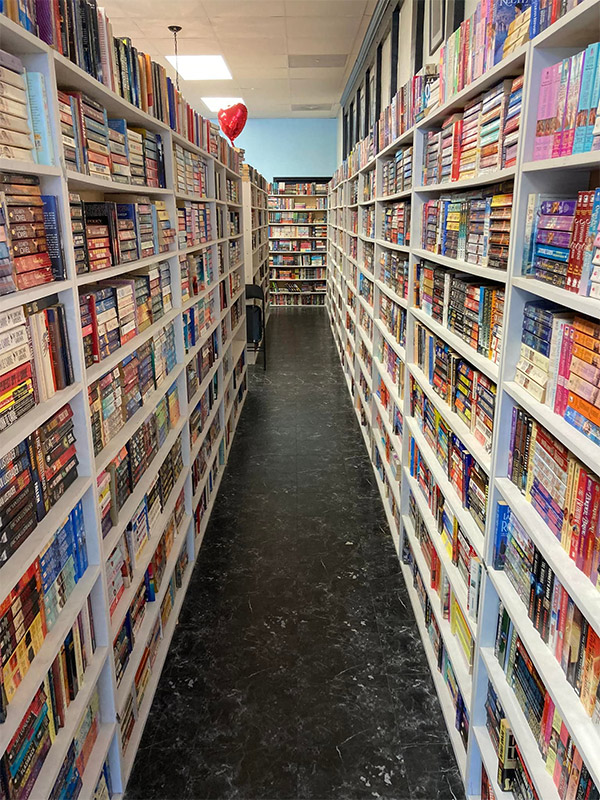
I started by saying I don’t get to Barnes & Noble too often but there are a handful of used books stores – like this one in nearby Richmond Hill, GA, that we frequent which makes me think the paperback will be around for awhile yet.
And I am reminded of an essay by E. B. White titled, Farewell, my Lovely.
It was White’s fond remembrances of the Model T Ford.
To close the essay, White writes: The days were golden, the nights were dim and strange. I still recall with trembling those loud, nocturnal crises when you drew up to a signpost and raced the engine so the lights would be bright enough to read destinations by. I have never been really planetary since. I suppose it’s time to say good-bye. Farewell, my lovely!
Please allow me to paraphrase.
The days were golden, the nights were dim and strange.
I still recall with trembling those loud, nocturnal crises when you were stuck in a car at night and you weren’t allowed anything that made a light bright enough to read by.
so much disturbing our lives, clouding our future our unhappy land
Adapted from the essay Letter from the East (Allen Cove, February 8, 1975) written by EB White as published in The Essays of EB White by EB White (Harper and Row, New York, 1977).
Mr. White writes:
With so much that is disturbing our lives and clouding our future, beginning right here in my own little principality, with its private pools of energy (the woodpile, the black stove, the germ in the seed, the chick in the egg), and extending outward to our unhappy land and our plundered planet, it is hard to foretell what is going to happen.
I know one thing that has happened: the willow by the brook has slipped into her yellow dress, lending, along with the faded pink of the snow fences, a spot of color to the vast gray-and-white world. I know, too, that on some not too distant night, somewhere in pond or ditch or low place, a frog will awake, raise his voice in praise, and be joined by others. I will feel a whole lot better when I hear the frogs.
My take was the air of foreboding and doom for our unhappy land back in 1975.
I guess every generation has to handle this feeling and figure it out.
I was 15 in 1975 and the future did not seem to did not seem so bad
So here is the 15 year olds of today and a hope for their future.
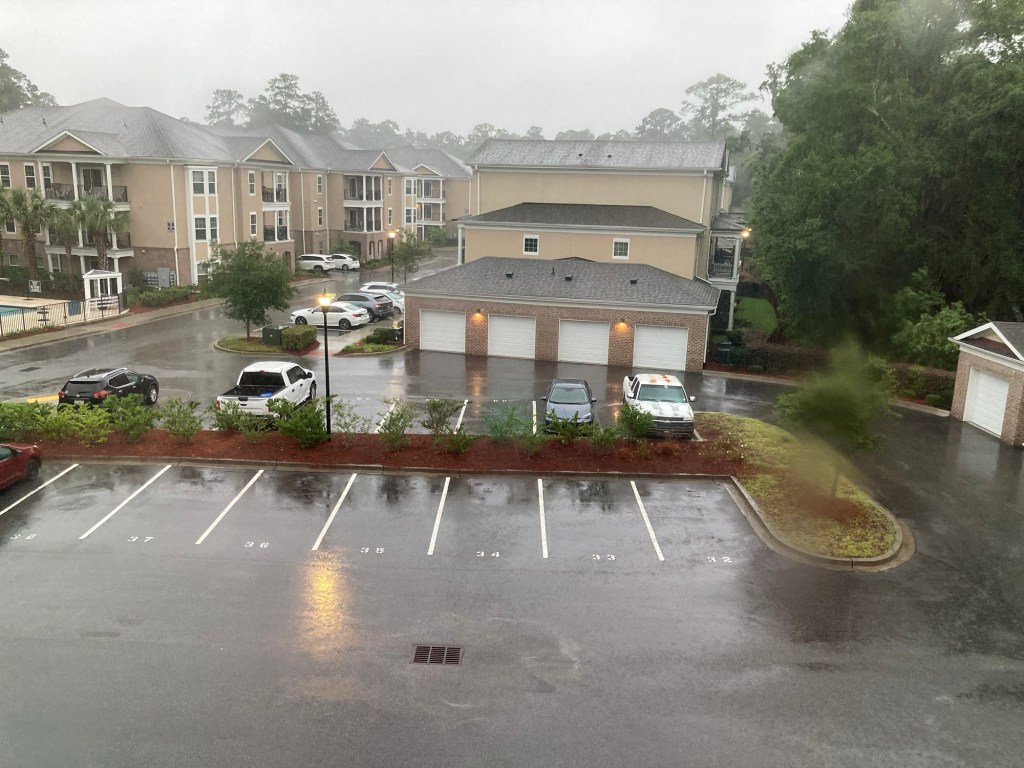
We walk often late in the evening to beat the heat here in the low country and our sidewalks line deep dark forests with swampy marshland.
We walk along as dusk settles and 1,000s upon 1,000s of frogs wake up and raise their voices in praise.
As we walk along the treeland swamps, we think, what is that sound?
Tonight, maybe, when we hear it, I will feel a whole lot better.
And the radio is playing Jean Sibelius: Organ Symphony … how can someone be unhappy?
we will all wake some morning to learn that there is not one decent man
We doubt that there ever was a time in this country when so many people were trying to discredit so many other people. About a year ago, we started to compile a handbook of defamation, showing who was disemboweling whom in America, but the list soon got too big for us and we abandoned the project as both unwieldy and unlovely. Discreditation has become a national sickness, for which no cure has so far been found, and there is a strong likelihood that we will all wake some morning to learn that in the whole land there is not one decent man. Vilification, condemnation, revelation—these supply a huge part of the columns of the papers, and the story of life in the Unit.
From the essay, Discredit of Others, published on October 4th, 1952 in the New Yorker Magazine and republished in On democracy / E. B. White; edited by Martha White; foreword by Jon Meacham, New York, Harper Collins, 2019.
In the forward to the book is this quote from Mr. White.
To hold America in one’s thoughts is like holding a love letter in one’s hand—it has so special a meaning.


 No Haiku For You