8.3.2021 – that boy called wolf

that boy called wolf
but remember the last time …
there really was a wolf

I was reading an article this morning that titled, “The Anatomy of a Rumor.

The abstract stated, “The rumor that the President was plotting to use election-eve violence as an excuse for massive repression of students and blacks, mass ar­rests, and suspension of Constitu­tional guarantees to keep the dis­senters behind bars… The rumor was really saying that a Reichstag fire was in the works.”

Okay, that wasn’t the real abstract.

The real abstract states, “The rumor had Nixon plotting to use election-eve violence …”

Can’t make this stuff up.

The story was from the Village Voice online archive and had been originally published on November 5, 1970.

You can click on the link and read if for yourself if you want too.

The premise is that, “The original newspaper story explained that Nixon was alarmed by the Bank of America burning, the 11th Street “bomb factory” explosion, the Weatherman blast at police department headquarters, and the sudden wave of bomb scares, and concerned about possible bombing of polling places and other left wing attempts to disrupt the Presidential cam­paign. But the rumor that preceded the story and mushroomed all over the country afterward had Nixon plotting to use election-eve violence as an excuse for massive repression of students and blacks, mass ar­rests, and suspension of Constitu­tional guarantees to keep the dis­senters behind bars. It was a rumor not so much about cancellation of elections as it was about cancellation of the left it­self.”

It is a fascinating read.

The story also had that quote from Attorney General John Mitchell, “This country is going so far to the right you aren’t going to recognize it.”

Mr. Mitchell said that back in 1970.

A case of plus ça change, plus c’est la même chose I guess.

One short line in the story that I found most chilling was, “The important thing to remember about the story of the boy who cried “wolf” is that there really was a wolf there that last time.

Lots to worry about today.

A lot more voices are crying WOLF than just the one little boy.

So many voices.

So many wolves.

I feel I should be concerned.

I feel I should be aware THAT THAT LAST TIME THERE REALLY WAS A WOLF.

But know what?

Boy do I really find it hard to believe that this is that last time.

The Shepherd Boy & the Wolf

A Shepherd Boy tended his master’s Sheep near a dark forest not far from the village. Soon he found life in the pasture very dull. All he could do to amuse himself was to talk to his dog or play on his shepherd’s pipe.

One day as he sat watching the Sheep and the quiet forest, and thinking what he would do should he see a Wolf, he thought of a plan to amuse himself.

His Master had told him to call for help should a Wolf attack the flock, and the Villagers would drive it away. So now, though he had not seen anything that even looked like a Wolf, he ran toward the village shouting at the top of his voice, “Wolf! Wolf!”

As he expected, the Villagers who heard the cry dropped their work and ran in great excitement to the pasture. But when they got there they found the Boy doubled up with laughter at the trick he had played on them.

A few days later the Shepherd Boy again shouted, “Wolf! Wolf!” Again the Villagers ran to help him, only to be laughed at again.

Then one evening as the sun was setting behind the forest and the shadows were creeping out over the pasture, a Wolf really did spring from the underbrush and fall upon the Sheep.

In terror the Boy ran toward the village shouting “Wolf! Wolf!” But though the Villagers heard the cry, they did not run to help him as they had before. “He cannot fool us again,” they said.

The Wolf killed a great many of the Boy’s sheep and then slipped away into the forest.

Liars are not believed even when they speak the truth.

The Æsop for Children from the Library of Congress
6.18.2021 – defy ignorance

defy ignorance
of vested prejudices
vested interests

17 syllables, 7 words and more situational application than you can shake a stick at, if that’s your idea of a good time.

If I started listing the different situations in the current news cycle that these 7 words could be applied, the list would soon be hiring than the Empire State Building and its 102 floors.

I adapted today’s haiku from a “Beyond the Hundredth Meridian: John Wesley Powell and the Second Opening of the West” written by Wallace Stegner and published in 1954.

Major John Wesley Powell was the one armed explorer of Wonderful World of Disney fame who rafted down the Colorado River in 1869 and located the Grand Canyon and invented a tourist sport at the same time.

Major Powell also served as the second Director of the United States Geological Survey, a post he held from 1881–1894.

When Mr. Stegner wrote about Major Powell, Stegner was able to comment about the problem of living out west.

Living out in the American West where there was LOTS of SUNSHINE, LOTS of WILD FIRES and VERY LITTLE WATER.

Mr. Stegner was able to comment about as Major Powell noticed that there would be issues.

Major Powell published in 1878 a government paper titled: Report on the Lands of the Arid Regions of the United States.

According to one account, Major Powell, “. . . unflinchingly described the scarcity of water, and summarized that much of the American south-west, if it must be settled, should be settled lightly and modestly. Overpopulate it, and it will be unforgiving.”

According to Mr. Stegner, “As a government scientist, Major Powell was now defying ignorance. He was taking on vested interests and the vested prejudices by which they maintained themselves.”

As one account puts it, Major Powell was a sage.

And what does sage mean?

According to the online Merriam-Webster it means:

Wise through reflection and experience.

Proceeding from or characterized by wisdom, prudence, and good judgment.

One (such as a profound philosopher) distinguished for wisdom.

A mature or venerable person of sound judgment.

So what happened to Major Powell and his report?

No one listened to him.

5.19.2021 – a salutary

a salutary
fear of the future, makes one
watchful, combative

The beginning of wisdom, as Tocqueville put it, is to “have that salutary fear of the future that makes one watchful and combative, and not that sort of soft and idle terror that wears hearts down and enervates them.

Have that salutary fear.

Be watchful.

And.

Be combative.

There might be roving groups of ‘tourists’ trying to find their way into local public buildings.

Or maybe that Washington Riot was just an ‘over reaction’ and really did not take place.

Be watchful as the story gets changed.

As one feller said, you’ll be shocked by what never happened.

Then be combative!

Don’t let be overcome by the sort of soft and idle terror that wears hearts down.

Salutary?

An adjective, (especially with reference to something unwelcome or unpleasant) producing good effects; beneficial. IE: “a salutary reminder of where we came from”

Enervates?

To cause (someone) to feel drained of energy or vitality; weaken.

2.7.2021 – American Satire

American Satire
American Reality
Where does one stop, start?

In answer to the question, in a recent interview, “Do you consider yourself a satirist,?”, satirist Fran Lebowitz said, “In a way, yes, but, American reality has been so extreme of late that satire is almost impossible. Anything you could possible imagine actually happens. It would stump Jonathan Swift.”

It was Jonathon Swift who wrote, “Satire is a sort of glass wherein beholders do generally discover everybody’s face but their own; which is the chief reason for that kind reception it meets with in the world, and that so very few are offended with it.”

I have to admit I am not sure what this all means.

I think it boils down to, you can’t make this stuff up.

How did a national response to a global pandemic become a political statement based on wearing or not wearing a mask?

Ms. Lebowitz also said in this same interview:

When I was young there was a very strict idea of the boundary between the public and the private life.

So, things that you might do in the privacy of your bedroom, you wouldn’t do on 12th St.

That seems to have disappeared entirely and it is not just the young; it’s true even of people my age, who were brought up in a certain way and then forgot about it.

It is surprising to me just how unconscious people are of themselves in public, considering how much more acceptable it has become to think about yourself all the time”

Is that the answer to the question?

Consider how much more acceptable it has become to think about yourself all the time.

I like Ms. Leibowitz a lot.

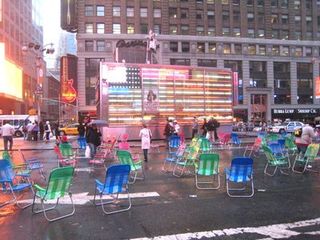
Just when you think she has gone off into the happy world of hyperbole and complains that New York City spent $40 million dollars researching how to and then putting lawn chairs in Times Square, you find out she was telling the truth.

When I consider how much more acceptable it has become to think about yourself all the time, I am reminded of an essay on the future by one of my favorite writers, Michigan’s Own, Bruce Catton.

Mr. Catton wrote, “The dismaying world we confront was given its vast intricacy and its perilous speed by human beings. The one basic resource we have always had to rely on is the innate intelligence, energy and good will of the human race. It is facing an enormous challenge, but then it always has; and it meets each one only to confront another. If now we give way to the gloom of the apostles of catastrophe we are of course in the deepest sort of trouble. The old reliance is at our service. It can bear us up if we put out full weight on it.”

This is where that comment of Ms. Leibowtiz comes in to play.

American reality has been so extreme of late that satire is almost impossible.

Anything you could possible imagine actually happens.

If we have to rely on the innate intelligence, energy and good will of the human race while at the sane time we consider how much more acceptable it has become to think about yourself all the time I think we are of course in the deepest sort of trouble.

Not something I would dare put my weight on at this time.

1.20.2021 – nation, under God

nation, under God,
shall have new birth of freedom
of by for people

Today’s Haiku is abstracted from Abraham Lincoln’s remarks delivered at the dedication of a National Cemetery on the fields where the battle of Gettysburg was fought.

Mr. Lincoln said:

“… our fathers brought forth upon this continent, a new nation, conceived in Liberty, and dedicated to the proposition that all men are created equal.

Now we are engaged in a great civil war, testing whether that nation, or any nation so conceived and so dedicated, can long endure.

Maybe we haven’t been in a Civil War of late but I guess if we haven’t been, it as close as I want to ever come.

Either way you look at it this Country has been tested of late.

A test whether that nation, or any nation so conceived and so dedicated, can long endure.

A lot of work in front of all of us.

As Mr. Lincoln said, “It is rather for us to be here dedicated to the great task remaining before us.

That this nation, under God, shall have a new birth of freedom – and that government of the people, by the people, for the people, shall not perish from the earth.

When Gerald Ford was sworn in as Vice President in the midst of Watergate, he used the line, “I am a Ford, not a Lincoln.

When Mr. Ford was sworn in as President, he said, “Our long national nightmare is over.”

He then went on to say, “Our Constitution works; our great Republic is a government of laws and not of men. Here the people rule.”

Here the people the rule!

As Mr. Lincoln said in his first Inaugural Address:

Why should there not be a patient confidence in the ultimate justice of the people? Is there any better or equal hope, in the world.”

Is there any better or equal hope, in the world?